
Planting
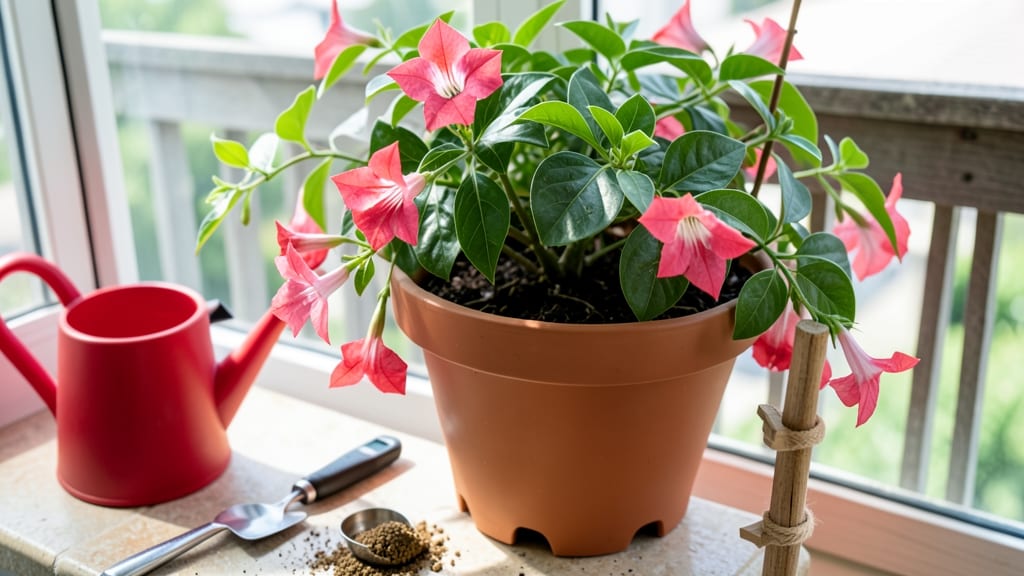
Caring for mandevilla in pots means bold, trumpet-shaped blooms all season long—if you nail these few key steps. 🌿 I’ve turned my patio into a tropical paradise with these plants, and the secret isn’t complicated: it’s about mimicking their natural tropical habitat in containers.
Too much water or cold drafts, and they’ll sulk. Get it right, and you’ll have a plant that flowers nonstop from spring to frost.
Their tropical roots mean mandevilla demands bright, indirect light—think morning sun and afternoon shade in hot climates. Well-draining soil is non-negotiable; mix in perlite or orchid bark to keep roots from rotting.
Water when the top inch feels dry, but never let them sit in soggy soil. A 10- to 15-gallon pot gives them enough space to thrive without becoming root-bound too quickly.
Feed them every 2-3 weeks during growing season with a balanced fertilizer (10-10-10), and prune leggy stems after blooms fade to encourage bushier growth. The payoff? Clusters of vibrant pink, red, or white flowers that’ll make your neighbors jealous.
Just watch for spider mites—those tiny pests love dry air—and keep them away from temps below 50°F.
Overwintering’s the tricky part: bring pots indoors near a sunny window or use a grow light to keep them flowering. Reduce watering but don’t let soil dry out completely. With these tweaks, your mandevilla will bounce back stronger every spring—ready to steal the show again.
📚 In This Guide
- What you need
- Instructions
- Tips and common mistakes
- Wrapping up and next steps
What you need
- ● Pot: 1–2 drainage holes (minimum 12" diameter for mature plants; larger pots = more stability). Terracotta or ceramic (breathable) is ideal.
- ● Well-draining potting mix: 1 bag (1–2 cubic feet) of a cactus/succulent blend mixed with perlite or orchid bark (50/50 ratio) for aeration.
- ● Mandevilla plant: 1 healthy nursery-grown vine (check for lush green leaves and buds!).
- ○ Gloves (optional but recommended—Mandevilla sap can irritate skin!).
- ● Trowel or small shovel for repotting.
- ● Watering can with a narrow spout (to avoid overwatering).
- ● Fertilizer: 1 bottle of balanced liquid fertilizer (10-10-10 or 20-20-20) or slow-release granules.
- ● Support structure: 1 trellis, stake, or cage (for climbing varieties).
- ○ Mulch (optional): Orchid bark or pine needles (to retain moisture and regulate temperature).
- ● A sunny spot (6+ hours of morning sun; afternoon shade in hot climates).
- ● Warmth: Mandevilla hates cold (keep temps above 50°F/10°C; ideal: 65–85°F/18–29°C).
- ○ Humidity (optional): A pebble tray or humidifier helps in dry indoor environments.
Tips & tricks for perfect Mandevilla care in pots
A few strategic adjustments can transform your Mandevilla from a struggling houseplant to a blooming showstopper. Here's what I've learned after years of trial and error with these tropical beauties.
Drainage is Non-Negotiable: In Step 1, when selecting your pot, prioritize drainage holes—even if it means upgrading containers. I've seen Mandevillas thrive in terra cotta pots because they wick moisture away from roots. For extra insurance, add a layer of ½-inch aquarium gravel at the bottom before your potting mix. This creates a secondary drainage layer that prevents water from pooling against the roots, which is especially critical during the once-weekly watering routine mentioned in Step 3.
Light Requirements Need Precision: The 12-14 hours of grow light in Step 2 isn't just about duration—it's about quality. Position your grow light so it covers the plant's entire canopy, not just the top. I rotate my pots weekly to ensure even exposure, which prevents the leggy growth you'll notice when light is insufficient. For natural light, east-facing windows provide the gentlest conditions, while west-facing windows offer more intensity that works well with the bright, indirect light requirement.
Fertilizer Timing Matters: When you're fertilizing every 2 weeks in spring/summer (Step 4), remember that timing is everything. Apply fertilizer in the morning so the plant has time to process nutrients before evening. I've found that alternating between root feed and foliar spray every other application gives my Mandevillas a real boost. Also, always dilute that 10-10-10 fertilizer to half-strength—full strength can burn delicate roots, especially when combined with the monthly flushing to prevent salt buildup.
Overwintering Insulation Trick: During the 55°F threshold mentioned in Step 5, don't just move your plant indoors—create a microclimate. I place my pots on a heat mat set to low near a sunny window, which maintains root zone warmth. This simple trick helps prevent the leaf drop that's normal during dormancy but can be minimized with consistent warmth. The bubble wrap insulation mentioned is particularly effective for preventing cold drafts from windows or doors.
Pro Tips for Care For A Mandevilla Plant In Pots
- A few strategic adjustments can transform your Mandevilla from a struggling houseplant to a blooming showstopper.
- Drainage is Non-Negotiable: In Step 1, when selecting your pot, prioritize drainage holes—even if it means upgrading containers.
- Light Requirements Need Precision: The 12-14 hours of grow light in Step 2 isn't just about duration—it's about quality.
Frequently asked questions
How often should I water my potted Mandevilla?
Water your Mandevilla when the top 1–2 inches of soil feel dry to the touch. Typically, this means watering every 5–7 days in warm weather, but adjust based on humidity and pot size. Overwatering is the #1 killer—always ensure pots have drainage holes to prevent root rot.
Can Mandevillas survive winter in pots?
Mandevillas are tropical and need protection when temps drop below 40°F (4°C). Move pots indoors near a sunny window or use a grow light. If you can’t bring them inside, wrap pots in burlap and mulch the soil. Expect dormancy—reduce watering and trim dead foliage in early spring.
Why isn’t my Mandevilla blooming?
Lack of blooms usually means one of three things: not enough sunlight (6+ hours daily), overcrowded roots (repot every 2–3 years), or low nutrients. Feed with a balanced fertilizer (like 20-20-20) every 4–6 weeks in spring/summer. A little stress (like a slight drought) can also trigger blooms!
What pests should I watch for on Mandevillas?
Keep an eye out for aphids, spider mites, and mealybugs—they love Mandevillas! Wipe leaves with soapy water or spray with neem oil for mild infestations. For severe cases, isolate the plant and treat with insecticidal soap. Healthy plants (well-watered, not overcrowded) are less vulnerable!
Can I grow Mandevilla from cuttings?
Take 4–6 inch tip cuttings in spring/summer, strip the lower leaves, and dip in rooting hormone. Plant in moist perlite or sand, cover with a plastic bag, and keep in bright, indirect light. Roots should form in 2–4 weeks. A great way to propagate for free!
Wrapping up and next steps
Caring for a Mandevilla plant in pots is a rewarding journey that brings vibrant blooms and lush greenery to your space—even in containers! 🌸 With the right balance of sunlight, water, soil, and pruning, your plant will thrive year-round, gracing your patio, balcony, or indoor garden with its stunning trumpet-shaped flowers.
Remember, consistency is key, and a little patience goes a long way.
Now that you’re armed with expert tips, why not share your Mandevilla love? Snap a photo of your thriving plant, tag us, and inspire others to grow their own! Happy gardening! 🌿