
Pruning
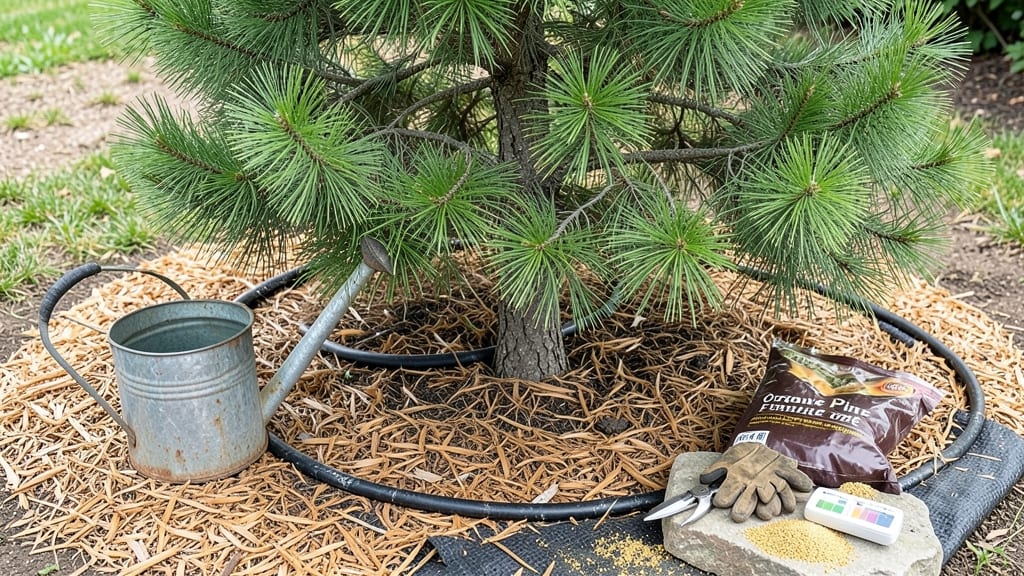
Caring for a pine tree feels like tending to a low-maintenance giant. 🌲 These evergreens thrive with basic attention—sunlight, occasional water, and the occasional pruning session. My first pine tree taught me that most care mistakes come from overdoing it, not neglect.
The secret is simplicity: well-draining soil, infrequent watering, and avoiding heavy pruning. Pines hate soggy roots and overcrowded branches. Most varieties need full sun and tolerate drought once established, making them perfect for busy gardeners or forgetful plant parents.
You’ll end up with a tree that stays green year-round, requires almost no winter prep, and grows stronger with minimal effort. Even the needles stay vibrant for 3-5 years before naturally dropping, creating that classic pine forest floor. Works for both landscape pines and container-grown varieties.
Here’s how to keep yours healthy without the fuss.
📚 In This Guide
- What you need
- Instructions
- Tips and common mistakes
- Wrapping up and next steps
What you need
- ● Pruning shears or loppers: Sharp, bypass-style pruners (for small branches) or loppers (for thicker limbs). Size: 6–8" blades for shears, 12–16" for loppers.
- ● Sterilizing solution: 70% isopropyl alcohol or a 10% bleach-water mix (1 part bleach to 9 parts water) to disinfect tools between cuts.
- ● Gloves: Heavy-duty, gardening gloves (preferably waterproof) to protect hands from sap and sharp branches.
- ● Watering can or hose: A spray nozzle attachment for gentle watering (avoid blasting the trunk).
- ● Mulch: 3–4 inches of organic mulch (pine bark, wood chips, or shredded leaves) to retain moisture and suppress weeds.
- ● Shovel or spade: For planting or amending soil around young trees.
- ● Fertilizer: Slow-release, pine-tree-specific fertilizer (e.g., 10-10-10 NPK ratio) or organic options like composted manure.
- ● Tree wound dressing: Pruning sealant (controversial but useful for large cuts to prevent disease).
- ● Soil pH test kit: To check acidity (pines prefer pH 4.5–6.0; adjust with sulfur if needed).
- ● Tree tie or support: For young or storm-damaged trees (e.g., soft plastic tree ties).
- ● Safety gear: Safety goggles and long sleeves if working with tall or overgrown pines.
Step-by-step instructions for nurturing a healthy pine tree
Pine trees thrive with simple, consistent care—here’s how to keep yours strong for decades.
☀️ Step 1: Position for Optimal Sunlight and Airflow
Pines need full sun—at least 6 hours daily—to develop vibrant green needles and sturdy growth. A spot with morning sun and afternoon shade works best in hot climates, but avoid deep shade, which causes sparse, yellowing foliage. I always check the tree’s shadow at midday; if it’s shorter than the tree itself, the location is ideal.
Airflow matters just as much as light. Crowded spaces or tight corners trap moisture, inviting fungal diseases like needle blight. Space young pines 10-15 feet apart to allow branches to spread naturally. If planting near a fence or wall, leave 3-4 feet of clearance—pines hate being smothered.
💧 Step 2: Water Deeply but Infrequently
Pines despise soggy roots but tolerate brief dry spells better than most trees. Water deeply once a week during the first growing season, soaking the soil 12-18 inches down. You’ll know it’s enough when water runs out the drainage holes if in a container, or when the top 4 inches of soil feel dry to the touch. Overwatering causes needle drop and root rot—watch for yellowing needles as a warning sign.
Mature pines need far less water. After the first year, most only require deep watering every 2-3 weeks unless your region experiences prolonged drought. Mulch heavily with 3-4 inches of organic mulch (like pine straw or wood chips) to retain moisture and regulate soil temperature. Keep mulch 6 inches away from the trunk to prevent rot.
✂️ Step 3: Prune Strategically in Late Winter
The best time to prune is February or March, just before new growth begins. Remove dead, diseased, or crossing branches first—they’re easy to spot as they’re brown, brittle, or rubbing against others. Cut back to the main trunk or a healthy lateral branch, making clean cuts with sterilized pruners to avoid spreading disease. Never remove more than 25% of the foliage in one season; pines recover slowly from heavy pruning.
Shape the tree lightly by trimming overly long branches to encourage a fuller form. Focus on the outer third of the tree—inner branches rarely get enough light and can become weak. After pruning, apply copper fungicide to cuts to prevent infection, especially if your area has a history of fungal issues.
🌿 Step 4: Fertilize Sparingly for Long-Term Health
Pines in nutrient-poor soil benefit from a slow-release, acid-loving fertilizer in early spring. Use a 10-10-10 or 8-3-9 formula (high nitrogen for needles, balanced phosphorus/potassium for roots) at half the recommended rate. Over-fertilizing burns roots and causes needle burn—look for brown tips as a sign of excess salts. Spread fertilizer 6 inches from the drip line (the edge of the tree’s canopy) and water it in immediately.
Most pines don’t need annual feeding. Test soil every 2-3 years—pines prefer acidic soil (pH 4.5-6.0). If your soil is too alkaline, amend with sulfur or peat moss in the root zone. Avoid synthetic fertilizers; organic options like fish emulsion or composted pine needles work better long-term.
⏰ Step 5: Protect Against Pests and Seasonal Stress
Watch for pine beetles, spider mites, or bagworms—common pests that target stressed trees. Early signs include sawdust-like frass (beetle droppings), fine webbing (mites), or sack-like nests (bagworms). Treat infestations immediately with neem oil or horticultural oil for mites, or Bt (Bacillus thuringiensis) for caterpillars like bagworms. For beetles, remove infested branches and dispose of them in sealed bags.
Winter care is minimal but critical. Young pines need wind protection—wrap the trunk with burlap or tree guard if your area gets harsh winds or heavy snow. Mature pines handle cold well, but ice buildup on branches can snap them. Gently tap branches to dislodge ice before it causes damage. In drought-prone areas, deep water once a month during winter to prevent desiccation.
Tips & tricks for perfect pine tree care
Here's what nobody tells you about keeping your evergreen looking its best with minimal fuss.
Sunlight Secret: The 6 hours of daily sun requirement is non-negotiable, but here's the real trick: position your tree so it gets morning sun first—this prevents afternoon moisture buildup that invites fungal diseases. I've seen trees in afternoon-only sun develop yellowing needles within months because that's when humidity peaks. For container-grown pines, rotate them quarter-turn every few weeks to ensure even sun exposure all around.
Watering Wisdom: That 12-18 inch deep watering isn't just about quantity—it's about technique. Use a soil probe or long screwdriver to check moisture depth after watering. If it comes out dry, you haven't watered deeply enough. For mature trees, I recommend using a garden hose with a slow setting or a soaker hose to avoid surface runoff, which wastes water and can erode soil around the base.
Pruning Precision: When you're making those clean cuts in Step 3, here's a pro move: cut at a 45-degree angle just above a healthy lateral branch or bud. This encourages better healing and reduces the chance of water pooling in the cut. I always sterilize my pruners with rubbing alcohol between cuts—this simple step has prevented multiple fungal infections in my own trees. And remember, those copper fungicide treatments work best when applied immediately after pruning while the cuts are fresh.
Fertilizer Strategy: The half-rate application of 10-10-10 or 8-3-9 fertilizer is crucial, but timing matters just as much. I've found that applying fertilizer in early spring—just as new growth begins—gives the tree time to absorb nutrients before summer heat stress sets in. For organic options, composted pine needles work particularly well because they mimic the tree's natural forest floor environment while slowly releasing nutrients.
Pro Tips for Care For A Pine Tree
- Here's what nobody tells you about keeping your evergreen looking its best with minimal fuss.
- Sunlight Secret: The 6 hours of daily sun requirement is non-negotiable, but here's the real trick: position your tree so it gets morning sun first—this prevents afternoon moisture buildup that invites fungal diseases.
- Watering Wisdom: That 12-18 inch deep watering isn't just about quantity—it's about technique.
Frequently asked questions
Got questions about keeping your pine tree thriving? You’re not alone! Here are answers to the most common concerns—from pruning to pests and everything in between.
How often should I prune my pine tree?
Prune mature pine trees only when necessary—typically every 2–3 years—to remove dead branches or shape growth. Young pines may need light trimming annually to encourage strong structure. Avoid over-pruning, as pines are slow to recover. Pro tip: The best time is late winter or early spring before new growth starts.
What should I do if my pine tree has brown needles?
Brown needles are often normal (pines shed older needles yearly), but sudden browning could signal disease, pests, or drought. Check for spider mites or needle cast fungus. Water deeply during dry spells, and fertilize lightly in early spring if soil is poor. If the issue persists, consult a local arborist.
Do pine trees need winter care?
Pines are hardy, but young or newly planted trees benefit from mulch (2–3 inches) around the base to protect roots from freezing. Avoid heavy snow buildup on branches—gently brush it off to prevent breakage. No extra watering is needed in winter; let the ground freeze naturally.
Can I grow a pine tree in a container?
Yes! Dwarf pine varieties (like Pinus mugo) thrive in containers with well-draining soil and a pot at least 2x wider than the root ball. Use a mix of potting soil and sand, and repot every 2–3 years. Place in full sun, and water when the top inch of soil is dry. Warning: Larger pines need permanent ground planting.
What’s the easiest pine tree for beginners?
Start with the Ponderosa Pine or Scotch Pine—both are low-maintenance, drought-tolerant, and forgiving of occasional neglect. For smaller spaces, Mugo Pine is a compact, slow-growing champion. Avoid delicate species like Bristlecone Pine if you’re new to pine care.
How do I tell if my pine tree is diseased?
Watch for yellowing needles, sawdust-like frass (sign of bark beetles), or oozing sap. Fungal issues like needle cast may cause banded discoloration. Act fast: Prune infected branches 12 inches below the damage, and treat with copper fungicide if needed.
Still stumped? Drop your pine tree’s specific issue in the comments—we’re happy to help troubleshoot!
Wrapping up and next steps
Caring for your pine tree doesn’t have to be complicated—just consistent! With the right pruning techniques, watering habits, and a watchful eye for pests, you’ll keep your tree thriving for years.
Remember, patience and observation are your best tools, and a little effort now means a stunning, healthy tree later.
Ready to give your pine tree the love it deserves? Start small—pick one task from this guide today, whether it’s trimming dead branches or checking for pests. Your tree (and your future garden) will thank you! 🌲✨