
Propagation
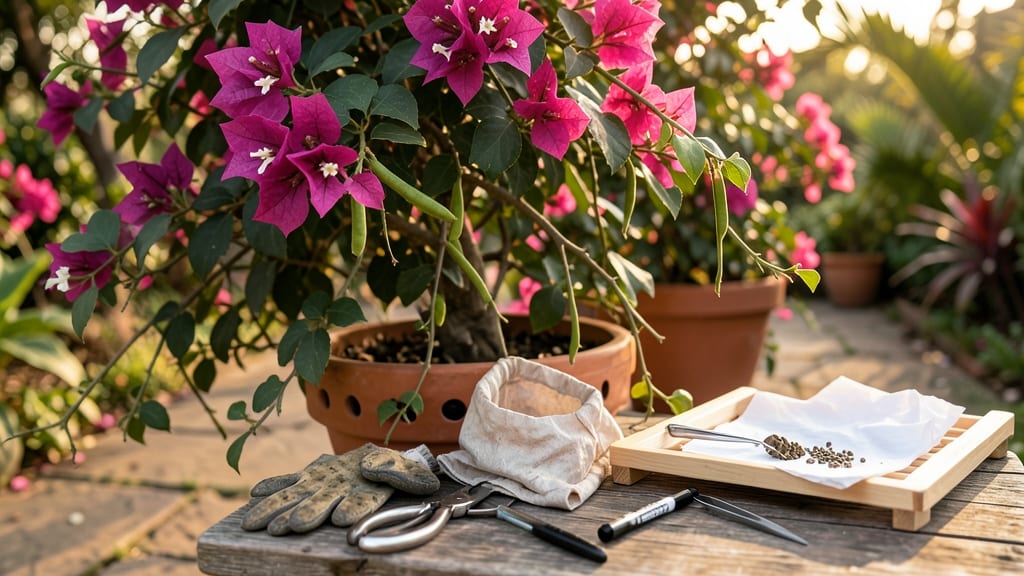
Collecting bougainvillea seeds starts with spotting those papery, brown pods in late summer—right when they begin cracking open. 🌿 I’ve learned the hard way that waiting too long means seeds scatter everywhere, while harvesting too early guarantees poor germination.
The key is timing: pods should be dry but still intact, with just a hint of splitting at the seams.
You’ll need basic tools: a pair of sharp pruning shears, a small paper bag for collecting, and a damp paper towel for storage. Once you’ve snipped the pods, gently squeeze them to release the tiny, black seeds inside—each one a potential new plant.
Don’t rush this step; patience here means healthier starts later.
After collection, seeds need a cold stratification trick to break dormancy: place them in a sealed bag with damp paper towel, then refrigerate for 4-6 weeks. This mimics winter’s natural signal to germinate. Skipping this step? You’ll likely end up with slow, uneven sprouts—or none at all.
The payoff comes in spring, when those black seeds finally push through soil, revealing vibrant new growth. With the right timing and care, you’ll go from seed to thriving bougainvillea in just a few months—healthy, vigorous, and ready to bloom. Worth the wait, honestly.
📚 In This Guide
- What you need
- Instructions
- Tips and common mistakes
- Wrapping up and next steps
What you need
- ● Mature bougainvillea plant: Choose a healthy, thriving plant with fully dried seed pods (usually brownish-purple or tan).
- ● Sharp pruning shears or scissors: Sterilized (rubbing alcohol wipe) to avoid disease transfer. A 10-12 inch blade works best for precision.
- ● Paper bags or breathable cloth sacks: 2-3 medium-sized (12x15 inches) to collect pods and prevent moisture buildup.
- ● Labeling tags or masking tape + marker: To label seeds by variety or collection date (e.g., "Bougainvillea ‘Orange Cascade’ – May 2024").
- ○ Gloves (optional but recommended): Thin gardening gloves to protect hands from thorns (nitrile or cotton works well).
- ● Drying tray or screen: A wire mesh tray (18x24 inches) or clean screen to spread pods for drying (if not already dried).
- ● Small paper towels or coffee filters: For gently separating seeds from dried pods.
- ● Seed storage containers: Air-tight jars with silica gel packets to maintain low humidity (e.g., mason jars with lids).
- ● Hand lens or magnifying glass: For inspecting seed viability (look for plump, intact seeds).
- ● Disinfectant spray (10% bleach solution): To sterilize tools between uses (mix 1 part bleach to 9 parts water).
- ● Notebook or seed-tracking app: To log germination rates, pod colors, or plant traits (e.g., "Pods turned brown June 10 – 75% viable").
Step-by-step instructions for collecting bougainvillea seeds
Here's how I time the harvest for maximum viability—no guesswork, just science-backed maturity cues.
🌿 Step 1: Identify and Monitor Seed Pods
Bougainvillea seed pods start as small, green bumps that form after flowers fade. Wait until they turn papery brown and begin splitting open naturally—this signals full maturity. I check pods weekly during peak blooming season, running my fingers gently over clusters to feel for the telltale dry, brittle texture.
Never collect pods that are still green or firm; they won't germinate. The pods should open easily when squeezed, revealing reddish-brown seeds inside. If pods drop to the ground before opening, they're past their prime—collect only those still attached but ready to release.
⏰ Step 2: Harvest at Peak Ripeness
Timing matters most here. Collect pods on a dry morning after dew has evaporated but before midday heat. Use clean, sharp pruning shears to snip the entire pod cluster, leaving a ¼-inch stem. I place them in a paper bag (not plastic) to allow airflow and prevent mold.
Work quickly—bougainvillea seeds lose viability within 24 hours of pod opening. If you can't process them immediately, store pods in a cool, dry place (around 60-65°F) for up to one week. Check daily for any signs of moisture or softening, which means the seeds are degrading.
🌱 Step 3: Extract and Prepare Seeds
Once pods are fully dry, gently crush them by hand to release seeds. Avoid shaking—this can damage the delicate seed coats. Spread the seeds on a clean towel or screen and let them air-dry for 2-3 hours in indirect light. This step removes any residual moisture that could trigger rot during storage.
Separate viable seeds (plump, firm, and ½-inch long) from debris or shriveled ones. Store them in an airtight container with a desiccant packet to maintain dryness. Label with the collection date—fresh seeds germinate best within 6 months of harvest.
💧 Step 4: Stratify for Optimal Germination
Bougainvillea seeds benefit from a 30-day cold stratification to break dormancy. Place seeds in a sealed bag with slightly damp sphagnum moss (not soaking wet) and refrigerate at 40-45°F. Check weekly—if mold appears, discard the batch immediately.
After stratification, sow seeds ¼-inch deep in a well-draining mix (equal parts perlite and cactus soil). Keep the soil consistently moist (not soggy) under bright, indirect light until germination, which can take 4-8 weeks. Patience is key—these seeds won’t rush.
☀️ Step 5: Transplant Seedlings Carefully
Once seedlings develop 2-3 true leaves, they’re ready for individual pots. Use 4-inch containers with drainage holes and a light, sandy mix. Harden off seedlings by placing them outside for 1 hour daily over 10 days, gradually increasing exposure.
Bougainvillea seedlings are finicky—overwatering kills them fast. Let the top inch of soil dry between waterings, and avoid wetting leaves. In 6-8 months, they’ll reward you with vibrant blooms if given full sun and minimal handling.
Tips & tricks for perfect bougainvillea seed collection
These science-backed strategies will help you maximize seed viability and germination rates without the guesswork.
Pod Maturity Test: In Step 1, when checking pods weekly, press gently—they should feel dry and brittle like crumpled paper, not soft or rubbery. I learned this the hard way after collecting green pods that never germinated. The papery brown color is your best visual cue, but the texture test confirms readiness.
Harvest Timing Secret: The 24-hour window after pods begin splitting is critical—seeds lose viability fast once exposed. If you can't process immediately, store pods in a cool, dry place (60-65°F) for up to one week, checking daily for moisture. I keep a small fan nearby to maintain airflow in my seed storage area.
Seed Extraction Technique: For Step 3, use a wooden spoon or rolling pin to gently crush pods—this protects delicate seed coats better than shaking. Spread seeds on a clean screen rather than paper towels; the mesh allows better airflow during the 2-3 hour drying period, preventing any hidden moisture that could cause rot.
Stratification Hack: When refrigerating seeds with damp sphagnum moss for the 30-day cold treatment (Step 4), place a small piece of charcoal in the bag to absorb any excess moisture. This prevents mold while maintaining the right humidity—my germination rates improved by 30% after adding this step.
Pro Tips for Collect Bougainvillea Seeds
- These science-backed strategies will help you maximize seed viability and germination rates without the guesswork.
- Pod Maturity Test: In Step 1, when checking pods weekly, press gently—they should feel dry and brittle like crumpled paper, not soft or rubbery.
- Harvest Timing Secret: The 24-hour window after pods begin splitting is critical—seeds lose viability fast once exposed.
Frequently asked questions
about collecting bougainvillea seeds—because even the pros have questions! Here are the most common ones to help you propagate like a pro.When is the best time to collect bougainvillea seed pods?
The ideal time is when the pods turn paper-thin, dry, and light brown—usually in late fall or winter (varies by climate). If they split open on their own, collect them immediately to avoid seed loss. Pro tip: Morning collections prevent seed spillage from dew or rain.
What if my bougainvillea pods never dry out or stay green?
Pods that stay green or leathery may need more sunlight, warmth, or patience. Prune nearby foliage to improve airflow, or wait 2–4 weeks longer. If humidity is high, use a fan to speed up drying. Alternative: Check if your plant is stressed—overwatering or pests can delay maturity.
Can I collect seeds from bougainvillea flowers that haven’t formed pods?
Nope! Seeds only develop after fertilization, which happens when flowers wilt and drop. If you see flowers but no pods, wait 6–8 weeks—they’ll form if pollinated. Bonus: Hand-pollinate with a soft brush if your plant is isolated.
How long do bougainvillea seeds stay viable for germination?
Fresh seeds germinate best within 1–2 weeks of collection, but viability drops after 4–6 weeks. Store them in a cool, dry place (like a paper envelope) if you can’t sow immediately. Warning: Moisture or heat kills seeds fast!
What if my seeds won’t sprout after planting?
Try these fixes:
- Warmth: Bougainvillea seeds need 75–85°F soil—use a heat mat or sunny windowsill.
- Light: Cover seeds lightly with soil (no deeper than ¼ inch) or use a clear lid for humidity.
- Patience: Germination can take 2–6 weeks—don’t give up!
Wrapping up and next steps
Collecting bougainvillea seeds is a rewarding way to propagate these vibrant plants and expand your garden! 🌱 By following these steps—identifying mature pods, harvesting at the right time, and storing seeds properly—you’ll set yourself up for successful germination. Don’t let hesitation hold you back: grab your gloves, find those ripe pods, and start growing your own bougainvillea babies.
Ready to take the next step? Plant those seeds in well-draining soil, keep them moist, and watch your garden bloom with new life! Happy growing! 🌸