
How To
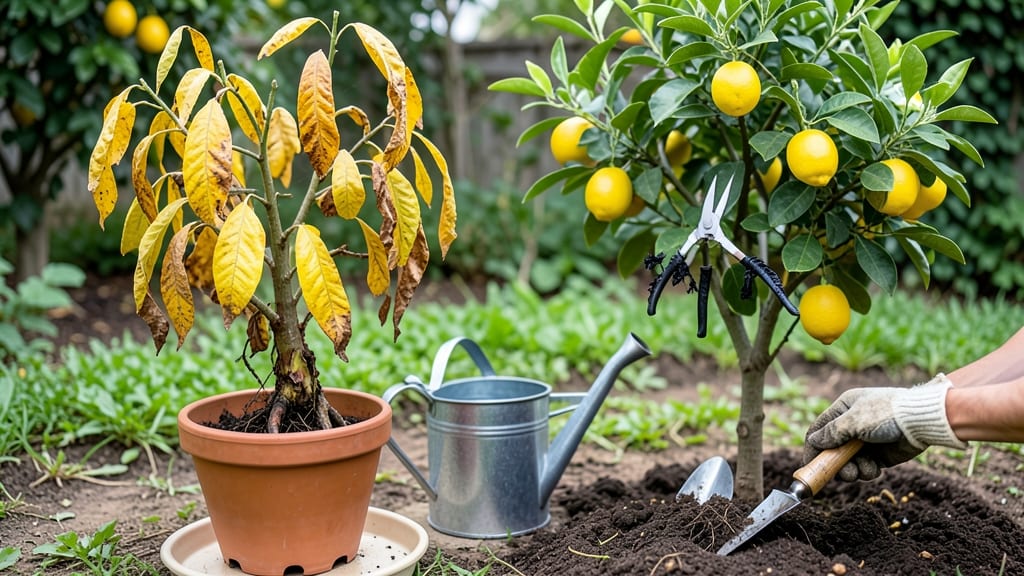
How to fix an overwatered lemon tree—your drooping leaves might be begging for help right now. 🌱 The good news? Overwatered citrus can bounce back faster than you think—if you act quickly. I’ve nursed back three soggy lemon trees (yes, really), and the key is stopping the rot before it spreads.
First, check the roots: if they’re mushy or smell foul, you’ve got root rot. Drain excess water immediately, then repot into fresh, well-draining soil with perlite or sand.
Prune any blackened stems with clean shears—this isn’t cruel, it’s survival surgery. Within 3 days, you’ll see the first signs of recovery as new growth pushes through.
Long-term, adjust your watering to once a week (or when the top inch of soil feels dry). Elevate the pot slightly to improve drainage, and keep it in bright, indirect light. The leaves will perk up faster than you’d expect—just give it patience and the right conditions.
This works for both potted and in-ground lemon trees, though containers recover quicker. The secret? Don’t wait until the roots are drowning. Act now, and you’ll be back to harvesting sweet lemons in no time.
Root Causes of Overwatering
An overwatered lemon tree isn’t just a case of too much love—it’s often a mix of well-intentioned habits and environmental factors that disrupt the plant’s delicate balance.
Understanding why this happens is the first step to preventing it. Let’s dig into the science and common triggers behind soggy soil and wilting citrus.
Lemon trees thrive on consistency, but many gardeners fall into the trap of guesswork instead of data. Overwatering often stems from:
- Fixed schedules without soil checks: Watering every 2–3 days (even in dry climates) can drown roots, especially if the soil doesn’t dry out between sessions. Why? Lemon trees in pots or heavy clay soil retain moisture longer, suffocating roots and blocking oxygen.
- Seasonal confusion: Winter slows root activity, but some gardeners water as much as in summer, assuming the tree “needs it.” Science alert: Cooler temps reduce evaporation, so the soil stays wet longer.
- Automatic irrigation gone rogue: Drip systems or timers set on high can deliver 1–2 inches of water per week—far more than a lemon tree’s 1 inch max in most climates.
Pro tip: Stick your finger 2–3 inches into the soil—if it’s damp, wait. Use a moisture meter for precision.
A lemon tree’s roots need oxygen, not a swamp. Poor drainage is a silent killer because:
- Compacted or clay-heavy soil: Water pools around roots instead of draining, creating anaerobic conditions (no oxygen). Roots suffocate, leading to root rot (a fungal infection from Phytophthora or Pythium).
- Pots without drainage holes: Even “self-watering” pots can trap excess moisture. Why? Lemon trees hate “wet feet”—their roots are sensitive to prolonged saturation.
- Mulch piled too high: A thick mulch layer (over 3 inches) can smother the soil, trapping heat and moisture against the roots.
Fix it fast: If your pot lacks holes, drill them or repot into a container with drainage. For garden beds, amend soil with perlite or sand to improve aeration.
Lemon trees are tropical but not tropical rainforest plants. High humidity or sudden temperature drops can trick gardeners into overwatering:
- Humid climates slow evaporation: In 70%+ humidity, soil stays wet longer. A tree might look “thirsty” when it’s actually conserving water.
- Cold snaps reduce transpiration: When temps drop below 60°F (15°C), leaves pull in less water. Yet, many water on schedule—leading to root stress.
- Greenhouse or indoor overwatering: Indoor air is often drier near vents but moist near plants. A lemon tree in a sunny window might need less water than one in a dim corner.
Adjust your approach: In humidity >60%, reduce water by 30%. Use a hygrometer to monitor levels.
Not all containers or soil are created equal—and some are root rot waiting to happen:
- Pots too large for the tree: A 5-gallon pot for a 1-year-old tree means excess soil holds water while roots struggle to dry it out. Rule of thumb: Upgrade pot size by 2–3 inches max per year.
- Heavy, water-retentive soil: Pure garden soil or peat-heavy mixes compact and trap moisture. Lemon trees need well-draining, slightly acidic soil (pH 6.0–7.0) with 30–40% perlite or sand.
- Fresh potting mix without amendments: New soil lacks the porous structure of aged or amended mixes, leading to poor aeration.
Quick test: If water sits on top of the soil 10+ minutes after watering, your mix is too dense.
Now that you know the real culprits, the next step is actionable fixes to revive your lemon tree’s roots and leaves. Stay tuned!
How to Revive Your Lemon Tree
Now that you know the signs and causes of an overwatered lemon tree, it’s time to take action! The good news is that with the right steps, you can nurse your tree back to health—often within days.
Here’s how to diagnose the problem and fix it, cause by cause, along with prevention tips to keep your lemon tree thriving.
If your lemon tree’s leaves are turning yellow, the roots are likely suffocating from excess moisture. Here’s how to save them:
- 🔥 Step 1: Stop Watering Immediately Let the soil dry out completely before watering again. Overwatering creates anaerobic conditions that choke roots.
- 🍳 Step 2: Improve Drainage If your pot lacks drainage holes, transfer the tree to a new container with holes. For in-ground trees, amend the soil with perlite, sand, or gravel to improve aeration.
- 👨🍳 Step 3: Repot (If Needed) If the roots are mushy or black, trim the affected parts with sterilized pruners and repot in fresh, well-draining soil.
- 💡 Pro Tip: Use a moisture meter to check soil dampness—water only when the top 2 inches are dry.
Drooping leaves signal dehydration despite excess water—a classic overwatering paradox. Here’s how to restore balance:
- ⏰ Step 1: Prune Damaged Leaves Remove severely wilted leaves to reduce stress on the tree.
- 🥘 Step 2: Adjust Watering Schedule Water only when the top 1–2 inches of soil are bone-dry. Lemon trees prefer moderate moisture, not soggy soil.
- 🌡️ Step 3: Boost Humidity (If Needed) Place the pot on a pebble tray with water or use a humidifier to help recovery.
- 🎯 Prevention: Use self-watering pots with drainage or a drip irrigation system for controlled moisture.
If root rot has set in (black, mushy roots with a foul smell), act fast:
- 🔪 Step 1: Remove the Tree from the Pot Gently shake off old soil to inspect roots.
- 🧼 Step 2: Trim Rotten Roots Cut away black, slimy roots with sterilized scissors. Healthy roots are firm and white.
- 🌿 Step 3: Repot in Fresh Soil Use a fungicide-treated potting mix (add mycorrhizal fungi for recovery) and ensure the pot has drainage.
- ✨ Pro Tip: After repotting, avoid watering for 3–5 days to let roots heal.
Overwatering leaches nutrients. Revive your tree with targeted care:
- 📊 Step 1: Test Soil pH Lemon trees thrive in slightly acidic soil (6.0–7.0). Adjust with lime (to raise pH) or sulfur (to lower pH) if needed.
- 💪 Step 2: Fertilize Lightly Use a balanced citrus fertilizer (6-6-6 or 8-3-9) diluted to half-strength. Over-fertilizing can burn roots.
- 🥗 Step 3: Add Organic Matter Mix in compost or worm castings to replenish nutrients naturally.
- 🍎 Prevention: Fertilize every 4–6 weeks in spring/summer, but stop in fall/winter when growth slows.
Final Thought: Recovery takes 3–7 days for mild cases, but severe root rot may need weeks. Stay patient, adjust your watering habits, and your lemon tree will bounce back—ready to produce sweet, juicy fruit again! 🍋✨
Frequently asked questions
How quickly can I expect to see improvement after fixing overwatering?
For mild cases, you'll often notice recovery within 3-7 days—new growth may appear and leaves will perk up. Severe root rot cases may take 2-4 weeks to show significant improvement, especially if you had to repot. The key is consistency: maintain proper drainage and watering habits.
Can I save my lemon tree if the roots smell foul and are black?
Yes, but you must act immediately! Trim all black, mushy roots with sterilized scissors, repot in fresh soil with fungicide treatment, and avoid watering for 3-5 days to let roots recover. Add mycorrhizal fungi to help healthy roots regenerate. The sooner you act, the better the chances.
What's the best soil mix to prevent future overwatering?
Use a blend of 60% potting soil, 30% perlite, and 10% coarse sand for optimal drainage. This creates air pockets while retaining enough moisture. For in-ground trees, amend native soil with compost and perlite to improve aeration and prevent waterlogging.
Why do my lemon tree leaves look wilted even though I just watered?
This is a classic overwatering paradox! When roots suffocate from excess moisture, they can't absorb water efficiently, causing wilting. Let the soil dry completely before watering again. Place the pot in bright, indirect light and avoid fertilizing until recovery is underway.
How can I tell if my lemon tree is overwatered vs. underwatered?
Overwatered trees show yellowing leaves, mushy stems, and roots that smell foul. Underwatered trees have crispy brown edges, dry soil pulling away from pot sides, and leaves that feel papery. Check soil moisture by sticking your finger 2-3 inches deep—if damp, it's overwatered.