
Watering
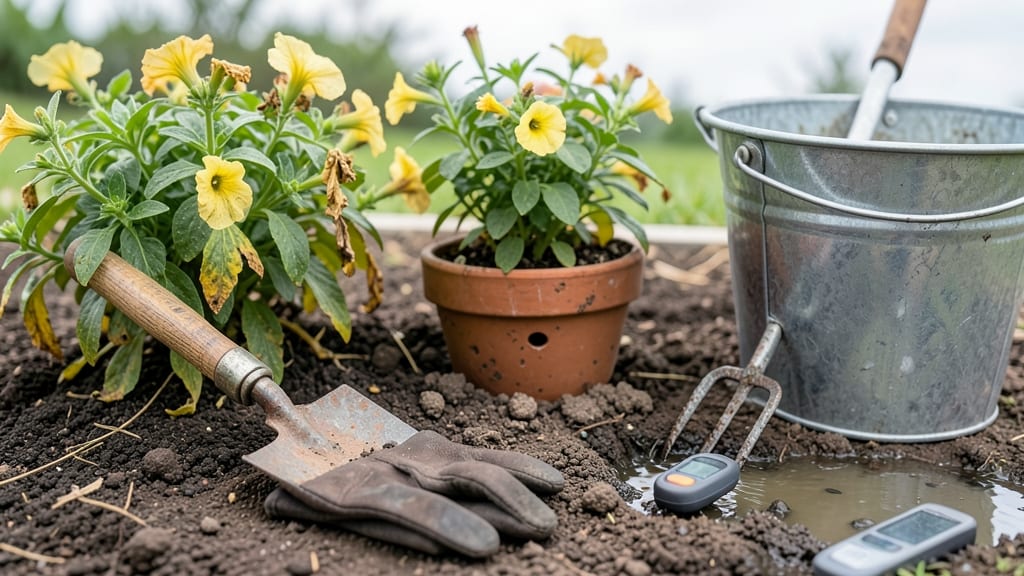
How to fix overwatered outdoor plants—your plants are drowning, not drinking. 🌱 I’ve saved more wilting herbs and sad petunias from soggy soil than I can count—and the fix is simpler than you’d think. Overwatering shows up as yellow leaves, mushy stems, or roots that smell like rot, but with the right adjustments, you can nurse them back to health in just a few days.
First, stop watering immediately and let the soil dry out. Then, improve drainage by mixing in perlite or sand if your garden beds are heavy clay. For container plants, check drainage holes and repot if needed.
Prune any blackened or mushy stems with clean scissors, and don’t worry—new growth will take its place.
Within a week, you’ll see fresh green leaves pushing through, and within two weeks, most plants rebound completely. Herbs like basil bounce back fastest, while woody plants like roses take a little longer but recover just as well. The key is patience and letting the roots breathe again.
To keep this from happening again, water only when the top inch of soil feels dry. Use a moisture meter or stick your finger in—if it’s damp, wait.
And here’s the secret weapon: mulch. A 2-inch layer of straw or wood chips keeps moisture steady without drowning roots. Your plants will thank you.
📚 In This Guide
- What you need
- Instructions
- Tips and common mistakes
- Wrapping up and next steps
What you need
- ● Garden gloves (1 pair) – Protect your hands from dirt and sharp objects.
- ● Trowel or hand fork (1) – For gently loosening compacted soil around roots.
- ● Bucket or watering can (1) – To help with drainage adjustments.
- ● Well-draining potting mix or compost (1-2 bags, 1-2 cubic feet) – Replace soggy soil with fresh, aerated mix.
- ● Perforated drainage tray or saucer (1) – If repotting, ensure excess water has an escape route.
- ● Hose or spray bottle (1) – For controlled watering post-revival.
- ● Pruning shears or scissors (1 pair) – To trim severely damaged foliage.
- ○ Mulch (optional but helpful) (1 bag, 1-2 cubic feet) – Retains moisture without suffocating roots.
- ● Root hormone gel – Speeds up recovery for severely stressed plants.
- ● Soil moisture meter – Monitors hydration levels post-fix.
- ● Fungicide (mild) – Prevents root rot if mold or mildew is present.
- ● Plant support stakes – Helps wobbly plants stabilize after repotting.
Step-by-Step instructions for reviving overwatered outdoor plants
Here’s how I’ve saved plants from root rot and wilting—no green thumb required.
💧 Step 1: Stop Watering Immediately and Assess the Damage
First, halt all watering completely. Overwatered plants need time to dry out, and adding more water just suffocates their roots. Check the soil by pushing your finger 2-3 inches deep—if it feels soggy or emits a musty smell, you’re dealing with root rot. Yellowing leaves or mushy stems confirm the problem.
Look for signs of recovery: crispy leaf edges or drooping that hasn’t improved after 24 hours of no water means the roots are struggling. If the soil pulls away from the pot or feels compacted, it’s time to act fast. The goal now is to dry out the roots without shocking the plant further.
✂️ Step 2: Prune Damaged Foliage and Improve Airflow
Use clean, sharp scissors to trim any leaves that look mushy, blackened, or wilted beyond recovery. Focus on the lower stems first—they’re often the first to rot. Snip just above a healthy leaf node to encourage new growth. I avoid cutting more than one-third of the plant at once, as this stresses an already weakened system.
Next, improve airflow around the plant. Overwatered plants often suffer from fungal issues, so thin out crowded branches and remove any nearby debris or mulch touching the stems. Prop the plant upright with small stakes if needed—this prevents further root stress from leaning or collapsing.
☀️ Step 3: Adjust Watering and Soil Conditions
Water only when the top 2 inches of soil feel dry to the touch. Use a watering can with a narrow spout to direct moisture at the base, avoiding the foliage. I like to water in the early morning so excess moisture evaporates quickly. If your soil drains poorly, mix in 1-2 inches of coarse sand or perlite around the base to improve drainage.
For container plants, ensure drainage holes aren’t clogged. If the pot feels heavy with water, lift it—if it doesn’t lighten after a few hours, the roots are still drowning. Move potted plants to a shadier spot for a week to reduce transpiration stress while they recover.
🌱 Step 4: Monitor and Encourage Root Recovery
Watch for new growth signs: firm stems, slightly crispy but not blackened leaves, and a return to upright posture. Healthy roots will start absorbing water again within 5-7 days. If no improvement occurs after a week, the plant may need repotting with fresh, well-draining soil. I’ve saved many plants this way by being patient—root recovery isn’t instant.
Apply a balanced, water-soluble fertilizer (like 10-10-10) at half strength after 2 weeks to replenish nutrients lost during stress. Avoid fertilizing if the plant is still weak or showing signs of rot. Keep an eye out for pests like fungus gnats, which thrive in damp conditions—spray with neem oil if needed.
Tips & tricks for reviving overwatered outdoor plants
Here's what nobody tells you about saving plants that seem beyond help—these tricks have saved my own struggling greens more times than I can count.
Soil Test First: Before taking any action, do this quick test: squeeze a handful of soil. If it crumbles easily when dry but feels damp, your plant just needs better watering habits. If it stays clumped and smells like wet cardboard, you're dealing with root rot that requires immediate intervention. I've saved plants by catching this early—don't skip this step!
Pruning Strategy: When trimming damaged foliage in Step 2, focus on removing leaves that are completely black or mushy, not just wilted ones. Healthy leaves can still photosynthesize and support recovery. I learned this the hard way after removing too much foliage and stressing an already weak plant further. Aim to keep at least two-thirds of the plant's original leaf surface intact.
Drainage Upgrade: For container plants struggling with drainage, consider repotting into a pot with larger drainage holes—even if it means temporarily using a larger container. The key is getting water out quickly. I've seen plants recover dramatically just by moving them to pots with proper drainage. If repotting isn't an option, create a drainage layer by adding a 1-inch layer of pebbles or broken pottery pieces at the bottom before adding fresh soil.
Fertilizer Timing: The 2-week wait before fertilizing in Step 4 is critical—don't rush it. Weak roots can't absorb nutrients effectively, and fertilizer can actually burn them. I've seen plants recover beautifully after this waiting period, with new growth appearing within days of applying that half-strength fertilizer. Think of it as giving your plant's roots a chance to heal before offering them extra nutrients.
Pro Tips for Fix Overwatered Outdoor Plants
- Here's what nobody tells you about saving plants that seem beyond help—these tricks have saved my own struggling greens more times than I can count.
- Soil Test First: Before taking any action, do this quick test: squeeze a handful of soil.
- Pruning Strategy: When trimming damaged foliage in Step 2, focus on removing leaves that are completely black or mushy, not just wilted ones.
Frequently asked questions
Got questions about reviving your soggy outdoor plants? Here are some common concerns—and quick fixes—to keep your greenery thriving after too much water.
How quickly can I fix overwatered plants?
Most plants show signs of recovery within 3–7 days if you act fast. Yellow leaves may drop, but new growth often appears in a week or two. For severe cases (like root rot), recovery can take 2–4 weeks or longer. Monitor soil moisture daily and adjust care as needed.
What’s the best time of day to check for overwatering?
Morning is ideal—soil is cooler, and you can assess moisture without confusion from recent rain or evening dew. Avoid checking after watering or in direct sunlight, which can dry the surface and mask deeper saturation. Stick your finger 2 inches deep; if it’s damp, hold off on watering.
Can I use coffee grounds or other household items to help?
Coffee grounds can improve soil drainage long-term by breaking down into compost, but they won’t fix overwatering overnight. For immediate help, stick to perlite, sand, or coconut coir to aerate soil. Avoid salt (like Epsom salt) unless testing confirms a magnesium deficiency—it can worsen root stress.
How do I know if my plant is beyond saving?
Watch for black, mushy stems, a foul odor (sign of rot), or total wilting despite your efforts. If leaves turn brown and crispy (not just yellow), the plant may be dead. Prune dead foliage to redirect energy, but if roots are slimy or the stem collapses when touched, it’s time to replace it.
What if it rains right after I fix overwatering?
Don’t panic! Move potted plants to a covered area (like a porch or garage) for 24–48 hours to prevent further saturation. For in-ground plants, mound soil around the base to create a slight barrier. If rain is forecasted, skip watering for 3–5 days and let the soil dry naturally.
Wrapping up and next steps
Fixing overwatered outdoor plants is easier than you think—just act quickly and follow the right steps! 🌱 By adjusting your watering routine, improving drainage, and giving your plants some TLC, you can revive them and prevent future stress. Remember, even a little attention can make a big difference.
Now that you’re armed with the know-how, take action today—check your soil, trim the damage, and give your plants the care they deserve. Your green thumbs are ready for a comeback! 🌿