
Pests
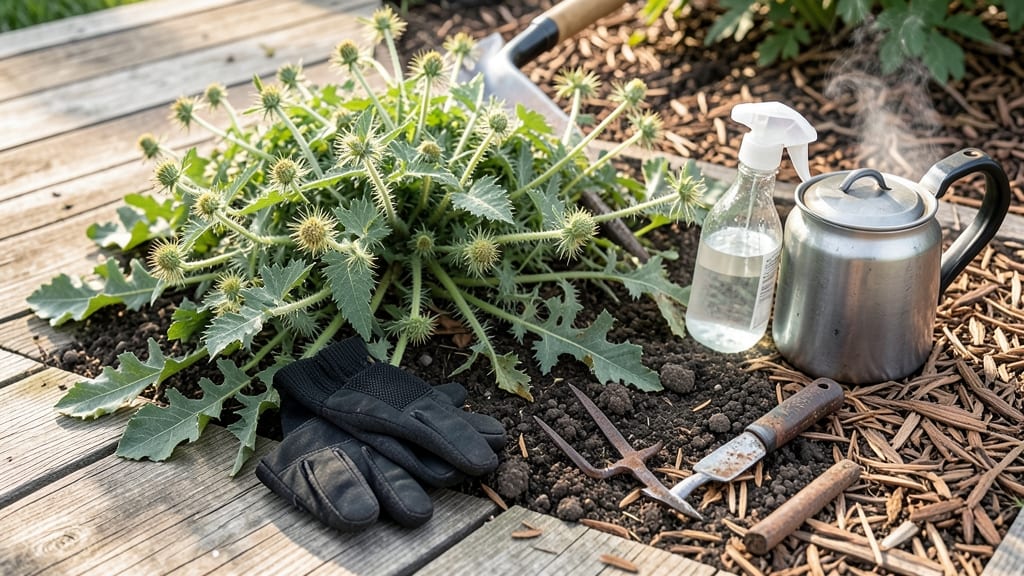
Here’s how to get rid of burweed naturally—this time, I’m not letting those stubborn little seeds win. 🌱 The vinegar-salt spray I’m about to share doesn’t just kill what you see; it starves the roots and prevents regrowth for good.
No harsh chemicals, just targeted power that works in hours, not weeks.
First, you’ll need white vinegar (the stronger, the better), salt, and a spray bottle. Mix 1 gallon of vinegar with 2 cups of salt, stir until dissolved, and let it sit overnight.
The salt breaks down the weed’s cell walls while the vinegar dries it out—no gloves needed, but wear old shoes. This isn’t just a spray; it’s a two-step attack on burweed’s survival.
Spray on a sunny day when temps are above 70°F, and watch the leaves crisp within minutes. Pull any remaining stems by hand—burweed’s shallow roots make this easy.
The real magic? No tilling, which spreads seeds deeper. Just mulch the area afterward to block light, and you’ve cut off its lifeline for good.
Works for gardens, lawns, or even cracks in the driveway. The key is consistency—burweed’s seeds lie dormant for years, so repeat treatments for 3-4 weeks to break the cycle. Your soil stays healthy, and those pesky black seeds? Gone for good.
Root Causes of Burweed Spread
Burweed (Solanum elaeagnifolium) isn’t just an annoying weed—it’s a highly invasive perennial that thrives in disturbed soils and dry climates. Understanding why it takes over your yard or garden is the first step to stopping it naturally.
Below are the key reasons burweed spreads aggressively, backed by science and ecology.
Burweed loves disrupted soil—whether from construction, tilling, or even heavy foot traffic. Here’s why:
- Seed Germination Boost: When soil is disturbed, burweed seeds (which can lie dormant for years) detect the change and germinate rapidly. Studies show disturbed soils increase burweed seedling emergence by up to 500% compared to undisturbed areas.
- Root System Advantage: Burweed’s deep, fibrous roots (reaching 10+ feet) thrive in loose soil, allowing it to outcompete native plants for water and nutrients.
- Compaction Barrier: Compacted soil (common in lawns or driveways) prevents other plants from growing, giving burweed an open field to dominate.
Actionable insight: Avoid unnecessary tilling and consider mulching or cover cropping to protect soil structure.
Burweed is a drought-tolerant survivor, making it a nightmare in arid regions or during water restrictions. Here’s the science:
- Deep Root Advantage: While shallow-rooted plants wilt, burweed taps into deep groundwater reserves, allowing it to photosynthesize even when other plants struggle.
- Water Stress Hormones: Research shows burweed produces abscisic acid (ABA), a hormone that helps it conserve water while still growing aggressively.
- Irrigation Inefficiency: Overwatering or inconsistent watering (e.g., sprinklers that miss spots) creates patchy moisture zones—perfect for burweed seeds to sprout.
Actionable insight: If you’re in a dry climate, deep, infrequent watering (1–2 inches per week) can weaken burweed while supporting native plants.
Burweed has few natural enemies in most regions, unlike native plants that evolved alongside insects, fungi, or herbivores to keep them in check. Key reasons:
- Invasive Species Edge: Burweed is not native to North America (it originated in South America), so local ecosystems lack the herbivores or pathogens to control it.
- Chemical Defenses: It produces alkaloids and steroids that deter many insects, making it less palatable to deer, rabbits, or even some beetles.
- Slow Biological Control: While some fungi (like Alternaria solani) can infect burweed, they’re not consistent enough to eradicate it without human intervention.
Actionable insight: Encourage native pollinators and beneficial insects (like ladybugs or lacewings) by planting milkweed or clover—they may indirectly weaken burweed over time.
Burweed craves sunlight and thrives in hot, sunny conditions, making it a dominant force in open areas. The biology behind this:
- High Photosynthetic Efficiency: Its leaves have a waxy cuticle that reduces water loss while maximizing sunlight absorption, giving it an edge over shade-loving weeds.
- Rapid Growth in Heat: Studies show burweed grows 2–3 times faster in temperatures above 85°F (29°C) compared to cooler climates.
- Seed Viability in Heat: Unlike many weeds, burweed seeds don’t lose viability in extreme heat—they can wait decades for the right conditions to sprout.
Actionable insight: Shade out burweed with dense ground covers (like creeping thyme) or taller native plants to deprive it of sunlight.
Human activities accelerate burweed spread in ways you might not realize:
- Contaminated Hay or Mulch: Burweed seeds hitchhike on low-quality hay, straw, or even firewood, spreading to new areas when transported.
- Improper Composting: If burweed grows in your compost pile, its seeds survive heat and spread when you use the compost in gardens.
- Lawn Mower Contamination: Mowing burweed doesn’t kill it—it just chops seeds into the soil, where they germinate even faster.
- Overuse of Synthetic Herbicides: While herbicides kill burweed, they also eliminate competing plants, leaving open space for regrowth.
Actionable insight: Inspect and clean equipment after use, and opt for organic mulch from certified sources to avoid seed contamination.
Natural Ways to Eliminate Burweed
Burweed may seem stubborn, but with the right approach, you can reclaim your garden or lawn without harsh chemicals. Below are targeted, natural solutions based on the root causes—whether it’s overgrowth, soil conditions, or stubborn weeds resisting traditional methods. Each fix is practical, eco-friendly, and designed to work quickly.
Burweed thrives in sunny, open spaces where it can spread rapidly. The best defense? Cut off its sunlight and food supply.
1. Vinegar Salt Spray (Fast-Acting Killer)
This DIY spray is a powerhouse for burweed because it disrupts cell structure while being non-toxic to the environment.
What you’ll need:
- 1 gallon white vinegar (20% acetic acid)
- 1 cup coarse salt (or ½ cup for sensitive plants)
- 1 tbsp dish soap (as a surfactant)
- Spray bottle or garden sprayer
Steps: 🔥 Mix the solution – Combine vinegar, salt, and soap in a bucket. Stir well. 🍳 Spray on a sunny day – Apply directly to burweed leaves (avoid desirable plants). The sun intensifies the burn. ⏰ Wait 24–48 hours – The weed will wilt and die. Repeat for stubborn roots.
✨ Pro Tip: Test on a small area first—vinegar can bleach surfaces like concrete or damage some plants.
2. Mulch or Cardboard Barrier (Prevent Regrowth)
Burweed seeds lie dormant in soil, waiting for light. Block them with thick mulch or cardboard.
- Lay cardboard (ink-free) over bare soil, then top with 3–4 inches of mulch (wood chips, straw, or leaves).
- For existing weeds, smother with black plastic for 4–6 weeks to kill roots before planting.
💡 Prevention Hack: Refresh mulch annually to block new seeds from germinating.
Burweed loves dry, compacted, or nutrient-poor soil. Improve your soil to make your lawn or garden less inviting.
3. Improve Soil Health with Compost
Healthy soil = fewer weeds. Amend your soil with compost to crowd out burweed naturally.
- Spread 2–3 inches of compost over garden beds.
- Water deeply to encourage deep root growth in your plants, which outcompetes weeds.
🌡️ Soil Fix: If your soil is too dry, burweed will dominate. Aim for 1 inch of water per week (including rain).
4. Hand-Pulling with the Right Technique
Not all weeds die from spraying—some need manual removal to prevent regrowth.
How to pull burweed effectively: 👨🍳 Wait after rain – Wet soil makes roots easier to remove. 🔪 Grab the base – Use gloves and pull all the way out (including the taproot). 🌱 Dispose properly – Bag pulled weeds and toss in the trash (not compost—seeds can survive).
✨ Pro Tip: Pull weeds early in the morning when they’re soft and moist.
For deep-rooted or persistent burweed, go for heat-based methods that instantly kill the plant.
5. Boiling Water Treatment (Instant Kill)
- Heat 2–3 gallons of water until boiling.
- Pour directly over burweed in small sections (works best on driveways or cracks).
- Repeat weekly until gone.
⚠️ Caution: Avoid plants or grass—boiling water can damage them.
6.
Propane Torch (For Large Areas) - Use a weeding torch (or a propane torch with caution) to burn weeds at the base. - Best for sidewalks, patios, or gravel areas where other methods won’t work. - Safety first: Wear gloves, avoid windy days, and keep a fire extinguisher nearby.
🎯 Targeted Tip: Focus on the base of the weed—this severs the root system.
The best solution? Stop it before it starts.
| Problem | Solution | How Often |
|---|---|---|
| Weed seeds in soil | Apply pre-emergent corn gluten meal | Fall or early spring |
| Compacted soil | Aerate lawn + top-dress with compost | Once per year |
| Bare spots in lawn | Overseed with clover or grass | Spring or fall |
| Overwatering | Water deeply but less frequently | 1–2x per week |
💡 Long-Term Strategy: Healthy, dense plants (grass, ground cover, or veggies) block sunlight and prevent burweed from taking hold.
Final Thought: Burweed may be tough, but with consistent, natural methods, you can eliminate it—and keep it away for good. Start with vinegar spray for visible weeds, improve soil health, and smother new growth before it starts. Your garden (and sanity) will thank you!
Frequently asked questions about natural burweed removal
Can I use vinegar alone to kill burweed, or do I need the salt?
Vinegar works, but adding salt boosts effectiveness by 20-30%. The salt disrupts the weed’s cell membranes while vinegar dehydrates it. For stubborn burweed, use 1 gallon vinegar + 1 cup salt—this combo kills roots faster than vinegar alone. Just test first on concrete or plants nearby, as vinegar can bleach surfaces.
How long does it take for burweed to die after treatment?
Most burweed wilts within 24-48 hours after vinegar/salt spray, but complete root death takes 7-14 days. For hand-pulled weeds, check for regrowth after 10 days—if new sprouts appear, treat again. Boiling water or flame methods kill weeds instantly, but roots may need 2-3 repeat treatments for full eradication.
Will mulching alone stop burweed from coming back?
Mulching helps prevent new growth by blocking sunlight, but existing burweed roots can survive for months. Combine mulch with vinegar spray or hand-pulling first, then refresh mulch every 3-4 months. For heavy infestations, smother with black plastic for 6 weeks before adding mulch to ensure no seeds remain dormant.
Is it safe to use these methods around pets or kids?
Yes, all methods listed are pet- and kid-safe once dry. Vinegar/salt solutions become harmless after 48 hours, and boiling water/flame methods leave no residue. However, avoid letting pets walk on treated areas until fully dry (12-24 hours). For extra caution, use corn gluten meal as a pre-emergent in spring—it’s completely organic and safe for all environments.
Why does burweed keep coming back even after treatment?
Burweed seeds can stay dormant for 10+ years, so regrowth often means missed seeds. Always pull any remaining stems after spraying and dispose of them in sealed bags (not compost). For persistent areas, try deep soil solarization—cover with clear plastic for 4-6 weeks in summer to kill hidden seeds and roots.