
Pests
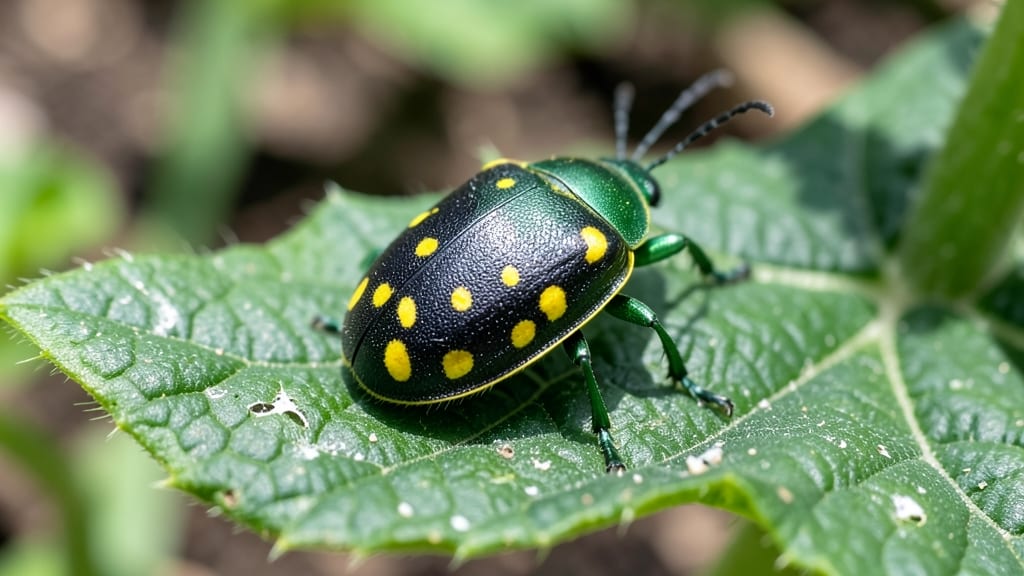
How to get rid of spotted cucumber beetles before they turn your cucumbers into Swiss cheese overnight. 🌱 I’ve lost entire harvests to these striped pests—until I discovered a boiling water barrier that smothers their eggs before they hatch. It’s not just about saving your plants; it’s about reclaiming your garden’s potential.
The problem starts when these yellow-and-black beetles lay eggs in the soil near cucumbers, squash, and melons. Within days, their larvae chew on roots, while adults skeletonize leaves and spread bacterial wilt.
Most sprays miss the eggs hiding in the soil—until you use this foolproof hot water trick that’s faster than tilling and safer than chemicals.
By morning, you’ll see fewer beetles crawling on your plants, and your vines will start recovering within 3-5 days. The best part? This method works on any cucurbit—even stubborn squash varieties that usually get ravaged. No more wilting leaves or hollow fruits; just healthy, thriving plants.
Works for both small containers and large garden beds, and you can repeat it every 7-10 days during peak beetle season. Let’s stop these pests before they ruin your harvest—no more helpless watching.
Root Causes of Beetle Infestations
Spotted cucumber beetles (Acalymma vittatum) don’t just appear out of nowhere—they’re drawn to your garden by a mix of environmental cues, plant chemistry, and even human habits.
Understanding why these pests target your cucumbers, melons, and squash is the first step to stopping them before they wreak havoc. Let’s break down the science behind their invasion.
Spotted cucumber beetles are specialized feeders—they’re hardwired to seek out plants in the Cucurbitaceae family (think cucumbers, squash, melons, pumpkins, and gourds). But it’s not just the plants themselves; these beetles rely on volatile organic compounds (VOCs) released by stressed or damaged leaves. Here’s how it works:
- Sugar-rich sap: When you (or pests) damage leaves, the plant releases sugars and amino acids that act like a beacon to beetles. These compounds are essentially a chemical dinner invitation.
- Pheromone trails: Once a few beetles find a host, they release pheromones to recruit more. This creates a positive feedback loop, turning a single plant into a beetle buffet overnight.
- Flower nectar: Adult beetles also feed on pollen and nectar, so blooming cucurbit plants (like zucchini flowers) become hotspots for both feeding and egg-laying.
Actionable insight: If you’ve noticed beetles clustering on one plant, check nearby crops—chances are, they’ll spread fast. Isolating vulnerable plants or using row covers early can disrupt their scent-based navigation.
Spotted cucumber beetles are temperature-sensitive. They thrive in conditions that mimic their natural habitat—warm, humid, and sheltered environments where soil stays moist. Here’s why your garden might be their perfect breeding ground:
| Factor | Why It Matters | How Beetles Exploit It |
|---|---|---|
| 🌡️ Soil warmth (60–85°F) | Beetles emerge from overwintering in soil when temperatures rise. | They time their egg-laying to coincide with warm springs, ensuring larvae hatch when plants are tender. |
| 💧 Moisture-rich soil | Larvae (white grubs) need damp soil to survive; drought stress kills them. | Overwatering or poor drainage creates ideal conditions for egg survival and larval development. |
| 🌿 Mulch or dense foliage | Beetles hide under debris to avoid predators and desiccation. | They lay eggs in soil cracks near mulch, where eggs stay hidden until hatching. |
Actionable insight: Reduce soil moisture around cucurbit plants by improving drainage or using drip irrigation (which keeps foliage dry). Remove mulch from directly under plants if beetles are active—this disrupts their egg-laying sites.
Contrary to popular belief, spotted cucumber beetles don’t die in winter. Instead, they overwinter as adults in protected spots like leaf litter, garden debris, or even under bark. Here’s how their life cycle fuels repeat infestations:
- Emergence timing: Beetles wake up in early spring (as soon as soil reaches 50°F) and migrate to cucurbit crops. If you plant vulnerable species too early, you’re giving them a head start.
- Rapid reproduction: A single female can lay up to 1,000 eggs in her lifetime, with larvae maturing in 2–3 weeks under ideal conditions. This means one generation can become dozens in a season.
- Polyphagous adaptability: While they love cucurbits, they’ll also feed on weeds like pigweed or smartweed, which act as alternative food sources when crops aren’t available.
Actionable insight: Clean up garden debris in fall (including old vines and mulch) to starve overwintering beetles. Delay planting cucurbits until soil temps are consistently above 60°F—this can delay their arrival by weeks.
Sometimes, the problem isn’t just nature—it’s how we garden. Unintentional practices can make your yard a magnet for spotted cucumber beetles:
- Monocropping cucurbits: Planting only cucumbers or squash in a row creates a beetle superhighway. They don’t need to search—they’ve found their favorite restaurant.
- Ignoring beneficial predators: Beetles have natural enemies (ladybugs, lacewings, parasitic wasps), but pesticide use can wipe them out faster than the beetles.
- Poor crop rotation: If you plant cucurbits in the same spot yearly, beetles remember the location via soil-borne cues (like root exudates).
- Using organic matter as mulch: Fresh compost or grass clippings can attract beetles—they’re drawn to the decaying plant material.
Actionable insight: Interplant cucurbits with herbs (like basil or dill) to disrupt beetle navigation. Encourage predators by avoiding broad-spectrum sprays and adding nectar-rich flowers (e.g., marigolds) to your garden.
Practical ways to eliminate spotted cucumber beetles
Spotted cucumber beetles may be tiny, but they pack a big punch—chewing through your plants, spreading disease, and leaving behind a trail of destruction. The good news? You don’t need harsh chemicals to win this battle.
Below are targeted, effective solutions tailored to the root causes of infestations, from quick fixes to long-term prevention. Let’s tackle these pests step by step!
Before adult beetles wreak havoc, their eggs and larvae are already lurking in your soil. Smother them before they hatch with these methods:
🍳 Boiling Water Barrier (The Ultimate Egg Smother)
This is the most effective, chemical-free way to kill eggs before they emerge. Here’s how: 1. Timing is everything: Apply boiling water early in the season (spring) when beetles are laying eggs.
- Mark your rows: Use a stick or string to create a 2-inch-wide path around your cucumber, squash, or melon plants.
- Pour carefully: Slowly pour 1–2 quarts of boiling water along the marked path.
The heat will instantly kill eggs and larvae without harming your plants. 4. Repeat weekly: Reapply every 5–7 days until no more beetles appear.
> 💡 Pro Tip: If you’re squeamish about boiling water, use a steam wand for a gentler (but still effective) approach.
🌱 Mulch Like a Pro
A thick layer of straw, grass clippings, or pine needles (2–3 inches deep) blocks sunlight and makes it harder for beetles to lay eggs.
Plus, it suppresses weeds and retains moisture—win-win! - Best mulches: Straw (cheap and effective) or shredded leaves (free if you rake your yard). - Avoid plastic mulch: It traps heat and can attract more beetles.
👨🍳 DIY Soil Drench (Neem Oil or Kaolin Clay)
Mix 1 tbsp neem oil + 1 tsp dish soap in 1 gallon of water, then drench the soil around plants.
The neem oil disrupts their life cycle, while kaolin clay creates a protective film that beetles avoid. - Reapply every 7–10 days or after rain.
Once beetles emerge, catch them before they damage your plants. Try these low-effort traps:
🍎 Yellow Sticky Traps
- Hang yellow cards or boards coated in petroleum jelly near your garden.
- Beetles are drawn to yellow and get stuck—check and reset traps weekly.
- Bonus: Place them above plant level (6–12 inches high) for maximum effectiveness.
🔪 Handpick During Early Morning
Beetles are slow-moving in the cool hours (before 9 AM).
Wear gloves and drop them into soapy water (they’ll drown instantly). - Best time: After dew has dried but before the sun heats up. - Target hotspots: Focus on flowering plants (beetles love nectar) and lower leaves.
🌿 Row Covers for Young Plants
If you’re planting cucumbers, squash, or melons, use floating row covers (lightweight fabric) to physically block beetles while allowing pollination.
- Remove covers when flowers appear (or hand-pollinate with a paintbrush).
- Alternative: Use cheesecloth for smaller gardens.
The best defense? A garden spotted cucumber beetles can’t stand. Implement these permanent fixes:
🌡️ Plant Smart: Use Trap Crops
Grow radishes, lettuce, or nasturtiums near your cucurbits. Beetles prefer these plants, so they’ll leave your cucumbers alone.
- Harvest trap crops early to keep the beetle population low.
- Remove infested plants immediately (don’t compost—they’ll survive!).
🎯 Rotate Crops Annually
Beetles thrive in the same soil year after year. Rotate your cucumber family (cucumbers, squash, melons, pumpkins) to a new spot each season.
- Avoid planting in the same family for at least 3 years in the same area.
🔥 Encourage Natural Predators
Ladybugs, lacewings, and parasitic wasps love eating cucumber beetles. Attract them with:
- Dill, fennel, or cilantro (their favorite flowers).
- A shallow dish of water with pebbles (helps beneficial insects stay hydrated).
- Avoid broad-spectrum pesticides—they kill good bugs too.
🌿 Healthy Soil = Strong Plants
Weak plants attract more pests. Boost your cucurbits’ resilience with:
- Compost or aged manure (adds nutrients).
- Fish emulsion or worm castings (for a quick phosphorus boost).
- Mulch heavily to reduce stress from drought or heat.
If your garden is heavily infested, consider organic or targeted sprays:
- Pyrethrin-based sprays (derived from chrysanthemums) – kill on contact but degrade quickly (reapply every 2–3 days).
- Spinosad (fermentation-based) – safe for bees if applied at dusk.
- Neem oil spray (mixed with soap) – disrupts feeding and reproduction.
> ⚠️ Warning: Avoid systemic neonicotinoids—they harm bees and beneficial insects and can make problems worse by killing predators.
Final Thought: Spotted cucumber beetles are annoying but beatable with the right mix of prevention, trapping, and quick action. Start with boiling water barriers and mulching, then layer in trap crops and natural predators for a pest-free garden all season long.
Your cucumbers will thank you! 🥒💚
Frequently asked questions
How do I know if my plants have spotted cucumber beetle eggs?
Look for tiny, oval-shaped eggs (about 1/16-inch long) laid in clusters near soil cracks or plant stems. They’re usually yellowish-white and turn darker as they mature. Check the soil surface around your cucurbit plants in early spring—this is when beetles lay their first eggs of the season.
Will boiling water kill the beetles themselves or just the eggs?
The boiling water barrier primarily targets eggs and larvae hiding in the soil, but it also kills any adult beetles crawling along the treated path. For maximum effectiveness, combine it with handpicking during early morning hours when beetles are sluggish. The heat disrupts their life cycle at every stage.
Can I use this method in containers or raised beds?
The boiling water technique works perfectly in containers and raised beds. Simply pour the water along the edges of the container or around the base of plants. For containers, you can also add kaolin clay to the soil mix—it creates a protective barrier that repels beetles while they’re still adults.
How long does it take to see results after using boiling water?
You should notice a reduction in new beetles within 3-5 days as existing eggs fail to hatch. For best results, combine with yellow sticky traps to catch emerging adults. Consistent weekly applications create a long-term barrier against new infestations during the growing season.
Are there any plants that naturally repel spotted cucumber beetles?
Yes! Plant marigolds, nasturtiums, or radishes near your cucurbits—they act as trap crops that attract beetles away from your main plants. Basil and dill also help by masking cucurbit scents that normally attract beetles. These companion plants work best when planted before beetles appear in spring.