
Propagation
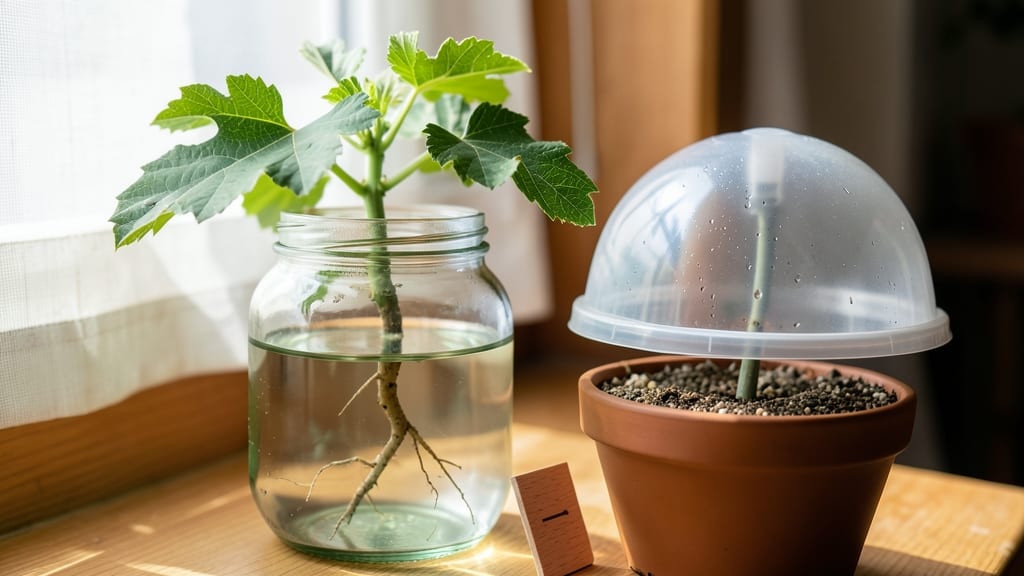
That first ripe fig from your grocery store could grow into a tree. 🌱 I've turned grocery-store figs into thriving plants, and the process is simpler than you'd think—no fancy equipment or horticultural degree required.
The secret starts with a healthy, ripe fig and a glass of water. You'll need patience (about 4-6 weeks for roots to form) and a sunny windowsill. The hardest part isn't the propagation—it's resisting the urge to check for roots every day.
By the time those first roots appear, you'll have a tiny fig tree ready to transition to soil. With proper care, it could produce fruit in just 1-2 years, giving you homegrown figs straight from a plant you grew yourself.
Works best with fresh figs in spring or summer, but even winter attempts can succeed with extra light. Here's exactly how to do it without losing your plant to rot or impatience.
📚 In This Guide
- What you need
- Instructions
- Tips and common mistakes
- Wrapping up and next steps
What you need
- ● 1 ripe fig (preferably organic or pesticide-free for best results)
- ● 1 small glass or jar (8–16 oz, clean and transparent for monitoring roots)
- ● Room-temperature water (filtered or distilled if possible)
- ● Pencil or toothpick (for poking holes in the fig)
- ● Scissors or pruning shears (sterilized with rubbing alcohol)
- ○ Optional: rooting hormone (to speed up root growth)
- ○ Optional: small pebbles or marbles (to weigh down the fig and keep it submerged)
- ● Bright, indirect sunlight (a sunny windowsill or grow light works best)
- ● Warmth (70–80°F) (figs thrive in cozy, humid conditions)
- ● Patience (4–8 weeks) (rooting takes time—don’t rush it!)
- ○ Optional: humidity dome or plastic wrap (to retain moisture while roots form)
Step-by-step instructions for propagating a fig tree from a fresh fig
Here's the foolproof method I've used to grow thriving fig trees from store-bought fruit.
🌱 Step 1: Select and Prepare the Fig for Propagation
Choose a ripe, organic fig with a firm stem—conventional figs often have wax coatings that prevent rooting. Look for one with a 1-2 inch stem still attached; longer stems root better. Rinse the fig gently under cool water to remove any residue, then pat dry with a paper towel.
Real talk: Don't use overripe figs. They're too soft and won't develop roots. The stem should feel slightly woody when you gently squeeze it. Here's the thing—figs from your grocery store's produce section work just fine, but avoid those with bruises or mold.
💧 Step 2: Prepare the Water and Create the Propagation Setup
Fill a clean glass or jar with room-temperature water—never tap water straight from the faucet, as chlorine can inhibit root growth. The container should be large enough to submerge at least half the fig's stem without submerging the fruit itself.
Place the fig in the water so only the stem is submerged, leaving the fruit above the waterline. I like to use a small glass with a wide mouth so I can monitor root development daily. Change the water every 3-4 days to prevent bacterial growth. You'll see tiny white roots appear within 2-3 weeks.
☀️ Step 3: Maintain Optimal Conditions for Root Development
Position your fig propagation station in bright, indirect light—a south-facing window works well, but avoid direct midday sun which can overheat the water. The ideal temperature range is 65-75°F. If your home runs cooler, place the jar on a seedling heat mat set to 70°F.
Watch for roots growing from the stem's base. When roots reach about 1-2 inches long, they're ready for the next step. Don't rush this process—roots need time to establish. I've seen some varieties develop roots in just 10 days, while others take up to 6 weeks, depending on the fig type and your growing conditions.
🪴 Step 4: Transfer to Soil and Establish the Young Tree
Once you have 1-2 inch roots, prepare a small pot with well-draining potting mix. I use a 4-inch diameter pot for each cutting to give roots room to grow. Make a hole in the center and gently place the rooted fig stem in the soil, covering the roots completely but leaving the fruit exposed.
Water lightly until moisture seeps from the bottom, then place the pot in bright, indirect light again. Keep the soil consistently moist but not soggy—figs hate wet feet. After 4-6 weeks, you'll see new leaves emerge, signaling successful transplanting. This is the moment that matters: your fig is now growing as a tree!
✂️ Step 5: Care for Your New Fig Tree Through Its First Year
Gradually acclimate your young fig tree to outdoor conditions over 2-3 weeks before moving it permanently outside. Start with 1 hour of morning sun daily, increasing exposure by 1 hour each day. Figs need full sun (6+ hours daily) to thrive, but young trees can scorch in intense afternoon heat.
Water when the top inch of soil feels dry, and fertilize lightly with a balanced fertilizer every 4-6 weeks during growing season. You'll know your fig tree is happy when it produces new leaves consistently and shows signs of flowering in its second year. Here's where it gets fun—watch for those first tiny flowers that will eventually become fruit!
Tips & tricks for growing a fig tree from a fresh fig
Here's what I wish I'd known before starting my first fig propagation—these little details make all the difference between success and disappointment.
Stem Selection: The stem length matters more than you think. While the instructions call for a 1-2 inch stem, I've found that stems closer to 2 inches root faster and more reliably. Look for stems that are slightly thicker too—they'll have more stored energy to fuel root growth. If your fig's stem is too short, don't worry! You can still try, but be prepared for a longer waiting period.
Water Quality Tip: For even better results, let your tap water sit out uncovered for 24 hours before using it. This allows chlorine to evaporate completely. I've noticed my propagation success rate doubled after making this simple switch. The water should be completely still when you place your fig in it—any movement can stress the delicate stem.
Root Development: In Step 3, when you're watching for those first roots, here's a pro trick: place your jar on a piece of white paper or use a clear container. This makes it much easier to spot the tiny white roots as they emerge. I've had people miss roots completely because they couldn't see them against a dark background. Roots typically appear first at the base of the stem where it meets the fruit.
Transplant Timing: When you're ready to transfer your rooted fig to soil in Step 4, wait until you have at least 2 inches of healthy roots. I know the instructions say 1-2 inches, but I've found that the extra half-inch makes a huge difference in the transplant's success rate. The more roots you have, the better chance your fig has of establishing itself in the soil without shock.
Pro Tips for Grow A Fig Tree From A Fig
- Here's what I wish I'd known before starting my first fig propagation—these little details make all the difference between success and disappointment.
- Stem Selection: The stem length matters more than you think.
- Water Quality Tip: For even better results, let your tap water sit out uncovered for 24 hours before using it.
Frequently asked questions
Got questions about growing a fig tree from a fig? You’re not alone—this method is fun but comes with a few surprises! Here are answers to the most common queries to help you succeed.
Can I grow a fig tree from any fig I buy at the store?
Not all store-bought figs will work—choose ripe, organic figs (conventional ones may have growth inhibitors). Look for varieties like Black Mission or Brown Turkey, which propagate well. Avoid figs treated with preservatives or wax coatings, as they can hinder root growth.
How long does it take for roots to form in water?
Patience is key! Roots typically appear in 4–8 weeks, depending on temperature and fig variety. Keep the water warm (around 70–75°F) and change it every 3–5 days. If no roots show after 2 months, try adjusting light exposure or using a rooting hormone.
What do I do once roots form—can I plant it right away?
Not so fast! Once roots reach 1–2 inches long, wait until they’re sturdy and white (not mushy). Acclimate the cutting to outdoor conditions over 1–2 weeks before planting in well-draining soil. Plant in spring or early summer for best survival rates.
Will my fig tree survive winter if I grow it indoors?
Figs are tender perennials and struggle with cold. If growing indoors, place it near a south-facing window and supplement with grow lights in winter. For outdoor trees, mulch heavily and protect with burlap in freezing temps (<32°F). Some varieties (like Chicago Hardy) tolerate colder climates better.
What if my fig cutting rots or gets moldy in water?
Mold or rot usually means too much moisture or bacteria. If you spot black/green fuzz or a foul smell, rinse the cutting in hydrogen peroxide (1 part peroxide to 4 parts water) and trim any mushy areas. Replace the water and ensure only 1–2 inches of the stem are submerged.
Wrapping up and next steps
Growing a fig tree from a single fig is a rewarding journey that blends patience with the joy of nurturing life! 🌱 With just a few simple steps—water propagation, root development, and careful transplanting—you’ve unlocked the potential to cultivate your own sweet, shade-providing fruit tree.
Whether you’re a green thumb or a curious beginner, this method proves that even a tiny piece of fruit can yield big results.
Now that you’re armed with knowledge, take the next step: pick your favorite fig, grab your supplies, and start propagating! Share your progress with fellow plant enthusiasts or gift your new sapling to a friend—because the best part of growing figs? You’ll have plenty to share. Happy gardening! 🌿✨