
Propagation
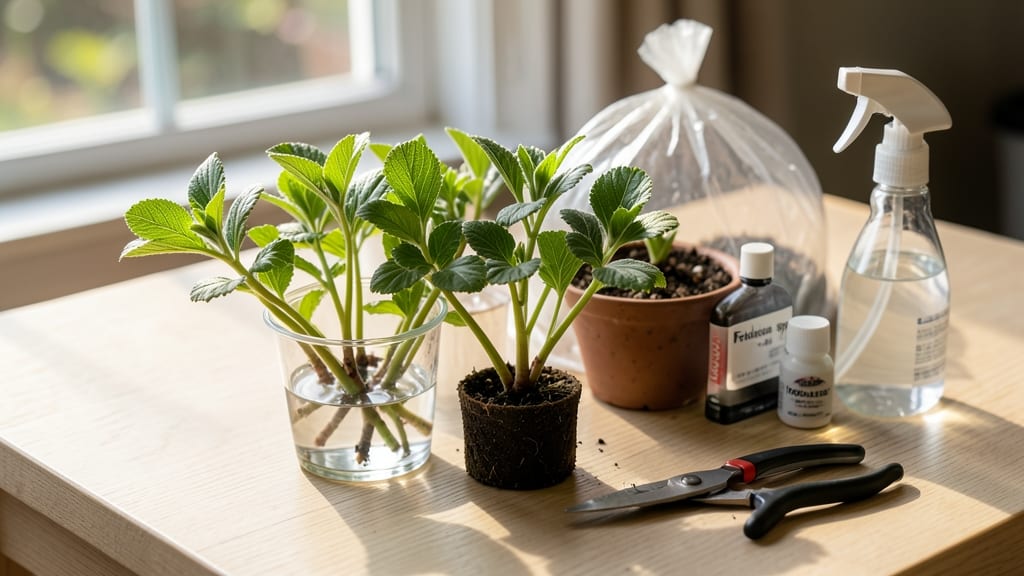
How to grow fuchsias from cuttings is easier than you think—just a few snips and a little patience. ✂️ I’ve propagated dozens of fuchsias this way—no fancy tools needed, just sharp scissors and patience. The key? Taking cuttings at the right time and rooting them in water first, which gives you a clear view of progress.
Most people fail because they rush into soil too soon. Start with 3-4 inch cuttings from healthy stems, strip the lower leaves, and place them in water. Within 2-3 weeks, you’ll see roots forming—proof your cuttings are ready for their forever home in soil.
This method works best in spring or early summer when fuchsias are actively growing.
By the time roots reach about an inch long, you’ll transplant them into pots with well-draining soil. The first few weeks are critical—keep them in bright, indirect light and avoid overwatering. Watch as those rooted cuttings burst into lush, blooming plants by next season.
Even if some cuttings struggle, you’ll still end up with more fuchsias than you started. The best part? You can repeat this process every year, creating a thriving collection without spending a dime. Ready to get started?
📚 In This Guide
- What you need
- Instructions
- Tips and common mistakes
- Wrapping up and next steps
What you need
- ● Healthy fuchsia cuttings: 4–6 inches long, with at least 2–3 sets of leaves (preferably from semi-hardwood stems).
- ● Sharp pruning shears or scissors: Clean and sterilized to avoid disease. Pro tip: 💡 Disinfect with rubbing alcohol before use!
- ● Clean water: Room-temperature, chlorine-free (let tap water sit out for 24 hours if needed).
- ● Small glass or jar: Wide-mouth (like a mason jar) for water propagation.
- ○ Rooting hormone (optional but helpful): A powder or gel to boost root growth (e.g., Clonex or Dip ‘N Grow).
- ● Well-draining potting mix: A blend of peat moss, perlite, and vermiculite (or a pre-mixed seed-starting mix).
- ● Small pots or trays: 3–4 inches in diameter with drainage holes.
- ● Plastic bag or humidity dome: To create a mini greenhouse effect (clear plastic wrap works too!).
- ● Hydrogen peroxide (3%): A few drops in water to prevent bacterial growth.
- ● Heat mat: Keeps cuttings warm (70–75°F) for faster rooting.
- ● Fertilizer (low-dose): A diluted seaweed or fish emulsion (after roots form).
- ● Grow lights: If natural light is limited (12–16 hours/day).
Step-by-step instructions for growing fuchsias from cuttings
Here’s my foolproof method for rooting fuchsias in water before transplanting—guaranteed to give you strong, vibrant plants.
🌱 Step 1: Select and Prepare Healthy Cuttings
Choose semi-hardwood stems from this season’s growth that are about 4-6 inches long and have at least 3-4 leaf nodes. Avoid flowering stems—they root poorly. Use sharp scissors to cut just below a leaf node at a 45-degree angle. This increases surface area for better root formation.
Remove the lower leaves, leaving only the top 2-3 leaves on each cutting. Too many leaves mean the stem wastes energy keeping them alive instead of growing roots. Strip off any flowers or buds too—your cutting’s energy should go into roots, not blooms.
💧 Step 2: Root in Water for 3-4 Weeks
Fill a clean glass or jar with room-temperature water—fuchsias root best in still water, not tap water left sitting overnight. Place the cuttings in the water so only the bare stem is submerged, not the leaves. You’ll see tiny white roots appear at the nodes in about 2-3 weeks, and by 4 weeks, they’ll be 1-2 inches long.
Change the water every 5-7 days to prevent bacteria or algae growth. I like to use a small glass for each cutting so I can monitor root progress easily. If the water gets cloudy before a week, dump it and refresh—this keeps your cuttings healthy and rooting strong.
✂️ Step 3: Transplant to Soil When Roots Are Established
Once roots reach 1-2 inches long, it’s time to move your cuttings to soil. Use a well-draining potting mix (I blend 50% peat moss and 50% perlite) to prevent soggy roots. Fill a 4-inch pot with the mix, then gently press the rooted cutting into the soil up to the first set of leaves.
Water lightly after transplanting—just enough to settle the soil around the roots. Don’t drown it! Place the pot in bright, indirect light for the first week to help it adjust. Too much direct sun now can scorch the leaves, and you want all that energy going into root establishment.
☀️ Step 4: Acclimate and Encourage Growth
After 10-14 days in soil, your fuchsia cuttings should show new growth—small leaves or flower buds—meaning they’ve taken root successfully. Gradually introduce them to morning sun over the next week. Fuchsias love light but can get sunburned if moved too quickly.
Keep the soil evenly moist but not soggy—stick your finger in the soil. If the top inch feels dry, water gently. Overwatering is the #1 killer of new fuchsias, so let the top layer dry out slightly between waterings. You’ll know you’re doing it right when the plant starts putting out fresh, vibrant leaves.
🪴 Step 5: Fertilize and Maintain for Blooms
Once your cuttings have 4-5 sets of true leaves, start feeding them with a balanced liquid fertilizer (like 10-10-10) diluted to half strength. I fertilize every 2 weeks during spring and summer to encourage lush growth and blooms. Stop fertilizing in fall to let the plant rest.
Pinch back the tips of new growth to encourage bushier plants. This might sound counterintuitive, but it forces the plant to grow wider instead of tall and leggy. You’ll see more flowers and fuller foliage as a result. With proper care, your cuttings will bloom by late summer—just in time for a stunning display!
Tips & tricks for perfect fuchsia propagation
Confession: I wasted months trying to root fuchsias before I learned these game-changing tricks. Here's what nobody tells you—
Cutting Selection: Look for stems that are pencil-thick with a slight woody texture—these semi-hardwood cuttings root best. Avoid stems that are too soft (they rot) or too mature (they're too tough). I always check for healthy green leaves without brown spots, and I avoid stems with flowers or buds since they drain energy from root development.
Water Quality Matters: Tap water left sitting overnight can develop bacteria or algae that'll rot your cuttings before they root. Always use fresh, room-temperature water and change it every 5-7 days as instructed. For extra insurance, I add a tiny pinch of cinnamon to the water—it acts as a natural antifungal without harming the plants.
Root Monitoring: When checking for roots, don't just look—gently tug on the cutting. If it resists slightly, roots are forming. I use a small glass with measurement markings to track growth, and I keep a notebook to record when I see those first white root hairs (usually around week 2). This helps me stay consistent with the 3-4 week timeline.
Transplanting Transition: The moment you move cuttings to soil is critical. I find it helps to dip the roots in a rooting hormone powder (optional but helpful) before planting, then water lightly but thoroughly to settle the soil. The first week after transplanting is when most failures happen—keep them in bright, indirect light and resist the urge to overwater.
Pro Tips for Grow Fuchsias From Cuttings
- Confession: I wasted months trying to root fuchsias before I learned these game-changing tricks.
- Cutting Selection: Look for stems that are pencil-thick with a slight woody texture—these semi-hardwood cuttings root best.
- Water Quality Matters: Tap water left sitting overnight can develop bacteria or algae that'll rot your cuttings before they root.
Frequently asked questions
Got questions about growing fuchsias from cuttings?
You’re not alone! Here are answers to the most common concerns—so you can propagate with confidence and avoid pitfalls.
When is the best time to take fuchsia cuttings?
Take cuttings in early summer (June–July) when fuchsias are actively growing. Avoid late summer or fall, as plants slow down and rooting success drops. For hardy fuchsias, you can also try cuttings in late spring (May) if your climate is mild.
How do I know if my fuchsia cutting is healthy enough to root?
Look for non-flowering stems (4–6 inches long) with at least 2–3 leaf nodes. Avoid woody or overly mature growth—these root poorly. Healthy cuttings should feel firm, not mushy, and have vibrant green leaves. Pro tip: Snip just below a node at a 45-degree angle for maximum rooting success!
Why are my fuchsia cuttings rotting in water?
Overwatering or bacterial/fungal infections are usually the culprits. Use room-temperature, filtered water (chlorine-free!) and change it every 2–3 days. If leaves turn yellow or stems soften, trim the rotted part, dip in cinnamon or hydrogen peroxide, and restart in fresh water. Bonus: Add a rooting hormone to speed things up!
Can I grow fuchsias from cuttings without water propagation?
Yes! Direct soil propagation works too—just dip cuttings in rooting hormone and plant in a moist, well-draining mix (perlite + peat or coconut coir). Keep humidity high with a plastic bag or propagator and mist lightly daily. However, water rooting gives you clear visibility of progress, making it easier for beginners.
How long does it take for fuchsia cuttings to root?
With water propagation, roots typically appear in 2–4 weeks, but some may take up to 6 weeks. Patience is key! Once roots are 1–2 inches long, transplant to soil. Speed it up: Place cuttings in indirect, bright light (no direct sun) and keep temps between 65–75°F.
Wrapping up and next steps
Growing fuchsias from cuttings is a rewarding way to expand your garden—and you’ve got all the tools to succeed! By rooting in water first, you’ll give your cuttings the best start before transitioning to soil.
With patience, the right conditions, and a little care, you’ll soon enjoy vibrant blooms from your new plants. 🌱✨
Now that you’re ready to propagate, why not share your new fuchsias with friends or experiment with different varieties? Happy gardening!