
How To
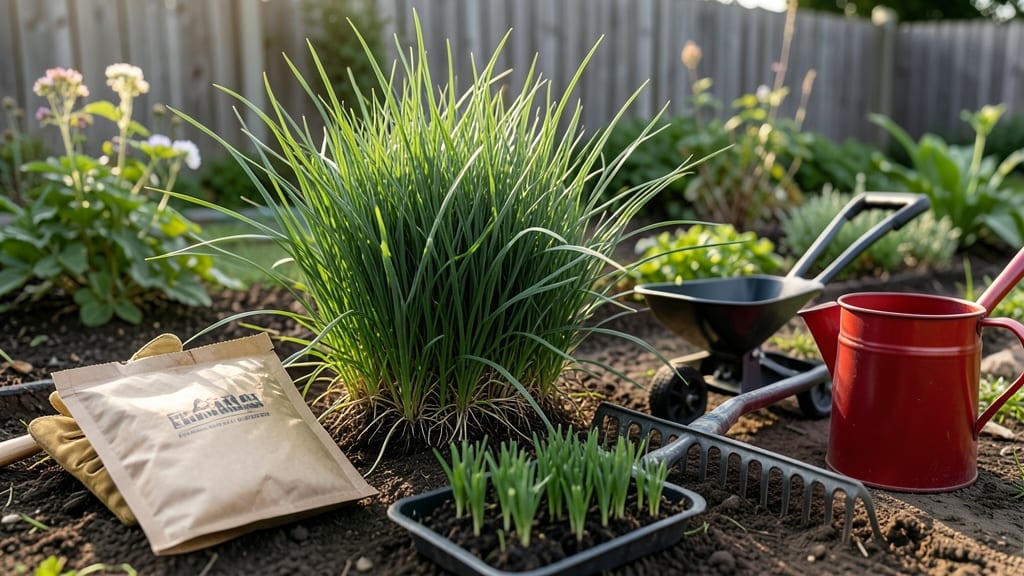
How to grow tall fescue grass transforms patchy lawns into drought-resistant green carpets. 🌱 I've seen it revive browned-out yards in weeks—once you master the right soil prep and watering rhythm, it’s the toughest grass for hot summers and shady spots.
Start with loose, well-drained soil (amend heavy clay with compost), seed at ½ pound per 100 sq ft, and keep moist for 2-3 weeks—no more, no less. The key? Firm seed-to-soil contact and patience; germination takes 7-21 days, but the payoff is worth it.
📚 In This Guide
- What you need
- Instructions
- Tips and common mistakes
- Wrapping up and next steps
What you need
- ● Tall fescue seed: Choose a high-quality blend (e.g., 'Kentucky 31' or 'Barnyard Grass' for drought tolerance). Aim for 8–12 lbs per 1,000 sq ft for new lawns.
- ● Lawn soil test kit: Check pH (ideal: 6.0–7.0) and nutrient levels before planting.
- ○ Topsoil or compost: 1–2 inches to improve drainage and fertility (optional but recommended for poor soil).
- ● Broadcast spreader: For even seed distribution (manual or rotary, $30–$100).
- ● Rake (bow or stiff-bristle): To level soil and cover seeds lightly (¼-inch depth).
- ○ Lawn roller (optional): For compacting soil post-seeding (50–100 lb weight).
- ● Watering system: Hose with sprinkler head or drip irrigation (for consistent moisture).
- ● Fertilizer (starter blend): High in phosphorus (P) (e.g., 5-10-10 ratio) to encourage root growth.
- ● Mulch (straw or peat moss): ¼-inch layer to retain moisture and protect seeds from birds.
- ● String trimmer or edger: For defining lawn edges neatly.
- ● Sunlight: Full sun (6+ hours/day) for optimal growth.
- ● Soil prep: Remove weeds, rocks, and debris; till 4–6 inches deep if compacted.
- ● Weather window: Plant in early fall (Sept–Oct) or late spring (April–May) for best germination.
- ● Water access: Commit to daily watering (15–20 mins) for the first 2–3 weeks.
Step-by-step instructions for establishing a tall fescue lawn
This resilient grass thrives with the right prep—here’s my battle-tested approach for thick, drought-tolerant coverage.
🌱 Step 1: Test and Amend Your Soil
Tall fescue prefers soil with a pH between 6.0 and 7.0—test your lawn with a home kit first. If your soil tests acidic (below 6.0), add 2-3 pounds of lime per 100 square feet and till it in 2-3 weeks before planting. For alkaline soil (above 7.0), work in 2-3 pounds of sulfur per 100 square feet instead.
This grass also loves well-draining soil. If your yard has clay, mix in 2-3 inches of compost during tilling to improve aeration. The goal is loose, crumbly soil that holds moisture without becoming soggy. I like to rake the surface afterward to create a fine, even seedbed—think of it as preparing a blank canvas for your lawn.
🌱 Step 2: Choose the Right Time and Plant Method
Plant tall fescue in early fall (September-October) when temperatures average 60-75°F—this gives roots time to establish before summer heat. Avoid spring planting; the grass competes with weeds and struggles to root deeply before summer drought sets in.
For new lawns, use a slit seeder to plant 6-8 pounds of seed per 1,000 square feet at a ¼-inch depth. If overseeding an existing lawn, mow first to remove excess growth, then use a broadcast spreader for even coverage. Lightly rake the seed into the soil to ensure good soil-to-seed contact—this prevents birds from scattering it and helps moisture reach the seeds.
💧 Step 3: Water Consistently for Germination
Keep the soil uniformly moist for the first 3-4 weeks—this is critical for germination. Water lightly twice daily (morning and evening) for 10-15 minutes per session until you see 50% germination. Avoid deep watering now; you want the top 1-2 inches of soil to stay damp, not soggy.
You’ll know you’re on track when bright green seedlings appear in 7-14 days. Once they reach 2-3 inches tall, reduce watering to once daily for 15-20 minutes. This encourages deep root growth, which is what makes tall fescue drought-resistant. If the soil surface dries out between waterings, you’re not watering enough—adjust immediately.
☀️ Step 4: Mow and Maintain for Thickness
Wait until the grass reaches 3-4 inches tall before mowing—this ensures the roots are strong enough to handle the stress. Set your mower to 3-4 inches and remove no more than one-third of the blade height at a time. Tall fescue stays lush at this height and resists weeds naturally.
Fertilize 4-6 weeks after germination with a slow-release, high-nitrogen fertilizer (look for a 25-0-5 or 30-0-4 ratio). Apply ½ pound of nitrogen per 1,000 square feet and water deeply afterward. Avoid over-fertilizing—too much nitrogen leads to thin, weak growth that browns in drought. I also recommend aerating annually in early fall to prevent soil compaction, which strangles roots.
⏰ Step 5: Adjust for Drought and Seasonal Care
Once established, tall fescue enters dormancy when watered once every 2-3 weeks during summer droughts. Don’t panic—this is normal. Resume regular watering when rains return or temperatures drop below 85°F. The grass will green up within 1-2 weeks of proper watering.
In late fall, apply a winterizer fertilizer (high in nitrogen and potassium) to strengthen roots for next year. Rake up any thatch (dead grass layer) if it exceeds ½ inch thick, as thick thatch blocks water and air from reaching the soil. A simple rake does the job—just work in dry conditions to avoid compacting the lawn.
Tips & tricks for perfect tall fescue lawn establishment
Between us, the difference between a patchy lawn and a lush, drought-resistant carpet of tall fescue often comes down to these overlooked details.
Soil Prep is Everything: Don't just test your soil—actually mark the pH test results on your lawn map. I've seen people add lime or sulfur to the wrong areas, creating uneven conditions that lead to patchy germination. After tilling in amendments, do a second soil test 2-3 weeks later to confirm you hit that 6.0-7.0 pH range. The goal is consistency across your entire lawn area, not just spot treatments.
Seed Depth Matters More Than You Think: That ¼-inch depth for seed planting isn't just arbitrary—it's the sweet spot where seeds get enough soil contact for moisture but don't get buried too deep to sprout. Use a seed depth gauge or even a wooden dowel marked at ¼-inch to verify depth. I've seen people plant too shallow (seeds dry out) and too deep (seeds struggle to emerge) both leading to wasted seed.
Watering Strategy That Actually Works: The 10-15 minutes twice daily rule is critical, but timing matters just as much. Water in the early morning (before 8 AM) so the grass has all day to dry slightly, preventing fungal growth. Evening waterings should be by 6 PM to avoid overnight moisture that invites disease. Use a rain gauge to measure—most sprinklers overwater by 30-50% without you realizing it.
First Mowing is Non-Negotiable: Wait until grass reaches 3-4 inches before that first mow, no exceptions. The roots need that height to establish energy reserves. And when you do mow, set your blade to 3-4 inches—this isn't a time to scalp your lawn. I've seen people mow too short too soon, and their lawns never fully recover that initial setback.
Pro Tips for Grow Tall Fescue Grass
- Between us, the difference between a patchy lawn and a lush, drought-resistant carpet of tall fescue often comes down to these overlooked details.
- Soil Prep is Everything: Don't just test your soil—actually mark the pH test results on your lawn map.
- Seed Depth Matters More Than You Think: That ¼-inch depth for seed planting isn't just arbitrary—it's the sweet spot where seeds get enough soil contact for moisture but don't get buried too deep to sprout.
Frequently asked questions
Got questions about growing tall fescue grass?
You’re not alone! Here are answers to the most common queries—from timing to troubleshooting—so you can tackle your lawn like a pro.
When is the best time to plant tall fescue grass?
Plant tall fescue in early fall (September–October) or late summer (August) for the best results. Cool soil temperatures help roots establish before winter, while avoiding extreme heat stress. Spring planting is possible but riskier—seedlings may struggle with summer drought.
How long does it take for tall fescue to grow?
Expect 14–21 days for germination, with full coverage in 6–12 months, depending on climate and care. Pro tip: Keep soil moist during the first 3–4 weeks to speed up growth. Patience pays off—tall fescue’s deep roots make it worth the wait!
Can tall fescue grow in full shade?
Yes! Tall fescue is one of the best shade-tolerant grasses, thriving in areas with 2–6 hours of sunlight daily. For deeper shade (<6 hours), mix it with fine fescue for even better coverage. Just avoid waterlogged soil—drainage is key.
Why is my tall fescue turning brown?
Brown patches often signal drought stress, disease, or pests. Check for:
- Drought: Water deeply 1–2 times weekly (1–1.5 inches per week).
- Fungal issues: Improve airflow, reduce thatch, and apply fungicide if needed.
- Grubs/weevils: Inspect soil and treat with insecticide if larvae are present.
Overwatering can also cause browning—always check soil moisture before watering.
Is tall fescue grass better than Bermuda or Kentucky bluegrass?
It depends on your needs! Tall fescue outperforms Bermuda in drought resistance and shade tolerance but grows slower than Kentucky bluegrass. Here’s a quick comparison:
| Grass Type | Drought Tolerance | Shade Tolerance | Maintenance |
|---|---|---|---|
| Tall Fescue | (Excellent) | (Best) | Moderate (Low mowing) |
| Bermuda | (Best) | (Poor) | High (Frequent mowing) |
| Kentucky Bluegrass | (Fair) | (Moderate) | High (Thatch-prone) |
Choose tall fescue for low-maintenance, resilient lawns in cooler climates!
Wrapping up and next steps
Growing tall fescue grass is totally doable—even for beginners! With the right soil prep, seed selection, and care routine, you’ll have a vibrant, drought-resistant lawn that stands out in your neighborhood. 🌱
Now that you’re armed with tips, roll up your sleeves and start planting! Track your progress, adjust as needed, and soon you’ll be the envy of every block with that perfectly lush green carpet. Happy growing!