
Shrubs
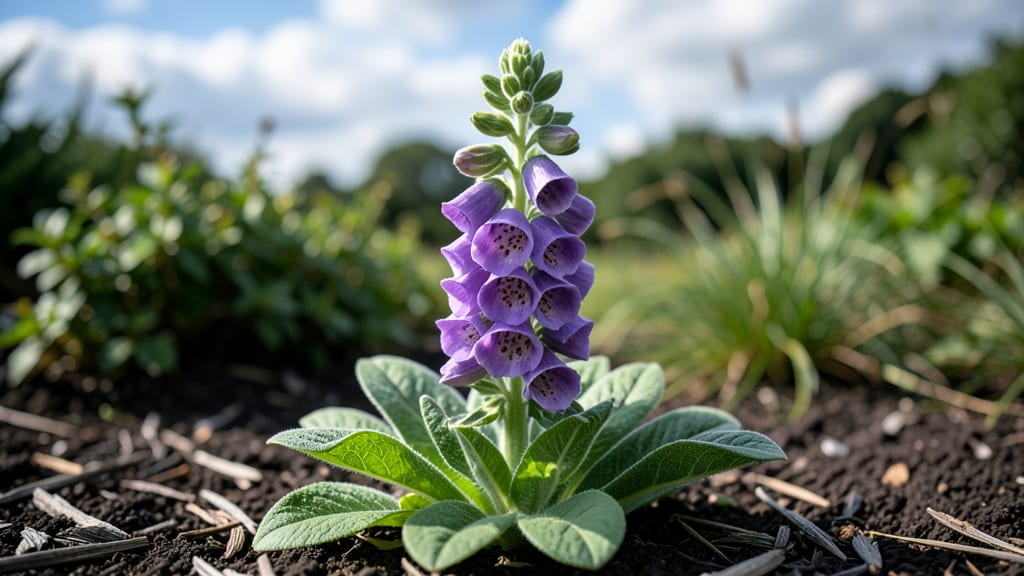
How to identify foxglove means knowing its bell-shaped flowers and hairy stems—mistaking it for comfrey could be dangerous. 🌿 I’ve seen gardeners overlook its key features until they’re face-to-face with its toxic effects. The first clue? Flowers that hang like lanterns in shades of purple, pink, or white, each one wider at the base than the throat.
Leaves are the next giveaway: long, oval, and slightly fuzzy, arranged in a rosette at the base or spiraling up the stem. Unlike lily of the valley’s smooth, heart-shaped leaves, foxglove’s foliage feels soft to the touch—almost like velvet.
Growth habit matters too: it stands 2-5 feet tall, often in clusters, while lookalikes like comfrey sprawl or stay low.
Here’s the critical detail: foxglove’s flower spikes emerge from leaf axils, not the stem’s tip. This habit, combined with its 5-petaled bells, sets it apart from other toxic plants.
The smell? Mildly sweet, but never trust your nose—some gardeners report no scent at all. One wrong sniff of its nectar could mean trouble.
Before you dig, check the leaf veins—foxglove’s are parallel and prominent, while comfrey’s are net-like. If you’re unsure, snap a photo and compare it to a trusted guide.
Safety first: never plant foxglove in gardens with children or pets—its cardiac glycosides are no joke. A little caution goes a long way.
📚 In This Guide
- What you need
- Instructions
- Tips and common mistakes
- Wrapping up and next steps
What you need
- ● Field guide or smartphone with a plant ID app (e.g., iNaturalist, PictureThis, or a printed foxglove guidebook).
- ● Hand lens or magnifying glass (10x magnification recommended for inspecting flower details).
- ● Notebook and pen (to jot down observations like leaf shape, flower arrangement, or habitat notes).
- ● Camera or smartphone with a good camera (for capturing close-ups of key features like bell-shaped flowers or spotted stems).
- ○ Gloves (optional but wise!) Foxglove contains digitalis, a toxic compound—handle plants with caution.
- ● Ruler or measuring tape (to check plant height and leaf dimensions—foxglove typically grows 2–5 feet tall!).
- ● Pruning shears (if you’re collecting seeds or cuttings—only for educational purposes!).
- ● Plastic bag or container (for safely storing samples if needed).
- ● GPS device or mapping app (to log locations for future reference).
- ● Field notebook with a plant ID chart (for quick cross-referencing).
How to identify foxglove in the wild or garden
This striking biennial has a distinctive look that sets it apart from other tall garden plants.
🌿 Step 1: Examine the Flower Spike Structure
Foxglove's most recognizable feature is its tall, upright flower spike that grows 2-5 feet high. The blooms appear in a raceme—an elongated cluster where individual flowers grow on short stems along a central axis. Each flower hangs downward like a bell, creating a cascading effect that's hard to mistake.
Look for the way the flowers open sequentially from the bottom upward. This staggered bloom pattern continues for several weeks, giving foxglove its long-lasting vertical display. The spike emerges directly from the plant's basal rosette of large, hairy leaves in its second year of growth.
🌱 Step 2: Study the Leaf Characteristics
The lower leaves form a basal rosette that can reach 12-18 inches wide and are covered in soft, velvety hairs. These leaves are 5-8 inches long, oval-shaped, and have a slightly wrinkled texture. The edges are smooth but may show slight undulation.
As you move up the stem, the leaves become progressively smaller and more spaced out. The upper leaves are typically 2-4 inches long and clasp the stem with rounded bases. This gradual leaf size reduction is a key distinguishing feature from similar-looking plants.
🌸 Step 3: Observe the Flower Shape and Color
Foxglove flowers are tubular with five fused petals that form a bell shape. The flowers typically measure 1-2 inches long and come in various colors including purple, pink, white, yellow, and spotted varieties. The most common wild type has deep purple flowers with darker purple spots inside.
Notice how the flower mouth opens slightly wider than the base, creating that distinctive bell shape. The five petal lobes are slightly irregular in size, with the upper lobe often being the largest. This irregularity helps distinguish foxglove from more symmetrical bellflowers.
⚠️ Step 4: Check for Seed Pods and Plant Height
Mature foxglove plants reach 3-5 feet tall with flower spikes that can extend another foot above the foliage. After flowering, look for the distinctive seed pods that form along the stem. These pods are 1-2 inches long, cylindrical, and contain numerous tiny seeds.
The seed pods develop from the base of the flower upward, following the same sequential pattern as the blooms. They remain attached to the plant throughout winter, often persisting until spring. This persistent seed structure is another key identification feature.
🌿 Step 5: Note the Plant's Growth Habit and Toxicity Signs
Foxglove grows as a biennial, meaning it produces only basal leaves in its first year and flowers in its second year before dying. The plant has a strong taproot that makes it difficult to transplant. Look for the characteristic "dead" stems that remain standing through winter after the plant has finished flowering.
Be aware that all parts of the foxglove plant are toxic if ingested, containing cardiac glycosides that can be deadly. The plant's toxicity is often indicated by the presence of large, hairy leaves and the distinctive bell-shaped flowers that animals typically avoid.
Tips & tricks for mastering foxglove identification
Confession: I nearly mistook foxglove for a harmless garden flower more than once before learning these game-changing details.
Seasonal Timing: Foxglove's two-year growth cycle is crucial for identification. In its first year, you'll only see the basal rosette of large, hairy leaves—no flowers. The dramatic flower spikes only appear in the plant's second year, typically between late spring and early summer. This biennial pattern helps distinguish it from annuals that flower their first year.
Leaf Texture Clues: Those velvety, hairy leaves aren't just for show—they're a critical identification feature. Run your fingers along the leaf surfaces in Step 2: the dense hairs should feel almost fuzzy to the touch. This soft, downy texture is rare in similar-looking plants and helps differentiate foxglove from bellflowers or snapdragons, whose leaves are typically smoother.
Flower Sequence Secret: When examining the flower spike in Step 1, pay attention to the bloom progression. The flowers open sequentially from bottom to top, with only a few blooms open at any given time. This staggered pattern creates that iconic cascading effect and continues for several weeks—unlike many plants that bloom all at once. The irregular petal sizes (with the upper lobe largest) further confirm your identification.
Toxicity Visual Cues: In Step 5, remember that foxglove's toxicity is often signaled by its avoidance by wildlife. While this isn't foolproof, you'll rarely see animals grazing on foxglove plants, unlike many edible garden plants. The persistent seed pods that remain through winter are another visual warning—nature's way of marking dangerous plants that should be left alone.
Pro Tips for Identify Foxglove
- Confession: I nearly mistook foxglove for a harmless garden flower more than once before learning these game-changing details.
- Seasonal Timing: Foxglove's two-year growth cycle is crucial for identification.
- Leaf Texture Clues: Those velvety, hairy leaves aren't just for show—they're a critical identification feature.
Frequently asked questions
about identifying foxglove—because even the most stunning plants can raise questions! Here are answers to the most common ones:Is foxglove safe to touch?
No, foxglove (Digitalis spp.) is highly toxic—all parts, including leaves, flowers, and seeds. Even brief contact can cause nausea, vomiting, or irregular heartbeat. Wear gloves when handling, and avoid ingestion at all costs. If exposed, wash skin thoroughly and seek medical help if symptoms appear.
When is the best time to identify foxglove?
The ideal time is late spring to early summer (May–July), when its tall spikes of bell-shaped flowers are in full bloom. This is when key identification features—like flower shape, leaf arrangement, and height—are most visible. Avoid mistaking it for other plants in winter when it’s dormant.
Can I grow foxglove in my garden?
While foxglove is beautiful and low-maintenance, it’s risky due to its toxicity. If you still want it, plant it far from children, pets, and edible plants. Choose non-native species like Digitalis purpurea (common foxglove) and wear gloves when handling. Deadhead spent blooms to prevent self-seeding.
How do I tell foxglove apart from honeysuckle or bellflowers?
Here’s a quick comparison:
Feature
Foxglove
Honeysuckle
Bellflowers
Flower Shape
Bell-shaped, downward-facing
Trumpet-shaped, upward-facing
Bell-shaped, but symmetrical and upright
Leaves
Large, hairy, and oval
Opposite, smooth and lance-shaped
Opposite, toothed edges
Height
2–5 feet tall
6–10 feet climbing vine
1–3 feet compact
Foxglove’s spotted flowers and fuzzy leaves are its dead giveaways!
What should I do if I suspect foxglove poisoning?
Act fast! Call Poison Control (1-800-222-1222 in the U.S.) immediately. Symptoms include dizziness, blurred vision, or irregular heartbeat. Do NOT induce vomiting unless instructed. Keep the plant (or photo) handy for identification.
Wrapping up and next steps
Identifying foxglove is all about paying attention to its distinctive features—from its tall, bell-shaped flowers to its jagged leaves and spotted stems. Remember, while it’s stunning, its beauty hides toxicity, so always double-check before interacting with it! 🌿
Now that you’re equipped with these 5 key visual clues, why not put your new skills to the test? Head outdoors, grab a field guide, and start spotting plants like a pro. Happy (and safe) exploring! 🕵️♂️✨