
Blooming
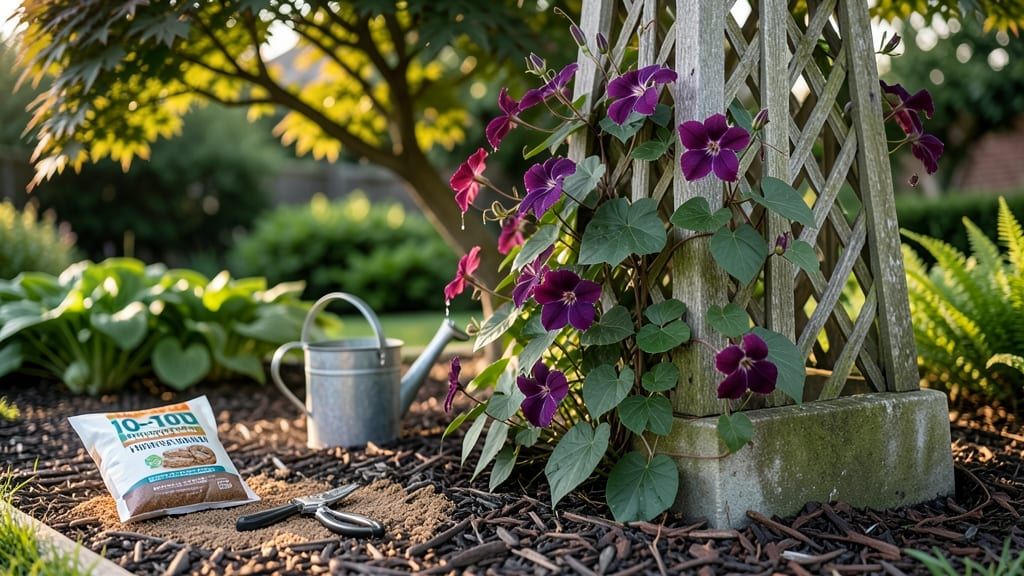
Clematis blooms transform a garden from pretty to showstopping. 🌸 The secret isn't just pruning—it's understanding your plant's personality. First-flowering types like 'Jackmanii' need one cut, while second-flowering varieties like 'Montana' demand two.
I've wasted years overcomplicating this; the real magic happens when you match pruning to the plant's natural rhythm.
Start with sunlight—clematis craves 6+ hours daily, but too much midday sun scorches leaves. A north-facing trellis or afternoon shade works best. Feed with balanced fertilizer in spring, then switch to phosphorus-heavy mix when buds form.
My Jackmanii now produces 6-inch blooms every year after I stopped guessing on fertilizer.
Water deeply once a week (more in heatwaves) and mulch to keep roots cool. The payoff? Longer stems, bigger flowers, and blooms that last 4-6 weeks.
Even my black thumb's clematis now fights for attention with neighbors'. The key is patience—first year focuses on foliage, second year rewards you with flowers.
Troubleshooting sparse blooms starts with pruning: too aggressive cuts = no flowers; too gentle = leggy stems. Adjust based on your variety—'Montana' types bloom on old wood, while 'Jackmanii' thrives on new growth. With these tweaks, your clematis will outshine every other vine in the neighborhood.
📚 In This Guide
- What you need
- Instructions
- Tips and common mistakes
- Wrapping up and next steps
What you need
- ○ Pruning shears or loppers: Sharp, clean tools (bypass pruners work best for precision cuts). Optional: Disinfectant (rubbing alcohol) to sterilize between cuts.
- ● Gloves: Heavy-duty gardening gloves to protect hands from thorns and sap.
- ● Garden twine or plant ties: For supporting vines if needed (about 5–10 feet per plant).
- ● Fertilizer: Balanced granular fertilizer (10-10-10 or 20-20-20): 1–2 cups per plant, applied in early spring.
- ● Slow-release bloom booster (e.g., 5-10-5): 1 cup per plant after pruning to encourage flowers.
- ● Mulch: Organic mulch (shredded bark or compost) to retain moisture and regulate soil temperature (2–3 inches around the base).
- ● Know your clematis type: Group 1 (early bloomers), Group 2 (repeat bloomers), or Group 3 (late bloomers)—pruning methods vary!
- ○ Healthy soil: Well-draining, slightly acidic to neutral soil (pH 6.0–7.0). Test kit optional but helpful.
- ● Sunlight access: Clematis thrive in 6+ hours of sunlight daily (morning sun + afternoon shade is ideal in hot climates).
- ● Watering can or hose: Deep watering (1–2 inches per week) during dry spells.
Step-by-step instructions for pruning clematis to encourage blooms
Here’s the pruning method I’ve used for years to coax abundant, long-stemmed clematis blooms—no guesswork involved.
✂️ Step 1: Identify Your Clematis Type and Prune at the Right Time
First, determine whether your clematis is a Group 1 (early bloomer, flowers on previous year’s growth), Group 2 (early and late blooms), or Group 3 (late bloomer, flowers on current year’s growth). Group 3 varieties (like ‘Jackmanii’ or ‘Perle d’Azur’) are the easiest to prune for big blooms—they thrive when cut back hard in late winter or early spring before new growth begins.
For Group 1 varieties (like ‘Alionushka’), prune immediately after flowering in late spring to avoid cutting off next year’s blooms. Group 2 plants (like ‘The President’) need a two-step approach: prune the first flush of blooms lightly, then cut back again after the second flush. Always use clean, sharp pruners—dull blades crush stems and invite disease.
🌿 Step 2: Prune for Structure and Airflow
Start by removing dead, weak, or crossing stems at the base. Crossed branches compete for nutrients and create shaded areas where flowers won’t develop. Next, cut back last year’s growth to just above a strong, outward-facing bud—this encourages new shoots to grow in an open, airy habit. For Group 3 clematis, leave 3-5 healthy buds on each stem; for Group 1, retain 6-12 buds per stem.
Here’s the thing—never leave stubs. Cut at a 45-degree angle just above the bud, about ¼ inch above it. This prevents water from pooling and rotting the stem. If your plant is overgrown, you can prune in stages over 2-3 years to avoid shocking it. Watch for new growth emerging within 2-3 weeks—that’s your signal the pruning worked.
☀️ Step 3: Feed and Support for Maximum Blooms
After pruning, apply a balanced, slow-release fertilizer (like 10-10-10) around the base of the plant. Clematis are heavy feeders, especially when pushing new growth. Water deeply to help the fertilizer reach the roots, then mulch with 2-3 inches of organic mulch (like shredded bark) to retain moisture and suppress weeds. Avoid over-mulching—too much can suffocate the crown.
Install a strong trellis or support system if you haven’t already. Clematis need vertical space to climb—the higher the stems, the more dramatic the blooms. Secure the main stems with soft ties (like garden twine or Velcro strips) to prevent wind damage. You’ll see longer, straighter stems by mid-summer, and those are the ones that produce the biggest, showiest flowers.
💧 Step 4: Water and Deadhead for Continuous Blooms
Keep the soil evenly moist but not soggy—clematis roots need consistent hydration, especially during bud formation in late spring. Water at the base of the plant in the morning to reduce fungal risks. If your area experiences hot, dry spells, increase watering frequency and use drip irrigation to avoid wetting the foliage. Yellowing leaves often signal underwatering, while brown, crispy edges mean too much sun without enough moisture.
Deadhead spent blooms regularly (every 1-2 weeks) to encourage more flowers. For Group 3 varieties, pinch back the tips of new growth after 4-6 leaves appear to promote bushier stems. If you notice fewer blooms than expected, check for aphids or spider mites—these pests sap energy from the plant. A neem oil spray applied in early summer keeps them in check.
Tips & tricks for pruning clematis to encourage blooms
A few clever adjustments can transform your clematis into a flowering powerhouse—here’s how to maximize every step of the process.
Pruning Precision: When you’re cutting back Group 3 clematis to those 3-5 healthy buds, focus on buds that face outward. These will grow into sturdy stems that climb upward rather than inward, creating that dramatic vertical display we all love. For Group 1 varieties, those 6-12 buds should be spaced evenly around the stem—think of it like distributing weight on a tightrope to avoid leaning. I’ve seen overcrowded stems produce weak, floppy growth that struggles to reach the trellis.
Timing is Everything: The 2-3 week window for new growth to appear after pruning is your real-time progress report. If you don’t see fresh shoots within that timeframe, check your pruning cuts—you might have cut too close to the bud or damaged the stem’s vascular system. For late winter pruning of Group 3 varieties, wait until you see the first signs of new growth in your region before cutting back. This ensures you’re not pruning too early and missing the ideal growth window.
Support System Secrets: That strong trellis or support system isn’t just decorative—it’s the foundation for long stems. Install your trellis before pruning so you can immediately guide new growth upward. I recommend using a 5-foot tall trellis for most varieties, but if you have a vigorous climber like ‘Jackmanii’, extend it to 6-7 feet. The higher the support, the longer the stems can grow, and the more dramatic those blooms will be when they finally appear.
Watering Wisdom: During bud formation in late spring, clematis need consistent moisture without becoming waterlogged. Here’s my trick: water deeply every 3-4 days in normal conditions, but increase to every 2 days during hot spells. The key is to keep the soil evenly moist—stick your finger about 2 inches deep; if it feels dry, it’s time to water. This prevents the stress that leads to those brown, crispy leaf edges that signal too much sun without enough moisture.
Pro Tips for Make Clematis Bloom
- A few clever adjustments can transform your clematis into a flowering powerhouse—here’s how to maximize every step of the process.
- Pruning Precision: When you’re cutting back Group 3 clematis to those 3-5 healthy buds, focus on buds that face outward.
- Timing is Everything: The 2-3 week window for new growth to appear after pruning is your real-time progress report.
Frequently asked questions
Got questions about coaxing those stunning clematis blooms? You’re not alone! Here are some of the most common concerns—plus quick, actionable answers to keep your vines thriving.
Why isn’t my clematis blooming this year?
If your clematis is playing hard to bloom, check these culprits first: pruning mistakes (cutting back too late or removing last year’s growth), poor sunlight (6+ hours of sun is ideal), or nutrient deficiencies (feed with a balanced fertilizer in early spring). Group 1-3 clematis (early bloomers) need last year’s stems preserved—prune after flowering. Groups 2-3 (repeat bloomers) can be pruned in early spring.
When is the best time to prune for maximum blooms?
Timing depends on your clematis group! Group 1 (early spring bloomers): Prune after flowering (late spring/early summer). Group 2 (repeat bloomers): Prune in late winter or early spring (before new growth starts). Group 3 (late summer/fall bloomers): Prune in early spring to encourage strong stems. Pro tip: Never prune in fall—it stresses the plant.
How much should I cut back, and where?
For most clematis (Groups 2-3), aim to cut back 1/3 of the plant to healthy buds or nodes. Look for swollen buds (they’ll look like tiny knobs) or leaf joints—these are your pruning markers. Avoid "heading back" (cutting into old wood) unless reviving a neglected plant. Group 1 clematis should only have dead or damaged stems removed.
Can I make clematis bloom indoors or in containers?
Yes! Container-grown clematis thrive with the right care: large pots (10+ gallons), well-draining soil, and support stakes (like trellises or cages). Place them in bright, indirect light (south-facing windows work). Feed with water-soluble fertilizer every 2-3 weeks during growing season. Winter tip: Move containers to a cool, dark spot (40-50°F) to mimic dormancy.
What should I do if my clematis has pests or diseases?
Common issues like clematis wilt (fungus) or aphids can stunt blooms. For wilt: remove infected stems, improve airflow, and avoid overhead watering. For aphids: spray with soapy water or introduce ladybugs. Powdery mildew? Use neem oil or sulfur-based fungicide. Prevent future problems by mulching (2-3 inches) and watering at the base of the plant.
Wrapping up and next steps
With the right pruning techniques, sunlight, and care, your clematis can thrive and reward you with stunning, abundant blooms year after year! 🌸 Remember, patience and consistency are key—whether you’re deadheading, adjusting pruning groups, or ensuring proper support.
Now that you’re armed with these tips, grab your pruners and watch your garden transform into a floral paradise.
Ready to take the next step? Share your progress with fellow gardening enthusiasts or explore more clematis varieties to add to your collection. Happy gardening! 🌿