
Tools
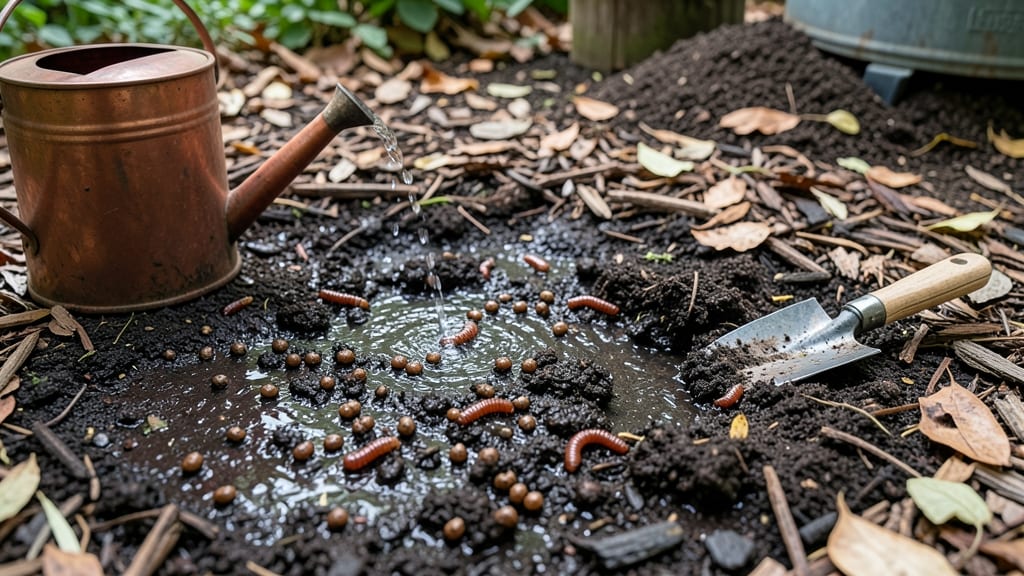
To attract earthworms to your garden, focus on enriching your soil with organic materials like compost or leaf litter, maintaining consistent moisture without waterlogging, and steering clear of chemical fertilizers or pesticides. These soil-loving creatures prefer loose, nutrient-rich environments with partial shade and protective mulch layers.
Earthworms are nature's soil engineers, and they're drawn to gardens where the conditions mirror their natural habitat. 🌱 The key is creating a microclimate that mimics their wild preferences—think of it as building a five-star hotel for worms.
Organic matter acts as their all-you-can-eat buffet, while proper moisture levels keep them comfortable. I've seen gardens transform in just a few months after implementing these changes, with worm activity becoming visibly more active and soil structure improving dramatically.
What's fascinating is how quickly these changes create a positive feedback loop. As earthworms multiply, their tunneling aerates the soil further, making it even more inviting for their peers. This natural process also breaks down organic matter faster, giving your plants a nutrient boost.
The secret lies in patience and consistency—earthworms won't appear overnight, but with the right conditions, they'll find your garden irresistible.
💡 In This Article
- Why Earthworms Love These Soil Conditions
- Step-by-Step Earthworm Attraction Guide for Gardeners
Why earthworms love these soil conditions
Earthworms are highly sensitive to their environment, and their preferences stem from evolutionary adaptations that maximize their survival and reproduction. The ideal pH range for these soil engineers is 6.0 to 7.0—slightly acidic to neutral—because this level supports the microbial communities they rely on for digestion.
Their gut contains symbiotic bacteria that break down organic matter, and these microbes thrive in this pH range. Too acidic (pH 5.0 or below) or alkaline (pH 8.0 or above) soils disrupt this relationship, making it harder for worms to process food and reproduce. 🌱
Soil aeration is equally critical because earthworms breathe through their skin, which must stay moist to absorb oxygen. Loose, well-drained soil with 10-20% air pockets allows them to move freely and burrow efficiently.
Compacted soil, common in heavily trafficked or tilled gardens, suffocates them by reducing oxygen levels and trapping excess moisture. Their tunneling activity naturally improves aeration over time, but you can accelerate this by adding coarse organic matter like shredded leaves or straw, which creates air channels as it decomposes.
Moisture levels play a delicate balancing act—earthworms need soil that feels like a well-wrung sponge, neither soggy nor bone-dry. Their skin must stay moist to absorb oxygen, but standing water drowns them or forces them to surface, where they dry out.
The sweet spot is 40-60% soil moisture by volume, which you can test by squeezing a handful of soil: it should hold together but not drip water. Mulch acts as a moisture regulator, shielding the soil from rapid drying while preventing waterlogging during heavy rains.
Temperature also dictates their activity levels. Earthworms are most active in soil temperatures between 50-77°F, with optimal reproduction occurring at 68-72°F. Below 40°F, they become sluggish, and above 85°F, they retreat deeper into the soil to avoid overheating.
This is why mulch is invaluable—it insulates the soil, maintaining stable temperatures and protecting worms from extreme fluctuations. In my own garden, I've noticed worm activity peak during spring and fall when soil temps hover around 65°F, with a noticeable decline during summer heatwaves.
Organic matter serves as both food and shelter for earthworms. Their diet consists of 50-80% decomposed plant material, which they ingest and process through their digestive systems, excreting nutrient-rich castings.
A single worm can produce up to its body weight in castings annually—about 0.5-1.0 grams per worm per day—which acts as a natural fertilizer.
The texture of organic matter matters too: fine particles like compost mix easily into the soil, while chunkier materials (like wood chips) create microhabitats that protect worms from predators and temperature swings.
What most gardeners overlook is how earthworms respond to chemical cues in the soil. Synthetic fertilizers and pesticides disrupt their natural behaviors by altering soil chemistry and introducing toxic compounds.
For example, even low levels of chlorine (common in tap water) can be lethal, while neonicotinoids (a class of pesticides) impair their ability to reproduce. The solution?
Stick to organic amendments like compost tea, fish emulsion, or worm castings—these provide nutrients without the chemical side effects that repel or harm earthworms. 💫