
Planting
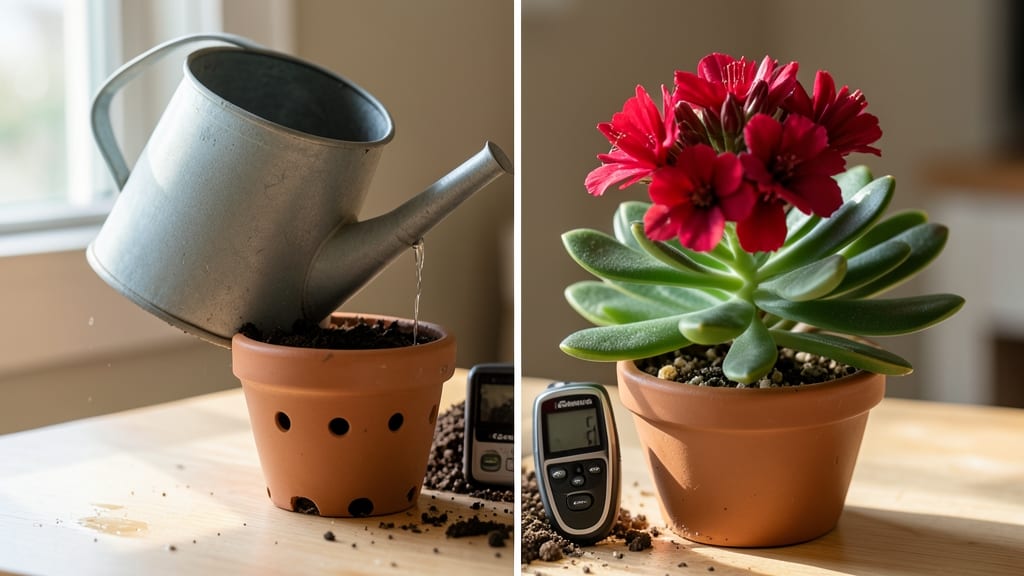
If your Kalanchoe 🌸 plant keeps wilting despite your best efforts, the issue might be simpler (and trickier) than you think—it’s likely about how to care for a kalanchoe plant indoors with water.
These drought-loving beauties thrive on neglect, but too much attention—especially with water—can turn your succulent into a sad, mushy mess.
Most plant care guides overcomplicate things, but Kalanchoes are surprisingly low-maintenance once you know their watering secrets. The key isn’t just when to water (though timing matters), but how—and avoiding the two biggest mistakes that kill these plants faster than you’d expect.
In this guide, I’ll break down the exact watering schedule that keeps your Kalanchoe happy year-round, plus how to spot signs of over- or under-watering before it’s too late. No guesswork, just proven techniques that work for even the busiest plant parents.
Ready to turn your struggling Kalanchoe into a thriving, blooming star? Let’s dive into the simple routines that make all the difference—starting with the soak-and-dry method that saves more plants than you’d believe.
Kalanchoe watering schedule: exact timing and techniques to avoid root rot
Mastering your Kalanchoe watering schedule is the #1 way to keep this stunning succulent thriving indoors. Unlike thirsty houseplants, Kalanchoes store water in their plump leaves, making them drought-tolerant—but that doesn’t mean they’re carefree.
The key? Deep, infrequent watering paired with the right soil and pot setup. Let’s break down the exact timing and techniques to prevent root rot while keeping your plant happy and blooming.
First, understand that overwatering kills Kalanchoes faster than underwatering. These plants evolved in arid conditions, so their roots need time to dry out between waterings. A common mistake is sticking to a rigid schedule—like every Sunday—without checking the soil.
Instead, use the "soak-and-dry" method, where you water thoroughly until it drains from the bottom, then wait until the top 2-3 inches of soil feel completely dry before watering again. This mimics their natural environment and prevents soggy roots.
Seasonal changes dramatically affect your watering needs. In spring and fall, when growth is moderate, water every 3-4 weeks. During summer’s heat, when evaporation speeds up, reduce the interval to every 2-3 weeks.
In winter dormancy, cut back to every 4-6 weeks—your Kalanchoe is essentially hibernating and needs far less moisture. Pro tip: Morning watering is ideal because it allows excess water to evaporate during the day, reducing the risk of fungal issues.
| Season | Watering Frequency | Soil Check | Watering Time | Notes |
|---|---|---|---|---|
| Spring | Every 3-4 weeks | Top 2-3" dry | Morning | Encourage blooming |
| Summer | Every 2-3 weeks | Top 2" dry | Morning | Increase airflow |
| Fall | Every 3-4 weeks | Top 2-3" dry | Morning | Reduce fertilizer |
| Winter | Every 4-6 weeks | Top 3" dry | Morning | Dormancy period |
To execute the soak-and-dry method correctly, start by placing your Kalanchoe in the sink or a saucer. Water until you see moisture flowing out of the drainage holes—this ensures the root ball is fully saturated.
After 10-15 minutes, empty any excess water from the saucer to prevent the roots from sitting in water. Then, place the pot back in its usual spot.
The goal is to mimic a dry spell between waterings, so resist the urge to top up the soil with a little water every few days. This light watering habit is a surefire way to drown your Kalanchoe’s roots.
Another pro technique is the "finger test". Stick your index finger about 1-2 inches into the soil. If it feels dry and crumbly, it’s time to water. If it’s still damp or cool to the touch, wait another week.
This method is foolproof because it accounts for variations in humidity, pot size, and even the type of soil you’re using. For example, cactus mix drains faster than regular potting soil, so you’ll need to water more frequently with the latter.
Always adjust based on what your plant tells you—not a calendar.
Let’s talk about water quality, which often gets overlooked. Kalanchoes are sensitive to fluoride and chlorine in tap water, which can build up in the soil over time and cause leaf tip burn.
If you’re using tap water, let it sit out for 24 hours to allow chlorine to evaporate, or use filtered or rainwater instead. Room-temperature water is also crucial—cold water can shock the roots and lead to stress.
Always use water that’s lukewarm or at room temperature to keep your Kalanchoe thriving.
One of the biggest myths about Kalanchoe care is that they’re "low-maintenance" plants you can neglect. While they are drought-tolerant, they still need consistent attention to their watering routine. A common red flag is yellowing leaves, which often signals overwatering.
If you notice this, stop watering immediately and let the soil dry out completely. For underwatered Kalanchoes, the leaves will wrinkle and pucker, but they’ll bounce back quickly after a thorough watering.
The key is to observe and adjust—your Kalanchoe will thank you with vibrant blooms and healthy growth.
Finally, don’t forget that humidity levels
Best pots, soil, and drainage hacks to complement your Kalanchoe watering routine
Your Kalanchoe plant thrives when its roots stay dry between waterings, so choosing the right pot and soil is just as critical as your watering schedule. A terracotta pot with drainage holes is my top recommendation—it breathes better than plastic, helping excess moisture evaporate faster and preventing root rot.
For soil, skip the generic potting mix. Instead, blend a cactus or succulent mix (60%) with perlite or coarse sand (40%) to mimic the arid conditions Kalanchoes love. This combo ensures water drains quickly, giving your plant’s roots the dry environment they crave.
✅ DIY Drainage Hacks for Kalanchoe
- Add a 1-inch layer of pebbles or broken pottery at the pot’s bottom before soil to create an air gap and improve drainage.
- Use a terracotta pot without a saucer—place it on a drip tray with pebbles instead to catch excess water while allowing airflow.
- For plastic pots, drill extra drainage holes if the originals are too small, or place the pot inside a slightly larger terracotta cache pot.
- Mix orchid bark into your soil blend (20%) to boost aeration and reduce moisture retention.
If your Kalanchoe’s leaves start turning yellow or the soil stays soggy for more than a day after watering, it’s a sign your drainage system needs upgrading. Even a small adjustment—like swapping out heavy garden soil for a chalky, gritty mix—can make a world of difference.
Pro tip: Repot your Kalanchoe every 2-3 years or when roots crowd the pot. Choose a container only 1-2 inches wider than the current one to avoid encouraging excessive root growth, which leads to higher water demands.
Remember, the goal is to mimic desert conditions indoors. With the right pot, soil, and drainage tweaks, your Kalanchoe will stay happy with minimal watering—leaving you more time to admire its vibrant blooms.