
Pruning
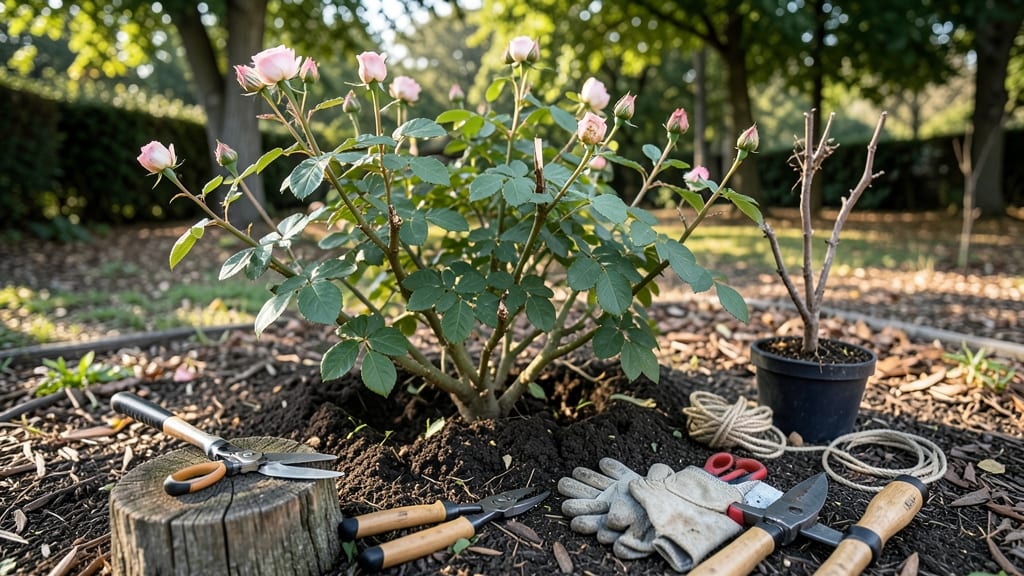
That first clean cut makes all the difference. ✂️ Replanting a rose bush isn’t just about digging up roots—it’s about giving your plant a fresh start with the right pruning technique.
I’ve learned that cutting at the wrong angle or missing key nodes can set back blooms for a whole season, but doing it right transforms a struggling bush into a thriving centerpiece.
The best time to prune and replant is late winter or early spring, when the plant is still dormant but about to wake up. You’ll need sharp bypass pruners, a trowel, and a bucket of water for the cuttings—no fancy tools, just the right technique.
Start by removing any dead or crossing branches first, then focus on shaping the bush for airflow and sunlight.
After replanting, your rose will reward you with stronger stems and more abundant blooms by midsummer. The key is making clean cuts just above an outward-facing bud, keeping the plant’s energy focused on new growth.
Water deeply for the first two weeks to help roots establish, and avoid heavy fertilizing until you see fresh shoots.
This method works for both hybrid teas and shrub roses, whether you’re dividing an overgrown bush or transplanting a young one. The payoff? A bush that recovers faster, blooms bigger, and lives longer—no more sad, sparse stems. Let’s get those pruners ready!
📚 In This Guide
- What you need
- Instructions
- Tips and common mistakes
- Wrapping up and next steps
What you need
- ● Pruning shears or loppers: Sharp, bypass-style shears (for clean cuts) or loppers (for thicker branches). Disinfect blades with rubbing alcohol before and after use to prevent disease spread.
- ● Garden gloves: Heavy-duty, cut-resistant gloves (e.g., leather or reinforced fabric) to protect hands from thorns and debris.
- ● Shovel or spade: A round-point shovel (for digging) or a transplant spade (for minimal root disturbance). Size: 10–12 inches wide.
- ● Pruning saw: Bow saw or pruning saw for thick stems (1+ inch in diameter). Avoid dull blades—test by cutting a paper bag.
- ○ Root stimulator (optional but helpful): A powder or liquid (e.g., Mycorrhizal fungi or Rootone) to boost root regrowth.
- ● Watering can or hose: With a gentle spray nozzle for post-replant hydration.
- ● Compost or well-aged manure: 2–3 gallons to enrich the new planting hole.
- ● Mulch: Organic mulch (e.g., shredded bark or straw) to retain moisture and suppress weeds.
- ● Choose the right time: Prune and replant in early spring (before new growth) or late fall (after blooming season). Avoid extreme heat or frost.
- ● Check weather forecast: Aim for a cloudy day or replant in the late afternoon to reduce stress on the bush.
- ● Prepare the new location: Ensure 6+ hours of sunlight daily and well-draining soil.
- ● Test soil pH (ideal: 6.0–6.5 for roses). Adjust with lime or sulfur if needed.
- ● Safety first: Wear long sleeves and pants to avoid thorn pricks.
- ● Keep a first-aid kit handy for minor cuts.
- ● Plant support: A stake or cage (5–6 feet tall) to secure the bush during recovery.
- ● Slow-release fertilizer: Rose-specific granules (e.g., 10-10-10 NPK ratio) to mix into the soil.
- ● Plant tag or marker: To label the replanted bush with its variety and replant date.
- ● Anti-transpirant spray: (e.g., Vapor Gard) to reduce water loss during transplant shock.
Step-by-Step guide to pruning and replanting a rose bush
Revitalize your rose bush with this straightforward method—you'll see healthier growth and more vibrant blooms in just a few weeks.
✂️ Step 1: Assess and Prepare for Pruning
Start by examining your rose bush for dead, diseased, or crossing branches. I always grab my pruning shears and a small bucket to collect the cuttings—this keeps the work area clean and makes cleanup easier. Focus on removing any branches that are thinner than a pencil or show signs of black spots, mildew, or cankers. These weak spots drain energy from the plant.
Next, identify the main canes—the thick, sturdy stems that form the structure of the bush. Healthy canes should be at least ½ inch in diameter and free of damage. If your bush has more than 5-7 strong canes, you'll need to thin them out to encourage better airflow and bloom production. This is where the magic happens—less congestion means fewer pests and more flowers.
✂️ Step 2: Make Clean Cuts at the Right Angles
Use sharp pruning shears to make 45-degree cuts just above an outward-facing bud. I always angle the cut away from the bud so water runs off, preventing rot. For thicker canes, I make a second cut parallel to the first to avoid tearing the bark. Never leave stubs—this invites disease and weakens the plant.
When cutting back, aim to remove ⅓ of the bush’s total volume. This might sound aggressive, but roses respond beautifully to a good haircut. You'll see new growth sprouting from the buds you leave behind within 2-3 weeks. If you're unsure where to cut, look for the 5-leaflet leaf—this is a classic rose leaf, and the bud below it is a safe place to make your cut.
🪴 Step 3: Dig Up and Divide the Bush (If Needed)
If your rose bush has outgrown its space or you're replanting to improve its location, dig carefully around the base with a spade, keeping the root ball intact. I always water the bush 24 hours before digging to soften the soil and make the roots easier to handle. Lift the bush gently, shaking off excess soil to assess the roots.
Use a clean knife to separate the bush into 2-4 smaller sections, ensuring each has 3-5 strong canes and a healthy root system. This is where replanting gets exciting—you’re essentially cloning your rose bush! Trim any damaged roots with sterilized shears, and soak the divided sections in a bucket of water for 30 minutes to revive them before replanting.
🌱 Step 4: Replant in Well-Draining Soil
Choose a new spot with at least 6 hours of sunlight daily and soil that drains well—roses hate soggy feet. Dig a hole twice as wide as the root ball but no deeper. Amend the soil with compost or aged manure to give your rose a nutrient boost. Place the divided section in the hole, ensuring the graft union (the bump near the base of the cane) is 2 inches below soil level—this protects it from freezing and encourages stronger growth.
Backfill the hole with soil, pressing gently to remove air pockets. Water deeply until the soil is evenly moist to 12 inches down. Mulch around the base with 2-3 inches of organic mulch, keeping it 6 inches away from the stem to prevent rot. This step is critical—mulch conserves moisture and keeps roots cool in summer.
☀️ Step 5: Post-Pruning Care for Recovery
After replanting, avoid heavy watering for the first week to let the roots establish. Instead, water lightly every 2-3 days to keep the soil slightly damp. You’ll see new shoots emerging from the buds within 3-4 weeks—this is your reward for the hard work! Fertilize lightly with a balanced rose fertilizer after 6 weeks to support new growth.
Keep an eye out for aphids or spider mites, which love fresh new growth. A strong spray of water or neem oil usually does the trick if pests appear. Within a season, your replanted rose bush will reward you with healthier canes, more blooms, and a stronger structure—worth every snip of the shears!
Tips & tricks for pruning and replanting rose bushes
A few simple tricks will help you avoid common mistakes and get the best results from your rose bush transformation.
Tool Prep: Sterilize your pruning shears with rubbing alcohol before you start—this prevents spreading disease between cuts. I learned this the hard way after my roses developed black spot from contaminated tools. Also, keep a small bucket nearby to collect cuttings, which makes cleanup easier and prevents clutter.
Timing Secret: The 24-hour pre-watering before digging (Step 3) is non-negotiable. It softens compacted soil and makes the root ball easier to handle without tearing delicate roots. If you're working with dry soil, water again 12 hours before digging for even better results. This small step prevents root shock during replanting.
Visual Cues for Pruning: When making your 45-degree cuts (Step 2), look for the classic 5-leaflet rose leaf—this is your guide for where to cut. The bud just below this leaf will produce strong new growth. If you're unsure about a cut, imagine drawing a line from the bud outward at a 45-degree angle; this is where your cut should end.
Post-Replanting Check: After replanting, gently tug on the bush to ensure it's securely in place. If it wobbles, backfill with more soil and press firmly. The 2-inch depth for the graft union (Step 4) is crucial—this protects it from winter frost and encourages vigorous growth. A little extra attention here prevents future problems.
Pro Tips for Cut A Rose Bush To Replant
- A few simple tricks will help you avoid common mistakes and get the best results from your rose bush transformation.
- Tool Prep: Sterilize your pruning shears with rubbing alcohol before you start—this prevents spreading disease between cuts.
- Timing Secret: The 24-hour pre-watering before digging (Step 3) is non-negotiable.
Frequently asked questions
Got questions about cutting and replanting your rose bush? You’re not alone! Here are some of the most common concerns—and straightforward answers—to help you prune like a pro.
When is the best time to cut and replant a rose bush?
The ideal time is late winter or early spring (before new growth starts) or early fall (before the first frost). Avoid pruning in extreme heat or cold, as stress can weaken the plant. If you’re replanting, do it on a cool, overcast day to reduce transplant shock.
How do I know if I’m cutting the rose bush too much?
Over-pruning happens when you remove more than ⅓ of the plant’s height or leave stubs shorter than ¼ inch. Signs of over-pruning include no new buds or leggy, sparse growth. Aim to cut back to healthy, outward-facing buds—never the center of the bush.
Can I replant a rose bush in the same spot after cutting it?
While possible, it’s often not ideal due to depleted soil nutrients or disease buildup. If you replant in the same spot, amend the soil with compost and ensure proper drainage. For best results, choose a sunny, well-draining location at least 3–5 feet away from the original site.
What should I do if my rose bush isn’t blooming after replanting?
Lack of blooms can stem from poor pruning, nutrient deficiency, or stress. Check for dead or diseased wood (remove it immediately) and fertilize with rose-specific food in early spring. Also, ensure it gets 6+ hours of sunlight daily—roses are sun lovers!
Do I need to treat the cuts after pruning?
No need for pruning sealants (like paint or wax) on roses—they don’t prevent disease and can trap moisture. Instead, use sterilized shears and make clean cuts at a 45-degree angle. If your climate is humid or disease-prone, a light dusting of fungicide on large cuts can help.
Wrapping up and next steps
Pruning and replanting your rose bush might feel like a big task, but with the right tools and techniques, you’ll soon have a thriving, healthier plant that rewards you with stunning blooms! 🌹 Remember, timing, sharp cuts, and proper spacing are your best friends—so take your time and enjoy the process.
Once your rose bush is settled in its new home, watch it flourish with care and patience.
Now that you’ve mastered the basics, why not level up your gardening game? Try experimenting with different rose varieties or even exploring companion plants to create a lush, vibrant garden that’s the envy of the neighborhood! Happy gardening! 🌿