
Pruning
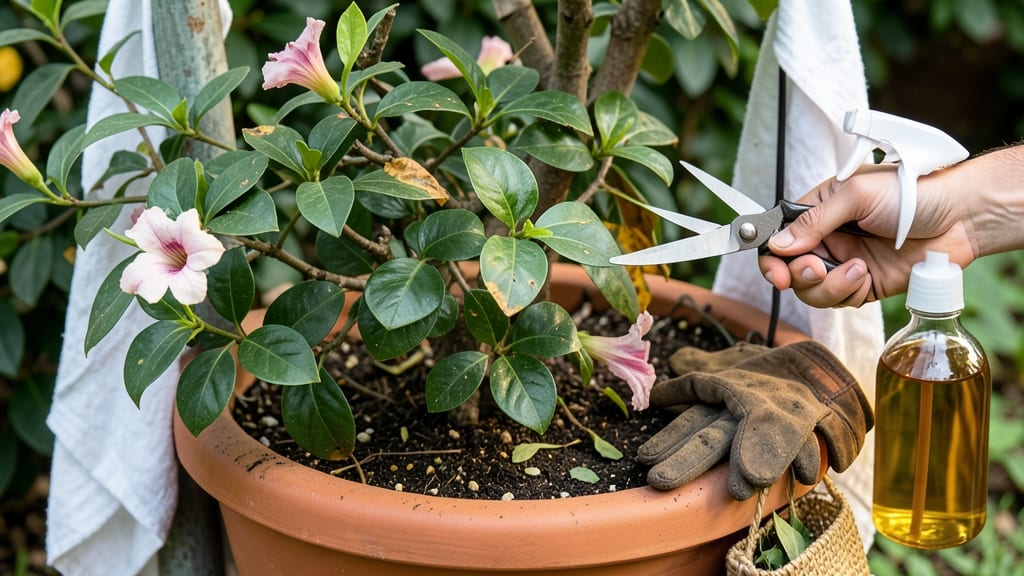
Your Mandevilla’s winter survival starts with a single cut. ✂️ Before the first frost hits, pruning back these tropical vines isn’t just about tidying up—it’s about protecting next year’s blooms.
I’ve learned the hard way that skipping this step means frost-damaged stems and fewer flowers come spring, no matter how much you love those velvety pink blooms.
The right time is critical: wait until temperatures consistently drop below 50°F at night, but act before the first frost. Grab sharp pruners and cut back one-third to half of the current growth, focusing on weak, leggy, or damaged stems.
Aim for clean cuts just above a leaf node or outward-facing bud—this encourages bushier growth next season. In USDA Zones 9-11, you might only need light trimming, while Zones 8 and below often require bringing plants indoors or mulching heavily.
After pruning, your Mandevilla will look like a skeleton—but that’s temporary. With proper winter care, you’ll see fresh, vibrant green growth by late winter. For indoor overwintering, trim vines to 12-18 inches, pot in well-draining soil, and place near a south-facing window or under grow lights.
Mulch outdoor plants with 3-4 inches of straw or leaves to insulate roots, and water sparingly to keep soil just moist. The goal? Keep roots alive so they’re ready to burst with new life when warmer weather returns.
Here’s the secret most gardeners miss: Don’t rush the process. Prune too early, and your plant wastes energy on new growth before winter sets in. Prune too late, and frost will damage tender stems.
The sweet spot is that golden two-week window before your first frost—check your local forecast, mark your calendar, and act when the time is right. Your Mandevilla will thank you with more blooms and stronger growth next season.
📚 In This Guide
- What you need
- Instructions
- Tips and common mistakes
- Wrapping up and next steps
What you need
- ● Pruning shears or bypass pruners – Sharp, clean, and sterilized (avoid dull blades that crush stems). Choose a pair with 4- to 6-inch blades for precision.
- ● Garden gloves – Heavy-duty, cut-resistant (Mandevilla’s thorns are no joke!). Opt for nitrile-coated gloves for grip and durability.
- ● Disinfectant (70% isopropyl alcohol or bleach solution) – 1 part bleach to 9 parts water. Sterilize tools before and after use to prevent disease spread.
- ○ Pruning saw (optional but helpful) – For thick stems over ½ inch in diameter. A folding pruning saw with a fine-tooth blade works best.
- ● Garden twine or plant ties – For securing large branches if needed (about 10 feet per plant should suffice).
- ● Containers or pots (if overwintering indoors) – 1-2 sizes larger than the root ball, with drainage holes. Choose 12-18 inch pots for mature Mandevilla.
- ● Well-draining potting mix – A blend of 50% peat moss or coco coir, 30% perlite/pumice, and 20% orchid bark keeps roots happy.
- ○ Mulch (optional for outdoor overwintering) – Straw, pine bark, or shredded leaves (about 2-3 inches deep) to insulate roots.
- ● Plant food (balanced fertilizer, 10-10-10) – A light feeding after pruning (follow label rates) encourages new growth in spring.
- ● Rooting hormone (for cuttings) – If you’re propagating from pruned stems, gel or powder form speeds up root development.
- ● Grow lights or LED bulbs – For indoor overwintering, provide 12-14 hours of light daily to keep plants healthy.
- ● Humidity tray or pebble tray – Helps maintain 50-60% humidity if your home is dry.
Step-by-step instructions for pruning Mandevilla before winter
Revitalize your mandevilla with this precise pruning method—it’s the secret to lush, blooming vines next spring.
✂️ Step 1: Time Your Pruning for Optimal Recovery
Wait until after your first frost has blackened the foliage but before hard freezes set in—typically late fall in most climates. This timing ensures the plant has entered dormancy but hasn’t suffered irreversible damage from extreme cold. I always prune mine in November here in Zone 8, right after the last expected frost warning.
Cutting back too early leaves the plant vulnerable to late-season warmth that can trick it into new growth, which frost will then kill. If you miss the window, don’t worry—just wait until spring to prune, but you’ll sacrifice some early-season blooms. The key is to work when the plant is dormant but still pliable—not brittle from freeze damage.
✂️ Step 2: Sterilize Tools and Remove Dead Growth
Clean your pruners with rubbing alcohol to prevent spreading disease between cuts. Start by removing any blackened, mushy stems—these are dead and won’t regrow. Healthy wood should snap cleanly when bent, while dead wood will crumble. I like to make a small notch with my thumb to test stem resilience before cutting.
Next, trim back the remaining stems to about 6-12 inches from the base, cutting just above a leaf node (the bump where leaves attach). This length gives the plant enough energy reserves to regrow vigorously in spring. Avoid cutting into old, woody growth—focus on the newer, greenish-brown stems that show signs of life.
🪴 Step 3: Protect the Base and Mulch Thoroughly
After pruning, mound 4-6 inches of mulch (like shredded bark or straw) around the base of the plant, leaving a 2-inch gap around the stem to prevent rot. This insulation mimics the plant’s natural tropical habitat and shields roots from freezing temperatures. I use pine straw because it’s lightweight and drains well, but any organic mulch works.
For container-grown mandevillas, wrap the pot in bubble wrap or frost cloth and bury it in a straw-filled box if temperatures dip below 20°F. The goal is to keep the root zone above 30°F—colder than that, and the roots risk damage. Water the plant lightly before mulching to ensure the soil retains moisture through winter.
☀️ Step 4: Monitor and Adjust for Extreme Cold
Check your pruned mandevilla during hard freezes (below 25°F). If the mulch shifts or looks dry, add more. In particularly cold regions, consider covering the entire plant with a clear plastic bottle (cut in half and placed like a cloche) to trap heat. Remove it on sunny days to prevent overheating.
Spring pruning comes next—wait until new growth appears (usually March-April in most zones) before trimming back any remaining dead wood. The plant will reward you with earlier blooms if you’ve given it this winter care. Real talk: Skipping the mulch step is the fastest way to kill your mandevilla—don’t skip it!
Tips & tricks for perfect Mandevilla winter pruning
These precision techniques will ensure your mandevilla survives winter and thrives next spring with vibrant blooms.
Timing is Everything: The late fall window between first frost and hard freezes is critical—this is when your mandevilla is dormant but still resilient. In colder climates (Zones 3-7), aim for mid-October to early November after leaves have blackened. In warmer zones (like my Zone 8), I wait until November when nighttime temperatures consistently drop below 40°F. Pruning too early can stimulate new growth that frost will kill, while waiting too long risks brittle stems that snap instead of cutting cleanly.
Tool Preparation Matters: Sterilizing your pruners with rubbing alcohol isn't just about disease prevention—it also keeps your cuts clean for better healing. I make it a habit to wipe blades between each cut when removing dead growth, especially if you're working with multiple plants. For stubborn stems, I find that making a small notch with my thumb first creates a clean break point, preventing jagged edges that can invite pests or disease. Use sharp, bypass pruners—they make cleaner cuts that heal faster than the ragged cuts from dull tools.
Mulching Technique for Root Protection: The 4-6 inch mulch layer isn't just about insulation—it's about creating a microclimate that mimics tropical conditions. I always mound mulch higher than the plant's base (creating a volcano shape) to maximize heat retention. For container plants, the straw-filled box trick works wonders—just remember to leave the top open slightly for air circulation. The key is maintaining that 30°F minimum at the root zone; any colder and you risk root damage that can take years to recover from.
Visual Cues for Pruning Success: When testing stem resilience in Step 2, look for three key indicators: healthy stems snap cleanly with a slight give, while dead stems crumble easily. The 6-12 inch height after pruning should leave you with stems that are still flexible—if they feel brittle, you've waited too long. After mulching, healthy soil should smell earthy, not sour or rotten. These visual checks ensure you're giving your mandevilla the best chance for spring recovery.
Pro Tips for Cut Back Mandevilla For Winter
- These precision techniques will ensure your mandevilla survives winter and thrives next spring with vibrant blooms.
- Timing is Everything: The late fall window between first frost and hard freezes is critical—this is when your mandevilla is dormant but still resilient.
- Tool Preparation Matters: Sterilizing your pruners with rubbing alcohol isn't just about disease prevention—it also keeps your cuts clean for better healing.
Frequently asked questions
about trimming your Mandevilla for winter can help ease any last-minute doubts. Here are some common queries—and their answers—to keep your plant thriving!When is the exact best time to prune Mandevilla before winter?
Prune your Mandevilla after the first frost (typically late fall to early winter, around November-December in most U.S. zones). This allows the plant to enter dormancy naturally before heavy cuts. If you’re in a mild climate (Zone 10+), you can wait until February—just avoid pruning too close to spring growth.
Should I cut back Mandevilla all the way to the ground?
No! Only trim back 1/3 to 1/2 of the plant, cutting just above a leaf node or bud. Over-pruning can stress the plant and delay spring regrowth. Think of it like a haircut—you want to shape it, not shave it bald! Pro tip: Use clean, sharp shears to avoid tearing stems.
What if my Mandevilla doesn’t bloom well after pruning?
If your Mandevilla skips blooms the next season, it might be due to over-pruning, poor light, or lack of nutrients. Try these fixes:
- Prune less aggressively next time (stick to shaping, not drastic cuts).
- Ensure it gets 6+ hours of sunlight daily in spring/summer.
- Fertilize with a balanced bloom booster (like 20-20-20) in early spring.
Can I leave Mandevilla outside all winter instead of bringing it in?
It depends on your climate! In Zones 9-11, Mandevilla can often survive mild winters outside if mulched heavily and protected from wind/frost. However, in colder zones (Zone 8 or below), always bring it indoors or use frost cloth. If you try outdoor overwintering, watch for brown stems—a sign of frost damage.
Do I need to sterilize my pruners before and after cutting?
Absolutely!
Sterilizing pruners with rubbing alcohol (70%+) or a 10% bleach solution before and after pruning prevents bacterial/fungal spread (like Mandevilla’s dreaded leaf spot). Wipe blades dry to avoid rust. Bonus: Store pruners in a dry place to keep them sharp and ready for next season!
Wrapping up and next steps
Cutting back your Mandevilla for winter doesn’t have to be stressful—it’s all about timing, technique, and a little TLC!
By pruning in late fall or early winter, protecting from frost, and storing cuttings properly, you’ll set the stage for stunning blooms next season. 🌸 With these steps, your Mandevilla will bounce back stronger than ever when spring arrives.
Ready to give your plant the care it deserves? Grab your pruners and get started! Then, mark your calendar for spring—it’s time to repot and reintroduce your Mandevilla to the outdoors. Happy pruning! ✂️🌿