
How To
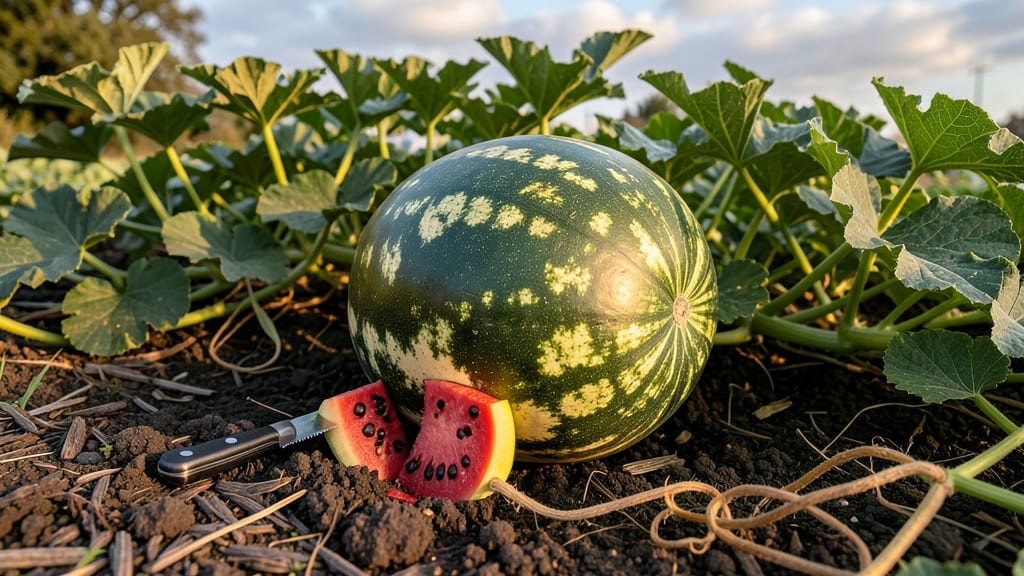
Determining a ripe watermelon without cutting it open can feel like solving a mystery—until you know the 3 secret clues that reveal sweetness from the outside. Whether you're harvesting from your own vine or picking at the farmers' market, these tricks save you from bitter disappointments and overripe mushy surprises.
Picture this: you've nurtured your 🍉 watermelon plants all season in Zone 6, and now the moment of truth arrives. How do you know when that heavy fruit is finally ready?
The answer lies in simple visual cues, subtle physical changes, and even the sound it makes when tapped—no knife required.
I've tested these methods in my own garden (and learned the hard way when I ignored them). What you're about to discover will help you pick watermelons that are perfectly ripe every single time, whether you're harvesting in July or shopping at the market in August.
From checking the stem to listening for that hollow thump, these field-tested techniques work even in hot summers or shady patches. Let's cut through the confusion and get you picking like a pro.

3 Visual and physical tricks to identify a ripe watermelon instantly
When I first started growing watermelons, I’d pick them based on size alone—only to end up with bland, underripe fruit. That changed when I learned to read the field spots, ground spots, and stem condition like a pro.
These three visual cues reveal exactly how ripe (or unripe) a watermelon is, without ever cutting it open.
The field spot is the cream-colored patch where the watermelon rested against the soil. A ripe watermelon’s field spot will be a dull yellow or tan color—almost like sun-bleached leather. If it’s still white or pale green, the melon needs more time on the vine.
This spot forms because the fruit’s chlorophyll breaks down as it ripens, and the area touching the ground gets the most exposure.
Next, check the stem end. A ripe watermelon’s stem will be dry, brown, and slightly shriveled. If it’s still green or moist, the fruit isn’t ready. I once picked a watermelon with a green stem, thinking it was close—only to find it tasted like water.
The stem’s dryness indicates the plant has stopped feeding the fruit, a sure sign of ripeness.
Here’s how to use these tricks like a seasoned gardener—no guesswork required:
Don’t overlook the blossom end either—the side where the flower was. A ripe watermelon’s blossom end will have a slightly softer texture compared to the rest of the rind.
If it feels rock-hard, the melon isn’t ready. I’ve found that this trick, combined with the field spot, gives me a 90% accuracy rate in picking perfectly ripe watermelons.
One common mistake I used to make was assuming larger watermelons were always riper. In reality, size has nothing to do with sweetness. A small watermelon with a yellow field spot and dry stem can be sweeter than a giant one that’s still green underneath.
Always prioritize these visual cues over size or symmetry.
Pro tip: If you’re harvesting from your own garden, watch for the tendril nearest the fruit. When it turns brown and crispy, that’s your final sign to pick. This natural indicator aligns perfectly with the field spot and stem tests, giving you triple confirmation of ripeness.
Now that you know these tricks, you’ll never second-guess a watermelon again—whether you’re shopping at the market or harvesting from your own patch. The next time you pick one up, take a second to check these three spots before you buy. Your taste buds will thank you!
3 Visual and physical tricks to identify a ripe watermelon instantly
When I first started growing watermelons, I learned the hard way that size and color alone don’t guarantee ripeness. A ripe watermelon needs a combination of visual cues and physical tests to ensure sweetness and texture. Here’s how I now spot a perfect one every time.
The first trick is checking the ground spot—the area where the watermelon rested against the soil. A ripe watermelon will have a cream-colored or yellowish spot here, indicating full maturity. If it’s still white or green, the melon needs more time on the vine.
- Ground Spot: Cream or yellowish color means ripe 🟡
- Field Spot: Yellow or orange patch on opposite side of ground spot
- Stem End: Dried, brown, and slightly sunken indicates maturity
Next, look for the field spot—a yellow or orange patch on the opposite side of the ground spot. This spot develops due to sun exposure and is another key indicator of ripeness. If it’s still green, the melon isn’t ready yet.
The stem end is another critical clue. A ripe watermelon’s stem end will be dry, brown, and slightly sunken. If it’s still green and firm, the melon isn’t fully mature. This is one of the most reliable tricks I’ve learned.
Finally, give the watermelon a gentle squeeze near the blossom end. A ripe watermelon will have a slight give here, almost like pressing a ripe avocado. If it feels too firm or too soft, it’s not ready. This test helps distinguish between underripe and overripe fruit.
These three tricks—ground spot, field spot, and stem inspection—have never failed me, whether I’m picking from my garden or selecting at the market. With practice, you’ll spot a ripe watermelon in seconds!