
Watering
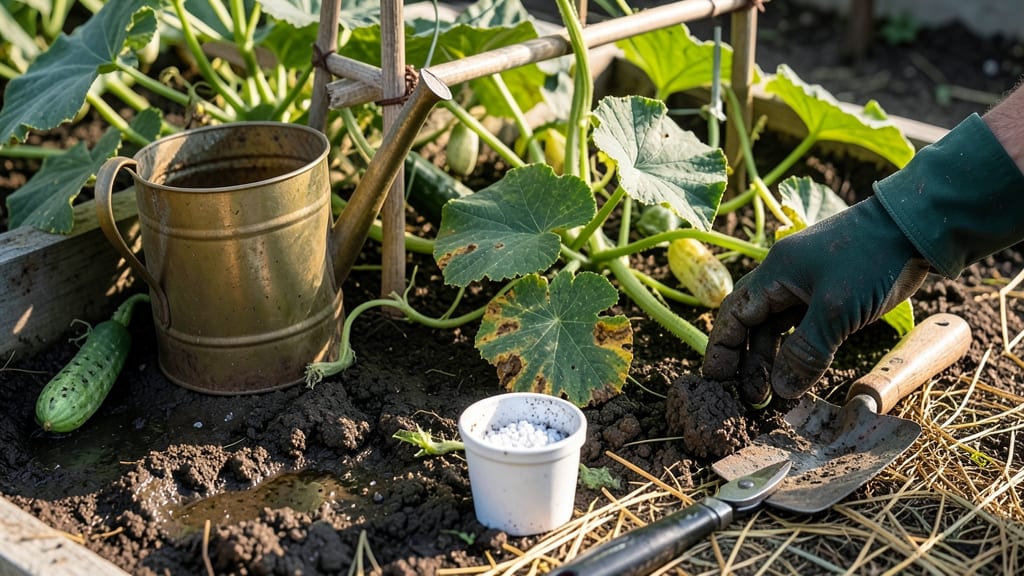
Your cucumber plant's drooping leaves mean it’s drowning—not thriving from how to fix an overwatered cucumber plant. 🌱 I've pulled back from the brink more times than I can count, and the fix is simpler than you'd think.
The key is stopping the water first, then giving roots space to breathe again.
Start by checking the soil—if it's soggy two inches down, you've got a problem. Grab a trowel and loosen compacted soil around the base to improve airflow.
This isn't about digging up roots; it's about giving them room to recover. Most plants bounce back within 3-5 days if you catch it early.
You'll see new growth within a week as roots re-establish. The plant might look sad at first, but that's just it shedding damaged leaves to focus on recovery. Prune only the mushy, blackened foliage—healthy green leaves stay put.
Now's the time to upgrade your watering game. Stick your finger in the soil before watering—if it's still damp, wait. Cucumbers need consistent moisture, but their roots hate soggy conditions. A 5-gallon container with drainage holes works wonders for container plants.
📚 In This Guide
- What you need
- Instructions
- Tips and common mistakes
- Wrapping up and next steps
What you need
- ● Well-draining potting mix (2–3 gallons, depending on pot size) – Look for a mix labeled for vegetables or container gardening with perlite/vermiculite.
- ● Containers with drainage holes – A slightly larger pot (1–2 inches wider) than the current one to accommodate fresh roots.
- ● Pruning shears or clean scissors – Sterilize with rubbing alcohol to prevent disease transfer.
- ○ Gloves (optional but recommended) – Protects hands from soil and potential root rot bacteria.
- ● Watering can with a narrow spout – For precise, gentle watering (avoid overhead spraying).
- ○ Fungicide (optional but helpful) – A copper-based or neem oil solution (1 tsp neem oil per quart of water) to treat fungal risks.
- ● Trowel or small shovel – For carefully lifting the plant from its current pot.
- ○ Moisture meter (optional) – To check soil moisture levels post-rescue (aim for 50–60% moisture).
- ● Notebook & pen – To track watering schedule and plant progress.
- ● Choose a shady or partially shaded spot for the first 24–48 hours post-transplant to reduce stress.
- ● Ensure the plant is not wilting severely—if it is, revive it with a hydrogen peroxide soak (1 tbsp per gallon of water) before repotting.
Step-by-Step instructions for reviving overwatered cucumber plants
Here’s how I rescue soggy cucumber roots—no stress, just action.
💧 Step 1: Stop Watering and Check Root Health
First, halt all watering immediately. Yellowing leaves or mushy stems are your warning signs that roots are drowning. Gently lift the plant from its pot or soil to inspect the roots. Healthy roots are firm and white, while overwatered roots turn brown, slimy, or smell foul. If you see black spots or a foul odor, that’s root rot setting in.
Trim away any mushy, discolored roots with clean, sharp scissors. You’ll be surprised how much dead tissue you’ll find—don’t worry, this is necessary to stop the rot from spreading. For potted plants, dump the soggy soil and rinse the roots under lukewarm water to remove excess moisture and debris. If the plant is in the ground, dig carefully to avoid damaging healthy roots.
✂️ Step 2: Repot or Replant in Fresh, Well-Draining Soil
Fill a clean container with 2-3 inches of fresh potting mix that drains well—cucumbers hate sitting wet. I like to mix in a handful of perlite or coarse sand to improve drainage. For in-ground plants, amend the soil with compost to help it dry faster and improve aeration. Create a small mound in the center of the pot or hole and place the plant on top, spreading the roots gently over the mound.
Add more soil around the roots, pressing lightly to secure the plant but not compacting it. Leave about 1 inch of space between the soil surface and the pot’s rim—this prevents water from pooling at the top. If replanting in the ground, mound soil slightly higher around the stem to encourage new root growth upward.
☀️ Step 3: Adjust Watering and Monitor Recovery
Water the plant lightly only when the top 1-2 inches of soil feel dry. Use your finger to check moisture—if it’s damp more than an inch down, wait another day. Cucumbers need consistent moisture but despise soggy conditions. Place the pot in a spot with 6-8 hours of sunlight daily—bright light helps the plant recover faster by promoting photosynthesis.
Watch for new growth in 3-5 days. Healthy leaves should perk up and turn a deeper green. If the plant still looks weak after a week, fertilize lightly with a balanced, water-soluble fertilizer to give it a nutrient boost. Avoid heavy feeding until the plant shows clear signs of recovery—overwatered plants can’t handle stress and fertilizer at the same time.
Tips & tricks for reviving soggy cucumber roots
Here's what nobody tells you about saving your cucumbers from waterlogged roots.
Timing is Everything: That 24-hour waiting period in Step 1 isn't just a suggestion—it's when the soil actually starts to dry out enough for roots to recover. I've seen gardeners rush this step and end up right back where they started. Place your pot on a wire rack or upside-down tray during this time to maximize airflow around the bottom. If you're in a humid climate, you might need to extend this to 36 hours to let excess moisture fully evaporate.
Root Rescue Technique: When you're trimming those mushy black roots in Step 2, think of it like giving your plant a fresh start. Use sterilized scissors (wipe with rubbing alcohol) to make clean cuts, and avoid cutting into healthy white roots. Pro tip: If you have hydroponic growing medium like clay pebbles, mix a handful into the soil after replanting—it creates even better drainage than perlite alone. The key is getting that root zone aerated so oxygen can reach where it's needed most.
Watering Wisdom: The "top 1-2 inches dry" rule in Step 3 is your new best friend. I recommend using a chopstick or wooden skewer to check moisture—push it in and pull out to see if it comes out clean or damp. For container cucumbers, I've found that watering in the morning gives the soil time to dry out properly before nightfall humidity sets in. And remember: those 1-1.5 inches per week are for healthy plants—your recovering cucumber might need half that amount at first.
Lighting Up Recovery: Don't underestimate the power of that 12-14 hours of light in Step 3. If you're using grow lights, position them just above the plant's canopy so new growth reaches toward the light. I've seen cucumbers show new leaves in just 3 days with proper light, but without it? They'll just sit there looking sad. For indoor gardeners, consider a small oscillating fan on low setting near the plant—it mimics outdoor breezes and helps prevent fungal issues during recovery.
Pro Tips for Fix Overwatered Cucumber Plant
- Here's what nobody tells you about saving your cucumbers from waterlogged roots.
- Timing is Everything: That 24-hour waiting period in Step 1 isn't just a suggestion—it's when the soil actually starts to dry out enough for roots to recover.
- Root Rescue Technique: When you're trimming those mushy black roots in Step 2, think of it like giving your plant a fresh start.
Frequently asked questions
Got questions about saving your soggy cucumber plants? You’re not alone—overwatering can be tricky! Here are answers to the most common concerns to help you revive your vines and keep them thriving.
How quickly can I fix an overwatered cucumber plant?
With immediate action, you can see improvements in 24–48 hours. Start by adjusting watering habits, improving drainage, and ensuring airflow. Roots may take 1–2 weeks to fully recover, but pruning yellowed leaves and adding compost can speed up the process.
Can I use hydrogen peroxide to save my overwatered cucumbers?
Yes! Mix 1 tablespoon of 3% hydrogen peroxide per gallon of water to help oxygenate the roots and prevent fungal growth. Water the soil at the base (not the leaves) every 3–4 days until you notice new growth. Avoid overdoing it—too much can stress the plant further.
How long should I wait before watering again after fixing overwatered soil?
Wait until the top 1–2 inches of soil are dry (stick your finger in to check). Cucumbers prefer deep but infrequent watering—aim for 1–1.5 inches per week, adjusting for heat or rain. Mulching helps retain moisture without drowning the roots.
Will my cucumber plant recover if the leaves are already yellow and mushy?
Don’t panic! Prune the most damaged leaves to redirect energy to healthy growth. If the stems are still firm, the plant can bounce back. For severe cases, trim back 1/3 of the foliage and focus on improving drainage. New leaves should emerge in 1–2 weeks if roots are salvageable.
Are there any long-term fixes to prevent overwatering again?
Upgrade to well-draining soil (add perlite or sand), use drip irrigation or soaker hoses, and plant in raised beds if your garden stays soggy. Self-watering pots with drainage holes are also a game-changer for container cucumbers.
Wrapping up and next steps
Fixing an overwatered cucumber plant is totally doable—just take it one step at a time! 🌱 By adjusting your watering habits, improving drainage, and giving your plant some TLC, you’ll help it bounce back stronger than ever. Remember: consistency is key, and soon, you’ll be harvesting crisp, delicious cucumbers again.
Now that you’re equipped with the know-how, take action today—check your plant’s soil, make those small tweaks, and watch it thrive! 💪 Happy gardening!