
Shrubs
How to get your blackberry bushes to produce—last summer, I watched mine go from lush canes to bare branches—until I fixed three critical mistakes that were starving the fruit production. The good news? It’s never too late to turn things around with the right pruning, feeding, and deadheading routine.
First, pruning isn’t optional—it’s the secret weapon. Cut back old canes after harvest (they won’t produce again) and thin new growth to let sunlight reach the center. Then, feed them in early spring with compost or a balanced fertilizer (10-10-10 works).
And yes, deadhead spent flowers to redirect energy into new fruit. These steps alone can double your harvest next season.
You’ll see the difference in 3-4 weeks: thicker canes, more blossoms, and berries so plump they’ll have neighbors asking for cuttings. The key is consistency—blackberries reward patience with years of heavy harvests once you get the rhythm right.
Works for thornless and traditional varieties alike, and adapts to both in-ground and container growing. Let’s get those bushes producing like they’re in a commercial orchard—without the fancy equipment.
📚 In This Guide
- What you need
- Instructions
- Tips and common mistakes
- Wrapping up and next steps
What you need
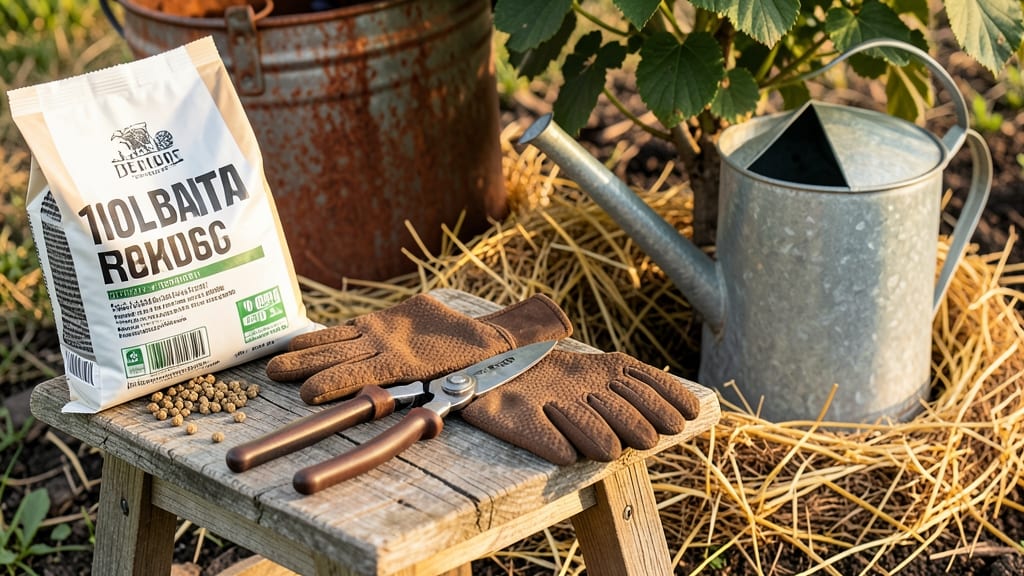
- ● Pruning shears or loppers: Sharp, clean pair (bypass pruners preferred). Quantity: 1–2 (for smaller/medium bushes, 1 may suffice; larger bushes need 2 for efficiency).
- ● Gloves: Heavy-duty gardening gloves (cut-resistant for thorny varieties like Blackberry thornless or Cheyenne). Quantity: 1 pair.
- ○ Pruning saw: For thick canes (1-inch diameter or larger). Optional but helpful: Yes, if your bushes are mature.
- ● Disinfectant: 70% isopropyl alcohol or a 10% bleach solution (to sterilize tools between cuts). Quantity: Small spray bottle or wipe.
- ● Compost or well-rotted manure: Organic matter for mulching. Quantity: 2–3 gallons per bush (spread in a 2–3 inch layer).
- ● Balanced fertilizer: 10-10-10 or organic options like fish emulsion (low-nitrogen in late summer). Quantity: 1–2 lbs per 100 sq. ft. or as per package instructions.
- ● Watering can or hose with nozzle: For deep watering (1–2 gallons per bush, 2–3 times per week).
- ○ Stakes or trellis system: For support (especially for floricane-producing varieties like Triple Crown). Optional: Yes, if canes are sprawling.
- ● Healthy, established bushes: At least 2–3 years old (younger plants focus on root/foliage growth, not fruit).
- ● Sunlight: Full sun (6+ hours daily) for optimal fruiting.
- ● Well-draining soil: pH 5.5–6.5 (test soil with a kit if unsure). Adjust with: Lime (to raise pH) or sulfur (to lower pH).
- ● Water access: Consistent moisture (especially during flowering/fruiting). Drought? Mulch heavily to retain moisture.
- ● Patience: Blackberries thrive with annual care—no overnight fixes!
Step-by-step guide to maximizing blackberry bush production
Blackberries reward careful attention with bountiful harvests—here’s how to coax the most berries from your bushes.
Prune Correctly for Airflow and Fruit Production
Blackberries produce fruit on second-year canes (floricanes) and new growth (primocanes). In late winter or early spring, cut back all dead, diseased, or weak canes at ground level using clean, sharp pruners. This removes last year’s spent fruit-bearing canes, redirecting energy to new growth. Keep only 4-6 of the strongest, most vigorous canes—more than that shades the center and reduces yields.
For trailing varieties, train remaining canes to a trellis or wire system to improve airflow and sunlight penetration. Poor airflow invites fungal diseases like botrytis, which can rot berries before they ripen. Prune out any canes growing toward the center of the plant—these will never get enough light to fruit well. I like to prune on a dry, sunny day; the wounds heal faster when the air is dry.
Fertilize for Strong Growth and Fruit Development
Blackberries are heavy feeders, so spring fertilization is critical. Apply a balanced 10-10-10 fertilizer (or organic equivalent like composted manure) when new shoots are 4-6 inches tall. Use ½ pound per 10-foot row or follow label instructions for container-grown plants. Avoid high-nitrogen fertilizers later in the season—they promote leafy growth at the expense of fruit.
Mid-summer, switch to a low-nitrogen, high-phosphorus fertilizer (like 5-10-10) to encourage flowering and fruit set. I also top-dress with 2-3 inches of compost around the base of the plant, keeping it 6 inches away from the stem to prevent rot. Water deeply after fertilizing to help nutrients penetrate the soil—blackberries hate dry roots during flowering.
Deadhead and Thin Berries for Larger Harvests
As berries begin to form, remove small or misshapen fruit clusters when they’re still pea-sized. This reduces competition for nutrients, allowing remaining berries to grow larger and sweeter. I use my fingers to gently twist off clusters—no need for pruners. Focus on removing every other berry in dense clusters, leaving the largest, healthiest ones behind.
Watch for mummified berries (dried, shriveled fruit) left from birds or disease. These harbor fungal spores and should be removed immediately. Also, prune out any suckers (shoots growing from the roots) that appear outside the main plant area—they drain energy from fruit production. Deadheading isn’t just about aesthetics; it’s about redirecting the plant’s energy to the berries you want to harvest.
Manage Water and Mulch for Consistent Production
Blackberries need 1-1.5 inches of water per week, especially during flowering and fruiting. Water deeply at the base (not overhead) to prevent fungal diseases. I use drip irrigation to keep leaves dry, which reduces botrytis risk. Let the top 2 inches of soil dry out between waterings to prevent root rot—blackberries hate soggy feet.
Apply 2-3 inches of mulch (straw or wood chips) around the base of the plant, keeping it 4 inches away from the stem. Mulch retains moisture, suppresses weeds, and regulates soil temperature. Refresh the mulch layer in early spring before new growth begins. Avoid fresh wood chips, which can draw nitrogen from the soil and stunt growth.
Protect Against Pests and Diseases Year-Round
Monitor for Japanese beetles, spider mites, and aphids, which can defoliate plants and reduce fruiting. I use neem oil spray (mixed weekly) as a preventive measure during peak pest seasons. For fungal diseases like anthracnose or rust, apply a copper fungicide in early spring and after heavy rains. Prune out infected leaves immediately and dispose of them in the trash—not the compost.
Birds are another challenge—netting the bushes when berries turn red is the easiest solution. I use fine mesh netting secured loosely so it doesn’t damage the canes. Harvest berries every 2-3 days once they begin to ripen; overripe berries attract more pests and animals. The more you pick, the more the plant produces—it’s a feedback loop worth encouraging.
Tips & tricks for maximizing blackberry bush production
Blackberries thrive when you understand their growth patterns and give them the right care. Here's how to ensure your bushes deliver the biggest harvests possible.
Pruning Precision: When pruning in late winter or early spring, focus on cutting back last year's canes (floricanes) to the ground—they've already fruited and won't produce again. The key is to leave only 4-6 of the strongest new canes (primocanes) to prevent overcrowding. I've found that using a sharp pair of pruners and making clean cuts just above a bud prevents disease entry points. For trailing varieties, don't just cut—train those canes to a trellis system to maximize sunlight exposure, which is crucial for fruit development. This simple step can double your yield by improving both airflow and light penetration.
Fertilization Timing: The switch from spring to summer fertilization is critical. In spring, use a balanced 10-10-10 fertilizer when shoots reach 4-6 inches tall to encourage strong growth. But here's what nobody tells you—mid-summer is when you need to shift to a low-nitrogen, high-phosphorus formula like 5-10-10. This change signals the plant to focus on fruit production rather than leafy growth. I've seen bushes go from sparse berries to heavy clusters just by making this one adjustment. Remember to water deeply after fertilizing to help nutrients reach the roots.
Deadheading Strategy: The pea-sized berry rule is non-negotiable. When you see those tiny berries forming, remove every other one in dense clusters. This might seem counterintuitive, but it works because you're forcing the plant to concentrate its energy on fewer, larger berries. I use my fingers to gently twist off the small ones—no need for pruners. Watch for mummified berries too; these dried remnants harbor fungal spores that can spread to healthy fruit. Remove them immediately to prevent disease from taking hold.
Watering Wisdom: Blackberries need consistent moisture, but here's the catch: they hate soggy feet. Aim for 1-1.5 inches of water per week, delivered deeply at the base of the plant. The top 2 inches of soil should dry out between waterings to prevent root rot. I've had the best success with drip irrigation systems that keep leaves dry—this simple upgrade can drastically reduce fungal diseases like botrytis. And remember, during flowering and fruiting, those water requirements become even more critical.
Pro Tips for Get Blackberry Bushes To Produce
- Blackberries thrive when you understand their growth patterns and give them the right care.
- Pruning Precision: When pruning in late winter or early spring, focus on cutting back last year's canes (floricanes) to the ground—they've already fruited and won't produce again.
- Fertilization Timing: The switch from spring to summer fertilization is critical.
Frequently asked questions
Got questions about coaxing those juicy blackberries into production? Here are answers to the most common ones—so you can troubleshoot, plan, and harvest like a pro!
Why aren’t my blackberry bushes producing berries?
If your bushes are healthy but still bare, they might be too young (2–3 years old) or lack proper pruning. Overcrowding, poor soil, or insufficient sunlight can also stunt fruit production. Check for pests or disease, and ensure you’re pruning last year’s canes (they bear fruit) while removing new growth early.
When is the best time to prune blackberries for maximum fruit?
Prune dormant season (late winter or early spring, before buds swell) to shape the bush and remove dead wood. For floricane-producing varieties (like ‘Triple Crown’), cut back old canes after harvest to encourage next year’s growth. Primocane-bearing types (like ‘Arapaho’) need late-summer pruning to promote winter fruit.
Can I force blackberries to produce earlier or later in the season?
While you can’t drastically shift the harvest window, you can extend it by planting primocane-fruiting varieties (they bear fruit on new growth in fall) alongside traditional types. For earlier ripening, choose early-season cultivars like ‘Chester’ or ensure full sun and consistent watering to speed up growth.
What should I do if my blackberries are small or tasteless?
Small, bland berries often signal underfeeding or overcrowding. Boost production by:
- Fertilizing with high-nitrogen in early spring, then switching to potassium-rich (like 5-10-10) as flowers form.
- Thinning canes to 4–6 per plant for better airflow and sunlight.
- Watering deeply 1–2 times/week (drought stress shrinks fruit).
How do I prevent birds from eating all my blackberries before I can?
Birds are drawn to ripe berries—here’s how to outsmart them:
- Use bird netting (lightweight, breathable) over bushes when fruit starts coloring.
- Hang old CDs or reflective tape nearby to scare them off.
- Harvest early in the morning when birds are less active.
- Try spicy pepper spray (mix cayenne + water) as a last resort.
Are there blackberry varieties that produce with less effort?
Yes! Thornless, semi-evergreen varieties like ‘Natchez’ or ‘Ouachita’ require minimal pruning and are disease-resistant. Primocane-bearing types (e.g., ‘Apache’ or ‘Chester’) produce fruit on new growth, so they’re perennial producers with less winter dieback. Choose based on your climate zone!
Wrapping up and next steps
Growing juicy, abundant blackberries is totally within your reach—just combine the right techniques with a little patience! 🌱 By mastering pruning, fertilizing, and deadheading, you’ll coax your bushes into producing heavier, sweeter harvests year after year.
Remember, consistency is key, so keep an eye on your plants and adjust as needed.
Now that you’re armed with the know-how, roll up your sleeves and get growing! Grab your pruners, check your soil, and watch those berries multiply. Happy harvesting! 🍇