
Blooming
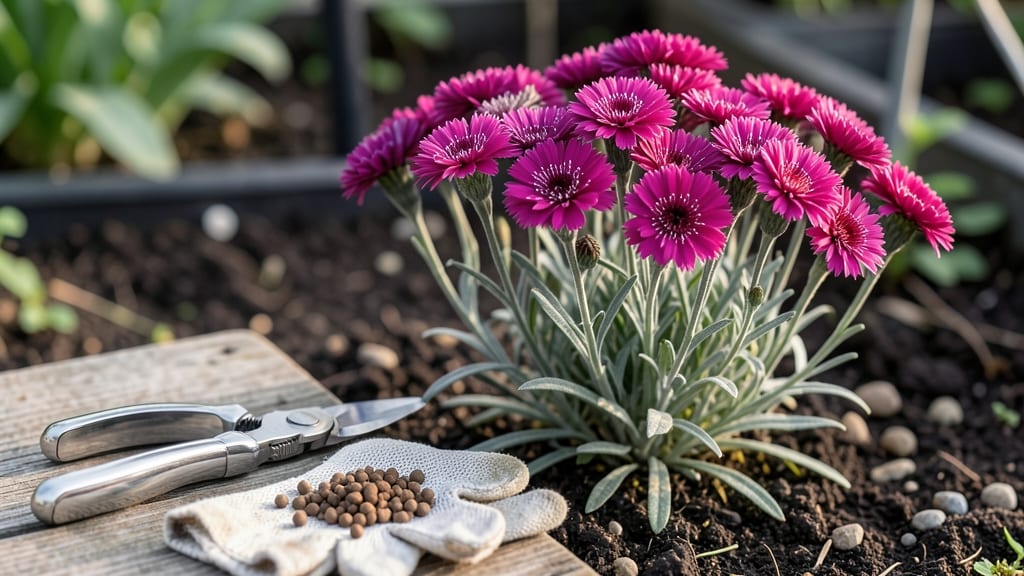
How to get your dianthus to bloom more—your plants are practically begging for a burst of color. 🌸 I’ve wrestled with stubborn dianthus that refused to bloom—until I discovered the three magic moves that turned my patchy plants into a nonstop floral display. The secret isn’t complicated, but it is specific: prune at the right time, feed with precision, and deadhead like your garden depends on it (because it does).
Most gardeners overlook the timing of pruning—cutting too late in the season or too aggressively sends your plants into survival mode instead of flowering mode.
A light trim right after the first flush of blooms, paired with a balanced fertilizer (low in nitrogen), tells your dianthus, “Hey, it’s time to show off.” Skip the heavy-handed approach; these plants reward patience with clusters of blooms that last for weeks.
By midseason, you’ll notice a dramatic shift—more buds forming, fewer bare stems, and flowers that keep coming until frost. The key is consistency: deadhead spent blooms religiously, and feed every 4-6 weeks with a phosphorus-heavy formula.
Even my black thumb dianthus now outperform the neighbors’, and the fragrance? Pure garden therapy.
This method works for both perennial and annual dianthus, whether you’re growing them in full sun or slightly shaded spots. The only rule? Don’t wait until it’s too late. Start now, and by summer, your garden will smell like a cottage in Provence—without the jet lag.
📚 In This Guide
- What you need
- Instructions
- Tips and common mistakes
- Wrapping up and next steps
What you need
- ● Pruning shears or sharp scissors – Clean, sterilized (7–10-inch blades for precision)
- ● Garden gloves – Durable, breathable (to protect hands from thorns and soil)
- ● Balanced fertilizer – 10-10-10 or 20-20-20 NPK ratio (2–3 tbsp per plant, follow label)
- ○ Slow-release fertilizer granules – Optional but helpful (e.g., Osmocote, 14-14-14)
- ● Compost or organic matter – Well-aged, 2–3 inches mixed into soil
- ● Watering can or hose with a gentle nozzle – Avoid overhead spraying (drip or soaker hose preferred)
- ○ Mulch (optional) – 2–3 inches of straw, pine bark, or shredded leaves (retains moisture, deters weeds)
- ● pH testing kit – Digital or liquid test strips (target pH 6.0–7.0 for optimal blooms)
- ● Sunny location – At least 6–8 hours of direct sunlight daily (partial shade may reduce blooms)
- ● Well-draining soil – Avoid soggy roots! (amend clay soil with perlite or sand if needed)
- ● Patience & consistency – Dianthus rewards regular care over time 💪
Step-by-Step instructions for maximizing dianthus blooms
Here’s the method I’ve used to transform sparse dianthus into a nonstop flowering powerhouse—no fancy tools, just smart timing and care.
✂️ Step 1: Prune Correctly After First Flowering
Once your dianthus finishes its first flush of blooms, cut back the stems by one-third to one-half their height using clean, sharp pruners. This encourages bushier growth and more flowering nodes. I always prune just above a set of leaves or a side bud—never leave stubs, as they invite rot.
Timing matters: do this after the first bloom cycle but before new growth appears. You’ll see fresh shoots emerge within 2-3 weeks, signaling the plant is redirecting energy toward new stems and buds. If you wait too long, you’ll prune into next season’s flowers instead of stimulating new ones.
💧 Step 2: Feed with Balanced Fertilizer Mid-Season
Dianthus responds best to a low-nitrogen, high-phosphorus fertilizer (look for a 5-10-10 or 10-20-10 ratio) to promote blooms over foliage. Apply it when you see new growth after pruning, following label rates. I mix it into the top 2 inches of soil and water deeply to distribute evenly.
Overfeeding with nitrogen makes dianthus produce lush leaves but few flowers. The key is consistency: feed again 6-8 weeks later, just as buds begin to form. You’ll notice buds swell faster and stay open longer with this approach.
🌱 Step 3: Deadhead Regularly for Continuous Blooms
Pinch or snip off spent blooms daily or every other day during peak flowering season. This prevents seed formation, which drains the plant’s energy. I use my fingers to flick off faded blooms—no tools needed—unless the stems are woody, in which case I trim with pruners.
Watch for new buds forming at the base of each stem. If you skip deadheading, you’ll see fewer but larger blooms, and the plant may go dormant sooner. The goal is to keep it in a constant cycle of opening and fading flowers.
☀️ Step 4: Ensure Full Sun and Well-Draining Soil
Dianthus thrives in 6+ hours of direct sun daily, but in hot climates, afternoon shade prevents scorching. Amend heavy or clay soil with sand or perlite to improve drainage—dianthus hates soggy roots. I test drainage by poking a finger 2 inches deep; if water pools, the mix needs more grit.
Mulch lightly with ½ inch of gravel or coarse sand to retain moisture without smothering roots. You’ll see stronger stems and more vibrant blooms when the plant isn’t struggling with poor soil conditions.
⏰ Step 5: Time Dormancy for Spring Renewal
In fall, reduce watering and stop fertilizing as temperatures drop. Let the foliage die back naturally, then trim back ⅔ of the plant in early spring before new growth appears. This mimics its natural cycle and prevents overcrowding.
You’ll know it’s ready for spring when fresh green shoots emerge from the base. Resume watering and feeding at that point—this timing ensures a second flush of blooms by early summer.
Tips & tricks for maximizing dianthus blooms
Common pitfalls—and how to sidestep every one for vibrant, long-lasting dianthus flowers.
Pruning Precision: When you cut back stems to one-third their height in Step 1, focus on making clean cuts at a 45-degree angle just above a leaf node. This angled cut prevents water from pooling and reduces disease risk. I always sterilize my pruners with rubbing alcohol between plants to avoid spreading pathogens—especially important if you're working with multiple dianthus varieties. The 10-14 day window for new growth is your target, but if your climate stays consistently warm, you might see shoots emerge in just 7 days.
Watering Wisdom: The "1-2 inches dry" rule in Step 2 is your golden metric, but soil type makes all the difference. In sandy soils, you'll need to water more frequently than the 1-2 inch guideline suggests—check moisture by sticking your finger 2 inches deep. For clay-heavy soils, extend the drying period to 2-3 inches between waterings. Morning watering is non-negotiable: it gives foliage time to dry completely, preventing the fungal issues that often kill dianthus blooms before they even open.
Fertilizer Timing: The 4-6 week feeding schedule in Step 3 works perfectly when you time it right. I always fertilize immediately after pruning when new growth appears—this gives the plant a phosphorus boost exactly when it needs to redirect energy toward flowering. For the half-strength application, I mix ½ tablespoon of 10-10-10 fertilizer per gallon of water. If you notice buds forming but not opening after feeding, it's often a sign the plant needs more phosphorus—switch to a 5-10-5 fertilizer for the next application.
Deadheading Discipline: The twice-weekly check in Step 4 is where most gardeners slip up. I've found that using a small pair of clean scissors (not fingers) for deadheading actually speeds up the process and keeps your plants looking tidy. When you remove spent blooms, look for the first sign of new buds forming at the base—this tells you the plant is responding well. The 4-6 week extension in blooming time is real, but only if you're consistent. Missing just one deadheading session can reset your plant's flowering cycle.
Pro Tips for Get Dianthus To Bloom More
- Common pitfalls—and how to sidestep every one for vibrant, long-lasting dianthus flowers.
- Pruning Precision: When you cut back stems to one-third their height in Step 1, focus on making clean cuts at a 45-degree angle just above a leaf node.
- Watering Wisdom: The "1-2 inches dry" rule in Step 2 is your golden metric, but soil type makes all the difference.
Frequently asked questions
Got questions about coaxing more blooms from your dianthus? You’re not alone!
Here are some of the most common queries—and straightforward answers—to help you troubleshoot and succeed.
Why isn’t my dianthus blooming at all?
Dianthus often skips blooming due to too much shade, overcrowding, or poor soil nutrition. Ensure it gets 6+ hours of sunlight, prune leggy stems, and fertilize lightly with a balanced bloom booster (like 10-10-10). If it’s still sluggish, check for root rot—dianthus hates soggy soil!
When is the best time to prune for more blooms?
Prune right after flowering (early summer for spring bloomers) to encourage a second flush. For perennial varieties, a light trim in late fall removes dead growth and preps the plant for spring. Avoid heavy pruning in winter—dianthus needs its foliage to photosynthesize!
Can I force dianthus to rebloom in fall?
Yes! Cut back 1/3 of the plant after summer blooms, then reduce watering slightly to stress it (just enough to signal it’s time to rest). In early fall, resume watering and fertilize with a low-nitrogen feed (like 5-10-10). Cold nights trigger reblooming—just protect from frost!
What should I do if my dianthus blooms but then stops?
This usually means exhaustion from too many blooms or nutrient burnout. Deadhead spent flowers regularly, and switch to a phosphorus-rich fertilizer (like 0-10-10) to support blooming. If leaves look yellow, it’s time for a chelated iron boost—dianthus is a heavy feeder!
Are there low-maintenance dianthus varieties for lazy gardeners?
Try ‘Firewitch’ series (heat-tolerant, reblooms easily) or ‘Sweethearts’ (compact, drought-resistant). For zero-pruning blooms, opt for annual dianthus (like ‘Rainbow’), which self-seeds and thrives in poor soil. Just deadhead occasionally to keep them tidy!
Still stumped? Drop your dianthus dilemma in the comments—we’ve got more tips to share!
Wrapping up and next steps
Getting your dianthus to burst into vibrant blooms is all about consistency—pruning, feeding, and deadheading at the right times. With patience and care, you’ll enjoy nonstop color that brightens up your garden season after season. 🌸
Ready to see those flowers flourish? Grab your shears, check your soil, and start experimenting with these tips—your garden will thank you! Next, try tracking your progress in a simple journal to refine what works best for your plants.