
Pests
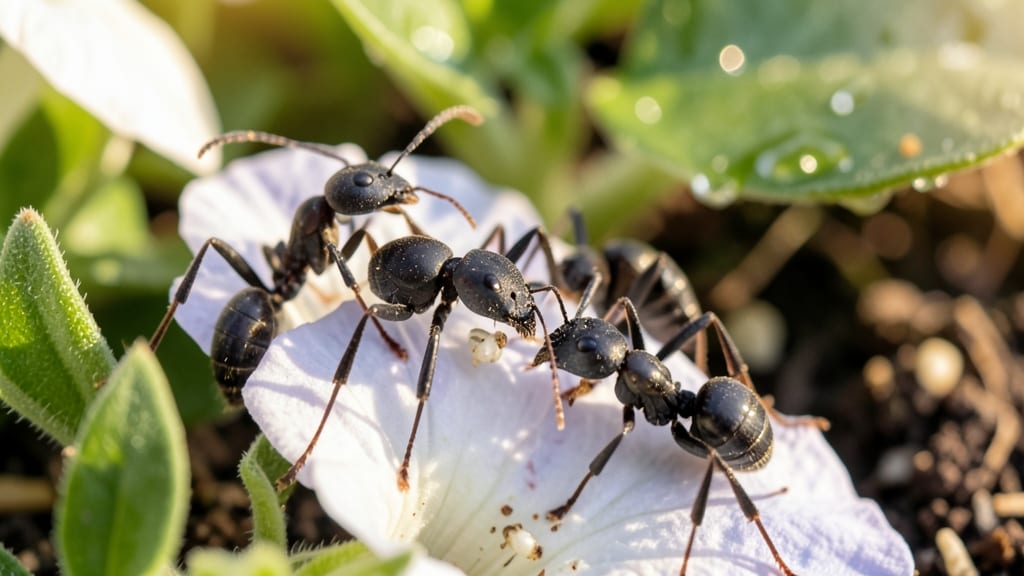
To get rid of ants on flowers, spray targeted areas with soapy water (1 tsp dish soap + 1 cup water) or vinegar solution (1:1 ratio) directly on ant trails and nests. Reapply every 24 hours until ants disappear, avoiding direct contact with flower petals to prevent damage.
Ants invade flowers primarily because they're drawn to the natural sugars in nectar and honeydew produced by aphids—those tiny pests ants often "farm" on plants. 🔥 The problem escalates when ants leave pheromone trails that recruit thousands more workers, turning your garden into an ant highway.
Unlike general pest control, flower-specific solutions must be gentle enough to avoid damaging delicate petals while still disrupting these chemical signals. That's why diluted soapy water works so well: it breaks surface tension on ants' bodies without harming the plants themselves.
For a more natural approach, consider sprinkling cinnamon powder around the base of your plants—ants hate its scent but it won't harm your blooms. 💫 The key is consistency: ants are persistent, so you'll need to reapply treatments every 24-48 hours until you've completely disrupted their foraging patterns.
Always test any solution on a small area first to ensure it won't bleach or damage your specific flowers.
💡 In This Article
- Why Ants Infest Flowers and How They Spread
- Safe Flower-Friendly Ant Repellents Beyond Sprays
Why ants infest flowers and how they spread
Ants target flowers primarily because they're attracted to the sugar-rich nectar and honeydew produced by aphids and other sap-sucking insects. 🔥 This sticky, sweet substance acts like a magnet, drawing ants in droves.
What's more, ants have a symbiotic relationship with aphids—they protect these pests in exchange for honeydew, creating a self-sustaining cycle that makes flowers a prime target. The ants leave behind pheromone trails that other workers follow, turning your garden into an ant superhighway within hours.
The chemical process behind this infestation is fascinating. Ants release trail pheromones—volatile compounds that evaporate and create invisible scent paths for their colony.
These trails can stretch for hundreds of feet and are incredibly persistent, often lingering for days even after the ants are gone. 💫 The pheromones don't just attract ants; they also trigger foraging behavior, ensuring the entire colony mobilizes to exploit your flowers.
This is why you might see a single ant one moment and a swarm the next—they're following a scent map that leads straight to the sugar source.
From a plant health perspective, ants can cause indirect damage by protecting aphids, which weaken flowers by sucking their sap.
The aphids' saliva also contains toxins that distort plant growth, leading to stunted blooms or curled leaves. 🌟 The ants themselves don't eat flowers, but their presence creates an ecosystem that harms your plants over time.
This is why early intervention is crucial—once the ant-aphid relationship is established, it becomes much harder to break without harming your garden.
Understanding this behavior helps explain why traditional ant baits often fail on flowers. Most commercial products contain borax or insect growth regulators that can leach into the soil and harm beneficial insects or roots. 💫 The key is disrupting the ants' chemical communication without introducing toxins.
That's where targeted sprays like diluted soapy water or vinegar come in—they break surface tension on ants' exoskeletons, causing them to dehydrate while leaving no harmful residue on your plants.
Consider this: a single ant colony can contain thousands of workers, all following the same pheromone trail.
If you see just 5-10 ants on your flowers, there are likely hundreds more hidden in nearby soil or under rocks. 🌟 This is why treating only the visible ants rarely works—you need to target the trails and potential nest sites simultaneously.
The most effective approach combines physical disruption (like spraying) with chemical interference (like vinegar's acetic acid, which masks pheromone signals).
Interestingly, ants have three main castes—workers, soldiers, and queens—each with different roles in colony survival. Workers are the ones you see on flowers, but they're just the scouts reporting back to the nest. 💫 The real challenge is breaking the chain of communication between these castes.
A well-placed spray can sever this connection by eliminating the scent trails that coordinate their efforts, effectively turning your garden into a no-go zone for the colony.