
Pests
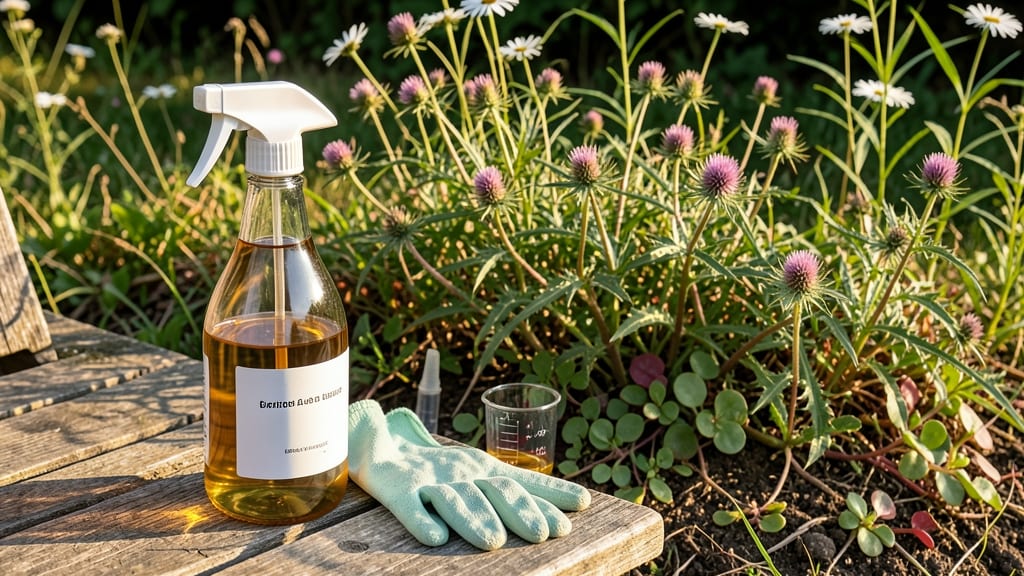
How to get rid of weeds using vinegar—it’s faster than you think! 🌱 I’ve used this trick for years to clear driveways and garden beds without harsh chemicals, and the results are shocking. A simple spray bottle and a few minutes is all it takes to turn stubborn weeds into crispy brown husks.
The secret lies in its acidity: vinegar disrupts weed cell walls, causing them to wilt and die within 24-48 hours. You’ll need undiluted white vinegar (5% acidity) on a sunny day when weeds are actively growing. Just spray until leaves are thoroughly soaked—no fancy tools required.
By next week, your yard will look freshly tilled, not just weed-free. The best part? It’s cheap, reusable, and safe for non-organic surfaces. Just avoid spraying desirable plants—vinegar doesn’t discriminate.
Fair warning: repeated applications work best, and rain can wash it away. For stubborn patches, a follow-up spray in 5-7 days ensures total eradication. Ready to reclaim your space?
📚 In This Guide
- What you need
- Instructions
- Tips and common mistakes
- Wrapping up and next steps
What you need
- ● White vinegar (5% to 20% acetic acid): 1 gallon (3.8 liters) for general use (5% acidity is effective but slower-acting).
- ● For tough weeds, opt for 20-30% acetic acid vinegar (available at garden centers or online). Note: Higher concentrations require extra caution!
- ● Spray bottle or garden sprayer: 16-32 oz (0.5-1 liter) for small areas.
- ● 1-2 gallon (3.8-7.6 liter) sprayer for larger patches.
- ● Protective gear: Gloves (nitrile or rubber).
- ● Safety goggles (to shield eyes from splashes).
- ● Long sleeves and pants (for skin protection).
- ○ Dish soap (optional but helpful): 1-2 tablespoons (to act as a surfactant and improve vinegar adhesion).
- ● Salt: 1 cup (for a vinegar-salt mix—boosts weed-killing power but may harm soil long-term).
- ● Spray nozzle attachment: For precise targeting (e.g., a cone or flat-fan nozzle).
- ● Marking spray or chalk: To outline treated areas and avoid reapplication.
- ● Plastic sheeting or cardboard: To protect nearby plants or soil from accidental vinegar splashes.
- ● Hose with spray nozzle: For rinsing tools or diluting vinegar if needed.
Step-by-step instructions for weed control with vinegar
Here's my battle-tested method for eliminating weeds fast—no digging, no chemicals, just targeted precision.
💧 Step 1: Select the Right Vinegar and Timing
Use full-strength white vinegar (5% acetic acid) or horticultural vinegar (20-30% acidity) for best results. I prefer the latter because it works faster on tough weeds like dandelions and clover. Apply on a bright, sunny day when temperatures are between 50-90°F—extreme heat or cold reduces effectiveness.
Wait until weeds are actively growing and soil is dry. Damp soil dilutes the vinegar's potency, while dry conditions let it penetrate roots immediately. I always spot-treat weeds in the morning so any residual moisture from dew evaporates first.
✂️ Step 2: Clear the Area and Protect Surrounding Plants
Trim weeds down to 2-3 inches tall before applying vinegar—this ensures the solution reaches the root system. Use scissors or pruners to avoid spreading seeds. Cover nearby plants with cardboard or old towels, securing edges with rocks or clothespins. Vinegar's acidity can damage foliage and soil microbes.
For delicate perennials, drape plastic sheeting over them instead of cardboard. Make sure edges overlap completely—even a small gap lets vinegar drift and kill your desired plants. I like to mark treated areas with small flags so I don't accidentally retreat the same spot.
🌱 Step 3: Apply Vinegar Directly to Weeds
Fill a 1-gallon spray bottle with vinegar and add 1 tablespoon of dish soap (this helps the solution cling to leaves). Shake well before each use. Spray until weeds are completely saturated, focusing on the base where leaves meet the stem. Avoid overspraying—vinegar evaporates quickly and won't harm soil microbes if contained.
I like to work in sections, treating one weed cluster at a time. For broadleaf weeds, aim for the undersides of leaves where the solution pools. You'll know you've applied enough when droplets bead up and run down the stems. Reapply after 2-3 days if weeds are large or woody.
☀️ Step 4: Monitor and Retreat as Needed
Weeds typically wilt within 6-12 hours and die within 3-7 days, depending on size and vinegar strength. Check treated areas daily—if any green regrowth appears, reapply vinegar. Deep-rooted weeds like thistles may require 2-3 applications spaced 1 week apart to fully eliminate the root system.
Here's the thing—vinegar doesn't prevent regrowth. New weeds will sprout, so plan to treat your garden every 2-4 weeks during growing season. I schedule treatments right after mowing to catch seedlings before they establish.
Tips & tricks for effective vinegar-based weed control
These precision tips will help you maximize vinegar's weed-killing power while protecting your garden's health.
Vinegar Strength Matters: Horticultural vinegar (20-30% acidity) works faster than standard white vinegar (5%)—especially on tough weeds like dandelions. I've found that for deep-rooted weeds, the higher concentration penetrates more effectively within the 6-12 hour wilt window. If using white vinegar, you may need to reapply more frequently. For stubborn weeds, I'll even mix horticultural vinegar with water in a 1:1 ratio for a stronger solution.
Timing Secret: The 50-90°F temperature range is critical—this is when vinegar's acetic acid works most efficiently. I've learned to avoid treating weeds right after rain or in the evening when temperatures drop. The morning sun helps evaporate any dew, ensuring the vinegar makes direct contact with leaves. Pro tip: Check the weather forecast before treating—if rain is predicted within 24 hours, wait until after it passes.
Targeted Application Technique: When spraying, focus on the base of the weed where leaves meet the stem—this is where the vinegar will have the most direct impact on the root system. I use a 1-gallon spray bottle with 1 tablespoon of dish soap because it creates better adhesion. For large weed patches, I'll work in small sections to avoid missing spots. The key is complete saturation without overspray—vinegar evaporates quickly and won't harm soil microbes if contained properly.
Monitoring Strategy: After application, check treated areas daily for the first 3-7 days. I've found that weeds typically wilt within 6-12 hours, but some may take longer depending on their size. If you see any green regrowth, that's your cue to reapply. For deep-rooted weeds like thistles, I'll mark the spot with a small flag and treat again after 1 week—this two-step process ensures the root system is fully eliminated.
Pro Tips for Get Rid Of Weeds Using Vinegar
- These precision tips will help you maximize vinegar's weed-killing power while protecting your garden's health.
- Vinegar Strength Matters: Horticultural vinegar (20-30% acidity) works faster than standard white vinegar (5%)—especially on tough weeds like dandelions.
- Timing Secret: The 50-90°F temperature range is critical—this is when vinegar's acetic acid works most efficiently.
Frequently asked questions
Got questions about tackling weeds with vinegar? You’re not alone! Here are some of the most common concerns—and straightforward answers—to help you weed out the guesswork.
Is vinegar safe for all types of weeds?
Vinegar works best on broadleaf weeds (like dandelions and chickweed) and young grasses. However, it’s less effective on thick, woody weeds (e.g., nutgrass) or those with deep root systems. For tough weeds, reapply or combine vinegar with salt or dish soap for better results. Always spot-test on a small area first!
How long does it take for vinegar to kill weeds?
You’ll usually see wilting within 24–48 hours, but full death can take 3–7 days, depending on the weed type, weather, and vinegar strength. Hot, sunny days speed up the process—so plan your treatment accordingly. Patience is key!
Can I use vinegar on my lawn without harming the grass?
Nope! Vinegar is not selective—it’ll kill everything it touches, including grass. For lawns, spot-treat weeds carefully or use a targeted applicator (like a spray bottle with a nozzle). For large areas, consider organic herbicides or manual removal instead.
Do I need to water the weeds before or after applying vinegar?
Skip the watering 24 hours before and after applying vinegar. Moisture dilutes the acid, reducing effectiveness. If weeds are dry, lightly mist them just before spraying to help the vinegar cling—but don’t overdo it!
Will vinegar work in cold or rainy weather?
Vinegar works best in warm, dry conditions (70°F+). Cold or rainy weather slows down the killing process. If you must treat in cooler temps, use higher-concentration vinegar (20–30%) and reapply if rain washes it away. Timing matters!
What if the weeds keep coming back?
Persistent weeds often mean roots or seeds remain. Dig out any leftover roots manually, and for seeds, apply a vinegar-salt mixture (1:1 ratio) or smother them with mulch. Regular maintenance (like weekly checks) prevents regrowth too!
Are there non-vinegar alternatives for eco-friendly weed control?
Try these:
- Boiling water: Pour directly on weeds (great for driveways).
- Corn gluten meal: A natural pre-emergent herbicide for preventing weeds.
- Manual removal: Pull weeds early when soil is moist.
- Flame weeding: Use a propane torch for stubborn patches (safely!).
Wrapping up and next steps
Getting rid of weeds with vinegar is a fast, frugal, and eco-friendly way to reclaim your garden or lawn without harsh chemicals! 🌱 With just a few household items and a little effort, you can tackle those pesky invaders naturally. Whether you’re dealing with driveways, sidewalks, or flower beds, this method delivers real results—just
Now that you’re armed with the know-how, roll up your sleeves and give it a try! Start small, observe the progress, and soon you’ll be enjoying a weed-free space. Happy gardening! 🌿