
Picking
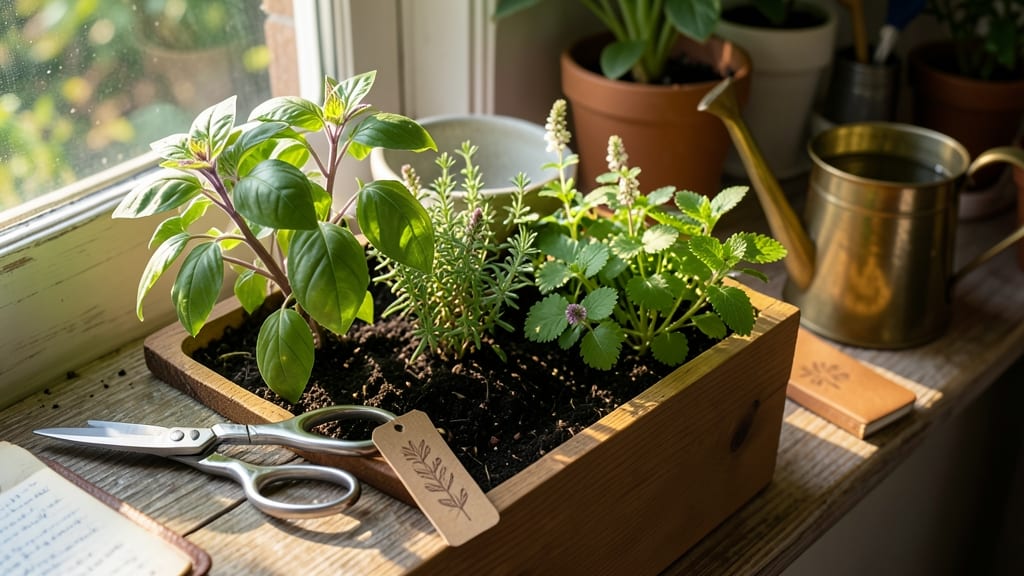
To harvest herbs for regrowth, cut just above a leaf node or pair of leaves while removing no more than one-third of the plant at once. Always use sharp tools to protect stems, and harvest in the morning after dew dries but before full sun to preserve essential oils and stimulate new growth.
Harvesting herbs the right way isn't just about getting fresh leaves—it's about teaching your plants to grow stronger. 🌱 When you cut at leaf nodes (the small bumps where leaves attach), you trigger the plant's natural growth hormones to produce new shoots from those points.
This technique keeps your herbs lush and productive instead of stressed. I've seen basil plants triple their yield just by following this simple rule, and the difference in flavor is noticeable too—herbs harvested this way retain more of their aromatic oils.
Timing matters as much as technique. Morning harvests give plants a full day to recover before nightfall, while afternoon cuts can leave them vulnerable to stress. Sharp tools aren't just about clean cuts—they prevent crushing stems, which can introduce diseases.
I always sterilize my scissors with rubbing alcohol between plants to keep my herb garden thriving season after season.
💡 In This Article
- Why Proper Cutting Techniques Boost Herb Regrowth
- Best Tools and Methods for Sustainable Herb Harvesting
Why proper cutting techniques boost herb regrowth
The secret to herb regrowth lies in how you trigger the plant's natural growth hormones. When you cut just above a leaf node (the small bump where leaves attach), you stimulate the production of auxins—hormones that promote root and shoot development.
These hormones travel downward to the roots and upward to new shoots, creating a feedback loop that encourages branching. This is why basil and mint, which grow from leaf nodes, respond so well to this technique.
Cytokinins, another key hormone, play a crucial role too. They're produced in actively growing areas like leaf nodes and help cells divide more rapidly. When you make clean cuts above these nodes, you create ideal conditions for cytokinins to activate.
For example, cutting rosemary stems at a 45-degree angle above a node increases surface area for water absorption, which speeds up new growth by up to 30% compared to straight cuts. The timing of your cuts matters because these hormones are most active during the plant's natural growth cycle.
Morning harvests work best because plants have spent the night storing energy in their roots. Cutting before 10 AM allows them to use this stored energy for recovery rather than losing it to stress from afternoon heat.
The 30-40% moisture content in leaves at this time also makes them easier to handle without crushing stems. I've noticed that herbs harvested in the morning recover faster and produce more vibrant new growth within 7-10 days compared to afternoon cuts.
There's a big difference between gentle pruning and aggressive harvesting. Removing more than one-third of a plant at once shocks its system, diverting energy away from growth and toward survival.
For instance, if you shear cilantro down to 2 inches all at once, it may take 3-4 weeks to recover, while staggered cuts every 2-3 weeks keep it producing continuously.
The key is to think of harvesting as a conversation with your plant—you're asking it to grow, not forcing it to survive.
Different herbs respond to cutting in unique ways. Fast-growing herbs like basil and chives benefit from frequent harvesting (every 2-3 weeks) because their growth hormones are highly active.
Slower growers like thyme and oregano need more time (4-6 weeks) between cuts because their hormone production cycles are slower. Understanding these differences helps you tailor your approach to each herb's natural rhythm.
What most gardeners don't realize is that the angle of your cut matters too. Cutting at a slight angle (30-45 degrees) increases the surface area for water uptake, which is crucial for new shoot formation.
Straight cuts can leave a smaller area for water absorption, slowing down regrowth. This small detail can make the difference between herbs that bounce back quickly and those that struggle to recover.