
Picking
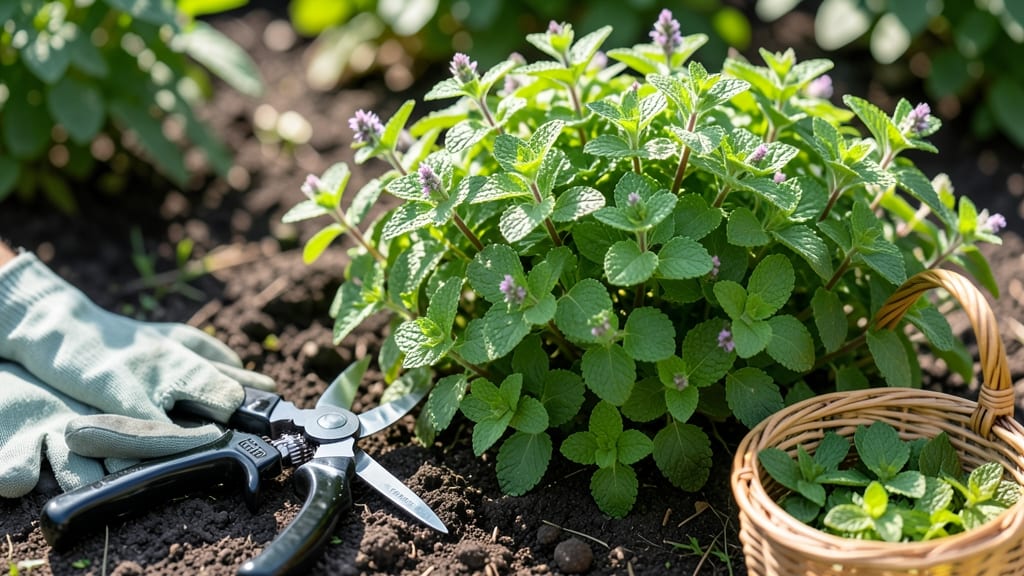
Harvest sweet mint when stems are 4-6 inches tall by cutting just above a leaf node with clean shears. Do this in the morning after dew dries but before full sun, and avoid harvesting more than one-third of the plant at once to encourage regrowth. Use sharp scissors or pruning shears for clean cuts and prevent disease spread.
Harvesting sweet mint at its peak—when the stems reach 4-6 inches—ensures the most vibrant flavor and robust growth.
The early morning timing is crucial because the leaves contain the highest concentration of essential oils, which give mint its signature aroma. 🌿 I've found that cutting above a leaf node (where new growth emerges) stimulates bushier plants, while sterilized tools prevent bacterial spread that could weaken your mint patch.
This method isn't just about yield—it's about preserving the plant's health for continuous harvests throughout the season.
For best results, I recommend using bypass pruners or clean kitchen shears, as they create precise cuts that heal faster. After harvesting, store fresh mint in an airtight container wrapped in a damp paper towel to maintain moisture and potency.
If you're drying mint for later use, bundle stems together and hang them upside down in a dark, well-ventilated area until completely crisp.
💡 In This Article
- When and Why to Prune Sweet Mint for Maximum Yield
- Essential Tools and Techniques for Clean Sweet Mint Harvesting
When and why to prune sweet mint for maximum yield
Sweet mint thrives on regular pruning because it grows from axillary buds located at the leaf nodes (the points where leaves attach to stems). When you cut just above these nodes, you signal the plant to redirect its energy toward producing new shoots rather than flowering.
This process, called apical dominance reversal, encourages bushier growth. 🌱 The ideal harvest window is when stems reach 4-6 inches—this size ensures the leaves have fully developed their essential oil content (like menthol and menthone) while still being tender enough for culinary use.
Timing matters because mint's essential oil concentration peaks in the morning after dew evaporates but before the sun's heat causes the oils to degrade. Harvesting at 8-10 AM gives you the strongest flavor and aroma, while afternoon cuts (after 2 PM) can yield slightly milder leaves.
The plant's natural circadian rhythm also plays a role—morning harvests coincide with peak photosynthesis activity, meaning the leaves are at their most nutrient-dense. 💧 Interestingly, mint plants left unpruned will eventually divert energy toward flowering, producing weak, woody stems with bitter-tasting leaves.
Identifying healthy stems involves checking for vibrant green color, firm texture, and a fresh scent. Overgrown mint (stems exceeding 8 inches) often develops leggy growth with sparse leaves, indicating it's past its prime for harvesting.
The key is to maintain a balance—never remove more than one-third of the plant in a single session, as this can shock the root system and reduce future yields. For container-grown mint, this translates to about 6-8 inches of new growth per harvest cycle. 🌿
Here's what happens at the cellular level: When you make a clean cut above a leaf node, the plant's meristematic cells (undifferentiated stem cells) activate and begin producing new shoots within 3-5 days.
This regrowth is faster than many herbs because mint has a shallow root system that absorbs water and nutrients efficiently. The trade-off? Mint's aggressive growth means it can quickly become invasive if not contained—hence the importance of regular harvesting to maintain control. 🌿
Consider this comparison: A well-pruned mint plant can produce 4-6 harvests per season, while an unpruned plant may yield just 1-2 before becoming woody.
The secret lies in the 30-60-90 rule: Harvest when stems are 4-6 inches, never take more than 30% of the plant at once, and aim for a 90-day cycle between major prunings to keep growth vigorous.
This approach ensures you get the most flavorful leaves while extending your mint's productive lifespan.
Pro tip: If your mint starts flowering, pinch off the buds immediately—they signal the plant to stop producing leaves and focus on seed production.
Flowering mint loses up to 40% of its essential oil content, making it less potent for culinary or medicinal uses. 🌸 By staying ahead of the flowering cycle, you'll maintain a continuous supply of sweet, aromatic leaves throughout the growing season.