
Companion Plants
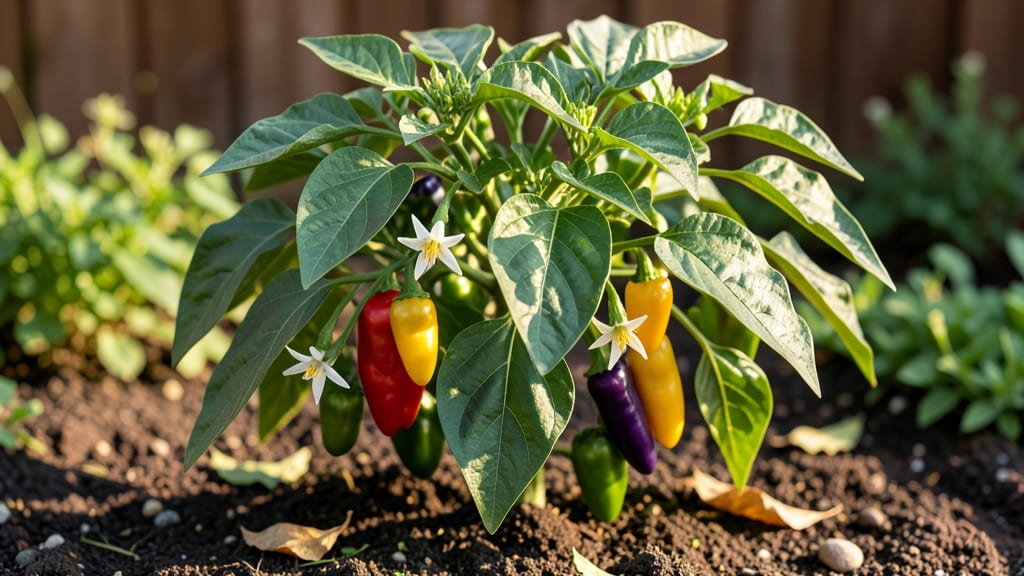
How to identify hot pepper plants hiding in plain sight—until you know what to look for. 🌶️ That bush with tiny leaves and clusters of fruit might be a jalapeño or a bell pepper in disguise, and the difference changes everything. I’ve spent years mistaking mild peppers for hot ones (and vice versa), so I’m sharing the leaf shape, fruit structure, and growth habits that reveal their true spice level before you even taste them.
The first clue is the leaf shape—hot peppers have narrower, more pointed leaves that look almost lance-shaped, while bell peppers sport broader, rounded leaves that resemble small maple leaves.
Then check the fruit stems: hot peppers grow directly from the stem (no stem attachment), while bells have a thick, raised stem scar where the fruit connects. Even the plant structure differs—hot peppers grow upright and bushy, while bells sprawl wider.
Fruit color isn’t foolproof, but size and shape are dead giveaways. Hot peppers stay small and tapered, while bells swell into blocky, glossy shapes. A jalapeño might be 3 inches long; a bell pepper starts at 4 inches wide.
And here’s the kicker: wrinkled skin on mature hot peppers signals ripeness—and heat. If you’re still unsure, crush a tiny piece between your fingers: hot peppers release capsaicin, that telltale tingling burn even before cooking.
This works for indoor pots, greenhouse setups, or backyard beds—just snap a photo of your mystery plant next to a known hot pepper for comparison. Once you master these clues, you’ll spot ghost peppers, habaneros, and even mild chiles from across the garden.
No more surprises when you reach for the "mild" salsa.
📚 In This Guide
- What you need
- Instructions
- Tips and common mistakes
- Wrapping up and next steps
What you need
- ● Hot pepper plant reference guide – A printed or digital guide (like Pepper Scale or University of Georgia Extension’s Pepper Guide) to compare leaf shapes and fruit traits.
- ● Magnifying glass or loupe (3x–10x magnification) – Helps inspect fine details like leaf serrations, stem hairs, or fruit textures.
- ● Measuring tape or ruler (6–12 inches) – For checking leaf length, width, and spacing between serrations.
- ● Notebook & pen – To jot down observations like leaf shape, fruit color, and plant height.
- ● Camera or smartphone – Capture close-ups of leaves, stems, and peppers for later comparison.
- ○ Gloves (optional but recommended) – Some hot peppers (like habaneros or ghost peppers) can irritate skin—opt for nitrile gloves for extra protection.
- ● Field guide app (e.g., PictureThis or iNaturalist) – Useful for instant plant ID via photo upload.
- ● Pruning shears – For safely collecting leaf or fruit samples (if needed for closer inspection).
- ● Spray bottle with water – Keeps leaves crisp for better visibility of veins and serrations.
- ● Pepper heat chart (Scoville scale reference) – Helps narrow down varieties based on expected spiciness.
How to identify hot pepper plants: leaf shape and fruit clues
Here's the visual checklist I use to distinguish fiery varieties from their milder cousins.
🌿 Step 1: Examine Leaf Shape and Arrangement
Hot peppers typically have lance-shaped leaves that grow in an alternate pattern along the stem. Hold a leaf between your fingers—it should taper to a point at both ends, like a spearhead. Compare this to bell peppers, which have broader, more rounded leaves arranged in a whorled pattern around the stem.
Look closely at the leaf edges: hot pepper leaves often have slightly serrated or jagged edges, while bell pepper leaves tend to be smoother. The veins also provide a clue—hot peppers usually have more prominent, visible veins that create a distinct network pattern when backlit by sunlight.
🌱 Step 2: Analyze Plant Structure and Growth Habits
Hot pepper plants generally grow more bushy and compact than their bell pepper relatives. They often develop multiple stems from the base, creating a multi-branched structure. When you run your hand along the stem, you'll notice the nodes (where leaves attach) are spaced closer together.
Pay attention to the plant's overall height—most hot peppers stay between 2-4 feet tall, while bell peppers can reach 3-5 feet or more. The stems also tend to be slightly hairier on hot peppers, which helps them retain moisture in dry climates where many hot varieties originated.
🌶️ Step 3: Study the Fruit Characteristics
Hot pepper fruits develop from small, white flowers that appear at the leaf axils. These flowers are typically star-shaped with five petals, while bell pepper flowers are more rounded. The key fruit identification comes when peppers begin to form—look for the characteristic pointed or conical shape that's absent in bell peppers.
Examine the pepper's surface texture: hot peppers often have slightly waxy or bumpy skin, while bell peppers tend to be smoother. The color progression also differs—hot peppers frequently develop red, orange, or yellow hues at maturity, while bell peppers often stay green or turn yellow.
⏰ Step 4: Consider Growth Timeline and Production Patterns
Hot peppers typically take 70-120 days to mature from transplant, depending on the variety. They produce fruit continuously throughout the growing season, with new peppers forming at the stem tips while older ones mature. This creates a staggered harvest pattern that continues until frost.
Watch for the plant's fruiting habits—hot peppers often produce multiple peppers per node, while bell peppers typically develop just one fruit per flower. The peppers themselves are usually smaller than 2 inches in diameter, though some varieties like jalapeños can reach 3-4 inches when mature.
🔍 Step 5: Use the Scoville Test for Confirmation
For absolute certainty, you can perform a simple taste test using the Scoville scale as your guide. Start with a small piece of the pepper—hot peppers will create an immediate burning sensation that lingers. The intensity varies by variety, from mild heat in peppers like banana peppers to extreme heat in habaneros.
I always recommend cutting the pepper lengthwise first—this exposes the internal structure where the heat is most concentrated. The seeds and membranes contain capsaicin, the compound responsible for heat, so you'll notice the most intense flavor in these areas. Remember that heat perception varies by individual, so compare with known varieties when possible.
Tips & tricks for perfect pepper plant identification
Mastering these visual and structural clues will help you confidently distinguish fiery varieties from their milder cousins.
Leaf Texture and Vein Analysis: When examining leaves, hold them up to a bright light source to really see the vein structure. Hot pepper leaves often have more pronounced veins that create a web-like pattern when backlit. I've found that using a magnifying glass can help reveal these details more clearly, especially on younger leaves where the differences are most subtle. The serrated edges are another key indicator—run your finger along the edge to feel the slight jaggedness that distinguishes hot peppers from the smoother bell pepper varieties.
Growth Habit Observation: Pay close attention to how the plant grows from the base. Hot pepper plants often develop multiple stems from the ground up, creating that bushy, compact appearance. I've noticed that the nodes (where leaves attach) are usually spaced about 1-2 inches apart on hot peppers, while bell peppers tend to have more space between nodes. This closer spacing helps create that dense, productive growth pattern that's characteristic of hot varieties.
Flower Shape Comparison: When you see those small white flowers, take a moment to examine their shape. Hot pepper flowers are typically star-shaped with five distinct petals, while bell pepper flowers are more rounded. I've found that using a ruler to measure the flower diameter can help—hot pepper flowers are usually about 1 inch across, while bell pepper flowers tend to be slightly larger. This subtle difference becomes more apparent when comparing multiple flowers side by side.
Pepper Size and Shape Tracking: As peppers begin to form, start tracking their development. Hot peppers will show that pointed or conical shape early in their growth, while bell peppers maintain a more cylindrical form. I recommend marking plants with small flags when you first notice this shape difference—this visual cue becomes more reliable as the peppers mature. The surface texture is another early indicator: hot peppers often develop that slightly waxy, bumpy skin even when they're still small.
Pro Tips for Identify Hot Pepper Plants
- Mastering these visual and structural clues will help you confidently distinguish fiery varieties from their milder cousins.
- Leaf Texture and Vein Analysis: When examining leaves, hold them up to a bright light source to really see the vein structure.
- Growth Habit Observation: Pay close attention to how the plant grows from the base.
Frequently asked questions
about identifying hot pepper plants—because even seasoned gardeners have moments of doubt! Here are answers to the most common queries to help you spot those fiery friends with confidence.How early can I tell if a pepper plant is hot vs. sweet?
You can start noticing clues as early as the seedling stage! Hot pepper seedlings often grow slightly slower and have thicker, darker green leaves compared to sweet peppers. Once flowers appear, hot peppers tend to produce smaller, white or purple blooms (sweet peppers usually have larger white flowers). By the time fruit forms, the shape, size, and color will confirm it—hot peppers rarely grow bigger than a golf ball!
Why do my pepper plants have no flowers or fruit?
If your plants are lush but flowerless, it’s often due to temperature stress (below 60°F or above 90°F), lack of sunlight, or over-fertilizing with nitrogen (which promotes leaves over flowers). Try moving them to a sunny spot, ensuring 6+ hours of direct light daily, and switch to a low-nitrogen, high-phosphorus fertilizer to encourage blooming. Patience is key—some varieties take 60–90 days to flower!
Can I identify hot peppers by leaf shape alone?
Leaf shape gives some clues, but it’s not foolproof! Hot peppers often have narrower, more elongated leaves with serrated edges, while sweet peppers tend to have broader, smoother leaves. However, leaf shape varies by variety—always cross-reference with fruit characteristics (e.g., size, color, and shape) for accuracy. When in doubt, label your plants early!
What if my pepper plant looks like a hot pepper but the fruit isn’t spicy?
Don’t panic—it’s possible! Some hybrid varieties or pollinated flowers can produce milder fruit, especially if bees or other pollinators cross-pollinate different pepper types. If you’re growing from seed, check the seed packet for expected heat levels. For guaranteed spice, opt for self-pollinating hot varieties (like jalapeños or habaneros) or grow them in isolation from sweet peppers.
Are there any companion plants that help identify hot peppers?
While no plant directly helps identify hot peppers, growing them alongside basil, marigolds, or onions can improve overall plant health and deter pests, making it easier to focus on spotting those fiery clues! Basil, in particular, may enhance flavor in nearby peppers. Just avoid planting them near fennel or brassicas, which can stunt growth. Keep an eye on leaf color and fruit development for the best results!
Wrapping up and next steps
Identifying hot pepper plants is easier than you think—just look for those distinctive leaves, flower shapes, and fruit characteristics! Whether you're a seasoned gardener or a curious beginner, recognizing these clues will help you cultivate a thriving (and spicy!) harvest. 🌶️
Now that you’re armed with the know-how, why not take the next step? Start by inspecting your garden or local nursery for these telltale signs, or even experiment with growing your own peppers from seeds. Happy gardening—and may your peppers always be fiery and fruitful! 🌱✨