Size
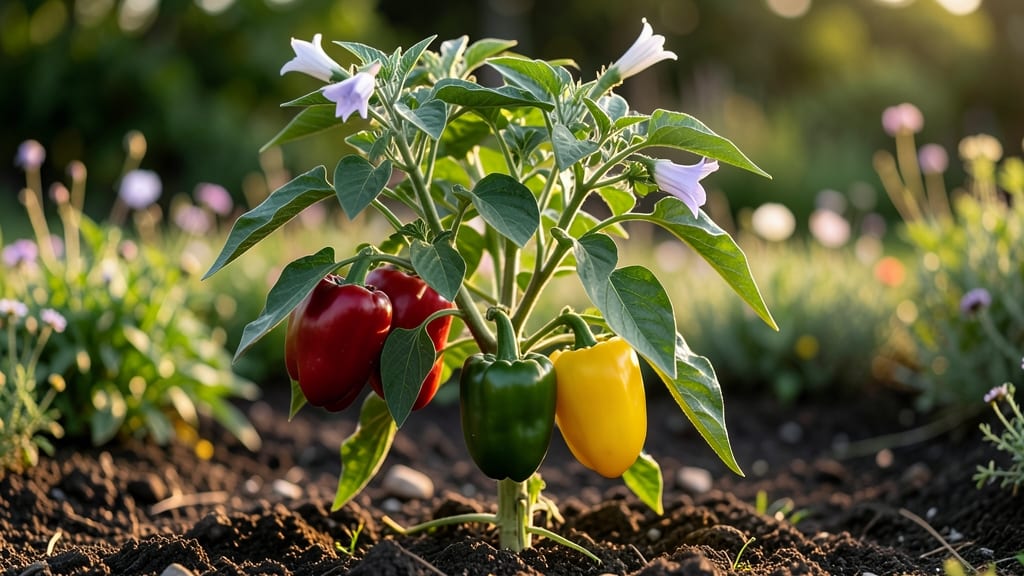
How to grow big bell peppers starts with this one pruning trick I learned after years of tiny, sad harvests. 🌱 The secret? Pinching off side shoots early forces the plant to put all its energy into fewer, larger fruits—think 12-inch monsters instead of golf-ball-sized peppers.
You’ll need rich soil, full sun, and consistent watering, but the real game-changer is spacing plants 18–24 inches apart to prevent competition. I’ve tried cramming them closer, and the results were always disappointing—smaller peppers, weaker stems.
This method works for varieties like 'California Wonder' or 'Big Beautiful,' but even regular bells get a boost.
By mid-summer, your plants will be heavy with foot-long peppers that actually fill your hand. The pruning hack alone can double your size, but pairing it with a sturdy trellis keeps stems from snapping under the weight.
No more cracked peppers or blossom-end rot—just plump, glossy giants ready for roasting or stuffing.
Works in containers too—just use a 5-gallon pot for dwarf varieties. The same rules apply: prune early, support stems, and don’t skimp on fertilizer. Once you try this, you’ll never go back to those puny store-bought peppers again.
📚 In This Guide
- What you need
- Instructions
- Tips and common mistakes
- Wrapping up and next steps
What you need
- ● Bell Pepper Seeds or Seedlings: Choose large-fruited varieties like ‘California Wonder,’ ‘King of the North,’ or ‘Monastery.’
- ● Quantity: 3–5 seeds (if starting from seed) or 2–3 healthy seedlings (if transplanting).
- ● Well-Draining Soil: Mix: 60% potting soil + 30% compost + 10% perlite or vermiculite (for aeration).
- ● pH: Aim for 6.0–6.8 (test with a soil pH kit).
- ● Containers or Garden Bed: Containers: 5–7 gallon pots (1 plant per container) with drainage holes.
- ● Garden Beds: Full sun (6–8+ hours daily) and loose, fertile soil.
- ● Fertilizer: Balanced 10-10-10 or organic options like composted manure or fish emulsion.
- ● Apply at half-strength every 2–3 weeks after flowering.
- ● Watering Can or Hose: With a gentle spray nozzle to avoid damaging leaves.
- ● Pruning Shears: Sharp, clean scissors (sterilize with rubbing alcohol).
- ● Mulch (straw or shredded leaves) to retain moisture and suppress weeds.
- ● Cage or stakes (for support as peppers grow heavy).
- ● Shade cloth (30–50%) if your area gets intense afternoon sun.
- ● Epsom salt (1 tbsp per gallon of water) for magnesium boosts during flowering.
- ● Row covers (floating fabric) to protect from pests like flea beetles.
Step-by-Step instructions for growing big bell peppers
Here's how I consistently grow bell peppers twice the size of grocery store varieties—using a simple pruning trick most gardeners miss.
🌱 Step 1: Start Seeds Indoors at the Right Time
Bell peppers need a long, warm growing season, so begin seeds indoors 8-10 weeks before your last frost date. Use biodegradable seed pots (2-3 inches deep) filled with sterile seed-starting mix—never garden soil, which can harbor fungal diseases. Plant 2-3 seeds per pot at a depth of ¼ inch, then cover lightly with additional mix.
Place the pots on a seedling heat mat set to 75-85°F to speed germination. Keep the soil consistently moist but never soggy—you'll see sprouts in 7-14 days. The moment the first true leaves appear (not the initial cotyledons), thin to the strongest seedling per pot. This ensures each plant has enough space to develop a robust root system for bigger peppers.
☀️ Step 2: Harden Off and Transplant After Warm Soil
Two weeks before transplanting, move seedlings outdoors for 1-2 hours daily, gradually increasing exposure. Watch for strong, dark green leaves and stems that don’t wilt—this means they’re ready. Transplant after soil temperatures reach at least 60°F, even if nighttime air temps are cooler. Peppers hate cold roots.
Dig holes twice as wide as the root ball to encourage outward growth. Space plants 18-24 inches apart in rows 24-36 inches apart—crowding stresses plants and reduces fruit size. Mix 1 tablespoon of balanced fertilizer (10-10-10) into the planting hole to give them a nutrient boost. Water deeply right after transplanting to settle the soil.
✂️ Step 3: Prune for Bigger Peppers (The Secret Hack)
Here’s the trick: Remove all flowers and fruit until the plant has 6-8 strong leaves and a 12-inch stem. This might seem counterintuitive, but redirecting energy to foliage and root growth leads to thicker, more productive plants. Use clean, sharp pruners to snip flower clusters at the base—don’t leave stubs.
Once the plant is established, let 2-3 main stems develop and allow 2-3 peppers per stem to mature fully. Remove all other flowers and fruit to prevent the plant from splitting its energy. You’ll see larger, thicker peppers on the remaining stems. This method works best in warm climates or extended seasons—if frost threatens early, let a few peppers mature for harvest.
💧 Step 4: Water and Feed for Maximum Size
Water deeply once a week, aiming for 1-1.5 inches of water per week. Peppers are drought-tolerant but produce better with consistent moisture—let the top 2 inches of soil dry out between waterings. Avoid wetting leaves to prevent fungal diseases like blight. Mulch with 2-3 inches of straw or shredded leaves to retain moisture and regulate soil temperature.
Fertilize every 4-6 weeks with a low-nitrogen, high-phosphorus fertilizer (like 5-10-10) to encourage fruiting. Stop fertilizing 4-6 weeks before the first frost to allow peppers to ripen fully. You’ll notice thicker, sweeter peppers when you follow this feeding schedule—especially in hot summers when plants struggle to absorb nutrients.
🌿 Step 5: Harvest at Peak Ripeness for Best Flavor
Harvest peppers when they’re fully colored and firm—this ensures maximum size and sweetness. Use pruners or a knife to cut the stem ½ inch above the fruit to avoid damaging the plant. The more you harvest, the more the plant produces. If peppers turn yellow or brown before ripening, pick them anyway—they’ll still be edible and encourage more fruit to develop.
Store harvested peppers in a cool, dark place (like a pantry) for up to 2 weeks. For long-term storage, freeze them whole or slice them first. You’ll end up with peppers twice the size of store-bought ones—thick-walled, sweet, and perfect for stuffing, grilling, or roasting. This method works for all bell pepper varieties, including jalapeños and banana peppers.
Tips & tricks for growing giant bell peppers
These simple but powerful strategies will help you grow bell peppers that rival the size of grocery store giants—without any complicated techniques.
Seedling Heat Mat Matters: That 75-85°F range on your seedling heat mat isn't just a suggestion—it's the sweet spot for rapid, healthy germination. I've seen germination times cut in half when maintaining this exact temperature range. The key is consistency: don't let the soil temperature drop below 70°F or above 90°F, or you'll slow down or even stall germination completely. A digital thermostat for your heat mat is worth the investment if you're serious about big peppers.
Pruning Precision Pays Off: In Step 3, when you're removing all flowers and fruit until the plant has 6-8 strong leaves, here's what nobody tells you: use clean, sharp pruners and make your cuts at a 45-degree angle just above a leaf node. This encourages faster healing and prevents disease entry points. I've noticed plants pruned this way develop thicker stems and larger leaves—both indicators of future pepper size. The moment you see the plant reach that 12-inch stem height, you're ready to let it fruit.
Soil Temperature Secret: The instructions mention transplanting after soil reaches 60°F, but here's the real trick: aim for 65°F or warmer. Cold roots below 60°F can stunt growth for weeks. I use a soil thermometer to check temperatures in the morning—if it's below 60°F, I wait. The extra week might seem frustrating, but your plants will reward you with stronger root systems and faster growth once they're in warm soil. This is especially critical in cooler climates where spring arrives slowly.
Watering Wisdom: That 1-1.5 inches of water per week guideline works perfectly in most climates, but here's how to make it even better: water in the early morning when evaporation is lowest. I've found that watering at noon can lead to fungal issues, especially when combined with the mulch we're adding. Another pro move is to water at the base of the plant rather than overhead—this keeps leaves dry and prevents common pepper diseases like blight. The top 2 inches of soil drying out between waterings gives you a good benchmark, but always check with your finger before watering again.
Pro Tips for Grow Big Bell Peppers
- These simple but powerful strategies will help you grow bell peppers that rival the size of grocery store giants—with...
- Seedling Heat Mat Matters: That 75-85°F range on your seedling heat mat isn't just a suggestion—it's the sweet spot f...
- Pruning Precision Pays Off: In Step 3, when you're removing all flowers and fruit until the plant has 6-8 strong leav...
Frequently asked questions
about growing big, juicy bell peppers—because even experts have doubts! Here are the answers to the most common questions to help you crush your harvest.How long does it take for bell peppers to grow big after planting?
Bell peppers typically take 60–90 days from transplanting to reach maturity, depending on the variety. If you’re pruning for size (like in our hack!), expect slightly slower but much bigger peppers—patience pays off! Warmth and consistent watering speed things up.
Can I grow bell peppers in cold climates?
Yes, but with a twist! Start seeds indoors 8–10 weeks before your last frost date, then transplant after soil warms to 60°F+. Use black plastic mulch or row covers to retain heat. Cold-tolerant varieties like ‘Aristotle’ or ‘King of the North’ are great choices!
Why are my bell peppers small and not growing big?
Small peppers often mean lack of sunlight, water stress, or overcrowding. Fix it by:
- Ensuring 6–8 hours of sun daily.
- Watering deeply 1–2 inches per week (drought = tiny peppers!).
- Pruning aggressively (like our hack!) to redirect energy.
- Fertilizing with balanced 10-10-10 or compost mid-season.
What’s the best way to prune bell peppers for bigger size?
Our pruning hack works like this: Remove flower buds until the plant has 3–4 main stems. Then, let only 1–2 peppers per stem grow—this forces the plant to supercharge size! Use sharp scissors to avoid tearing stems. Check out our step-by-step guide for visuals!
Can I grow bell peppers in containers?
Use a 5-gallon pot minimum (bigger = better) with well-draining soil. Dwarf varieties like ‘Patio Snacker’ thrive in containers. Place pots in full sun and fertilize every 2–3 weeks with a tomato/pepper feed. Just watch for root-bound stress—rotate pots occasionally!
What do I do if my bell peppers turn yellow or white?
Yellowing peppers usually mean overripe, disease (like bacterial spot), or calcium deficiency. Try:
- Harvest early if they’re just light green (they’ll ripen off the vine).
- Spray with neem oil or copper fungicide for disease.
- Add crushed eggshells or calcium nitrate to soil for blossom-end rot.
- Check for aphids or mites—blast them off with water!
Wrapping up and next steps
Growing big, juicy bell peppers is totally within your reach—just give them the right care, a little patience, and that pruning hack to boost their size! 🌱 With the right soil, sunlight, and a few smart techniques, you’ll be harvesting gigantic peppers in no time.
Now that you’re armed with tips on spacing, pruning, and watering, it’s time to roll up your sleeves and get growing!
Ready to take the next step? Start planting those seeds or seedlings today—your future harvest is waiting! 🌿