
Pruning
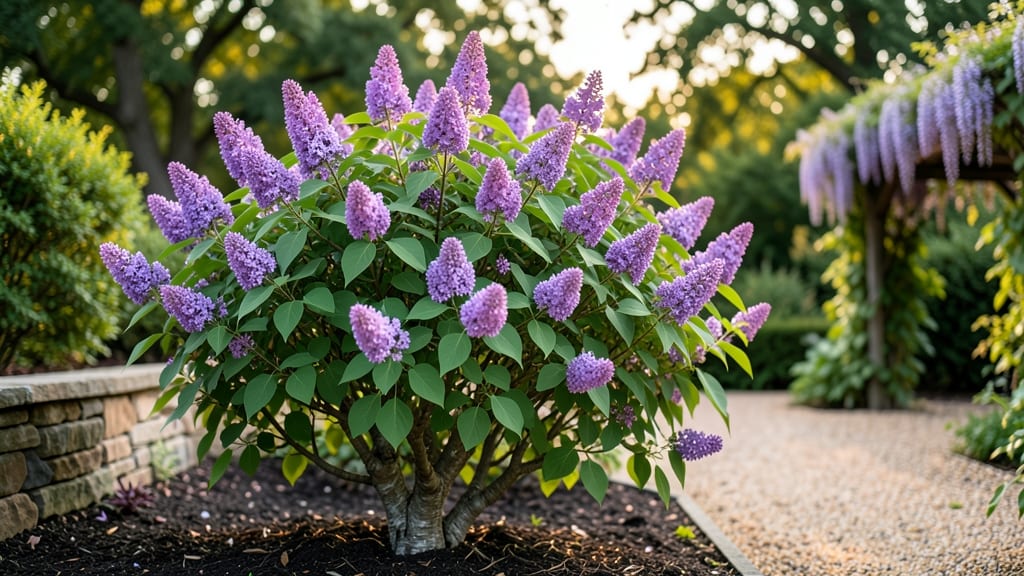
Here’s how to identify a lilac bush—that first wave of purple spikes in spring. I’ve spent years telling lilacs apart from their lookalikes, and the trick starts with those heart-shaped leaves—smooth, dark green, and slightly fuzzy when young.
But don’t just trust the flowers; the bark, branching, and scent are dead giveaways too.
Most lilacs have smooth gray bark that peels slightly with age, and their branches grow in a rounded, multi-stemmed shape—never a single trunk like privet. The flowers cluster in fragrant, cone-shaped spikes, usually purple but sometimes white or pink.
Mock orange fools people with its white blooms, but its leaves are narrower and its scent is citrusy, not sweetly floral.
You’ll spot common varieties like ‘Katherine Havemeyer’ (deep purple) or ‘Syringa vulgaris’ (classic lilac) by their leaf size and flower density. Dwarf lilacs stay under 6 feet, while standard types reach 10+ feet.
The key? Smell the leaves—lilacs release a faint, sweet fragrance when crushed, while privet smells like nothing special.
Once you’ve confirmed it’s a lilac, pruning becomes easier. Wait until right after flowering to trim old wood, and watch for new growth—those reddish stems are a sure sign you’ve got the right plant. No more mistaking it for a shrub that’ll never bloom like yours should.
📚 In This Guide
- What you need
- Instructions
- Tips and common mistakes
- Wrapping up and next steps
What you need
- ● Pruning shears or sharp scissors – For gently inspecting leaves and stems without damaging the plant (ensure they’re clean and sterilized with rubbing alcohol).
- ○ Gloves (optional but recommended) – Protect your hands from thorns or sap (nitrile or leather gloves work best).
- ● Magnifying glass or loupe – Helps examine leaf shapes, buds, and bark details up close.
- ● Notebook or smartphone – To jot down observations (leaf shape, flower clusters, bark texture) or snap photos for reference.
- ● Field guide or plant identification app – Apps like PictureThis or PlantNet can cross-reference your findings (free versions are available!).
- ● Small trowel or hand shovel – If you need to dig or expose roots for a closer look (especially for young plants).
- ● Garden twine or tags – To mark the bush for future reference if you’re unsure.
- ● Spray bottle with water – Dampen leaves to highlight veins or textures for easier inspection.
- ● Ladder or step stool – For reaching taller lilac bushes (safety first—secure it on stable ground!).
- ● Pruning saw (for thick branches) – Only needed if the bush is mature and you’re assessing large stems.
Step-by-step guide to identifying a lilac bush
Lilacs are iconic shrubs with unmistakable features—once you know what to look for, spotting one becomes effortless.
Examine the Flowers for Fragrance and Spike Shape
Lilacs produce dense, upright clusters of flowers called panicles, typically 3-6 inches long, arranged along a central stem. The blooms appear in spring, just as leaves unfurl, and emit a strong, sweet fragrance that fills the air. Common lilacs (Syringa vulgaris) display purple flowers, but varieties range from white to deep violet. Hold your hand near the blooms—if you detect a heavy, honey-like scent, it’s almost certainly a lilac.
Unlike many flowering shrubs, lilac flowers grow directly from the stems without leaves in between. This distinct arrangement, combined with their smooth, slightly waxy petals, sets them apart. If you see butterfly-shaped flowers (like those on wisteria), it’s not a lilac—those belong to the pea family.
Inspect the Leaves for Shape and Arrangement
The leaves are another dead giveaway: heart-shaped with pointed tips, measuring 2-4 inches long. They grow opposite each other on the stem (one leaf per node, paired directly across from its neighbor). Run your fingers along the leaf edges—lilac leaves are smooth and entire, without teeth or lobes. Younger leaves often have a slightly fuzzy texture on the underside.
Compare the leaf shape to common look-alikes: forsythia leaves are narrow and lance-shaped, while mock orange (Philadelphus) has smooth, oval leaves with a more rounded tip. Lilac leaves also have a distinct midrib (central vein) that’s slightly raised on the underside, giving them a subtle three-dimensional feel.
Observe the Bark and Branch Structure
Mature lilac bark is grayish-brown and slightly ridged, with a peeling texture that flakes off in thin strips. Young branches are smooth and greenish, but as the shrub ages, the bark develops a scaly, exfoliating pattern. Look for buds along the stems—lilac buds are oval-shaped and pointed, typically ½ inch long, and often covered in fine hairs.
The overall growth habit is upright and rounded, with multiple stems emerging from the base (though some varieties are grafted to grow as single-trunk trees). If you see a single, tall trunk, it’s likely a grafted cultivar. Lilacs also produce small, brown seed pods after flowering, which split open to release winged seeds.
Confirm with Seasonal Clues
Lilacs follow a predictable seasonal cycle that helps confirm identification. They bloom in late spring (April–May in most climates), leaf out before flowering, and drop leaves in early fall. If you spot a shrub with purple spikes and heart-shaped leaves in summer, it’s likely a lilac—just not in bloom. Some varieties, like Syringa meyeri, flower later in the season (June–July), so timing matters.
Check for new growth in early spring: lilacs produce bright green shoots from dormant buds, often with a slightly reddish tint when young. If the shrub has no flowers but matching leaves and bark, it’s still a strong candidate—just not in its showy phase. Avoid confusing it with privet (which has small, insignificant flowers and tiny, oval leaves) or elderberry (which has compound leaves and berries).
Rule Out Common Look-Alikes
Lilacs share traits with several other shrubs, so elimination is key. Wisteria has long, dangling flower clusters and compound leaves (multiple leaflets per stem), while mock orange (Philadelphus) has white, four-petaled flowers and a strong orange-blossom scent. Deutzia flowers are smaller, with five petals and serrated leaves, and abelia has tubular flowers and leathery, oval leaves.
If the shrub has thorny stems, it’s not a lilac—think hawthorn or rose. If the flowers are yellow, consider forsythia or spirea. Lilacs are deciduous, meaning they lose leaves in winter, so a evergreen shrub with similar flowers (like pieris) won’t match. The combination of fragrant panicles, heart-shaped leaves, and ridged bark is the lilac’s signature trio.
Tips & tricks for identifying lilac bushes with confidence
These subtle but essential details will help you distinguish lilacs from their look-alikes with absolute certainty.
Seasonal Timing is Everything: The late spring bloom period (April–May) is your best clue—this is when lilacs put on their signature floral display. However, don't dismiss a shrub just because it's not flowering. In summer, look for the heart-shaped leaves (2-4 inches long) growing opposite each other on stems. This leaf arrangement is unique to lilacs and remains consistent year-round, even when no flowers are present. If you're unsure about the season, check for new growth in early spring—lilacs produce bright green shoots with a slight reddish tint from dormant buds.
Bark Texture Reveals Age: Mature lilac bark develops a distinctive grayish-brown, peeling texture that flakes off in thin strips. This is a key identifier for older shrubs. Younger branches are smooth and greenish, but as the plant ages, the bark becomes more pronounced. Run your fingers along the stems—if you feel a scaly, exfoliating pattern, you're likely dealing with a lilac. This bark characteristic is particularly useful in winter when other features are less visible. Even if the shrub is dormant, the bark's texture remains a dead giveaway.
The Bud Test for Winter Identification: In late winter or early spring, examine the buds along the stems. Lilac buds are oval-shaped, pointed, and typically ½ inch long, often covered in fine hairs. These buds appear before leaves unfurl, giving you an early indication of what's to come. If you find these distinctive buds on a shrub with no leaves, it's almost certainly a lilac waiting to bloom. This is especially helpful when other shrubs are still dormant and indistinguishable.
Compare with Common Look-Alikes: The elimination process is just as important as identification. Create a mental checklist: no thorny stems (rules out hawthorn or rose), no compound leaves (eliminates wisteria or elderberry), and no evergreen foliage (excludes pieris). The combination of fragrant panicles, heart-shaped leaves, and ridged bark creates lilac's signature trio. If any of these elements are missing, it's not a lilac—it's something else entirely. This systematic comparison is the most reliable method for accurate identification.
Pro Tips for Identify Lilac Bush
- These subtle but essential details will help you distinguish lilacs from their look-alikes with absolute certainty.
- Seasonal Timing is Everything: The late spring bloom period (April–May) is your best clue—this is when lilacs put on their signature floral display.
- Bark Texture Reveals Age: Mature lilac bark develops a distinctive grayish-brown, peeling texture that flakes off in thin strips.
Frequently asked questions
Got questions about spotting a lilac bush? You’re not alone! Here are some of the most common queries—plus quick answers to help you nail that identification like a pro.
How do I tell a lilac bush apart from a wisteria vine?
Lilacs grow as bushes with woody stems, while wisteria climbs as a vine. Lilacs have heart-shaped leaves and fragrant flower spikes that grow directly from the stems, whereas wisteria’s flowers dangle in long, cascading clusters. Bonus: Lilacs bloom in spring, while wisteria often blooms later (spring to summer).
When is the best time to identify a lilac bush?
The ideal window is late spring (May–June), when lilacs are in full bloom with their iconic purple, pink, or white flower spikes. If you’re unsure, check for buds forming in late winter—lilacs are early bloomers! Fall is also helpful, as their heart-shaped leaves turn yellow before dropping.
What if my bush has flowers but no scent? Is it still a lilac?
Not all lilacs are fragrant—some modern hybrids (like ‘Dwarf Korean’) prioritize color over scent. However, true lilacs (Syringa vulgaris) are famously sweet-smelling. If your bush has spiky flower clusters and opposite leaves but no aroma, it might be a scentless variety or a lookalike like mock orange (which has white flowers and a citrusy scent).
Can I identify a lilac bush in winter when it’s dormant?
Look for brown, peeling bark and buds along the stems—lilacs store energy in their buds for spring blooms. Their branches grow in opposite pairs (unlike many trees), and the buds are oval-shaped. If you spot these, it’s likely a lilac—just wait for spring to confirm with flowers!
What if my bush looks like a lilac but has no flowers? Could it be diseased?
No flowers in spring? It could be overpruned, nutrient-deficient, or stressed (e.g., too much shade or poor soil). Check for buds—if they’re brown and mushy, it might be bacterial blight or fungus. Prune back dead wood, fertilize with balanced 10-10-10, and ensure it gets 6+ hours of sun. Patience helps—some lilacs take 2–3 years to rebloom after heavy pruning.
Are there lilac lookalikes I should watch out for?
Yes!
Common imposters include:
- Mock orange (Philadelphus): White, honeysuckle-scented flowers; no purple.
- Butterfly bush (Buddleia): Long, cone-shaped flowers; no fragrance.
- Privet (Ligustrum): Small white flowers; leaves are opposite but narrow.
- Weigela: Trumpet-shaped flowers; red or pink, not spiky.
Wrapping up and next steps
Identifying a lilac bush is all about noticing those signature purple spikes and heart-shaped leaves—plus a sniff test for that iconic fragrance! 🌸 Whether you’re a gardening newbie or a seasoned green thumb, these tips will help you spot one in no time.
Now that you’re armed with the know-how, why not take the next step?
- Plant one! If you love the look (and smell), consider adding a lilac to your garden—just pick a sunny spot and watch it thrive.
- Prune with confidence. Now that you can ID it, learn how to prune lilacs properly to keep them blooming beautifully for years.
Happy gardening—your yard (and nose) will thank you! 🌿