
Pruning
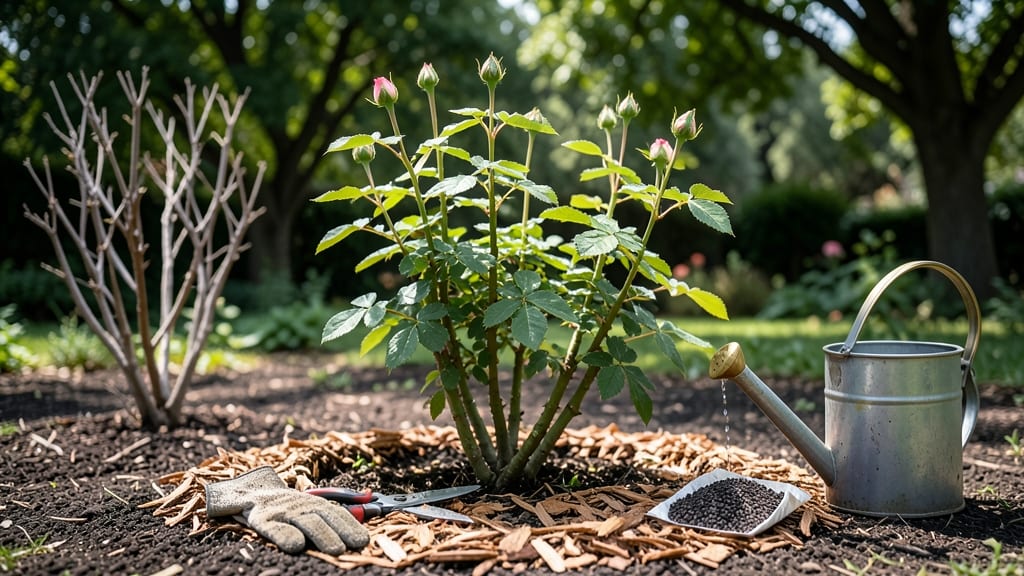
Your how to bring back a dead rose bush isn’t dead—it’s just sleeping. 🌱 I’ve nursed back more "dead" roses than I’d like to admit, and the secret weapon is a root flush that wakes them up from the inside out.
The key isn’t brute-force pruning or drowning it in fertilizer, but understanding what’s really wrong below the soil.
Most "dead" roses fail because of rotted roots from overwatering, suffocating soil, or disease. Dig down—healthy roots smell earthy and look white or tan, while bad roots are mushy, black, or crumble like wet paper.
If you find more good than bad, you’ve got a fighting chance. If it’s all rot, we’re starting fresh.
By the time you’re done, you’ll have a bush that looks like it’s been pruned by a pro—not hacked to death. New shoots emerge within 2-3 weeks, and by summer, you’ll have blooms that make your neighbors ask, "How’d you do that?"
The trick is patience and knowing exactly what to cut (and what to keep).
This works for hybrid teas, floribundas, and even old garden roses—no matter how far gone it looks. The best time to act is early spring or fall, when the bush can recover before extreme heat or cold. Let’s get those roots breathing again.
The Hidden Causes Behind Dying Roses
Seeing a once-vibrant rose bush wither into a sad, brown skeleton can feel like a heartbreak for any gardener. But before you dig deeper (literally), it’s crucial to pinpoint the root cause—pun intended. Roses are resilient, but they’re also picky about their environment, care, and even their own biology.
Let’s break down the most common reasons your rose bush might have taken a nosedive, so you can diagnose—and fix—the issue before it’s too late.
Roses are not built for extremes. Whether it’s a scorching summer heatwave or a brutal winter freeze, temperature swings can shock your plant into dormancy—or worse, death.
- Heat Stress:
When temperatures soar above 90°F (32°C) for prolonged periods, roses struggle to absorb water efficiently. Their leaves wilt, turn yellow, or crisp at the edges—a sign of transpiration overload.
The roots may also suffocate if the soil dries out too quickly, leading to hydraulic failure (when the plant can’t pull water from the roots to the leaves).
- Cold Damage:
Frost and freezing temps (below 20°F/-7°C) can cause cellular ice crystal formation in rose tissues, rupturing cell walls. This leads to blackened canes, mushy stems, and a sudden collapse of the plant’s structure.
Evergreens like Rosa rugosa are slightly more cold-hardy, but most hybrid teas and floribundas will suffer.
- Rapid Temperature Shifts:
When a rose endures a 20°F (11°C) swing in 24 hours (e.g., daytime heat followed by nighttime frost), it can’t adapt fast enough. This causes osmotic shock, where the plant’s ability to regulate water and nutrients breaks down.
💡 Pro Tip: If your roses are in a microclimate (like near a wall or pavement), they may overheat. Mulch with 3–4 inches of organic matter (straw, wood chips) to insulate roots and retain moisture.
Water is the lifeblood of your rose bush, but too much or too little can be just as deadly. Roses hate wet feet (root rot) but also thirst (desiccation).
- Underwatering (Drought Stress):
When soil moisture drops below 30–40%, roses enter survival mode. Their leaves curl inward to reduce water loss, stems become woody and brittle, and roots shrink and die back from lack of hydration. Chronic underwatering weakens the plant’s vascular system, making it vulnerable to disease.
- Overwatering (Root Rot):
Roses in waterlogged soil suffocate because roots can’t breathe. Fungal pathogens like Phytophthora and Pythium thrive in soggy conditions, causing root rot. Infected roots turn black, mushy, and emit a rotten smell. Over time, the plant’s ability to absorb nutrients collapses, leading to leaf drop and cane dieback.
- Poor Drainage:
If your rose bush is planted in clay-heavy or compacted soil, water pools around the roots instead of draining away. This creates an anaerobic environment (no oxygen), which smothers roots and encourages rot.
💡 Pro Tip: Stick your finger 2 inches into the soil—if it’s dry, water deeply. If it’s soggy, hold off until the top 3 inches are dry. Raise beds or amend soil with perlite/sand to improve drainage.
Roses are a magnet for pests and pathogens, and once they take hold, they can turn a healthy bush into a zombie in weeks. The most common culprits?
- Fungal Infections (Black Spot, Powdery Mildew):
Fungi like Diplocarpon rosae (black spot) thrive in humid, shady conditions and cause dark, tar-like spots on leaves. These spots block photosynthesis, starving the plant. Powdery mildew (Sphaerotheca pannosa) coats leaves in white, powdery fungus, clogging stomata (pores) and suffocating the plant.
- Bacterial Diseases (Canker, Blight):
Bacteria like Pseudomonas syringae cause oozing cankers on stems, which girdle (cut off) the plant’s nutrient flow. Xanthomonas leads to bacterial leaf spot, turning leaves into lacy brown skeletons.
- Pest Damage (Aphids, Japanese Beetles, Spider Mites):
Aphids suck sap, weakening stems and transmitting viruses. Japanese beetles skeletonize leaves, reducing the plant’s ability to photosynthesize. Spider mites pierce cells, causing stippling and yellowing.
💡 Pro Tip: Prune infected canes immediately (sterilize shears with rubbing alcohol!). Apply neem oil or copper fungicide preventatively in spring. Space plants for airflow to reduce humidity-related diseases.
Roses are heavy feeders and need a balanced diet of nitrogen (N), phosphorus (P), and potassium (K), plus micronutrients like iron, magnesium, and zinc. Too little or too much of any nutrient can cripple your bush.
| Symptom | Likely Cause | Action |
|---|---|---|
| Yellowing lower leaves (older growth) | Nitrogen (N) deficiency | Apply balanced fertilizer (10-10-10) or compost |
| Purple or reddish stems/leaves | Phosphorus (P) deficiency | Use bone meal or rock phosphate |
| Yellowing between veins (chlorosis) | Iron (Fe) or zinc (Zn) deficiency (common in alkaline soil) | Apply chelated iron or Epsom salt (magnesium) |
Revive Your Rose Bush NowA dead rose bush isn’t always a lost cause—with the right approach, you can coax it back to life! Below are practical, step-by-step solutions tailored to the most common causes of decline. Each fix includes prevention tips to keep your roses thriving long-term. Signs: Yellowing leaves, mushy stems, or roots that smell rotten when dug up. How to Fix It:
Prevention Tips: ✅ Water deeply but infrequently—roses prefer 1–2 inches of water per week, not daily drizzles. ✅ Use raised beds or containers if your native soil drains poorly. ✅ Mulch around the base (2–3 inches of organic mulch) to regulate moisture without suffocating roots. Signs: Crispy, brown edges on leaves, wilted stems that don’t bounce back, or soil pulling away from pot sides. How to Fix It:
Prevention Tips: 💡 Water in the early morning to reduce evaporation. 💡 Use drip irrigation for consistent moisture. 💡 Choose heat-tolerant varieties (like ‘Knock Out’ roses) if you live in a hot climate. Signs: Holes in leaves, sticky residue (aphids), black spots (fungus), or sawdust-like frass (rose slugs). How to Fix It:
Prevention Tips: 🔥 Water at the base (avoid wetting leaves) to deter fungal spores. 🔥 Inspect plants weekly during growing season. 🔥 Rotate fungicides/pesticides to avoid resistance. Signs: Blackened canes, shriveled buds, or leaves that stay brown after spring thaw. How to Fix It:
Prevention Tips: ✨ Mulch heavily in fall (6+ inches of straw or leaves). ✨ Choose cold-hardy varieties (e.g., ‘Dr. Huey’ or ‘Canada Peace’). ✨ Avoid late pruning—wait until after the last frost to trim. Signs: Pale yellow leaves (nitrogen deficiency), purple stems (phosphorus lack), or weak, spindly growth. How to Fix It:
Prevention Tips: 💪 Mulch annually to slowly release nutrients. 💪 Rotate fertilizers to prevent buildup of one nutrient. 💪 Prune in early spring to remove old wood and encourage new, hungry growth. Final Pro Tip: 🌟 Patience is key! A revived rose bush may take 4–6 weeks to show new growth. Keep an eye on it, adjust care as needed, and soon you’ll be back to lush blooms and proud canes. Frequently asked questions
1
How do I tell if my rose bush is truly dead or just dormant?Check for green shoots at the base or along the stems—these mean life remains. Dig up a small section of root and look for firm, white tissue. If roots are mushy or black, it’s dead. Even if canes look brown, if roots are healthy, prune back to healthy wood and give it time.
2
Can I save a rose bush with only blackened canes but healthy roots?Cut all blackened canes back to green tissue or healthy buds. Sterilize your pruners first. The roots will sprout new growth within 2-4 weeks if conditions (water, sunlight, soil) are right. Avoid fertilizing until new shoots appear.
3
What's the fastest way to revive a severely dehydrated rose bush?Give it a deep soak until water runs out the bottom, then mulch heavily with 3-4 inches of organic material to retain moisture. Move it to partial shade for 1-2 weeks while roots rehydrate. Avoid pruning until new growth appears—this can take 3-6 weeks.
4
Is it better to prune dead roses in spring or fall?Spring is ideal—wait until after last frost when new growth begins. Fall pruning risks winter damage, but if you must do it, prune 6-8 weeks before first frost to allow wounds to heal. Always sterilize tools and cut at 45-degree angles above outward-facing buds.
5
How often should I fertilize a revived rose bush?Start with a balanced fertilizer (10-10-10) when new growth appears, then feed every 4-6 weeks during growing season. Too much fertilizer burns roots—always water thoroughly after applying. In fall, switch to low-nitrogen (5-10-10) to strengthen roots for winter. |