
Companion Plants
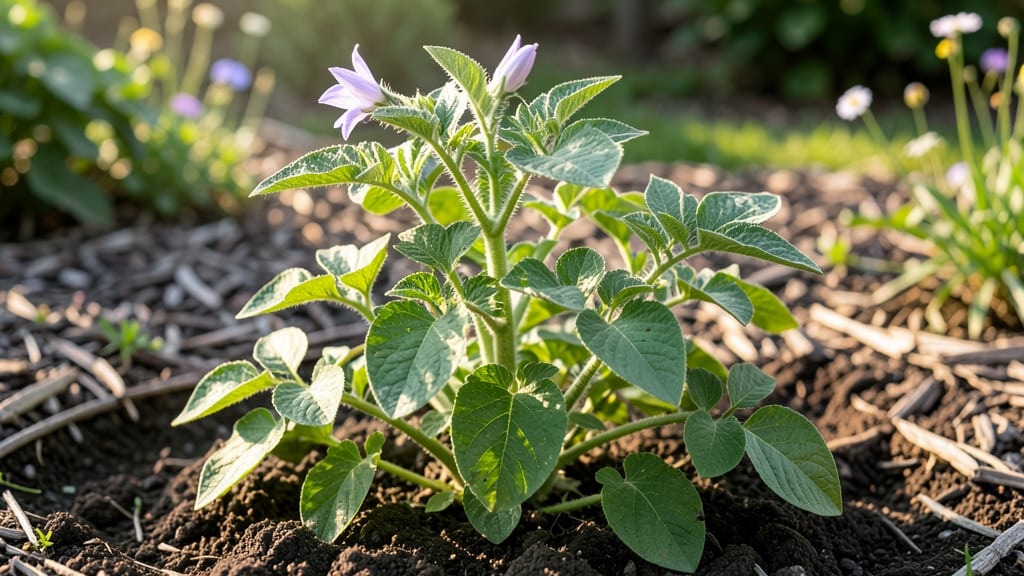
How to identify potato plants early saves you from poisonous look-alikes. 🌱 That first flush of leaves can fool even experienced gardeners—deadly nightshade and wild potatoes mimic them perfectly. The key? Leaf shape and growth habits that change dramatically as the season progresses.
Start with the leaves: potato plants have deeply lobed, jagged-edged foliage that resembles a maple leaf but with a rougher texture. Early on, they grow in a low, sprawling habit, while dangerous look-alikes often stand taller or have smoother edges.
Check the stems too—potatoes have hairy, slightly fuzzy stems that feel different from the smooth stems of nightshade.
By midseason, you’ll see white or purple flowers (if your variety blooms) and tuber formation—small bumps on the underground stems. This is when you can confidently distinguish them from weeds. If you’re still unsure, dig carefully: potatoes have brown, rough-skinned tubers, while nightshade berries will give it away.
Mistakes happen, especially when young plants look identical. When in doubt, consult a local extension office or snap a clear photo for verification. The earlier you confirm your plants, the sooner you can start hilling soil and protecting them from pests.
📚 In This Guide
- What you need
- Instructions
- Tips and common mistakes
- Wrapping up and next steps
What you need
- ○ Hand lens or magnifying glass – A 10x magnification lens helps examine fine details like leaf edges and stem textures. (Optional but highly recommended for beginners!)
- ● Notebook and pencil – For jotting down observations like leaf shape, growth stage, or unusual markings.
- ● Ruler or measuring tape – To measure leaf length, stem diameter, or spacing between tubers (if digging is involved).
- ● Gloves (nitrile or gardening gloves) – Protects hands from soil, sap, or prickly stems. Waterproof gloves are ideal if checking plants in wet conditions.
- ● Small trowel or hand shovel – For gentle digging (if you’re verifying tubers). A 5-inch blade is perfect for precision.
- ● Camera or smartphone – Capture leaf patterns, growth stages, or side-by-side comparisons with known potato plants.
- ● Field guide or plant ID app – Apps like PlantNet or iNaturalist help cross-reference your findings. (Free options available!)
- ● Pruning shears – For safely snipping leaf samples (if you’re studying multiple plants). Sterilize with rubbing alcohol between uses!
- ● Spray bottle with water – Keeps leaf samples fresh if you’re transporting them for closer inspection.
- ● Reference photos of potato plants – Print or save high-res images of healthy vs. diseased potato foliage for comparison.
- ● Garden twine or flags – Mark spots where you’ve spotted potential potato plants to revisit later.
Step-by-Step guide to identifying potato plants by leaf shape and growth stages
Mastering potato plant ID ensures you spot them early and avoid confusing them with weeds or other crops.
🌱 Step 1: Examine the Leaf Shape for Initial Identification
Potato plants (Solanum tuberosum) have distinctive compound leaves with 5-9 leaflets arranged alternately along the stem. The leaflets are oval-shaped with slightly serrated edges and a deep central vein that creates a V-shape when viewed from above. Compare this to weed leaves, which often have jagged, irregular edges or single, simple leaf structures.
Here's the thing—young potato seedlings start with two small, heart-shaped cotyledons (the first true leaves) that look nothing like mature foliage. Don't mistake these for grass or other weeds. Within 2-3 weeks, the first true leaves emerge with the classic compound structure. I always check for this transition to confirm I'm dealing with potatoes.
🌿 Step 2: Observe Growth Stages for Positive Confirmation
Potato plants grow in four distinct stages, each with unique visual cues. First, look for the stem growth habit: potatoes send up erect, hairy stems that grow 12-24 inches tall depending on the variety. The stems often develop purple or green stripes—a key identifier for many cultivars.
Watch for flowering, which occurs 6-8 weeks after planting in most varieties. Potato flowers are white, pink, or purple, bell-shaped, and grow in clusters. While not all potatoes flower (some are sterile), seeing them confirms you've got a true potato plant. The flowers also help distinguish potatoes from weeds like nightshade, which has different bloom patterns.
✂️ Step 3: Check for Tubers and Underground Clues
While you can't see tubers until harvest, mound the soil around the plant base to create hills (a common potato-growing technique). If the plant is healthy, it will push new stems and leaves from the hill, confirming active tuber formation below. Look for small, knobby growths along the underground stems—these are baby tubers.
I know it seems counterintuitive, but digging up a single tuber for inspection is the surest way to confirm. Choose a small, shallow tuber near the surface—it should have the rough, brown skin and white or yellow flesh characteristic of potatoes. If you find smooth, bulbous roots, you've got a different crop (like onions or garlic).
☀️ Step 4: Rule Out Common Look-Alikes
Potatoes are often mistaken for nightshade weeds (like deadly nightshade or black nightshade), which have similar leaf shapes but toxic berries and hairier stems. Nightshade leaves also tend to be smaller and more clustered. Another imposter is volunteer tomatoes, which have deeply lobed leaves and sticky stems—unlike potatoes' smooth, hairy stems.
If you're still unsure, pinch a leaf and smell it. Potato leaves have a mild, earthy aroma, while weeds often smell bitter or rank. I've also found that running a finger along the stem helps—potato stems are slightly fuzzy, whereas many weeds have smooth or prickly surfaces.
Tips & tricks for mastering potato plant identification
Confession: I spent years pulling weeds I thought were potatoes—until I learned these visual shortcuts that make identification foolproof.
Leaflet Count Matters: Focus on the number of leaflets in Step 1—potato plants consistently have 5-9 oval leaflets per compound leaf. Count them carefully: fewer than 5 suggests a weed, while more than 9 might indicate a different nightshade. I keep a small magnifying glass handy for close inspection, especially when leaves are small or crowded.
Timing is Everything: That 2-3 week window for true leaves to emerge in Step 1 is critical. Young seedlings with just cotyledons can easily be mistaken for grass or other weeds. I mark my calendar when I plant potatoes and check again at the 2-week mark—this prevents me from accidentally pulling out potential potato plants too early.
Stem Texture Reveals All: The hairy, fuzzy stems mentioned in Step 2 are your secret weapon. Run your fingers along the stem—potato stems feel slightly rough, while nightshade stems are often smoother or covered in fine hairs. This tactile check has saved me from removing plants I later regretted pulling.
Flower Clues Confirm Identity: When you spot those white, pink, or purple bell-shaped flowers in Step 2, you've got confirmation. Not all potatoes flower, but when they do, it's a definitive sign. I've found that flowering typically happens around 6-8 weeks, so if you see blooms earlier or later, it might indicate a different variety or even a related nightshade plant.
Pro Tips for Identify Potato Plants
- Confession: I spent years pulling weeds I thought were potatoes—until I learned these visual shortcuts that make identification foolproof.
- Leaflet Count Matters: Focus on the number of leaflets in Step 1—potato plants consistently have 5-9 oval leaflets per compound leaf.
- Timing is Everything: That 2-3 week window for true leaves to emerge in Step 1 is critical.
Frequently asked questions
How can I tell the difference between potato plants and weeds?
Potato plants have hairy stems, compound leaves (3-9 leaflets), and a distinctive white or purple flower (if they bloom). Weeds like morning glory or bindweed often have smooth stems and heart-shaped leaves. Pull anything suspicious early—potatoes are slow starters!
When is the best time to identify potato plants in my garden?
Spot them 2-3 weeks after sprouting (when leaves unfurl) or before flowering (4-6 weeks post-planting). Early ID helps you remove weeds and monitor growth. If you’re unsure, check for tuber formation by gently brushing soil near stems—potatoes won’t have roots there!
Can I identify potato plants by their leaves alone?
Yes! Healthy potato leaves are dark green, jagged, and lobed (like a fern). Look for hairy stems and alternate leaf arrangement. If leaves are yellowing, curling, or spotted, it could signal disease (like blight) or pests—act fast to save your crop!
What if my potato plants look like sweet potatoes or yams?
Potatoes have broad, rough leaves and hairy vines, while sweet potatoes/yams grow long, heart-shaped leaves on trailing vines. Also, potatoes are nightshades (like tomatoes), so they’ll wilt in frost—sweet potatoes are tropical and frost-sensitive. Dig a sample if you’re still unsure!
My plants have weird growth—are they still potatoes?
If leaves are purple, stunted, or deformed, it could be disease, pests, or nutrient issues. Check stems for spider mites or blight spots. If growth is too lush, they might be volunteer tomatoes (also nightshades). Compare to healthy plants—when in doubt, snip and test!
Wrapping up and next steps
Identifying potato plants doesn’t have to be a guessing game—with the right knowledge, you’ll spot them like a pro! 🌱 From heart-shaped leaves and purple or green stems to understanding their growth stages, these clues make it easy.
Whether you’re a seasoned gardener or just starting, confidence in recognizing your spuds will lead to a bountiful harvest.
Now that you’re armed with the know-how, take the next step: grab those gardening gloves and head to your plot! Observe your plants closely, and soon you’ll be reaping the rewards of your green thumb. Happy planting! 🌟