
Trees
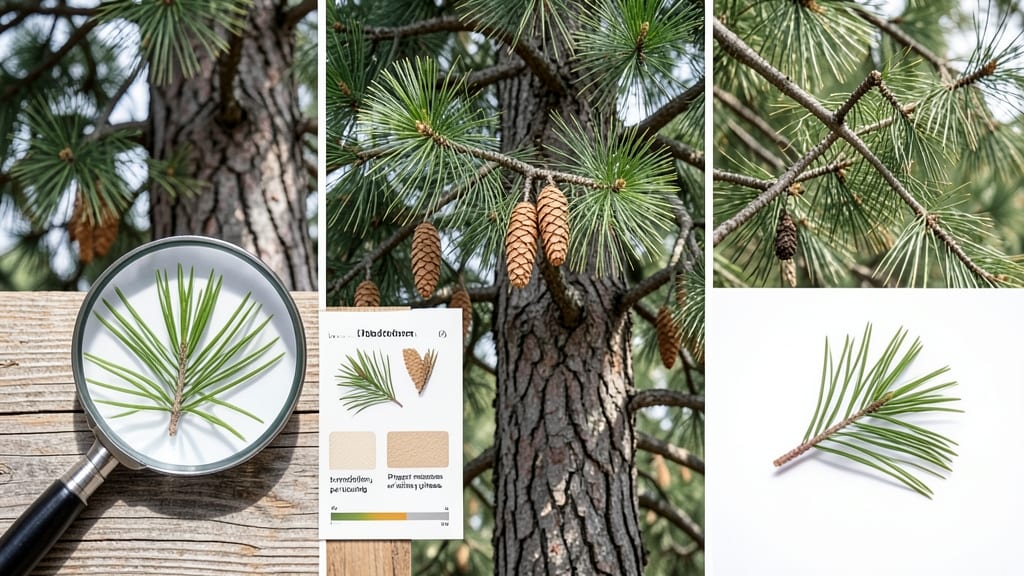
How to identify white pine needles starts with their signature clusters of five, unlike the two or three needles of most pines. 🌲 That’s your first clue—this simple grouping sets them apart instantly. I’ve spent years telling white pines from their lookalikes, and this one detail alone saves confusion in the field. The needles are soft, flexible, and about 3-5 inches long—longer than spruce but shorter than some firs. Run your thumb along a branch: white pine needles bend almost 180 degrees without snapping, while firs stay stiff. That flexibility is a dead giveaway. Compare them to Eastern white pine’s slightly shorter (2-3 inches) needles or Scots pine’s stiffer, 2-needle clusters. Twist a needle between your fingers: white pine’s feel smooth and slightly waxy, not rough like spruce. For absolute certainty, check the cone shape—white pine cones are oval and hang down, while spruce cones are round and stick up. Now you can ID them like a pro, even when they’re just saplings.
📚 In This Guide
- What you need
- Instructions
- Tips and common mistakes
- Wrapping up and next steps
What you need
- ● Fresh or dried white pine needles – At least 5-10 needles per sample (preferably from multiple branches for accuracy).
- ● Magnifying glass (10x magnification) – Helps examine fine details like needle texture and stomatal lines.
- ● Ruler or measuring tape – For precise needle length measurements (white pines typically range 3–5 inches).
- ● Notebook & pen – To record observations (e.g., needle shape, color, and arrangement).
- ● Small white or light-colored tray – For arranging needles to compare against a neutral background.
- ● Digital camera or smartphone – Capture close-ups of needle bundles and bark for later reference.
- ● Field guide or pine identification app (e.g., LeafSnap or iNaturalist) – Cross-check your findings with expert databases.
- ● Plastic gloves – If handling needles from unknown sources (e.g., allergies or sap sensitivity).
- ● Small paintbrush or tweezers – Gently separate needles stuck in resin or debris.
How to identify white pine needles: 5 visual clues to spot them instantly
Here's how I spot white pine needles in seconds—no botanical degree required.
🌿 Step 1: Examine Needle Length and Bundle Arrangement
White pine needles grow in clusters of five needles per fascicle—that's the technical term for the bundle. Hold a branch between your fingers and count: if you see exactly five slender, flexible needles emerging from the same point, you've found white pine. Most other pines have two or three needles per bundle, never five.
Measure the needles against your thumb—white pine needles are 3-5 inches long, about the length of your index finger from knuckle to fingertip. They're soft to the touch, unlike the stiff, sharp needles of pines like jack or red pine. Run your fingers along a branch: if the needles feel almost silky and bend easily without snapping, it's likely white pine.
🌱 Step 2: Check Needle Color and Surface Texture
Fresh white pine needles are a bright, silvery-blue-green color when viewed from above, with two white stomatal lines running along the underside of each needle. Flip a needle over and look closely—those white lines look like tiny parallel highways. This is a dead giveaway for white pine, as most other pines lack these prominent white bands.
The upper surface is a matte green, never glossy. Hold a branch up to a window: if the light reflects unevenly and the needles appear slightly fuzzy, that's another clue. White pine needles have a fine, almost powdery texture that you can feel if you rub them between your fingers.
☀️ Step 3: Inspect Branch and Bark Characteristics
White pine branches grow in a distinctive horizontal, layered pattern—older branches spread out like a flat fan, while newer growth pushes upward. Look for orange-brown cones that are oval-shaped and 2-4 inches long—they hang downward from the branches. These cones are softer than the hard, woody cones of other pines and often persist on the tree for years.
Run your hand along the trunk or larger branches: white pine bark is smooth and grayish when young, developing shallow furrows as the tree matures. Unlike rough, scaly pine bark, white pine bark stays relatively smooth, almost like sandpaper. This smoothness extends to the smaller branches too—if you can run your palm along a branch without catching on rough ridges, it's likely white pine.
🪴 Step 4: Verify Needle Arrangement on the Branch
White pine needles radiate spirally from the branch—each bundle of five needles twists slightly as it grows, creating a corkscrew pattern along the branch. Hold the branch at a 45-degree angle to the light and rotate it slowly: you should see the bundles spiral outward in a consistent pattern, like a screw thread. This is different from the more uniform, flat arrangement you'd see in other pines.
Look at where the needles attach to the branch. In white pine, the base of the bundle is slightly swollen and covered in a fine, white, powdery residue. This residue is actually resin that oozes from the tree and hardens. If you see this powdery buildup at the needle bases, you've confirmed white pine.
✂️ Step 5: Test Needle Flexibility and Break Point
Gently bend a white pine needle between your fingers—it should flex easily but not snap. If you apply too much pressure, it will eventually break, but only after bending significantly. Most other pine needles are much stiffer and snap cleanly when bent. This flexibility is a key identifier, especially when comparing to the brittle needles of pines like Scotch or Austrian.
Break a needle in half and examine the cross-section. White pine needles have a central vascular bundle that's clearly visible as a small, darker line running through the middle. The rest of the needle should appear uniformly green with no dark spots or discoloration. If the cross-section looks clean and the break is jagged rather than smooth, you're dealing with white pine.
Tips & tricks for perfectly identifying white pine needles
These pro tips will help you spot white pine needles like a botanist—no field guide needed.
Bundle Count is Non-Negotiable: The five-needle fascicle is your golden ticket. I've seen people overlook this because they're focused on length or color, but counting those five needles is foolproof. In Step 1, when you examine the bundle arrangement, don't just glance—count each needle carefully. This is the one characteristic that never varies in white pine, unlike color which can shift with sunlight or season.
Lighting is Your Secret Weapon: For Step 2, when checking those white stomatal lines, natural daylight is your best friend. Artificial light can wash out the subtle white bands, making them harder to see. If you're indoors, position your sample near a south-facing window. The contrast between the bright white lines and green needle will pop dramatically in good light—this is how I've confirmed white pine in dim forest settings where other clues were obscured.
Bark Texture Tells the Whole Story: In Step 3, when inspecting the bark, focus on the smoothness. I've made the mistake of assuming rough bark meant it wasn't white pine, only to discover the tree was mature. Young white pine bark stays smooth for decades, so run your hand along both small and large branches. That sandpaper-like smoothness is distinctive—no other pine maintains this texture as the tree ages.
Flexibility Test Reveals the Truth: The bend test in Step 5 is where many people get it wrong. They think "flexible" means it should bend dramatically, but white pine needles have just enough give to bend slightly before resisting. Practice this with a known white pine sample first—you'll develop a feel for that perfect "just before snapping" resistance that distinguishes it from other pines that either snap immediately or bend too easily.
Pro Tips for Identify White Pine Needles
- These pro tips will help you spot white pine needles like a botanist—no field guide needed.
- Bundle Count is Non-Negotiable: The five-needle fascicle is your golden ticket.
- Lighting is Your Secret Weapon: For Step 2, when checking those white stomatal lines, natural daylight is your best friend.
Frequently asked questions
Got questions about spotting white pine needles? You’re not alone! Here are answers to the most common queries—so you can confidently ID these trees in no time.
Can white pine needles be confused with other evergreens?
White pine needles (soft, flexible, and 5-needled) can resemble spruce or fir. The key difference? Spruce needles are stiff and sharp, while fir needles are flat and blunt. White pine’s needles also grow in clusters (like a tiny bouquet), unlike spruce’s single-needle look.
When is the best time of year to identify white pine needles?
White pine needles are easiest to spot in late spring or summer when they’re fully grown and vibrant. Avoid winter—needles may look dull or browned. Early fall is also great, as the cones (another ID clue) mature and become more visible.
What if my tree’s needles look like white pine but aren’t?
If you suspect a mix-up, check these red flags:
- Needle length: White pine needles are 3–5 inches long. Shorter or longer? Not white pine.
- Needle texture: Spruce needles are prickly; fir needles are soft but flat.
- Bark: White pine bark is scaly and orange-brown. Other pines (like red pine) have rough, plate-like bark.
Do white pine needles change color in fall?
Unlike deciduous trees, white pine needles stay green year-round (evergreen!). However, they may turn yellowish-brown in late fall/winter due to cold or drought. Healthy needles should snap (not bend) when fresh—dry needles are brittle.
What’s the easiest way to confirm it’s a white pine?
Combine three clues for 100% certainty:
- Needles: Soft, flexible, 5-needled clusters.
- Cones: Long, drooping, and papery (unlike spruce’s stiff cones).
- Bark: Scaly and peeling (like shingles).
Wrapping up and next steps
Identifying white pine needles is easier than you think—just remember their soft texture, five-sided shape, and distinctive blue-green hue. Whether you're a gardener, hiker, or nature enthusiast, these visual clues will help you spot them in no time! 🌲
Now that you’re armed with this knowledge, why not put it to use? Head outdoors and compare what you see to these tips—you’ll be spotting white pines like a pro in no time. Happy exploring!