
Shrubs
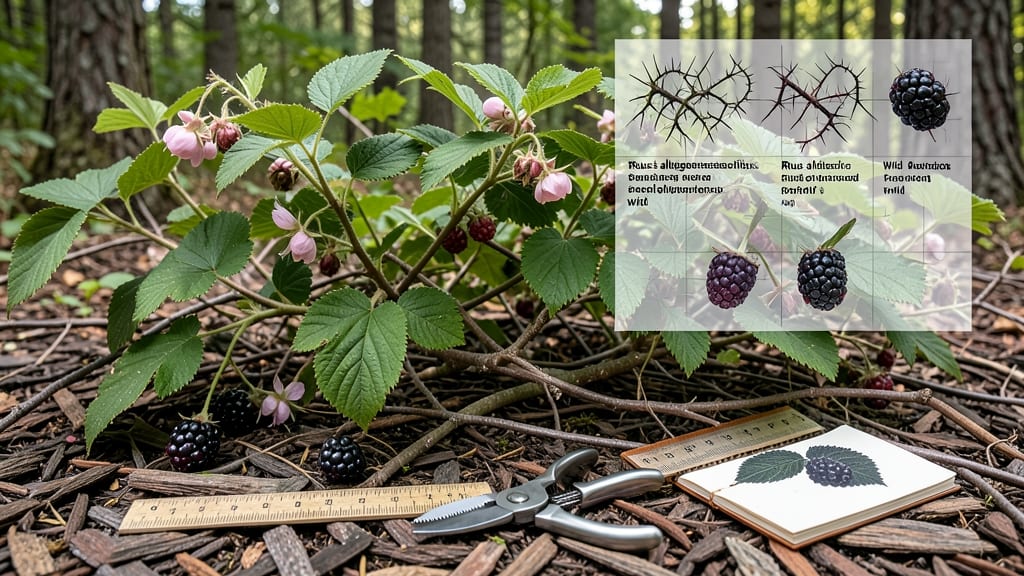
How to identify wild blackberries can fool even experienced foragers—until you spot these three unmistakable clues. 🌿 The first dead giveaway is the arching canes that grow upward, then droop dramatically under the weight of ripe berries, unlike the upright stems of cultivated varieties. These canes also bear stout, hooked thorns (not the fine, straight ones on raspberries) that cling to clothing like tiny grappling hooks. Leaf shape is your second confirmation: wild blackberries have five leaflets with jagged, serrated edges, while dewberries (their close cousin) sport three leaflets. Run your thumb along the underside of a leaf—wild blackberries smell faintly of almonds when crushed, thanks to cyanogenic glycosides (a natural chemical that’s safe in small amounts but worth noting). The berries themselves are the final check: wild blackberries grow in large, loose clusters (not the tight, uniform bunches of cultivated types) and turn a deep, glossy black when ripe. If you’re still unsure, taste one—wild varieties are sweeter but slightly tart, while store-bought berries often lack depth. This matters because misidentifying them can lead to invasive spread or accidental poisoning from look-alikes like nightshade. Why bother with the details? Wild blackberries can become aggressive in gardens, outcompeting desirable plants, and some varieties carry thorns that make harvesting a chore. But once you master these cues, you’ll spot them anywhere—along fences, in abandoned fields, or even pushing up through sidewalk cracks. The key is to observe all three traits together: canes, leaves, and berries. Pro tip: Snap a photo of the whole plant (canes, leaves, and berries) and compare it to your state’s wild edible plant database. Many regions have invasive blackberry species that look identical but behave very differently—knowing the difference saves future headaches. Grab your phone and head outside; you’ll start noticing them everywhere.
📚 In This Guide
- What you need
- Instructions
- Tips and common mistakes
- Wrapping up and next steps
What you need
- ● Field guide or plant identification app: A reliable resource like Wild Edibles: A Practical Guide to Foraging or apps such as iNaturalist or PictureThis to confirm ID.
- ○ Gloves (optional but recommended): Lightweight gardening gloves to protect your hands from thorns and rough foliage.
- ● Small knife or pruning shears: A 3–5-inch folding knife or bypass pruners for harvesting ripe berries without damaging the plant.
- ● Plastic or mesh berry picker: A handheld tool with a fine mesh net to avoid puncturing berries while picking.
- ● Containers for harvesting: 1–2 quart-sized mason jars or food-grade buckets (for small batches).
- ● 1 large breathable bag (like a mesh produce bag) for bulk foraging.
- ● Hand lens or magnifying glass: A 10x magnification tool to inspect tiny details like leaf serrations or thorn structures.
- ● Notebook and pen: For jotting down locations, plant characteristics, or sketching unfamiliar features.
- ● Water and snacks: Foraging can be tiring—pack electrolyte drinks and high-energy snacks (like trail mix).
- ● GPS device or phone with offline maps: To mark foraging spots and avoid getting lost.
- ● Disinfectant wipes: For cleaning hands or tools before/after handling plants.
- ● Camera or smartphone: To document plants for later reference or sharing with foraging groups.
- ● First-aid kit: Include sting relief wipes (for thorn pricks) and antihistamines (in case of allergic reactions).
- ● Permit or landowner permission: If foraging on private or protected land, check local regulations first!
How to identify wild blackberries: 3 visual cues that never lie
Spotting wild blackberries in the wild isn’t rocket science—just look for these three foolproof markers.
🌿 Step 1: Examine the Canes for Thorns and Growth Habit
Wild blackberry canes are your first clue. Unlike cultivated varieties, they grow in dense thickets with sharp, hooked thorns along the entire length of the stem. These thorns aren’t just random—they curve backward, making them nearly impossible to pull through clothing or skin. Run your hand along a cane: if it feels like a barbed-wire fence, you’re dealing with blackberries.
Also, notice how the canes grow. Wild blackberries send up arching, sprawling canes that root at the tips when they touch the ground. These new shoots form a tangled mat, while cultivated berries often have upright, trellised canes. If you see a bushy, sprawling thicket with thorns, you’ve found the right plant.
🍇 Step 2: Check the Fruit’s Shape, Color, and Cluster Pattern
Blackberries grow in loose, drooping clusters of 10-30 berries, unlike raspberries, which form on a central core that stays behind after picking. Each berry is oval or slightly elongated, never perfectly round. When ripe, they’re a deep, glossy black—no red or purple hues. If the berries are still red or purple when fully ripe, it’s not a blackberry.
Here’s the real test: gently squeeze a ripe berry. Wild blackberries don’t leave juice stains on your fingers—they’re dry to the touch. Raspberries, on the other hand, burst easily and leave a sticky mess. If the berries are firm, dark, and grow in loose clusters, you’ve got wild blackberries.
🌱 Step 3: Look for the Leaves and New Growth
Blackberry leaves are compound with 3-5 serrated leaflets, arranged alternately along the stem. The edges of the leaflets have sharp, saw-like teeth, and the undersides are slightly hairy. Hold a leaf up to the light—if it’s divided into multiple leaflets with jagged edges, it’s a blackberry. Smooth-edged or palmate leaves (like those on dewberries) are a red flag.
New growth is another giveaway. Wild blackberry canes produce bright green, fuzzy shoots in spring. These shoots are covered in fine hairs and grow aggressively, often smothering nearby plants. If you see a thicket with hairy new growth and compound leaves, you’re in the right place. Avoid areas with smooth, shiny leaves or single-leaf patterns—those belong to look-alikes like dewberries or raspberries.
Tips & tricks for mastering wild blackberry identification
Here's what nobody tells you about avoiding common mistakes in the field—these tricks will turn you into a blackberry-spotting pro.
Thorn Texture Test: The hooked, backward-curving thorns are your secret weapon. Run your thumb along a cane—if it feels like gripping barbed wire, you've found wild blackberries. Cultivated varieties often have softer, straighter thorns or none at all. This tactile check works even when berries aren't visible yet, giving you an early advantage in identifying the right thickets.
Cluster Shape Secret: When examining berry clusters, look for the "drooping umbrella" shape—loose, arching branches with berries hanging like grapes. Raspberries form tight clusters that stay attached to a central core (the "hollow" you see after picking). This visual difference becomes especially clear when berries are nearly ripe but still firm to the touch.
Leaf Underside Inspection: Flip the compound leaves to check for fine hairs on the undersides—this fuzzy texture is distinctive to wild blackberries. Use a small flashlight to examine leaf edges in low light; the serrated "sawtooth" pattern becomes more visible when backlit. This detail separates them from look-alikes like dewberries, which have smoother leaf edges.
Seasonal Timing Tip: The best time to identify wild blackberries is during late spring when new growth emerges. Look for the bright green, fuzzy shoots that appear before berries form. These shoots are your early warning system—they indicate active blackberry plants that will produce fruit later in the season. This gives you a head start on locating prime foraging spots before the berries even appear.
Pro Tips for Identify Wild Blackberries
- Here's what nobody tells you about avoiding common mistakes in the field—these tricks will turn you into a blackberry-spotting pro.
- Thorn Texture Test: The hooked, backward-curving thorns are your secret weapon.
- Cluster Shape Secret: When examining berry clusters, look for the "drooping umbrella" shape—loose, arching branches with berries hanging like grapes.
Frequently asked questions
Got questions about spotting wild blackberries? You’re not alone! Here are answers to the most common queries—because even experts need a little help sometimes.
How do I tell wild blackberries apart from poisonous lookalikes?
Wild blackberries are always thorny and grow on arching canes (unlike raspberries, which have hollow stems). Avoid nightshade berries (smooth, green stems) or poison ivy (three leaflets). When in doubt, squish a berry—if it stains your fingers purple, it’s safe!
When is the best time to pick wild blackberries?
Timing is key! Blackberries ripen from late summer to early fall (July–September in most regions). Look for deep black or purple berries that detach easily from the plant. Early morning picks are sweeter—avoid soggy berries after rain.
Are there any edible alternatives to wild blackberries?
Yes! If blackberries are scarce, try raspberries (softer, redder), dewberries (smaller, similar taste), or mulberries (white/purple, sweet). Always confirm with a field guide or local forager—never eat unknown berries!
Why do some wild blackberries taste bitter?
Bitter blackberries often mean underripe or overripe fruit, but they can also signal pesticide exposure or bird damage. Pick fully black berries from clean patches (avoid roadsides). If bitter, try cooking—heat can mellow the flavor!
What should I do if I accidentally pick non-wild blackberries?
If you’re unsure, don’t eat them! Wash hands and berries thoroughly, then research local plants. For suspected poisoning, call Poison Control (1-800-222-1222 in the U.S.). When in doubt, leave it—your stomach will thank you!
Wrapping up and next steps
Identifying wild blackberries is easier than you think—just remember those three foolproof visual cues: serrated leaves, thorny canes, and clustered berries. With a little practice, you’ll spot them like a pro and enjoy their sweet, tangy rewards! 🍇✨
Now that you’re ready to forage, grab a basket and head outdoors. Start small—explore local parks or trails, and always respect nature by harvesting responsibly. Happy berry hunting! 🌿💚