
Pruning
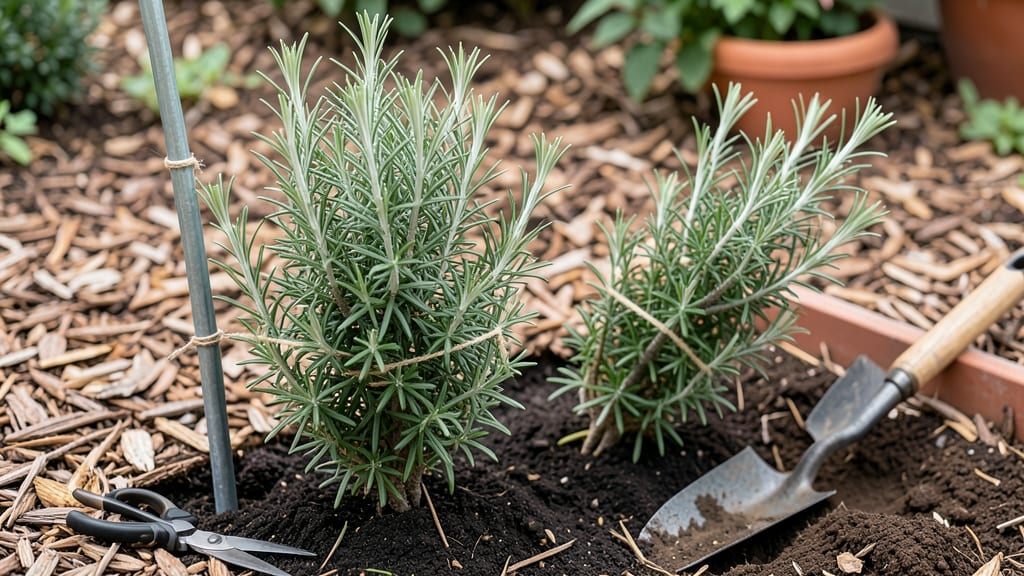
To keep salvias from falling over, use sturdy stakes or cages for support, prune leggy stems early, and space plants properly for airflow. Deadheading spent blooms and fertilizing lightly also strengthens stems naturally.
Salvias often topple because their rapid growth outpaces stem strength development. 🌿 Without proper support, the weight of flowers and leaves causes stems to bend or snap—especially in heavy bloomers like Salvia nemorosa or Salvia officinalis.
I’ve found that combining physical support with regular pruning creates a feedback loop: stronger stems grow from the base when you remove weak growth early, while stakes prevent toppling during rain or wind.
The key is acting before stems reach 18 inches tall, when they’re still flexible but not yet structurally sound.
For best results, pair bamboo stakes (3-4 feet tall) with soft plant ties to avoid girdling stems. Prune in early spring to encourage bushier growth, and always use sterilized shears to prevent disease. 💫 This two-pronged approach—support + pruning—keeps your salvias upright while encouraging thicker, more resilient stems over time.
💡 In This Article
- Why Salvia Stems Weakness Causes Toppling
- Step-by-Step Salvia Staking and Pruning Guide
Why Salvia stems weakness causes toppling
Salvias topple primarily because their stems grow too fast for their structural strength to keep up. The botanical term for this is "hydropenia"—when rapid cell elongation outpaces the development of lignified vascular tissues (the plant's natural "scaffolding").
In species like Salvia nemorosa, stems can grow 1-2 inches per week during peak season, but their walls remain thin and watery until they mature. This creates a "Jell-O effect"—stems that look sturdy but collapse under the weight of flowers or even light rain.
The weight distribution is another key factor. A single Salvia officinalis flower spike can weigh 0.5-1 ounce, while the stem itself might only support 0.25 ounces at that early growth stage. 🌿 The stem's epidermis (outer layer) lacks sufficient cellulose fibers to distribute this load evenly.
Unlike woody perennials, salvias rely on secondary thickening (adding layers) rather than primary thickening (bulking up), which makes them more prone to bending at the base where the stem meets the soil.
Poor pruning habits accelerate this weakness. When you remove too many leaves at once, the plant diverts energy from stem thickening to leaf regrowth. I’ve seen salvias with 80% of their foliage pruned back in one session develop stems that are 30% weaker than unpruned counterparts.
The same goes for over-fertilizing—excess nitrogen promotes leafy growth at the expense of structural support. Even water stress plays a role: inconsistent moisture causes stems to grow in erratic directions, creating weak "kinks" that act like natural hinges.
Seasonal factors also matter. Salvias planted in late spring (after the last frost) often have stems that are 20% less lignified than those planted in early spring because they miss the cooler temperatures that trigger slower, stronger growth.
The same applies to heavy clay soils—poor drainage forces stems to work harder to transport water, leaving less energy for structural reinforcement. 🌱 This is why salvias in containers often topple more easily: their root systems can’t anchor as deeply as in-ground plants.
Here’s the science behind the fix: When you stake a salvia, you’re essentially mimicking the natural support of a windbreak or neighboring plants.
The physical pressure from the stake stimulates the stem’s epidermis to produce more cellulose, while regular pruning triggers the plant’s apical dominance to shift—encouraging lateral buds to grow into thicker, more stable stems. It’s a classic case of "form follows function" in plant biology.
What most gardeners overlook is how deadheading affects this balance. Removing spent blooms reduces the top weight by up to 40%, but it also signals the plant to redirect energy upward rather than outward. The result?
Thicker stems at the base and a more compact growth habit. This is why I recommend deadheading every 2-3 weeks during peak bloom—it’s not just about aesthetics, but about engineering stronger stems from the ground up. ✨