
How To
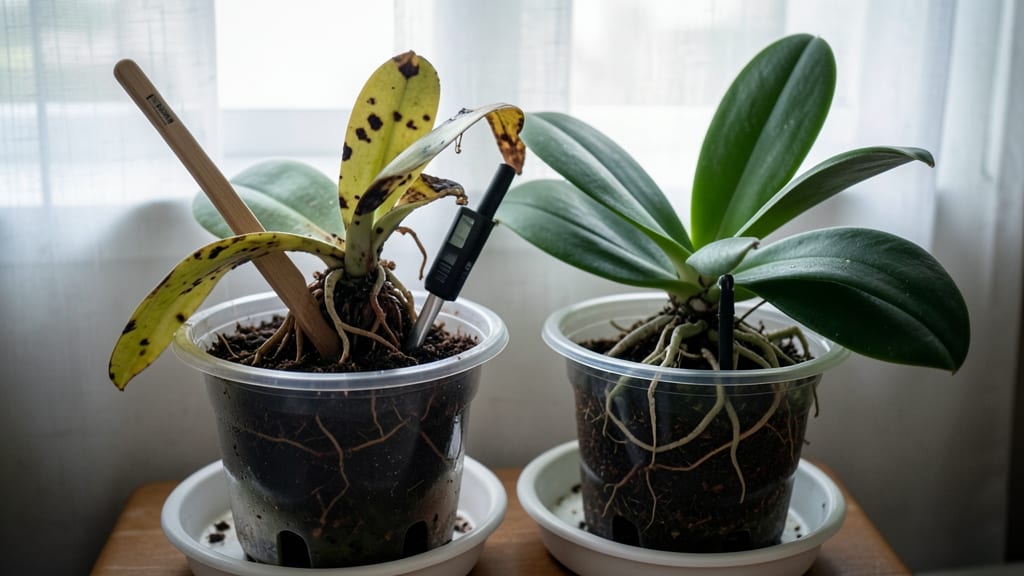
You can how to know if orchid is overwatered by checking its stem—if it feels alarmingly soft when you touch it, that’s a major warning sign. 🌱 Overwatering is the silent killer of orchids, and the first signs often go unnoticed until it’s too late.
The good news? You can diagnose and fix it before permanent damage sets in.
Start by checking the roots: healthy ones are firm and silvery-green, while overwatered roots turn mushy, black, or emit a foul, rotten smell. Yellowing leaves, wilting despite water, or a soggy potting mix are other red flags. The key is orchid-specific care—these plants thrive on less water than most houseplants.
If you confirm overwatering, act fast: trim dead roots with sterilized scissors, repot in fresh bark mix, and let the medium dry completely between waterings. Within weeks, your orchid should bounce back with proper airflow and drainage.
Long-term prevention is simple: water only when the roots look dull gray (not green) and the mix feels dry. Most orchids need water just once a week—or less—in average homes. Trust the plant’s signals over a schedule.
Rooting Causes Of Overwatering
Orchids are delicate plants that thrive in environments mimicking their natural epiphytic (or lithophytic) habitats—where they cling to trees or rocks rather than grow in soil. This unique lifestyle means their roots need specific conditions to stay healthy, and when those conditions are disrupted, overwatering becomes a silent killer.
Let’s break down the real reasons your orchid might be drowning in excess moisture, even if you think you’re watering it "just right."
Orchid roots are designed to absorb water and oxygen efficiently, but they hate sitting in soggy conditions. If your pot lacks proper drainage—whether due to tiny drainage holes, a lack of holes altogether, or a dense growing medium—water pools at the bottom instead of flowing out.
Over time, this creates an anaerobic (oxygen-free) environment, where beneficial microbes can’t thrive, and harmful pathogens like Phytophthora (a water mold) take over.
Why it’s dangerous:
- Root rot sets in within 24–48 hours of prolonged saturation, turning healthy roots brown and mushy.
- The growing medium (like bark or sphagnum moss) stays waterlogged, blocking airflow to the roots.
- Even "self-watering" pots can trap excess moisture if not monitored.
💡 Pro Tip: Always use pots with multiple drainage holes (at least 3–4) and elevate them on a saucer or tray to prevent water from pooling beneath.
Many orchid owners fall into the trap of rigid watering schedules—like every Monday and Thursday—without checking if the plant actually needs it. Orchids are not like succulents or cacti; they don’t store water in their leaves or stems.
Instead, they rely on ephemeral moisture in their environment. Watering on a fixed schedule (rather than assessing moisture levels) is a fast track to overwatering.
Why it backfires:
- Orchids absorb water quickly—often within minutes—but the medium (like bark chips) can take days or weeks to dry out completely.
- Humidity levels, temperature, and airflow affect evaporation rates. A hot, dry day might dry out the medium faster than a cool, humid night.
- Overwatering washes away nutrients in the medium, starving the roots of essential minerals.
🌡️ Science Check: Stick your finger 1–2 inches into the medium. If it feels damp, wait. If it’s dry at the top but moist below, water lightly. If it’s soggy throughout, hold off for at least 3–5 days.
Orchids love humidity—40–70% is ideal for most varieties—but too much humidity without proper airflow turns their pots into a greenhouse for mold and bacteria.
When humidity is high (like in bathrooms or kitchens) and there’s no ventilation, water evaporates slowly, keeping the roots damp for extended periods.
Why it’s a problem:
- Stagnant air traps moisture around the roots, preventing them from "breathing."
- Fungal infections like Botrytis (gray mold) thrive in these conditions, causing leaf spots and root decay.
- Even if you water less frequently, the high humidity means the medium stays wet longer.
✨ Fix It: Place a small fan on low speed near your orchid (but not directly blowing on it) to improve airflow. If humidity is consistently above 70%, consider a dehumidifier or move the plant to a less humid spot.
Not all potting mixes are created equal. Orchids need a chunky, airy medium that allows water to drain quickly and roots to access oxygen. Common mistakes include using:
- Regular potting soil (too dense, retains water, suffocates roots).
- Pure sphagnum moss (holds water like a sponge, no airflow).
- Coconut coir without bark (can compact over time, reducing drainage).
Why it leads to overwatering:
- Fine particles clog pores in the roots, preventing gas exchange.
- Water doesn’t evaporate as quickly, keeping roots wet longer.
- Compacted medium restricts root growth, making the plant more susceptible to rot.
🔥 Best Mediums for Orchids:
| Medium | Best For | Drainage Rating |
|---|---|---|
| Bark chips (fir or pine) | Most orchid types (Phalaenopsis, Cattleya) | ⭐⭐⭐⭐ (Excellent) |
| Cedar or fir bark + perlite | Dendrobium, Oncidium | ⭐⭐⭐⭐⭐ (Best for airflow) |
| Sphagnum moss + perlite | Terrestrial orchids (Paphiopedilum) | ⭐⭐ (Moderate—needs frequent checks) |
| LECA (clay pebbles) | Semihydroponic setups | ⭐⭐⭐⭐⭐ (Requires precise watering) |
💡 Pro Tip: Refresh your orchid’s medium every 1–2 years to prevent compaction and fungal buildup.
Sometimes, overwatering isn’t your fault—it’s your orchid’s response to stress. When orchids experience:
- Temperature fluctuations (e.g., drafty windows, AC vents)
- Low light levels (causing weak, etiolated growth)
- Nutrient deficiencies (roots "drink" more to compensate)
They may absorb more water than usual, leading to over-saturation of the medium. Additionally, stressed orchids are more vulnerable to root rot because their natural defenses are weakened.
🔍 Watch for these signs:
- Leaves drooping even when the medium is dry (could indicate root stress).
- New growth is yellow or stunted (a sign of poor nutrient uptake).
- Roots appear gray or black when checked (early rot).
🎯 Solution: Adjust lighting (
Revive Your Orchid Step by Step
Now that you’ve identified the signs of overwatering, it’s time to take action! Orchids are resilient, and with the right care, you can nurse them back to health. Below are practical, step-by-step solutions tailored to the most common causes of overwatering—plus prevention tips to keep your orchid thriving long-term.
Cause: Root rot from prolonged soggy conditions. Fix:
- Remove the orchid from its pot and gently rinse the roots under lukewarm water to dislodge old media.
- Trim the damage 🔪 with sterilized scissors:
- Cut away black, mushy roots (healthy roots are firm and green or silver).
- Avoid cutting into green tissue—stop just before it turns soft.
- Disinfect the cuts with a hydrogen peroxide solution (1 part 3% peroxide to 1 part water) or cinnamon powder to prevent infection.
- Repot in fresh media (orchid bark or sphagnum moss) and skip watering for 3–5 days to let wounds heal.
✨ Pro Tip: If most roots are rotten, don’t panic! Orchids can regrow roots from the rhizome (the stem base). Place the plant in a humid, shaded spot and monitor for new growth.
Cause: Overwatering + poor drainage or humidity issues. Fix:
- Check the pot 👀—does it have drainage holes? If not, repot immediately into a container with holes.
- Water only when the top 1–2 inches of media feel dry (stick your finger in to test!).
- Use the "soak-and-drain" method:
- Submerge the pot in room-temperature water for 5–10 minutes, then drain completely.
- Avoid letting the plant sit in water—no saucers!
- Improve airflow by spacing plants apart and using a small fan (2–3 hours/day) to mimic tropical breezes.
💡 Quick Fix: If leaves are soft but not black, they might just need a few days of recovery. Move the orchid to bright, indirect light (no direct sun!) and reduce humidity slightly.
Cause: Anaerobic bacteria thriving in waterlogged media. Fix:
- Dump the old media and rinse the roots thoroughly.
- Soak the roots in a fungicide solution (like copper fungicide or 1 tsp cinnamon in 1 quart water) for 10–15 minutes to kill bacteria.
- Repot in a well-draining mix (orchid bark chunks, perlite, or coconut husk).
- Water lightly only after 5–7 days to allow the media to dry slightly.
🌡️ Prevention Tip: After repotting, let the orchid dry out completely between waterings—this stops the stinky bacteria in its tracks!
Cause: Overwatering + stress from poor light or temperature swings. Fix:
- Move to a warmer spot (ideal: 65–80°F during the day, 55–65°F at night).
- Increase light gradually—orchids need bright, indirect light (east or north-facing windows are perfect).
- Fertilize lightly after 2–3 weeks of recovery with a diluted orchid fertilizer (¼ strength).
- Mist leaves (not the crown) daily if humidity drops below 40%.
🎯 Long-Term Tip: Use a humidifier or place the orchid on a pebble tray with water to maintain ideal humidity without overwatering.
Once your orchid is back on track, lock in these habits to avoid future drama:
- Water every 7–10 days (adjust based on your home’s humidity and light).
- Use clear pots (so you can check root health without digging).
- Avoid ice cubes or cold water—orchids hate temperature shocks!
- Rotate your orchid weekly so all sides get even light.
- Check roots monthly—healthy roots should be plump and green (not shriveled or slimy).
🔥 Final Reminder: Overwatering is fixable—don’t toss a sad orchid! With these steps, your plant will bounce back stronger than ever. Now, go give it some TLC! 🌸
Frequently asked questions
What does an overwatered orchid stem feel like?
An overwatered orchid stem will feel alarmingly soft or mushy when you gently squeeze it—almost like pressing a wet sponge. Healthy stems are firm with a slight springiness. If the stem collapses easily or feels hollow, it’s a clear sign of internal rot from excess water.
Why do my orchid roots smell bad after watering?
A foul, rotten smell from orchid roots means anaerobic bacteria are thriving in waterlogged conditions. Healthy roots should have a fresh, slightly sweet scent. If you detect a sour or putrid odor, trim the affected roots immediately, disinfect with cinnamon powder, and repot in fresh, chunky bark mix.
Can I save an orchid with black, mushy roots?
Yes! Even if most roots are black and mushy, orchids can regrow from their rhizome (the stem base). Cut away all dead roots with sterilized scissors, let the cuts dry for 1–2 days, then repot in fresh media. Place the orchid in bright, indirect light and avoid watering for 5–7 days to prevent further rot.
How often should I water my orchid to prevent overwatering?
Orchids typically need water every 7–14 days, but the key is checking the medium—not a schedule. Stick your finger 1–2 inches into the mix: if it’s dry at the top but moist below, wait another 2–3 days. Most orchids thrive when the roots look silvery-gray (not green) and the mix feels light and airy.
What’s the difference between overwatered and underwatered orchid leaves?
Overwatered leaves turn yellow, soft, and may develop brown spots or mushy edges, while underwatered leaves wrinkle, turn dull gray-green, and feel crispy. The biggest clue? Overwatered orchids wilt despite being in wet media, while underwatered ones wilt because the roots can’t absorb moisture—touch the roots to check!