
How To
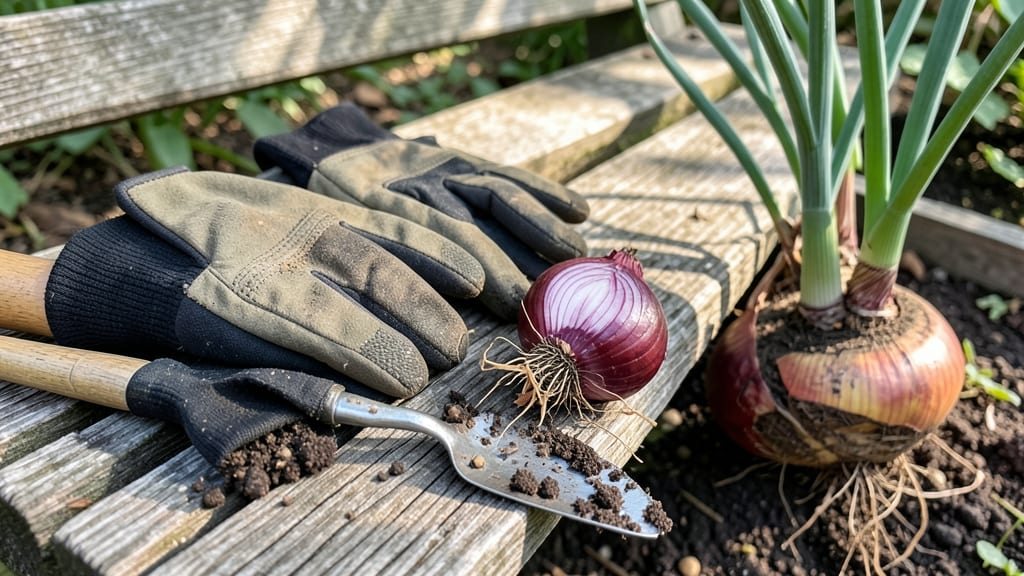
How to know when to harvest red onions can mean the difference between sweet, flavorful bulbs and tough, pungent ones. If you've ever pulled onions too early—only to find them small and watery—or left them too long in the ground, you know how frustrating it can be.
Your 🧅 red onions are ready when the tops yellow and flop over like a bow, signaling the bulbs beneath have reached peak ripeness. But there’s more to it than just color: the neck should separate easily, and the skin should feel dry and papery.
These simple checks ensure you harvest at the perfect moment, not a day too soon or late.
In USDA Zone 6a, the ideal window for harvesting is between July and September, when spring-planted onions mature. Whether you’re a seasoned gardener or a first-timer, mastering these visual cues will save you from wasted effort—and give you a harvest worth celebrating.
Let’s break down the exact signs to watch for, so you can pull your onions at their prime. You’ll never second-guess harvest time again!


5 Visual and physical signs your red onions are ready to harvest
Timing your red onion harvest correctly is the secret to flavorful, long-storing bulbs. Unlike some vegetables, onions don’t ripen after picking, so getting them right in the soil is critical. The good news?
Nature gives you clear signals—if you know what to look for. These five key indicators will tell you exactly when to pull your onions for the best results.
First, watch the top growth. Mature red onions send you a visual cue: their green leaves turn yellow and begin to flop over like a bow. This isn’t wilting—it’s a sign the bulb below has reached full maturity.
If your plants still have upright, dark green tops, they need more time in the ground.
Next, check the bulb size. Ready-to-harvest onions typically measure 1-2 inches in diameter. Smaller bulbs (under 1 inch) won’t have developed their full sweetness or storage potential.
Use a ruler or compare them to common objects like a quarter or ping-pong ball for quick reference. Overly large onions (3+ inches) may split or become pungent.
| Sign | Mature Onion | Immature Onion |
|---|---|---|
| Top Color | Yellowing, flopping | Dark green, upright |
| Bulb Size | 1-2 inches | Under 1 inch |
| Knob Thickness | ½-inch firm | Thin, soft |
| Skin Texture | Dry, papery | Moist, rubbery |
| Layer Separation | Slides apart easily | Sticks together |
Don’t overlook the neck (knob) where the bulb meets the green tops. A ready onion’s neck should be ½-inch thick and firm to the touch. If it feels soft or squishy, the onion needs more time.
This is where many gardeners go wrong—they focus only on the bulb size and miss the critical neck check.
The skin texture is another dead giveaway. Mature red onions develop dry, papery outer layers that peel back easily. Run your thumb over the skin—if it feels rough like tissue paper, it’s harvest time.
Immature onions, however, have moist, flexible skins that resist peeling. This moisture indicates the bulb hasn’t fully matured.
Finally, test the layer separation by gently peeling back the outer skin. In a mature onion, the layers should slide apart cleanly, revealing distinct, dry rings. Immature onions often have layers that stick together or feel gummy. This simple test eliminates guesswork and ensures you’re harvesting at peak ripeness.
Pro tip: Harvest on a dry day to prevent soil from clinging to the bulbs. Let harvested onions cure in the sun for 1-2 days before storing—this dries the skins further and prevents rot.
Store them in a cool, dark place with good airflow (like a mesh bag) for up to 6 months of fresh flavor.
The knob firmness and layer separation test: Step-by-Step guide
Harvesting red onions at the perfect moment means checking two key areas: the knob (neck) and the bulb layers. These tell you whether your onions are ready to pull or still need time in the soil.
The knob should feel firm, and the layers should separate cleanly when gently pulled apart—this is your green light to harvest.
Start by selecting a few onions from your garden bed. Gently grasp the green tops and lift the onion out of the soil. Be careful not to damage the bulb while removing it.
If the soil is too wet, wait a day or two to avoid muddy onions that won’t store well.
Once you’ve pulled the onion, focus on the neck (knob). This is the small stem area connecting the bulb to the green tops. A ready-to-harvest onion will have a firm, dry knob that’s about ½-inch thick.
If it’s still soft or moist, the onion needs more time in the ground.
Next, check the layer separation. Gently peel back the outer layer of the bulb. If the layers slide apart easily and the skin feels dry and papery, your onion is ripe.
If the layers stick together or the skin feels rubbery, leave it in the soil for another week or two.
If you harvest too early, the onions won’t develop their full sweet flavor or store well. Overripe onions, on the other hand, may split or rot.
The knob firmness and layer separation test ensures you get the best of both worlds: flavorful, long-lasting onions that are ready for your kitchen or pantry.
Once you’ve confirmed your onions are ready, let them cure in the sun for 1-2 days before storing. This helps dry out the skins further, preventing rot and extending shelf life. Store them in a cool, dry place with good airflow, like a mesh bag or ventilated container.