
Companion Plants
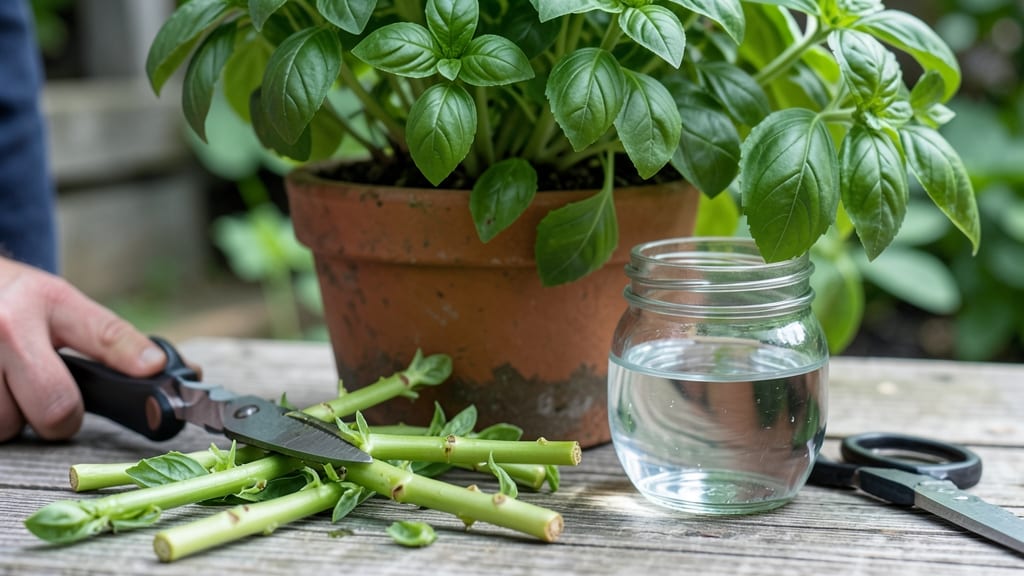
To make basil plants bushier, pinch off the top sets of leaves when they reach 6 inches tall to encourage branching. Regular pruning of leggy stems helps sunlight reach lower leaves, while light fertilization every 4-6 weeks promotes thicker, fuller growth.
Basil responds to pruning by redirecting its energy from vertical growth to producing more side shoots. 🌿 When you remove the top leaves, the plant's natural hormones shift focus to developing lateral stems, creating that lush, bushy appearance gardeners love.
I've found that consistent pruning—not just once—keeps basil producing new growth throughout the season, while a balanced fertilizer like 10-10-10 provides essential nutrients without overwhelming the plant.
Timing matters too: early season pruning gives your basil the best head start, while neglecting lower leaves can lead to sparse growth. Always use clean tools to prevent disease, and avoid cutting more than one-third of the plant at once.
The key is balance—too much pruning stresses the plant, while too little leaves it leggy and sparse.
💡 In This Article
- Why Pinching Basil Promotes Bushier Growth
- Step-by-Step Basil Pruning Techniques for Maximum Bushiness
Why pinching basil promotes bushier growth
When you pinch off the top sets of leaves on basil, you're interrupting the plant's natural growth pattern by removing the apical bud—the primary growth point at the stem's tip. This bud produces a hormone called auxin, which suppresses the growth of side buds lower on the stem.
By removing it, you eliminate this hormonal dominance, allowing the plant to redirect its energy toward developing lateral shoots from leaf axils (the junctions where leaves meet stems). 🌱 This process is called apical dominance reversal, and it's what transforms a single, tall stem into a bushy, multi-branched plant.
The results are immediate but subtle at first. Within 7-10 days, you'll notice tiny side shoots emerging from the leaf axils below the pinch point. These new shoots grow because the auxin concentration drops, triggering cell division in dormant lateral buds.
For optimal results, pinch when the plant reaches 6 inches tall—this height ensures the stem has enough stored energy to support new growth while preventing legginess. Compare this to unpruned basil, which continues growing vertically, often becoming sparse and weak at the base.
Light distribution plays a crucial role in this process too. When you prune, you're not just changing hormone levels—you're also allowing more sunlight to reach lower leaves.
Basil thrives on 6-8 hours of direct sunlight daily, and when lower leaves receive adequate light, they photosynthesize more efficiently, producing the energy needed for new shoot development.
Without pruning, the top leaves can shade lower ones, causing them to yellow and fall off, which weakens the plant's overall structure.
Here's what's happening at a cellular level: Auxin promotes stem elongation by increasing cell division in the apical meristem (growth tissue). When you remove the apical bud, auxin levels drop, and the plant's growth regulators shift to producing cytokinins, hormones that stimulate lateral bud growth.
This hormonal shift is why your basil suddenly becomes more bushy—it's not just mechanical pruning, but a biological response to hormonal changes. Think of it like redirecting a river: removing the main flow forces water (or in this case, growth hormones) to find new paths.
For best results, pinch basil every 2-3 weeks during the growing season (spring to early fall). Each pinch encourages more branching, but avoid cutting into the woody stem—always leave at least 2-3 sets of leaves below your pinch point to maintain the plant's energy reserves.
Over-pruning can stress the plant, while under-pruning leaves it leggy. The sweet spot is finding that balance where you're guiding growth without overworking the plant. 🌿
One common misconception is that pruning basil will make it grow faster overall. In reality, it redistributes growth—your plant will have more leaves per square inch but may take slightly longer to reach harvest size compared to unpruned basil.
However, the trade-off is worth it: pruned basil produces 2-3 times more leaves over its lifespan and stays productive for 6-8 weeks longer than unpruned plants. This is why professional growers and home gardeners alike swear by regular pruning.