
Vegetables
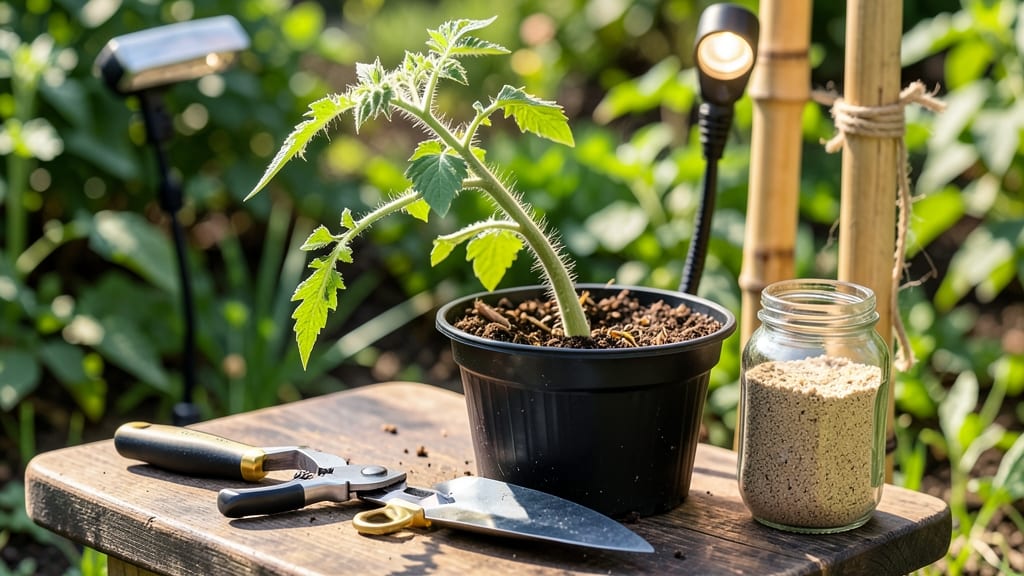
Leggy tomato seedlings scream for help—long, weak stems and tiny leaves mean it's time to act. 🌱 I've nursed dozens back to health, and the fix is simpler than you think: pruning, repotting, and light adjustments that work for both indoor starts and outdoor flats.
The culprit is almost always too little light or overcrowding, forcing seedlings to stretch for sunlight. My first batch looked like overgrown weeds until I moved them under a grow light and thinned the crowd. Within days, they thickened up and started growing strong.
You'll be pinching stems, burying seedlings deeper, and adjusting light in just 15 minutes. The results? Stocky plants ready for transplanting that outperform store-bought seedlings every time. No more floppy stems or weak growth—just sturdy plants that produce like champs.
Works for both indoor grow lights and outdoor conditions, and the same technique prevents legginess next season. Let's get those seedlings standing tall again!
What Triggers Weak Seedling Growth
Understanding why your tomato seedlings stretch tall and weak—like overgrown noodles—starts with recognizing the environmental and cultural stressors at play. These seedlings aren’t just being dramatic; they’re reacting to survival signals. Let’s break down the root causes (literally and figuratively) with science-backed explanations so you can tackle them head-on.
Tomato seedlings are phototropic, meaning they lean toward light like sunbathers on a beach. When they don’t get enough, they elongate rapidly (a process called etiolation) to reach sunlight. This stretchy growth weakens stems, making them prone to snapping under their own weight or wind.
- The science: Low light reduces photosynthesis, so seedlings burn through stored energy (from their seeds) faster.
They prioritize growing taller over developing strong stems and leaves. - Red flags: Seedlings that are pale, sparse-leaved, and reach for the sky (literally bending toward a window or grow light). - Actionable insight: Even 12–16 hours of light daily (from a grow light or sunny window) is critical.
If natural light is limited, supplement with full-spectrum LED grow lights placed 2–4 inches above seedlings.
Seedlings compete for nutrients, water, and light when packed too tightly. This competition triggers stress hormones (like ethylene) that promote rapid, weak growth instead of sturdy development.
- The science: Root systems become entangled and starved for oxygen, slowing nutrient uptake.
The seedlings “race” upward to escape the darkness of crowded roots. - Red flags: Seedlings touching each other, yellowing lower leaves, or stems that look thin and rubbery. - Actionable insight: Give each seedling at least 2–3 inches of space in a container.
If starting indoors, use individual pots or cells (like a seedling tray) to prevent root competition.
Tomato seedlings thrive in consistent warmth (ideal: 70–80°F during the day, 60–65°F at night). Sudden drops or spikes disrupt their metabolism, causing stunted growth or leggy stretches.
- The science: Cool temperatures (below 50°F) slow photosynthesis, while heat stress (above 90°F) can scorch leaves, forcing seedlings to grow tall to cool themselves. - Red flags: Seedlings growing slowly at first, then suddenly shooting up when moved to a warmer spot (like a sunny windowsill). - Actionable insight: Use a seedling heat mat (for indoor starts) or move containers to a stable location (like a greenhouse or under grow lights).
Avoid drafts from AC vents or cold windows.
Leggy seedlings often signal a nutrient imbalance, particularly a lack of nitrogen (for leafy growth) or phosphorus (for root development). Over-fertilizing with high-nitrogen fertilizers can also backfire by promoting lush leaves at the expense of stem strength.
- The science: Nitrogen deficiency causes chlorosis (yellowing leaves), while excess nitrogen leads to soft, weak stems that can’t support the plant’s weight.
- Red flags: Leaves that are yellow between veins (nitrogen deficiency) or dark green but floppy (over-fertilization).
- Actionable insight:
- Use a balanced fertilizer (like 5-5-5 or 10-10-10) at half-strength when true leaves appear.
- Avoid fertilizing until seedlings have 2–3 sets of leaves—they rely on seed reserves early on.
Even after repotting, seedlings can become leggy if their root systems are damaged during transplanting. This stress triggers a survival response: growing tall to recover lost energy reserves.
- The science: Roots are the plant’s “bank account” for water and nutrients.
When disturbed, seedlings prioritize regrowing roots over stems, but if the stress is prolonged, they’ll stretch upward instead. - Red flags: Seedlings that wilts briefly after repotting, then suddenly grow tall and weak. - Actionable insight: - Hardening off seedlings gradually (exposing them to outdoor conditions over 5–7 days) reduces shock. - Use gentle watering when repotting to avoid displacing roots—bottom-watering (placing pots in a tray of water) is ideal.
Some tomato varieties are naturally more prone to legginess, especially indeterminate types (which grow continuously) or those bred for early flowering. If your seedlings are from heirloom or hybrid seeds, check the plant tags—some varieties are just dramatic growers!
- The science: Certain genotypes have faster internodal elongation (the distance between leaf nodes), making them stretchier under stress.
- Red flags: Even with perfect care, some seedlings consistently grow tall and weak across batches.
- Actionable insight: If legginess is chronic, try determinate varieties (like ‘Roma’ or ‘Celebrity’) for bushier growth, or prune early to encourage compact habits.
Pro Tip 💡: Leggy seedlings are a cry for help—not a death sentence! By addressing light, space, temperature, and nutrients, you’ll see stockier, stronger plants in days. The key is consistency: once you fix one issue, others often follow.
Quick Fixes for Tall, Weak Seedlings
Leggy tomato seedlings aren’t a death sentence—they just need a little TLC to bounce back strong. Below, we’ve mapped out practical solutions for the most common causes, along with prevention tips to keep your plants sturdy from the start. Grab your shears and let’s get growing!
Problem: Seedlings stretched toward light sources (like a sunny window or grow light) because they weren’t getting enough intensity.
How to Fix It:
- Move them closer to a light source (within 2–4 inches of a grow light or a south-facing window). If using natural light, rotate trays daily so they grow evenly.
- Increase light duration to 14–16 hours/day. Use a full-spectrum LED grow light if your space is dim.
- Prune leggy stems (see below) to encourage bushier growth while you adjust lighting.
Prevention Tips:
- Use reflective surfaces (like aluminum foil on walls) to bounce light around.
- Start with strong light from day one—avoid weak, cheap grow bulbs.
- Thin seedlings early to reduce competition for light.
Problem: Seedlings leaned or sprawled because they were crammed together, competing for nutrients and space.
How to Fix It:
- Repot individually into 3–4 inch pots (or larger) with fresh well-draining potting mix. Avoid garden soil—it compacts and suffocates roots.
- Bury stems deeper (up to the first true leaves) to encourage new root growth from the buried stem.
- Water lightly after repotting to settle the soil, then keep moist (not soggy).
Pro Tip: 💡 If repotting isn’t an option, snip the bottom 1–2 inches of leggy stems and replant the cuttings in moist soil. They’ll root and grow into new plants!
Prevention Tips:
- Sow seeds in individual cells or small pots to avoid transplant shock.
- Use larger containers (at least 2–3 inches deep) from the start.
- Fertilize lightly with a balanced, water-soluble fertilizer (like 5-5-5) after repotting to boost recovery.
Problem: Weak, pale seedlings may lack nitrogen (for leaves) or phosphorus (for root growth), leading to leggy, floppy stems.
How to Fix It:
- Fertilize with a balanced formula (10-10-10 or 5-5-5) diluted to half-strength. Avoid high-nitrogen fertilizers alone—they promote leafy growth but weaken stems.
- Add compost tea or worm castings for a gentle nutrient boost and microbial support.
- Prune back leggy growth to redirect energy to root development.
Pro Tip: 🌡️ Test your soil with a simple kit to check pH (ideal: 6.0–6.8). Locked-out nutrients (like phosphorus) can worsen legginess.
Prevention Tips:
- Start with nutrient-rich soil (mix compost into seed-starting mix).
- Avoid over-fertilizing—more isn’t better! Follow package rates.
- Use slow-release granules (like Osmocote) for steady feeding.
Problem: Seedlings grow tall and weak in cold drafts (below 60°F) or hot, dry air (above 80°F), stressing their development.
How to Fix It:
- Move seedlings to a warm, stable spot (70–75°F day, 60–65°F night). Avoid cold windowsills or air-conditioned rooms.
- Use a humidity dome (or a plastic bag) to retain moisture if your air is dry. Remove once seedlings have 2–3 true leaves.
- Mist leaves lightly in dry climates to prevent wilting.
Pro Tip: ✨ Bottom watering helps—place trays on a saucer of water to encourage roots to grow downward.
Prevention Tips:
- Use a seedling heat mat (70–75°F) for slower starters.
- Avoid sudden temperature swings—keep seedlings away from doors/windows.
- Group pots together to create a microclimate with consistent humidity.
Problem: Even with fixes above, leggy stems need physical intervention to thicken and strengthen.
How to Prune:
- Snip just above a leaf node (where leaves meet the stem) using clean, sharp scissors. Aim to cut 1–2 inches below the leggy tip.
- Remove only the top 1/3 of the stem—don’t over-prune! The plant will redirect energy to lower leaves and roots.
- Pinch off flower buds (if present) to avoid stressing the seedling. Let it focus on foliage first.
Visual Guide:
Before
After
Prevention Tips:
- Prune early and often—don’t wait until seedlings are 6+ inches tall.
- Use a magnifying glass to spot leaf nodes (they’re tiny at first!).
- Prune in the morning so plants have daylight to recover.
Final Reminder: 🎯 Patience is key! Seedlings may take 1–2 weeks to show improvement after pruning/repotting. Keep an eye on them, and soon you’ll have stocky, thriving plants ready for transplanting.
Frequently asked questions
How do I know if my tomato seedlings are too leggy to save?
Seedlings are salvageable if they have at least 2-3 sets of true leaves and their stems aren't completely hollow or brittle. If the stems snap easily or the leaves are yellow and sparse, they may be too far gone. Focus on preventing future legginess by adjusting light and spacing immediately.
Can I fix leggy seedlings without repotting?
Yes! Start by pruning the top 1/3 of the leggy stem just above a leaf node. Move the seedlings closer to a bright light source (within 2-4 inches) and rotate them daily. This encourages bushier growth while you work on repotting them later. Just don't wait too long—roots need space to grow.
What's the fastest way to thicken up leggy stems?
The quickest fix is deep planting—bury the stem up to the first true leaves when repotting. This encourages new roots to form along the buried stem, creating a stronger base. Combine this with 14-16 hours of light daily and you'll see thicker stems within 5-7 days. Avoid fertilizing until new growth appears.
Will pruning leggy seedlings stunt their future growth?
Not at all! Pruning actually stimulates stronger growth by redirecting energy to lower leaf nodes and root development. The plant will produce more lateral branches, creating a bushier, more productive tomato plant. Just avoid removing more than 1/3 of the stem at once—this could cause shock.
Can I use regular household lights instead of grow lights?
While possible, household lights won't provide the full spectrum needed for optimal growth. If you must use them, place seedlings within 1-2 inches of a bright white LED bulb and keep them on for 16 hours daily. For best results, invest in a full-spectrum LED grow light—they're affordable and make a huge difference in seedling strength.