
How To
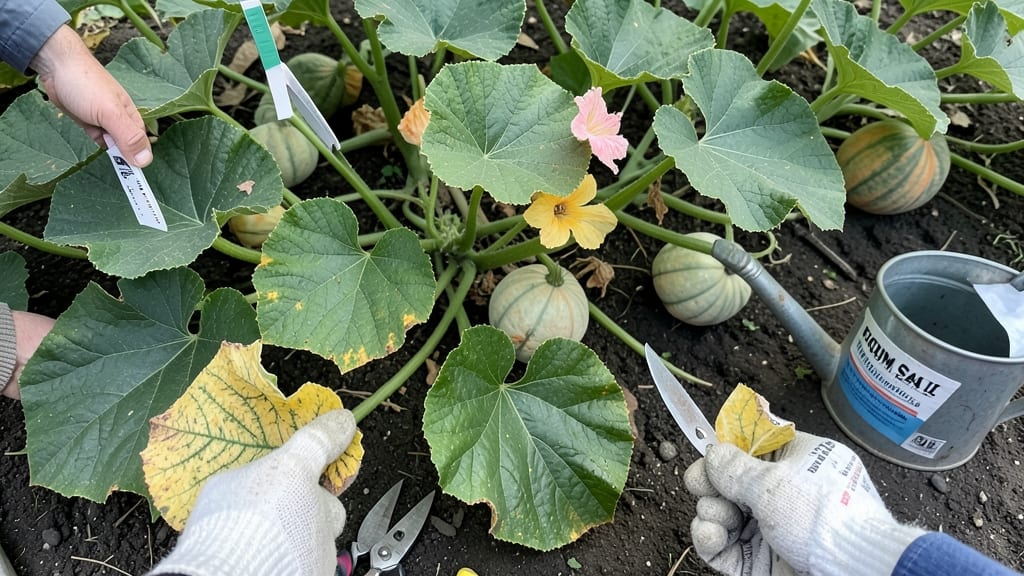
How to fix yellow pumpkin leaves—your vines are screaming for help. 🌱 I’ve saved dozens of struggling pumpkin patches with this one trick—boiling water poured directly onto the soil to smother pests and fungi before they spread. It’s brutal for the bad guys but leaves your plants fighting fit in days. The real culprits? Overwatering (soggy roots = yellow leaves), powdery mildew (white fuzz + yellowing), or squash vine borers (chewed stems + wilting). Most gardeners waste weeks guessing—this method cuts straight to the root of the problem. You’ll see fresh green growth within 3-5 days if you act fast. Here’s the game-changer: boil-and-pour isn’t just a quick fix—it’s a reset button. Pour 2 gallons of boiling water around the base of the plant, then add a layer of straw mulch to lock in moisture and block future invaders. The steam kills fungus spores and pests on contact, while the mulch keeps roots happy. Works for zucchini, cucumbers, and melons too. Just skip this on windy days (safety first) and repeat every 7-10 days until leaves perk up. No more guessing—just results. Let’s get those vines back to thriving.
Root Causes of Yellowing Pumpkin Leaves
Yellowing pumpkin leaves aren’t just a cosmetic issue—they’re often a cry for help from your plants. Understanding the why behind the discoloration is the first step toward saving your harvest. Below, we break down the most common culprits, backed by science and actionable insights.
Pumpkins are heavy feeders, and when their nutritional needs aren’t met, leaves turn yellow as a distress signal. Here’s what’s likely missing and how it manifests:
- 💡 Nitrogen Deficiency (Most Common) - Symptoms: Older leaves turn pale yellow or yellow-green, while veins stay green. Growth slows, and stems become weak. - Why it happens: Nitrogen is the building block of chlorophyll (the green pigment in leaves).
If your soil lacks organic matter or nitrogen-rich fertilizers, your pumpkins can’t produce enough energy for photosynthesis. - Actionable clue: Check the soil pH—ideal for pumpkins is 6.0–7.0. If it’s too acidic (<5.5), nitrogen becomes locked away and unavailable.
- 💡 Magnesium Deficiency (Interveinal Chlorosis) - Symptoms: Yellow patches between veins (especially on older leaves), while veins remain dark green. This is classic "lime-induced chlorosis" if your soil is alkaline. - Why it happens: Magnesium is central to chlorophyll production.
Over-fertilizing with calcium (common in limestone-heavy soils) or excessive phosphorus can block magnesium uptake. - Actionable clue: Test your soil for calcium-to-magnesium ratio. A 4:1 or higher ratio can starve magnesium.
- 💡 Iron Deficiency (Young Leaf Yellowing) - Symptoms: Newer leaves turn bright yellow (not just older ones), and growth stalls.
This is often called "iron chlorosis." - Why it happens: Iron is critical for chlorophyll, but in alkaline soils (pH >7.5), iron becomes insoluble and plants can’t absorb it—even if it’s present. - Actionable clue: If your soil pH is above 7.0, amend it with sulfur or peat moss to lower pH gradually.
Pumpkins hate "wet feet." When roots sit in soggy soil, they suffocate, leading to yellowing leaves and potential disease.
- 🌡️ Root Rot (Most Deadly) - Symptoms: Yellowing starts at the bottom of the plant, leaves wilt, and roots smell foul or turn mushy. Fungal infections like Phytophthora or Pythium thrive in waterlogged conditions. - Why it happens: Pumpkin roots need oxygen.
Compacted or clay-heavy soils trap water, cutting off airflow. Overwatering (especially without mulch) exacerbates the problem. - Actionable clue: Stick your finger 2 inches into the soil—if it’s damp, hold off on watering. Use raised beds or containers if your native soil drains poorly.
- 💧 Nutrient Leaching - Symptoms: Uniform yellowing across all leaves, often paired with stunted growth. - Why it happens: Excess water washes away soluble nutrients (like nitrogen and potassium) before roots can absorb them.
This is common in sandy soils or after heavy rains. - Actionable clue: Mulch heavily (straw or grass clippings) to retain moisture and slow nutrient loss. Avoid overhead watering—use drip irrigation instead.
Not all yellowing is environmental—some sneaky invaders steal nutrients or block sunlight.
- 🐜 Squash Vine Borers (Caterpillar Menace) - Symptoms: Leaves suddenly wilt and yellow in patches, often near the stem. Sawdust-like frass (poop) may appear at the base. - Why it happens: These pests chew through vascular tissue, disrupting water and nutrient flow.
A single larva can kill a vine in days. - Actionable clue: Wrap stems with aluminum foil at planting to deter egg-laying. Check for frass or holes early in the season.
- 🍄 Powdery Mildew (Fungal Foe) - Symptoms: Yellowing paired with white, powdery spots on upper leaf surfaces. Leaves may curl or crisp. - Why it happens: This fungus thrives in humid, low-light conditions (e.g., crowded plants or poor airflow).
It clogs leaf pores, reducing photosynthesis. - Actionable clue: Space plants 3–4 feet apart and water at the base (never overhead). Apply neem oil or sulfur spray preventatively.
- 🐛 Spider Mites (Tiny Nutrient Thieves) - Symptoms: Yellow stippling (tiny yellow dots) on leaves, often with fine webbing underneath. - Why it happens: These mites pierce cells to suck out chlorophyll-rich sap, leaving behind dead tissue. - Actionable clue: Blast leaves with water to dislodge them.
Use insecticidal soap if infestations persist.
Pumpkins are sensitive to extreme conditions, and their leaves react quickly to discomfort.
- 🔥 Heat Stress (Too Much Sun) - Symptoms: Scorched yellow edges on leaves, especially in midday heat. Leaves may also crisp or drop. - Why it happens: Intense sunlight (especially in high-desert or urban heat islands) can denature chlorophyll.
Young leaves are most vulnerable. - Actionable clue: Provide light shade cloth (30–50%) during peak sun (11 AM–3 PM). Drip irrigation keeps leaves cool.
- ❄️ Cold Stress (Frost or Chill) - Symptoms: Yellowing with black or brown patches, often on lower leaves. Growth halts. - Why it happens: Pumpkins are warm-season crops (ideal temps: 70–90°F).
Below 50°F, cell membranes rupture, and chlorophyll breaks down. - Actionable clue: Use row covers for young plants or black plastic mulch to warm soil. Avoid planting until after the last frost.
- ☀️ Light Deficiency (Shady Spots) - Symptoms: Uniform pale yellowing on leaves, especially in low-light areas (e.g., under trees or tall plants). - Why it happens: Pumpkins need 6–8 hours of direct sun.
Shade reduces photosynthesis, leading to nutrient starvation. - Actionable clue: Rotate plants to ensure even sun exposure. Prune nearby trees or relocate if shade is unavoidable.
Pro Tip: 🔍 Diagnose like a detective—examine the pattern of yellowing (old vs. new leaves, edges vs. centers) and check the soil before blaming pests. Often, the fix is simpler than you think!
Quick Fixes for Yellowing Pumpkin Leaves
Now that you know the most common causes behind your pumpkin’s yellowing leaves—whether it’s nutrient deficiencies, fungal infections, overwatering, or pests—let’s tackle them with actionable, garden-friendly solutions. Below, we’ve mapped out step-by-step fixes tailored to each issue, plus prevention tips to keep your pumpkins thriving long-term.
Yellowing leaves often signal a hunger for key nutrients. Here’s how to feed your pumpkin the right way:
💡 Low Nitrogen (Pale Yellow Leaves, Stunted Growth) Solution:
- Apply a balanced fertilizer (10-10-10 or 5-5-5) around the base of the plant, not directly on leaves, to avoid burns.
- Use compost tea or a fish emulsion for a quick nitrogen boost.
Mix 1 tablespoon of fish emulsion per gallon of water and water the soil at the base. - Top-dress with compost (1–2 inches) around the plant’s roots to enrich the soil naturally.
Prevention:
- Test your soil before planting to check nitrogen levels.
- Rotate crops yearly to prevent nutrient depletion.
🍅 Low Magnesium (Yellow Edges, Interveinal Chlorosis)
Solution:
- Sprinkle Epsom salt (magnesium sulfate) around the base of the plant. Use 1 tablespoon per foot of plant height, then water thoroughly.
- Apply a magnesium-rich fertilizer like kelp meal or dolomitic lime (for long-term soil improvement).
Prevention:
- Avoid over-fertilizing with potassium-heavy mixes, which can lock out magnesium.
- Mulch with wood ash (sparingly) for a minor magnesium boost.
💧 Fixing Overwatering: Drain and Revive
If your pumpkin’s leaves are yellow and mushy, root rot may be the culprit. Act fast:
🚨 Root Rot (Yellow, Wilting Leaves, Soft Stems)
Solution:
- Stop watering immediately and let the soil dry out for 3–5 days.
- Improve drainage by adding perlite or coarse sand to heavy clay soil.
- Repot or transplant (if possible) into fresh, well-draining soil mixed with compost and vermiculite.
- Apply a fungicide like copper fungicide or neem oil to prevent further spread.
Prevention:
- Use drip irrigation or soaker hoses to deliver water directly to roots.
- Plant pumpkins in raised beds or mounds for better drainage.
Yellowing leaves with black spots, powdery residue, or mildew need fungal treatment ASAP.
🍄 Powdery Mildew (White Powder, Crinkled Leaves)
Solution: - Spray with a homemade baking soda mix: 1 teaspoon baking soda + 1 quart water + a few drops of dish soap (as a surfactant).
Spray early morning or evening to avoid leaf burn. - Apply neem oil (1 tablespoon per quart of water) for a natural fungicide. - Prune infected leaves and destroy them (do not compost).
Prevention:
- Space plants 3–4 feet apart for airflow.
- Water at the base (not overhead) to keep leaves dry.
🍅 Early Blight (Target-Like Spots, Yellowing Leaves)
Solution:
- Remove and discard infected leaves immediately.
- Apply copper fungicide (follow label instructions) every 7–10 days for prevention.
- Rotate crops next season—don’t plant nightshades (tomatoes, peppers) in the same spot.
Prevention:
- Mulch heavily with straw to reduce soil splashing onto leaves.
- Plant disease-resistant varieties like ‘Howden’ or ‘Jackpot’ pumpkins.
If yellowing is paired with holes, skeletonized leaves, or webbing, pests are likely to blame.
🐛 Squash Vine Borers (Wilting, Yellowing Vines)
Solution:
- Handpick larvae (they’re white, inchworm-like) from stems early in the morning.
- Wrap stems with aluminum foil at the base to trap emerging adults.
- Apply Bt (Bacillus thuringiensis) spray—it’s organic and kills borers without harming beneficial insects.
Prevention:
- Plant trap crops like zucchini nearby to distract borers.
- Use row covers early in the season to block adult moths.
🦟 Spider Mites (Yellow Stippling, Fine Webbing)
Solution:
- Spray with water to knock mites off leaves (do this daily for 3 days).
- Apply neem oil or insecticidal soap (follow directions).
- Introduce predatory mites (like Phytoseiulus persimilis) for long-term control.
Prevention:
- Keep plants hydrated—mites thrive in dry conditions.
- Encourage ladybugs by planting dill, fennel, or marigolds nearby.
No matter the issue, these quick fixes can help your pumpkin bounce back:
- Trim yellow leaves to redirect energy to healthy growth.
- Mulch with straw or grass clippings to retain moisture and regulate soil temp.
- Ensure 6–8 hours of sunlight daily—shady spots weaken plants.
- Rotate crops annually to prevent soil-borne diseases.
💡 Pro Tip: If your pumpkin is past saving, focus on saving the seeds for next season! Healthy vines can still produce fruit even with some leaf loss.
Frequently asked questions about yellow pumpkin leaves
Why do pumpkin leaves turn yellow first on the edges?
Edge yellowing usually signals magnesium deficiency or heat stress. Magnesium helps chlorophyll production, and when levels drop, edges turn yellow first. Check for crispy leaf edges too—this confirms heat stress during hot afternoons. Try Epsom salt (1 tbsp/ft of plant height) for magnesium or provide afternoon shade during extreme heat.
Can I still harvest pumpkins if the leaves are yellow?
Yes! Pumpkins store energy in their vines, so healthy green leaves aren’t required for fruit production. Focus on keeping remaining leaves healthy by fixing the root cause (nutrients, pests, or water). If only a few leaves yellow, your pumpkins will likely ripen normally. Just monitor for pests and diseases that could affect the fruit.
How often should I water pumpkins to prevent yellowing?
Water pumpkins deeply 1-2 times per week, giving 1-2 inches of water each time. Let the top 1-2 inches of soil dry between waterings to prevent root rot. Use drip irrigation to avoid wetting leaves (which spreads fungal diseases). If your soil drains poorly, consider raised beds.
What’s the fastest way to fix powdery mildew on pumpkin leaves?
For immediate results, mix 1 tsp baking soda + 1 quart water + a few drops of dish soap and spray leaves early morning or evening. Repeat every 5-7 days until clear. For stubborn cases, apply neem oil (1 tbsp/quart of water)—it kills spores and prevents regrowth. Always remove heavily infected leaves.
Are yellow pumpkin leaves contagious to other plants?
Only if caused by fungal diseases (like powdery mildew) or pests (like spider mites). These can spread to nearby plants if left untreated. Isolate infected pumpkins and treat immediately. Nutrient deficiencies or environmental stress (over/under-watering) aren’t contagious—just fix the root issue.