
Size
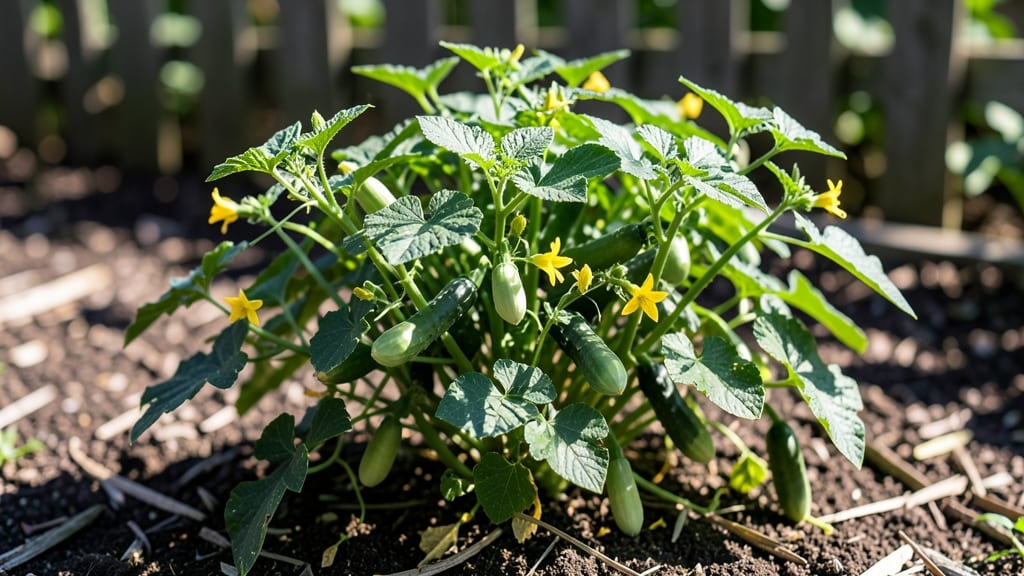
To grow mini cucumbers, start them in 5+ gallon containers with well-draining soil, ensure they get 6+ hours of full sun daily, and prune aggressively to control vine spread. Train vines vertically with trellises, harvest when cucumbers reach 4-6 inches, and fertilize lightly with compost or balanced organic feed every 3 weeks. Prevent overwatering to avoid disease in confined spaces.
Mini cucumbers thrive in containers because their compact growth habit maximizes yield in small spaces. 🌱 The key is balancing root space with vine control—too small, and roots compete for nutrients; too large, and moisture retention becomes an issue.
I've found that self-pollinating varieties like 'Bush Champion' produce better in containers since they don't rely on bees. For soil, a mix with perlite improves drainage while retaining enough moisture for those shallow roots.
Pruning isn't just about size control—it's about directing energy to fruit production. Start by removing the first few leaves at the base to encourage upward growth, then trim side shoots that form in leaf axils to prevent overcrowding.
Use clean, sharp pruners to avoid tearing stems, and always cut just above a leaf node. I recommend pruning in the morning when plants are hydrated, as this reduces stress. The goal is to create an open canopy that lets sunlight reach all vines equally.
💡 In This Article
- Optimal Container Sizes and Soil for Mini Cucumber Growth
- Pruning Techniques to Keep Mini Cucumbers Compact
Optimal container sizes and soil for mini cucumber growth
Mini cucumbers need containers with 5+ gallons to prevent root-bound stress, but the science goes deeper than just volume. Their compact varieties develop root systems that spread 12-18 inches wide but only 6-12 inches deep, making shallow, wide containers ideal.
Think of it like a salad bowl—roots need horizontal space to access nutrients while shallow depth prevents waterlogging. 🌱 For example, a 12-inch diameter pot with 10-inch depth works perfectly, while a deep 5-gallon bucket would trap excess moisture.
The ideal soil mix should balance drainage and moisture retention, with a pH between 6.0-6.8—this range maximizes nutrient uptake, particularly for nitrogen and phosphorus. I recommend a blend of 60% potting mix, 20% perlite or vermiculite, and 20% compost.
The perlite creates air pockets that prevent fungal diseases common in compact spaces, while compost provides slow-release nutrients. Self-pollinating varieties like 'Spacemaster' thrive in these conditions because they don't rely on bees, making container growth more reliable.
Drainage holes are non-negotiable—they prevent root rot by allowing excess water to escape within 30-60 minutes after watering. Without them, anaerobic conditions develop, where roots suffocate and beneficial microbes die off. Place containers on saucers to catch drainage while keeping them slightly elevated (on bricks or stands) to improve airflow.
For urban gardeners, self-watering containers with 1-2 inch reservoirs at the bottom can maintain consistent moisture without overwatering.
Soil temperature matters too—mini cucumbers prefer roots between 65-75°F. In cooler climates, use black containers to absorb sunlight and warm the soil faster. Dark-colored pots can raise soil temps by 5-10°F compared to white ones.
For organic fertilizers, I've had success with a 2-3 inch layer of worm castings mixed into the topsoil—it provides micronutrients while improving soil structure for those shallow roots.
Container material affects moisture retention differently. Terracotta wicks moisture faster (great for hot climates) but dries out quicker, while plastic retains moisture longer but can trap heat. For maximum control, I recommend fabric grow bags—they allow roots to breathe while preventing compaction.
These bags also make transplanting easier if you need to upgrade container sizes later in the season.
One common mistake is using garden soil directly from your yard—it compacts easily and lacks the organic matter mini cucumbers need. Instead, amend it with 1 part peat moss and 1 part coconut coir to improve aeration.
The goal is a soil that feels like a damp sponge when squeezed—it should hold its shape but not be soggy. This texture mimics their natural growing conditions in well-drained, fertile loam.