
Size
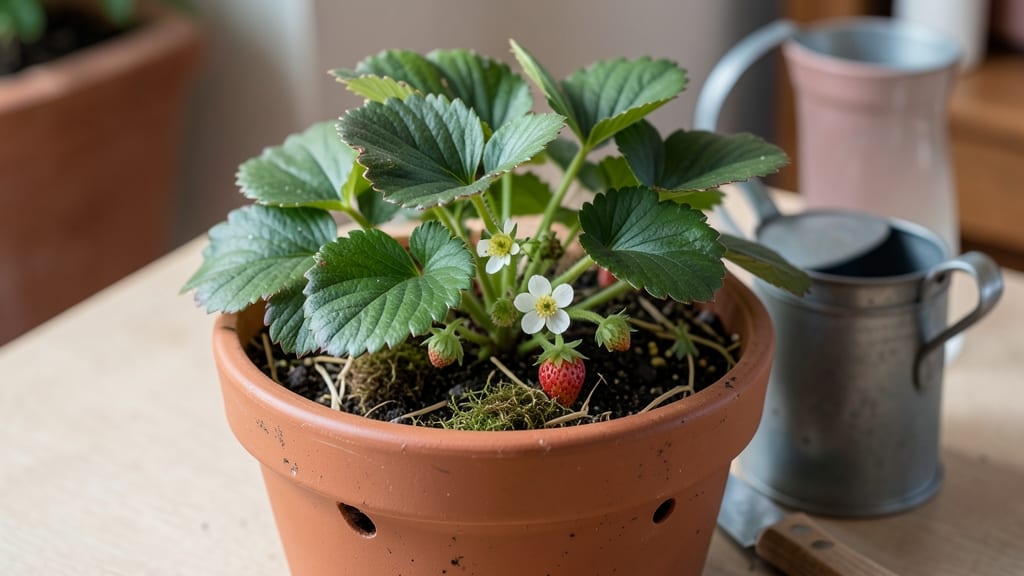
How to grow strawberries in pots indoors—sweet strawberries year-round, no backyard needed. 🌱 I’ve grown enough to make jam in my kitchen windowsill—here’s how you can too, even if your space is tiny. The secret lies in choosing the right variety, container, and light setup to mimic summer conditions indoors.
You’ll need 6-inch-deep pots with drainage holes, a well-draining potting mix (no garden soil!), and a day-neutral strawberry variety like ‘Albion’ or ‘Seascape’—they keep producing all season. A sunny south-facing window or a grow light 6-12 inches above your plants will keep them happy and fruiting.
Water when the top inch of soil feels dry, but avoid soggy roots—strawberries hate wet feet. Pinch off early flowers the first year to build strong plants, and fertilize lightly every 4-6 weeks. Within 3-4 months, you’ll be harvesting plump berries that taste sweeter than store-bought.
This works for balconies, kitchens, or even bathrooms with good light. The only downside? You’ll need to thin crowded plants and watch for spider mites in dry air. But the taste? Worth every effort.
📚 In This Guide
- What you need
- Instructions
- Tips and common mistakes
- Wrapping up and next steps
What you need
- ● Containers: 1–2 drainage holes pots (5–10 inches deep, 12+ inches in diameter per plant). Plastic, terracotta, or fabric grow bags work best.
- ● Potting Mix: 1 bag well-draining, peat-based mix (or add perlite/vermiculite for aeration). Avoid garden soil!
- ● Strawberry Plants: 3–6 June-bearing or everbearing varieties (e.g., 'Albion' or 'Seascape'). Check for healthy roots and no flowers (if starting early).
- ● Fertilizer: Balanced liquid fertilizer (10-10-10) or slow-release granules (follow package rates).
- ○ Grow Lights (Optional but Recommended): 1–2 full-spectrum LED grow lights (12–16 hours/day, 6–12 inches above plants).
- ● Alternative: A sunny south-facing window (6+ hours of light/day).
- ● Watering Can or Spray Bottle: With a narrow spout to avoid disturbing soil.
- ○ Mulch (Optional): Straw or shredded leaves (1–2 inches) to retain moisture and prevent soil splatter.
- ● 🌡️ Temperature: Keep pots in 60–75°F (15–24°C). Avoid drafts or heaters!
- ● 🎯 Container Size: Larger pots = happier plants! Add 1–2 extra inches of depth for root growth.
- ● ✨ Extra Boost: A humidity tray (pebbles + water) helps in dry climates.
Step-by-Step instructions for growing strawberries in pots indoors
Here's how I grow juicy strawberries year-round—no garden required.
🪴 Step 1: Choose the Right Containers and Drainage
Strawberries need room to spread, so select pots that are at least 8-10 inches deep and 12-14 inches wide for each plant. I prefer fabric grow bags because they prevent root circling and allow excess water to evaporate through the sides. If using traditional pots, make sure they have multiple drainage holes—strawberries rot quickly in soggy soil.
Place a 2-inch layer of gravel or broken pottery at the bottom of each pot before adding soil. This creates an air pocket that prevents waterlogging while still allowing roots to grow downward. For four plants, you’ll need four containers—each strawberry plant needs its own space to prevent competition and disease.
🌱 Step 2: Use a Well-Draining, Fertile Mix
Fill your pots with a lightweight, well-draining potting mix—never garden soil. I blend 50% premium potting mix with 30% perlite and 20% compost to ensure good aeration and nutrients. Strawberries thrive in slightly acidic soil, so add a handful of peat moss or a slow-release acidic fertilizer (pH 5.5-6.5) to the mix.
Moisten the soil before planting by watering it until it’s evenly damp but not soggy. Press it down gently to remove air pockets, then create a small mound in the center of each pot. This helps prevent water from pooling around the crown of the plant, which can cause rot. Here's the thing—strawberries hate wet feet, so drainage is non-negotiable.
☀️ Step 3: Plant Strawberry Crowns Correctly
Strawberry plants grow from bare-root crowns or potted starts. If using bare-root crowns, soak them in lukewarm water for 30 minutes before planting to rehydrate the roots. Place each crown on top of the mound so that the roots spread downward and the crown sits just above the soil line. This prevents rot while allowing roots to establish.
Gently press the soil around the crown to secure the plant, leaving the top of the crown exposed. Water lightly to settle the soil without disturbing the roots. If using potted starts, transplant them carefully, ensuring the soil line matches the pot’s original level. You’ll see new growth within 7-10 days if the conditions are right.
💧 Step 4: Provide Consistent Light and Water
Strawberries need 6-8 hours of bright, indirect light daily. A south-facing window works, but most homes won’t provide enough intensity, so supplement with a grow light placed 6-12 inches above the plants. Keep the light on for 14-16 hours per day to mimic summer conditions. Without enough light, your plants will grow leggy and produce fewer berries.
Water the soil when the top inch feels dry, but avoid letting the roots sit in water. I use a self-watering system with a drip tray to keep moisture consistent without overwatering. Mulch the soil surface with 1 inch of straw to retain moisture and keep roots cool. Watch for yellowing leaves—this is often a sign of overwatering or poor drainage.
✂️ Step 5: Prune and Support for Maximum Yield
Once your strawberry plants establish, they’ll send out runners (long stems with baby plants). Pinch off runners during the first year to encourage stronger root development and bigger berries. In the second year, you can let a few runners grow to propagate new plants. Use small stakes or a tomato cage to support the plants as they grow heavier with fruit.
Remove any yellow or diseased leaves immediately to prevent fungal issues. When berries form, keep them well-spaced by gently tying them to the stake with soft twine if needed. Harvest when fully red and slightly soft to the touch—this ensures the best flavor. Real talk: The first harvest might be small, but patience pays off with sweeter, larger berries in subsequent seasons.
Tips & tricks for perfect indoor strawberry growth
Here's what I learned after years of growing strawberries indoors—these small details make all the difference between struggling plants and a bountiful harvest.
Container Selection: Fabric grow bags are my top recommendation because they prevent root circling and allow excess moisture to evaporate through the sides. If using traditional pots, avoid anything smaller than 12-14 inches wide—strawberry roots spread wider than they grow deep. I've tried smaller pots, and the plants always struggled with root competition. For four plants, use four separate containers rather than one large shared pot—this prevents disease spread and gives each plant room to thrive.
Soil Preparation: The 50-30-20 mix of premium potting soil, perlite, and compost is non-negotiable for me. Perlite creates those essential air pockets while compost provides the nutrients strawberries crave. When creating your mound in Step 2, make it slightly taller than you think you need—the soil will settle as you water, and you want that crown sitting just above the soil line. Confession: I once planted with the crown too low, and it rotted within weeks.
Lighting Strategy: That 14-16 hour light requirement is crucial for fruit production. I use a combination of my south-facing window and a full-spectrum LED grow light on a timer. Position the light 6-12 inches above the plants—closer for winter when light is weaker, farther in summer. You'll notice a difference immediately when plants get enough light—they'll stand upright rather than stretching leggy toward any available light source.
Watering Wisdom: The key is consistency. Water when the top inch of soil feels dry, but never let the roots sit in water. I've found that using a self-watering system with a drip tray prevents both overwatering and underwatering. That 1-inch straw mulch isn't just for looks—it helps maintain even moisture levels and keeps roots cool during warm indoor conditions. Watch for yellowing leaves as your early warning system for overwatering or poor drainage.
Pro Tips for Grow Strawberries In Pots Indoors
- Here's what I learned after years of growing strawberries indoors—these small details make all the difference between struggling plants and a bountiful harvest.
- Container Selection: Fabric grow bags are my top recommendation because they prevent root circling and allow excess moisture to evaporate through the sides.
- Soil Preparation: The 50-30-20 mix of premium potting soil, perlite, and compost is non-negotiable for me.
Frequently asked questions
Got questions about growing strawberries indoors? You’re not alone!
Here are answers to the most common queries—so you can troubleshoot, plan, and enjoy your sweet harvest with confidence.
Can I grow strawberries indoors year-round?
Yes! With the right setup—adequate light (10+ hours/day), proper ventilation, and temperature control (60–75°F)—you can grow strawberries indoors year-round. Just avoid drafts or extreme heat, which can stress the plants. Pro tip: Use a grow light if natural light is limited!
How long does it take for indoor strawberries to fruit?
Indoor strawberries typically take 3–6 months to produce fruit, depending on the variety. June-bearing types (like 'Albion') may take longer, while everbearing or day-neutral varieties (like 'Seascape') can fruit faster—sometimes in as little as 2–3 months! Patience is key, but consistent care speeds things up.
Why are my indoor strawberry leaves turning yellow?
Yellow leaves usually signal overwatering, nutrient deficiency, or poor drainage. Check your pot’s drainage holes, reduce watering slightly, and fertilize with a balanced liquid fertilizer (like 10-10-10). If only older leaves yellow, it’s likely nitrogen deficiency—boost the N in your fertilizer. Fix it fast: Let the top inch of soil dry out between waterings!
What’s the best pot size for indoor strawberries?
Aim for at least 12–18 inches wide and deep per plant to accommodate roots and prevent crowding. Hanging baskets or deep containers work well, but avoid shallow pots—they dry out too quickly. Grouping plants (3–4 per pot) is fine, but ensure each has 6+ inches of space to thrive. Bonus: Use self-watering pots to maintain moisture!
Can I use regular potting soil for strawberries?
Not ideal! Strawberries prefer well-draining, slightly acidic soil (pH 5.5–6.8). Mix 50% potting soil with 50% perlite or coconut coir for better aeration. Add a handful of compost or worm castings to boost nutrients. Avoid garden soil—it compacts and holds too much moisture!
How do I keep pests away from my indoor strawberries?
Indoor pests like spider mites or aphids can still be a problem. Prevent them with:
- Regularly inspecting leaves (especially undersides!)
- Spraying plants with neem oil (mix 1 tsp per quart of water)
- Avoiding overwatering (pests love damp soil)
- Isolating new plants for a week before introducing them
Wrapping up and next steps
Growing strawberries in pots indoors is a delightful way to enjoy fresh, homegrown fruit year-round—no backyard required! 🍓 With the right containers, soil, and a little sunlight, you can turn your kitchen or balcony into a thriving mini-farm.
Whether you're a beginner or a seasoned plant parent, these sweet berries are a rewarding project that brings flavor and joy to your home.
Now that you’re armed with tips and tricks, why not start your strawberry adventure today? Pick your favorite variety, grab a pot, and let the growing begin—your taste buds (and Instagram feed) will thank you!