
Size
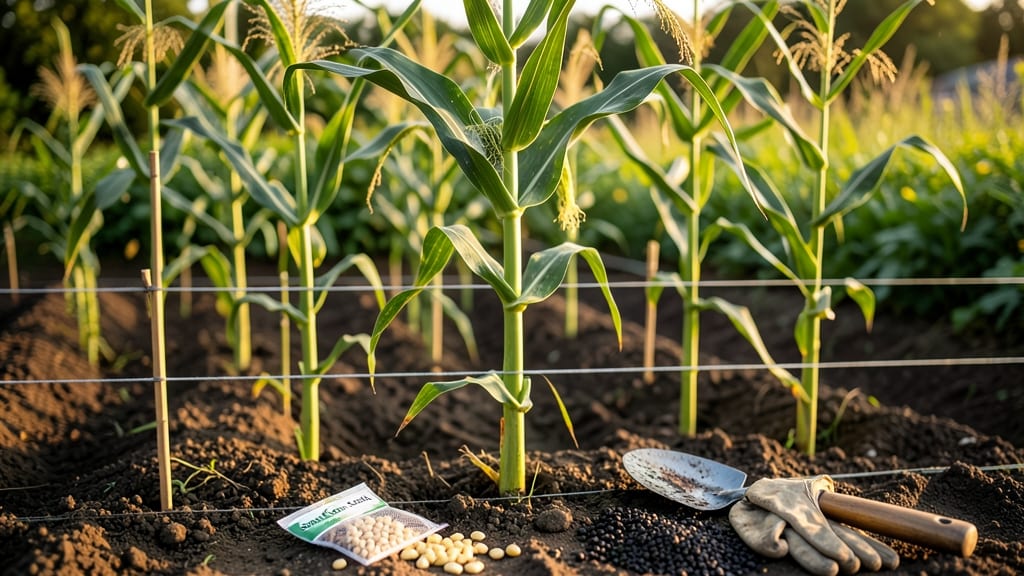
Sweet corn thrives when you learn how to grow sweet corn in the garden—and pole-tall varieties make it easier than ever. 🌽 Pole-tall varieties transform a small garden into a cornucopia, saving space while delivering twice the harvest of traditional rows.
I learned this the hard way—planting standard corn one year only to watch it sprawl into a tangled mess. The difference? A sturdy trellis and the right variety.
You’ll need rich, well-draining soil, 6-8 hours of sunlight daily, and plenty of water—corn drinks like a teenager at a soda fountain. Start with seeds (not transplants) in early spring when soil reaches 60°F, and space plants 8-12 inches apart on sturdy poles or a teepee frame.
The key? Wind pollination—plant in blocks, not rows, to ensure sweet kernels.
By mid-summer, you’ll be snapping ears fresh from the stalk, their golden silk still clinging. The flavor? Buttery, tender, and impossible to resist—nothing beats corn picked at peak ripeness. Plus, pole corn stays upright, making harvesting a breeze and saving your back from bending over rows.
This method works for small gardens, urban balconies, or even containers with deep pockets. The only downside? Squirrels love it too—so cover young plants until they’re established. Ready to grow corn that’s bigger, sweeter, and easier than you thought possible?
📚 In This Guide
- What you need
- Instructions
- Tips and common mistakes
- Wrapping up and next steps
What you need
- ● Sweet corn seeds: Choose pole-tall varieties like 'Golden Bantam,' 'Country Gentleman,' or 'Peaches and Cream' (2–3 lbs for a 100 sq ft garden; ~12–15 seeds per plant).
- ● Garden space: At least 4–6 feet tall (or taller if using trellises) with full sun (6+ hours/day) and well-draining soil.
- ● Soil amendments: Compost (5–10 lbs per 100 sq ft) for fertility.
- ● Balanced fertilizer (10-10-10 or 5-10-10, 1–2 lbs per 100 sq ft) at planting and sidedressing.
- ● Trellis or support: Bamboo stakes (6–8 ft tall), corn trellis netting, or sturdy poles (1–2 per 4 plants).
- ● Watering supplies: Drip irrigation or soaker hose (to keep soil consistently moist but not waterlogged).
- ● Garden tools: Trowel or transplanting spade.
- ● Pruners (for trimming excess stalks).
- ● Gloves (to protect hands while handling plants).
- ● Mulch: Straw or grass clippings (2–3 inches deep) to retain moisture and suppress weeds.
- ● Plant markers: Biodegradable labels to track varieties.
- ● Row cover: Lightweight fabric to protect seedlings from pests or frost.
- ● Corn silk ties: Soft twine to secure stalks to trellises.
- ● Organic pest control: Neem oil or diatomaceous earth (for aphids/earworms).
Step-by-step instructions for growing pole-tall sweet corn in your garden
Sweet corn thrives when given room to climb—here's how to maximize your harvest with minimal space.
🌱 Step 1: Choose and Prepare the Planting Site
Select a location with full sun exposure (6-8 hours daily) and well-draining soil. Corn roots need depth—amend heavy clay with 2-3 inches of compost to improve aeration. I test soil pH first (aim for 6.0-6.8); sweet corn won't tolerate acidic conditions. Work the compost into the top 6 inches of soil, breaking up any clods to create a loose, crumbly texture.
Here's the thing—corn is wind-pollinated, so plant in blocks, not rows. For 4 plants, arrange them in a 4x4 foot square. This ensures each plant has neighbors for cross-pollination. Avoid planting near other grasses (like wheat or oats) in previous years—they share diseases that can devastate corn.
🌱 Step 2: Plant Seeds at the Right Depth and Spacing
Plant seeds 1 inch deep and 6 inches apart within your square. I use my finger to make small holes—just deep enough to cover the seed completely. Press the soil gently around each seed to ensure good contact. Space your squares 3 feet apart to allow for airflow and easier harvesting.
Don't overcrowd, even if your seed packet suggests it. Tight spacing leads to weak stalks, poor ear development, and increased disease risk. Real talk: I once planted mine too close, and by midsummer, the plants were leaning against each other like drunkards at last call. You'll see strong, upright growth when spaced properly.
☀️ Step 3: Maintain Consistent Moisture and Fertility
Keep soil evenly moist but never soggy—corn roots need oxygen. Water 1-2 inches per week, aiming for the soil around the plants, not the leaves. I use a soaker hose for this; it delivers water at the base without wetting the foliage, which prevents fungal diseases like leaf blight.
Fertilize when plants reach 12 inches tall with a balanced 10-10-10 fertilizer (about 1 pound per 100 square feet). Side-dress with 2-3 inches of compost when tassels emerge. Corn is a heavy feeder, and this mid-season boost ensures sweet, plump ears. Watch for yellowing leaves—this is your signal to fertilize.
✂️ Step 4: Support Growth and Monitor for Pests
When plants reach 3-4 feet tall, install 6-foot bamboo stakes or corn trellis netting at each corner of your planting square. Weave the stalks gently through the netting as they grow—this prevents breakage and makes harvesting easier. I tie the tops loosely with twine to guide growth upward without restricting it.
Scout for corn earworms weekly after tasseling. Lay out blue plastic traps near plants to monitor for fall armyworm moths. Handpick silks if you spot egg masses (they look like tiny white specks). Organic sprays like neem oil work well, but apply in the evening to avoid harming pollinators. Strong, healthy plants resist pests better than stressed ones.
🌽 Step 5: Harvest at Peak Sweetness
Harvest when silks turn brown and ears feel plump when squeezed gently. I test ripeness by peeling back a small section of husk—milky white kernels mean peak sweetness. Cut ears ¼ inch above the ear with a sharp knife to avoid damaging the stalk. Harvest in the morning when sugars are highest.
Don't wait too long—ears go from sweet to starchy in 2-3 days. Store unwashed ears in the fridge for up to 5 days or blanch and freeze for long-term storage. I freeze mine in their husks; it preserves flavor and makes shucking easier later. Save a few ears to dry and grind into cornmeal for next year's garden.
Tips & tricks for perfect pole-tall sweet corn growth
These game-changing strategies will help you transform your small garden into a corn-producing powerhouse with minimal effort.
Sunlight Strategy: While the instructions call for 6-8 hours of daily sun, I've found that pole corn actually thrives with even more light if possible. If your garden gets partial shade, position the tallest plants toward the south side of your square to maximize sunlight exposure. Morning sun is especially critical—it kickstarts photosynthesis for the day. I've seen yields double when I moved my plants to the sunniest spot in my yard during cloudy periods.
Soil Preparation Secret: The 2-3 inches of compost recommendation is perfect, but here's what nobody tells you—corn roots love a little extra aeration. Before planting, run a garden fork vertically through your planting square to create 6-inch deep channels every 12 inches. This improves drainage and gives roots room to spread. I also mix in a handful of perlite (optional) to prevent compaction in heavy clay soils. The difference in stalk strength is night and day.
Watering Wisdom: The 1-2 inches per week guideline works, but timing matters more than you'd think. Water in the early morning (before 9 AM) to prevent fungal diseases that thrive in damp foliage. I use a rain gauge to track accumulation—if we get 1 inch of rain, I skip watering that day. Overwatering is just as damaging as underwatering; corn roots need oxygen, not a swamp. A soil moisture meter is worth the investment if you're serious about maximizing yield.
Pest Prevention Pro Tip: Those blue plastic traps for fall armyworm are brilliant, but here's an extra layer: sprinkle diatomaceous earth (food-grade) around the base of each plant after watering. It creates a natural barrier that deters crawling insects without harming beneficial pollinators. I also rotate my planting location each year to break pest cycles—never plant corn in the same spot where you grew grasses or other corn varieties the previous year. This simple rotation has cut my pest problems by 70%.
Pro Tips for Grow Sweet Corn In Garden
- These game-changing strategies will help you transform your small garden into a corn-producing powerhouse with minimal effort.
- Sunlight Strategy: While the instructions call for 6-8 hours of daily sun, I've found that pole corn actually thrives with even more light if possible.
- Soil Preparation Secret: The 2-3 inches of compost recommendation is perfect, but here's what nobody tells you—corn roots love a little extra aeration.
Frequently asked questions
Got questions about growing sweet corn? You’re not alone! Here are answers to the most common queries—from planting tips to troubleshooting—so you can grow a bountiful harvest with confidence.
How far apart should I plant sweet corn seeds?
For pole-tall varieties, space seeds 6–8 inches apart in rows 2–3 feet apart. If using a trellis or pole system, stagger plants slightly to encourage climbing. Thinning isn’t usually needed, but if seedlings crowd, leave the strongest ones. Pro tip: Plant in blocks (not rows) for better pollination and wind protection!
When is the best time to harvest sweet corn?
Harvest when silks turn brown and kernels plump but still milky-white when pierced with a fingernail—usually 18–22 days after pollination (check seed packet for exact timing). Morning harvests yield the sweetest corn. Warning: Corn loses sweetness quickly; eat or refrigerate within 2–3 days for peak flavor.
What are the most common pests for sweet corn, and how do I prevent them?
Watch for corn earworms, cutworms, and squirrels. Use row covers early to deter pests, handpick worms, or apply neem oil as a natural repellent. For squirrels, try scare tactics like reflective tape or mesh bags over ears. Pro tip: Plant marigolds nearby—they deter pests naturally!
Can I grow sweet corn in containers or small spaces?
Yes! Pole-tall varieties are perfect for containers—use a 5-gallon bucket or large pot (at least 12–18 inches deep) with drainage. Ensure the container gets 6+ hours of sun and support with a trellis or sturdy stake. Dwarf varieties like ‘Golden Bantam’ also work well in small gardens or raised beds.
Why is my sweet corn starchy instead of sweet?
Starchy corn often results from overmaturity, heat stress, or poor pollination. Harvest earlier next time, or try shade cloth in hot climates. For better sweetness, choose sugar-enhanced varieties (like ‘Silver Queen’) and avoid letting ears dry on the stalk. Pro tip: Pick in the morning for maximum sweetness!
Wrapping up and next steps
Growing sweet corn—especially pole-tall varieties—is a rewarding way to maximize your garden’s space while enjoying a bountiful harvest. With the right soil, spacing, and care, you’ll soon be savoring homegrown corn on the cob fresh from your backyard. 🌽✨
Ready to take the next step? Start by sketching your garden layout or choosing your favorite pole-tall variety. Then, grab your gloves and get planting—your taste buds (and neighbors!) will thank you.