
Planting
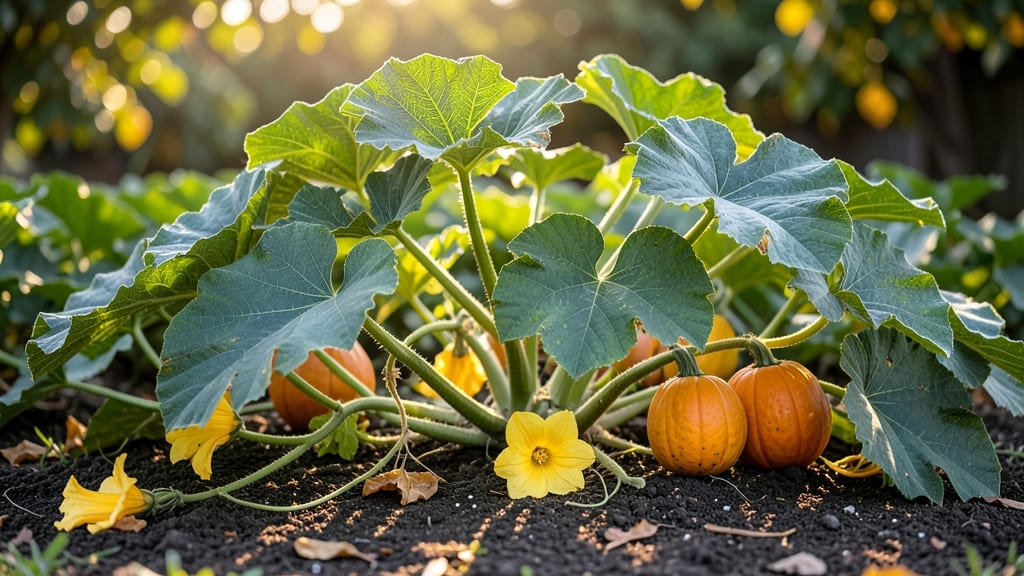
That first pumpkin vine sneaks up looking like a rampant weed—until you learn how to identify the plant by spotting the clues. 🌱 The moment I realized my "weeds" were actually pumpkins, I knew I'd never ignore those broad leaves again.
Their lobed, jagged edges (like a maple leaf gone wild) and rough, hairy stems are dead giveaways—nothing else in the garden grows quite like them.
Here's the secret: compare them to squash or cucumbers. Pumpkin leaves are larger, rougher, and more deeply lobed, while squash leaves stay smoother. The vines themselves sprawl aggressively—5-10 feet long—with tendrils that cling like a determined toddler.
And those early yellow flowers? They're solitary (not clustered like cucumbers) and smell like sunshine.
By mid-summer, you'll find round, ribbed fruits (not the smooth squash shapes) nestled in the vine's shadow. The real test? Scratch the stem—pumpkin stems are thick, woody, and covered in stiff hairs. I've used this trick to confirm pumpkins in my garden every year, and it never fails.
Even experienced gardeners mix them up with winter squash or gourds—so keep this cheat sheet handy. Once you know what to look for, those vines transform from nuisances into the stars of your harvest. Now go find yours!
📚 In This Guide
- What you need
- Instructions
- Tips and common mistakes
- Wrapping up and next steps
What you need
- ● Pumpkin seedling or mature plant: A living specimen (or a photo if you’re identifying from afar). For hands-on learning, start with one healthy seedling from a nursery or a pumpkin patch.
- ○ Hand lens or magnifying glass: (Optional but helpful!) A 10x magnification lens to examine leaf veins and textures up close.
- ● Ruler or measuring tape: For gauging leaf size and vine length. A 12-inch ruler works perfectly.
- ● Notebook & pen: To jot down observations like leaf shape, vine growth patterns, and flower details.
- ● Camera or smartphone: Capture close-ups of leaves, stems, and flowers for comparison later.
- ○ Gloves (optional): If handling prickly vines or thorny stems, lightweight gardening gloves add comfort.
- ● Basic plant knowledge: Familiarity with terms like lobed leaves, palmate venation, and tendrils (or a quick Google search!).
- ● Sunny weather: Ideal for outdoor inspections—pumpkin plants thrive in full sun, making it easier to spot key features.
- ● Patience: Pumpkin plants grow fast, but early identification (before flowering) requires sharp eyes!
Step-by-step guide to identifying pumpkin plants in your garden
Here's how I distinguish pumpkin plants from squash or vines—once you know these telltale signs, you'll spot them instantly.
🌿 Step 1: Examine the Leaf Shape and Arrangement
Pumpkin plants have lobed leaves with 5-7 pointed projections that resemble a jagged hand. Each leaf grows on a long, hairy stem and spreads out flat rather than curling. The edges are slightly serrated, and the leaves feel slightly rough to the touch. I always compare them to squash leaves—pumpkin leaves are more deeply lobed and less rounded.
Look at the leaf arrangement too. Pumpkin leaves grow alternately along the vine (one leaf per node), not opposite each other like some squash varieties. The first true leaves appear oval-shaped and smooth-edged, but as the plant matures, those deep lobes develop. If you see three-lobed leaves, it's likely a squash—not a pumpkin.
🌱 Step 2: Study the Vine Growth and Tendrils
Pumpkin vines are sturdy and sprawling, often reaching 10-20 feet in ideal conditions. The stems are thick and ribbed, with rough, textured skin that feels almost bumpy. You'll notice tendrils—small, coiled structures that help the vine climb or spread—growing in pairs at each leaf node. These tendrils are a dead giveaway for pumpkins.
Watch how the vine grows: pumpkins send out long, trailing runners that root at the nodes where they touch the ground. If you see multiple vines radiating from the base (rather than one main stem), that's another pumpkin clue. Squash vines tend to be bushier with fewer runners.
☀️ Step 3: Check for Flower and Fruit Characteristics
Pumpkin flowers are large and yellow, with five petals that spread wide open. Male flowers grow on long stems and appear first, while female flowers (which develop into fruit) have a small, round ovary at their base. If you see a tiny pumpkin-shaped bump behind a female flower, that's your confirmation.
The fruit itself is another key identifier. Pumpkins have hard, ribbed rinds that turn deep orange, yellow, or green as they mature. The stem where the fruit attaches to the vine is thick and woody, while squash stems are thinner. If you're unsure, gently press the fruit—pumpkins have a sturdy, almost rock-hard feel even when young.
🔍 Step 4: Verify with Root and Stem Details
Dig gently around the base of the plant (if possible) to check the root system. Pumpkin roots are shallow but extensive, spreading outward rather than growing deep. The main stem at the base is hairy and slightly fuzzy, especially near the soil line. This fuzzy texture is a hallmark of pumpkin plants.
Run your fingers along the stem—pumpkin stems have prominent ridges and a slightly waxy coating. If the stem feels smooth and glossy, it's likely a squash. Also, pumpkin stems branch frequently, creating a bushy, multi-stemmed appearance, while squash often stays more upright with fewer branches.
Tips & tricks for identifying pumpkin plants with confidence
Once you know what to look for, spotting pumpkin plants becomes second nature—here's how to avoid common mix-ups and confirm your ID like a pro.
The Leaf Comparison Test: Pumpkin leaves are the easiest way to start. Hold a mature leaf up to a squash leaf—pumpkin leaves have those distinctive 5-7 jagged lobes that look like a child's hand with fingers spread wide. The key detail? Those lobes are deeply indented between each point, creating sharp angles. Squash leaves tend to have more rounded lobes or fewer points. I always run my fingers along the edges: pumpkin leaves feel rough and slightly serrated, while squash leaves are smoother.
Tendril Clues You Might Miss: Those coiled tendrils at each leaf node are pumpkins' secret weapon. They grow in pairs and help the vine climb or spread. Here's what to watch for: pumpkin tendrils are thicker and more muscular than squash tendrils, and they often appear before the first true leaves. Pro tip: If you see a vine with tendrils but no leaves yet, it's almost certainly a pumpkin—this is when they're easiest to identify before other plants sprout.
Flower Inspection Technique: When you spot those large yellow blooms, don't just admire them—examine the base. Male flowers (which appear first) have long stems with no bulges, while female flowers have that tiny pumpkin-shaped ovary at the base. Here's the trick: if you see a flower with a small bump behind it that looks like a miniature pumpkin, that's your confirmation. I've seen gardeners miss this because they don't look at the back of the flower—always check both sides!
Root and Stem Secret: The fuzzy texture near the soil line is often overlooked, but it's one of the most reliable indicators. Run your fingers along the main stem—pumpkin stems feel hairy and slightly waxy near the base, while squash stems are smoother. Also, pumpkin stems branch frequently, creating that bushy appearance. If you're still unsure, gently dig around the base: pumpkin roots spread widely but shallowly, while squash roots go deeper. This is especially useful for identifying young plants before they develop leaves.
Pro Tips for Identify Pumpkin Plant
- Once you know what to look for, spotting pumpkin plants becomes second nature—here's how to avoid common mix-ups and confirm your ID like a pro.
- The Leaf Comparison Test: Pumpkin leaves are the easiest way to start.
- Tendril Clues You Might Miss: Those coiled tendrils at each leaf node are pumpkins' secret weapon.
Frequently asked questions
Got questions about spotting a pumpkin plant? You’re not alone!
Here are answers to the most common ones—so you can confidently tell a pumpkin vine from its lookalikes.
How can I tell if a plant is a pumpkin vs. a squash?
Pumpkins and squash often share traits, but pumpkins typically have lobed leaves (deeply indented like a maple leaf) and longer, trailing vines (up to 20+ feet!). Squash leaves are broader and more rounded, and their vines stay bushier. Check the flowers too—pumpkins have orange-yellow blooms (squash are usually yellow).
When is the best time to identify a pumpkin plant?
Spot a pumpkin plant early—as soon as seedlings emerge (4–6 weeks after planting). Look for heart-shaped leaves with jagged edges and tendrils (curly growths) on the vines. By flowering (6–8 weeks), you’ll see the classic pumpkin blooms. Pro tip: Morning is best—leaves are crisp and easier to examine!
What if my plant looks like a pumpkin but isn’t producing fruit?
No fruit? Don’t panic—pumpkins need full sun (6+ hours/day), warm soil (70°F+), and pollinators (like bees). If flowers appear but drop, check for:
- Poor pollination: Gently shake vines near flowers or hand-pollinate with a paintbrush.
- Nutrient deficiency: Yellow leaves? Add compost or a balanced fertilizer.
- Pests: Squash vine borers or aphids can stress plants. Inspect stems and undersides of leaves.
Are there pumpkin lookalikes I should watch out for?
Yes! Common imposters include:
Plant
Key Difference
Zucchini
Leaves are smoother and less lobed; vines are shorter and bushier.
Cucumbers
Leaves are thin, serrated, and less waxy; vines climb (not trail).
Gourds (e.g., luffa)
Leaves are larger, glossier, and more elongated; fruit grows upright.
Can I still grow pumpkins if I misidentified my plant early?
If you realize your plant isn’t a pumpkin after transplanting, don’t stress—many squash and gourds are edible (like zucchini or butternut squash). For true pumpkins, start fresh with seeds next season or swap in a pumpkin plant from a nursery. Pro tip: Label your plants early to avoid mix-ups!
Wrapping up and next steps
Identifying a pumpkin plant is all about observing its distinctive leaves, vine structure, and flowers—like spotting a hidden treasure in your garden! 🌱 From broad, lobed leaves to sprawling tendrils and vibrant blossoms, these clues make it easy to tell a pumpkin apart from its squash cousins.
Now that you’re armed with the know-how, why not put your skills to the test?
Head outside, grab your gardening journal, and start documenting the unique traits of your pumpkin plants. Whether you're a seasoned gardener or a curious beginner, every observation brings you closer to mastering the art of plant identification—and who knows?
You might just uncover a bountiful harvest waiting to impress your neighbors! 🎉