
Shrubs
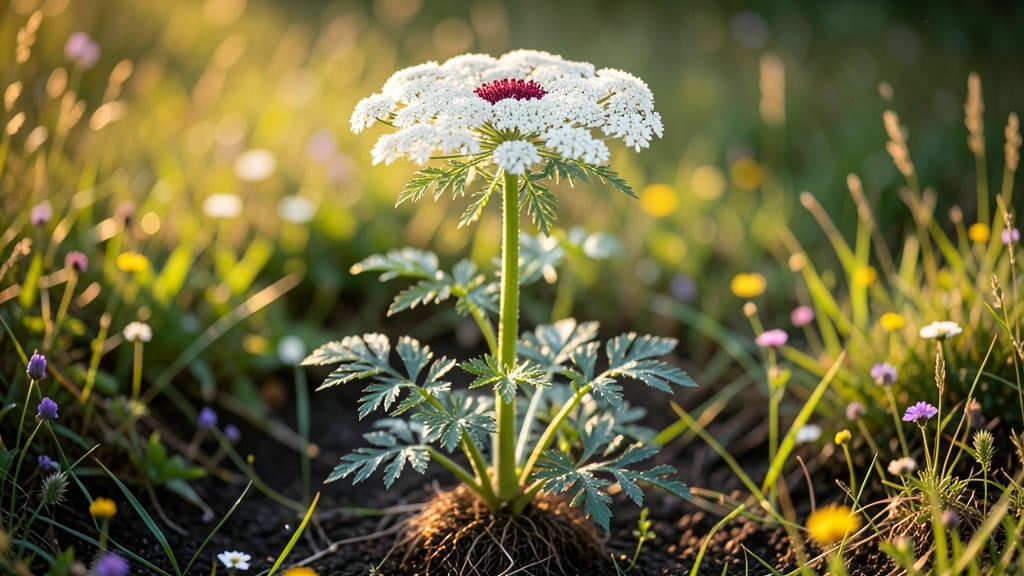
That delicate lace-like flower cluster hiding in your meadow isn't just pretty—it's Queen Anne's Lace, and spotting it correctly matters. 🌿 I've spent years distinguishing it from dangerous look-alikes, and these three visual clues will have you identifying it in seconds, no botanist needed.
Start with the flower shape: Queen Anne's Lace forms a flat-topped cluster (called an umbel) where tiny white flowers radiate like spokes. The real giveaway? The single dark purple flower at its center—this never happens with poison hemlock, its toxic twin. That purple spot is your safety signal.
Next, check the leaves: Fern-like, deeply divided into fine leaflets that look almost feathered. Run your fingers along the stem—it's hollow and hairless, another key difference from hemlock's ridged, hairy stems. These details separate the harmless wild carrot from plants you absolutely shouldn't touch.
For the field, grab a magnifying glass and examine the seed heads too. Queen Anne's Lace develops papery, umbrella-like seed clusters that turn brown in late summer. This helps confirm your ID when flowers fade—no guesswork needed.
📚 In This Guide
- What you need
- Instructions
- Tips and common mistakes
- Wrapping up and next steps
What you need
- ● Hand lens or magnifying glass – A 10x magnification lens helps spot fine details like flower umbel patterns or seed heads.
- ● Field guidebook or smartphone app – A plant ID app (like iNaturalist or PictureThis) or a physical guidebook (e.g., Peterson Field Guide to Wildflowers) for cross-referencing.
- ● Notebook and pen – To jot down observations like leaf shape, plant height, or habitat notes.
- ● Camera or phone with good zoom – Capture close-ups of key features (e.g., flower clusters, stems, or seed heads).
- ○ Gloves (optional but recommended) – Protect your hands from prickly stems or rough foliage.
- ● Small trowel or knife – For carefully digging up a small sample (if needed) to examine roots or base structures.
- ● A measuring tape – To note plant height (Queen Anne’s Lace typically grows 2–5 feet tall).
- ● A pruning shears – For trimming stems to study cross-sections or leaf arrangements.
- ● Plastic bags – To collect seed heads or leaves for further study (ensure you’re not harming protected areas!).
- ● GPS or mapping tool – To log locations if you’re documenting sightings for research or conservation.
How to identify Queen Anne's lace: 3 visual clues to spot it instantly
This wildflower is easy to spot once you know what to look for—here's how to recognize it in nature.
🌿 Step 1: Look for the Classic Umbrella-Shaped Flower Cluster
The most iconic feature of Queen Anne's Lace is its flat, umbrella-like flower head that resembles a lace doily. Each flower cluster grows on a single stem and spreads outward in all directions, creating a perfect circle. The tiny white flowers radiate from a central point like spokes on a wheel.
I always check for this first because it's the easiest way to rule out lookalikes. If you see a flower head that's more dome-shaped or clustered differently, it's probably something else—maybe wild carrot or yarrow. Queen Anne's Lace stands out because its flowers form such a precise, flat circle.
☀️ Step 2: Spot the Tiny Purple Flower at the Center
Here's where it gets interesting: most Queen Anne's Lace plants have one tiny purple flower smack in the middle of that white umbrella. This isn't always visible from a distance, so get close—this is the dead giveaway. The rest of the flowers are pure white, but that single purple bloom in the center is what makes it Queen Anne's Lace.
If you're in the field and see a white umbrella flower without that purple center, it might be a different species. I've seen wild carrot (which is poisonous) mimic the white flowers perfectly, but it never has that purple center flower. Always check up close for this detail.
🌱 Step 3: Examine the Leaves and Stem Structure
The leaves are another key identifier—Queen Anne's Lace has fern-like, finely divided leaves that grow alternately along the stem. Each leaflet is lacy and feathery, with a smooth edge. The stems are usually hairless and slightly grooved, giving them a distinctive look when you run your fingers along them.
I like to run my hand along the stem while looking at the leaves. If the leaves feel soft and delicate with those fine divisions, and the stem has those subtle grooves, you're likely looking at Queen Anne's Lace. The combination of these leaf and stem features with the flower cluster makes it unmistakable.
⏰ Step 4: Check the Growth Habit and Location
Queen Anne's Lace typically grows in open fields, meadows, and roadsides, often in full sun. It reaches heights of 2-5 feet and has a slightly wild, airy appearance. The plants usually grow in clusters, creating a sea of white flowers in late spring to early summer.
If you're seeing these flowers growing in shaded woodlands or as a single plant in a garden bed, it's probably not Queen Anne's Lace. I've found that this plant thrives in sunny, open areas where it can spread freely. This growth habit, combined with the other visual clues, helps confirm your identification.
✂️ Step 5: Compare With Common Lookalikes
Here's the thing—Queen Anne's Lace has a few close cousins that can fool you. Wild carrot (also called Queen Anne's Lace's evil twin) has the same white umbrella shape but grows taller and has a thick, edible taproot. Poison hemlock looks similar but has purple-spotted stems and a foul odor when crushed.
I always do a quick smell test if I'm unsure—Queen Anne's Lace has no distinctive odor, while poison hemlock smells strongly of parsley (which is a red flag). If you're ever in doubt, it's better to admire from a distance and not harvest or consume any wild plant that resembles Queen Anne's Lace.
Tips & tricks for spotting Queen Anne's lace in nature
These little-known tricks will help you confidently distinguish Queen Anne's Lace from its deceptive lookalikes.
Get Close for the Purple Center: That tiny purple flower at the center (Step 2) is often overlooked because people don't examine the flower head closely enough. I've seen wild carrot plants that perfectly mimic the white umbrella shape, but they never have that purple center. Bring a magnifying glass or hand lens if you're unsure—this one detail can save you from misidentification. The purple bloom is usually about the size of a pinhead, so you might need to part the white petals to spot it.
Run Your Fingers Along the Stem: The hairless, slightly grooved stems (Step 3) are another key identifier. When you run your fingers along the stem, you should feel subtle ridges rather than a smooth surface. This tactile check helps distinguish it from poison hemlock, which has rough, hairy stems. I always do this quick test after checking the flower cluster—it takes just a few seconds and gives you confidence in your identification.
Check the Growth Environment: Queen Anne's Lace thrives in open fields and meadows (Step 4), often growing in large clusters. If you're seeing these flowers growing as isolated plants in shaded areas, it's probably not Queen Anne's Lace. This environmental check helps eliminate many imposters. I've found that true Queen Anne's Lace often grows in dense patches, creating a sea of white flowers that's impossible to miss from a distance.
Smell Test for Safety: While Queen Anne's Lace has no distinctive odor, poison hemlock (its most dangerous lookalike) smells strongly of parsley when crushed (Step 5). Always do a quick smell test if you're unsure—crush a leaf between your fingers. If you detect that parsley-like scent, step back immediately and admire from a distance. This simple safety check could prevent a dangerous mistake.
Pro Tips for Identify Queen Anne'S Lace
- These little-known tricks will help you confidently distinguish Queen Anne's Lace from its deceptive lookalikes.
- Get Close for the Purple Center: That tiny purple flower at the center (Step 2) is often overlooked because people don't examine the flower head closely enough.
- Run Your Fingers Along the Stem: The hairless, slightly grooved stems (Step 3) are another key identifier.
Frequently asked questions
Got questions about spotting Queen Anne’s Lace? You’re not alone! Here are answers to the most common queries—so you can confidently ID this wildflower (and avoid mistaking it for something else).
What does Queen Anne’s Lace look like up close?
Close up, this wildflower has lacy, fern-like leaves with jagged edges and tiny white flowers clustered in a flat umbrella shape. The center often has a single dark red or purple flower—this is your key ID clue!
When is the best time to identify Queen Anne’s Lace?
The best time to spot it is late spring to early fall (May–September), when its flowers are in full bloom. Early morning is ideal—dew highlights its delicate petals, making identification easier.
Is Queen Anne’s Lace poisonous or dangerous?
No, it’s not toxic to humans or pets! However, its look-alike, poison hemlock, is deadly—so always double-check for the dark purple center and smooth stems. When in doubt, skip it!
Can I grow Queen Anne’s Lace in my garden?
It’s a low-maintenance perennial that thrives in full sun and well-drained soil. Just be patient—it may take a year or two to establish. Bonus: It attracts beneficial insects like hoverflies and parasitic wasps!
How do I tell it apart from poison hemlock?
Use this quick checklist:
- Stems: Queen Anne’s Lace has hairy stems; hemlock has smooth, purple-speckled stems.
- Leaves: Queen Anne’s leaves are fern-like and jagged; hemlock’s are toothed and glossy.
- Smell: Crush the leaves—hemlock smells like parsley or carrots (same family!); Queen Anne’s has no distinct odor.
Wrapping up and next steps
Identifying Queen Anne’s Lace is simpler than you think—just look for its lacy white flowers, fern-like foliage, and single dark purple floret at the center! 🌿 With these three key clues, you’ll spot it in meadows, gardens, or even your backyard with confidence.
Now that you’re armed with this knowledge, why not take a closer look at wildflowers on your next hike? Grab a field guide or snap a photo to double-check—every little discovery makes nature even more fascinating! 📸