
Planting
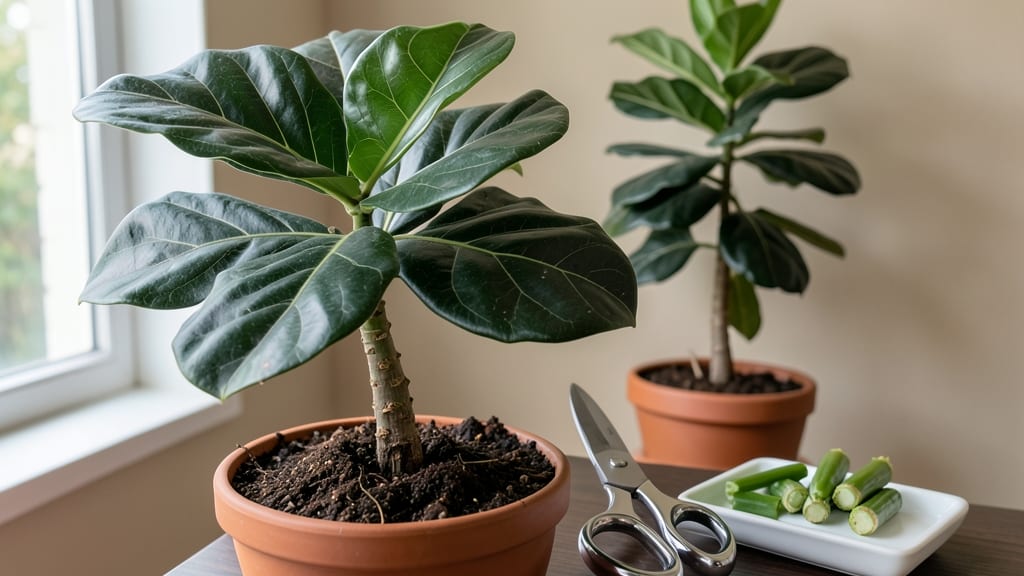
Your fiddle leaf fig just hit 3 feet tall and looks like a single pole with leaves at the top. ✂️ That’s your cue to prune—not because it’s dying, but because how to cut a fiddle leaf fig plant at the right time transforms it from a skinny stalk into a lush, bushy plant with multiple trunks.
The secret is timing and technique: prune in spring or early summer when the plant is actively growing, and always use clean, sharp pruners to make cuts just above a leaf node.
Most people over-prune or cut in the wrong place, which stresses the plant. I’ve killed three fiddle leaf figs this way—until I learned the 45-degree angle trick that encourages faster regrowth.
What you’ll end up with is a fuller plant that fills out faster, plus free baby plants from the cuttings. Within 6-8 weeks, you’ll see new shoots sprouting from the nodes, and those cuttings will root easily in water or soil.
The best part? Your fig will look healthier and more vibrant than ever before.
Works for both mature plants and leggy young figs—just adjust how much you cut. Here’s exactly how to do it without killing your plant (again).
Root Causes Behind Leaf Loss
Understanding why your fiddle leaf fig (Ficus lyrata) needs pruning—or worse, why its leaves drop—starts with recognizing the stress triggers it faces. These aren’t random; they’re survival responses to environmental or care-related disruptions.
Let’s break down the science behind the most common culprits so you can address them with precision.
Fiddle leaf figs are tropical natives, meaning they thrive in stable, warm conditions (65–75°F) with 60–70% humidity. Sudden drops—like drafty windows, AC blasts, or dry indoor air—send shockwaves through the plant’s vascular system.
- The Science: Cold air constricts stomata (pores on leaves), halting gas exchange.
Low humidity causes transpiration stress, where leaves lose moisture faster than roots can absorb water, leading to wilting or abscission (leaf drop). - Actionable Fix: Use a humidifier near the plant or place it on a pebble tray with water. Avoid placing it near heaters or vents.
Fiddle leaf figs despise "wet feet." Overwatering or compacted soil suffocates roots, cutting off oxygen and triggering root rot (Phytophthora or Pythium fungi). The plant reacts by shedding leaves to conserve energy.
- The Science: Waterlogged soil creates anaerobic conditions, where roots can’t respire. The plant prioritizes survival over foliage, dropping leaves to reduce water demand. - Actionable Fix: Let the top 2–3 inches of soil dry out before watering.
Use a well-draining mix (potting soil + perlite/pumice) and ensure pots have drainage holes.
Fiddle leaf figs need bright, indirect light (think filtered sunlight). Too little light weakens the plant, while direct sunburn (especially through windows) causes leaf scorch and drop.
- The Science: - Underlighting: Leads to etiolation (stretched, weak stems) as the plant searches for light, making leaves more prone to falling. - Sunburn: UV rays damage chloroplasts, causing necrosis (brown, crispy edges).
The plant sheds damaged leaves to redirect resources. - Actionable Fix: Rotate the plant weekly for even growth. Use sheer curtains to diffuse harsh light. If outdoors, acclimate gradually to prevent shock.
Hidden invaders like spider mites, mealybugs, or fungal infections (e.g., Botrytis) drain the plant’s energy, forcing it to drop leaves as a last resort.
- The Science: - Pests: Pierce leaves to feed, injecting toxins that trigger oxidative stress (cell damage).
The plant sheds leaves to limit damage. - Fungi/Bacteria: Invade through wounds (e.g., from poor pruning) or overwatering, clogging xylem vessels and starving the plant. - Actionable Fix: Isolate the plant and treat with neem oil (for pests) or copper fungicide (for infections).
Inspect leaves regularly for webbing, sticky residue, or black spots.
Fiddle leaf figs need balanced nutrients, but imbalances—like chlorosis (yellowing from iron/magnesium deficiency) or salt buildup from over-fertilizing—disrupt photosynthesis and growth.
- The Science: - Deficiencies: Stunted roots can’t absorb nutrients, leading to leaf chlorosis (yellowing) and eventual drop. - Overfertilizing: Excess salts in soil osmotically stress roots, preventing water uptake.
The plant sheds leaves to conserve energy. - Actionable Fix: Use a balanced liquid fertilizer (20-20-20) every 4–6 weeks in spring/summer. Flush soil with water monthly to prevent salt buildup.
Even mature fiddle leaf figs react poorly to sudden repotting or root-bound conditions. Disturbed roots can’t support the plant’s needs, leading to leaf drop.
- The Science: Roots are the plant’s lifeline. When compacted or damaged during repotting, they struggle to absorb water/nutrients, triggering abscission signals (hormones that tell leaves to fall). - Actionable Fix: Repot only when roots circle the pot’s base (every 2–3 years).
Use a pot 1–2 inches larger and handle roots gently to avoid trauma.
Aggressive pruning or snapping stems (instead of cutting) creates open wounds that invite infections or stress responses.
- The Science: Fiddle leaf figs rely on auxin hormones (produced at stem tips) to regulate growth. Cutting too harshly disrupts this balance, causing stunted growth or leaf drop. - Actionable Fix: Use sterilized scissors to cut at a 45-degree angle just above a leaf node.
Avoid tearing stems—this slows healing.
Pro Tip 💡: Keep a care journal! Track watering, light, and temperature changes. Patterns (e.g., leaf drop after moving the plant) reveal the exact stressor.
Revive Your Fiddle Leaf Fig
When your fiddle leaf fig (Ficus lyrata) shows signs of distress—yellowing leaves, browning edges, or leggy growth—it’s time to take action. The good news? Pruning and propagation aren’t just about fixing problems; they’re about encouraging healthier, bushier growth while giving you new plants to share or expand your collection.
Below, we’ll tackle the most common issues with step-by-step solutions, plus tips to keep your fig thriving long-term.
Cause: Too much space between leaves (legginess) or a single dominant stem can make your plant look sparse and weak.
How to Fix It:
- 🔪 Identify the Right Cuts:
- For leggy stems, trim just above a leaf node (where leaves grow) to encourage branching. Aim for cuts at a 45-degree angle to prevent water pooling.
- If the plant is top-heavy, prune the tallest stem to redirect energy to lower branches.
- 🌿 Propagate the Cuttings: - Dip the cut end in rooting hormone (optional but helpful). - Plant in a small pot with well-draining soil (a mix of perlite, potting soil, and coconut coir works well). - Keep the soil moist and place the pot in bright, indirect light.
Roots should form in 4–6 weeks.
- 🌡️ Care for the Parent Plant:
- After pruning, move your fig to a lighter spot (but avoid direct sun) to reduce stress.
- Fertilize lightly with a balanced liquid fertilizer (diluted to half strength) to encourage new growth.
💡 Prevention Tip:
- Rotate your plant every few months so all sides get even light, preventing legginess.
- Prune lightly in spring or early summer when the plant is actively growing.
Cause: Overwatering, underwatering, or pests can cause leaves to yellow or brown. Pruning removes damaged foliage while improving airflow.
How to Fix It:
- 🍳 Assess the Damage:
- Yellow leaves? Check the soil moisture—if soggy, reduce watering and trim affected leaves at the base.
- Brown edges? This could signal underwatering or low humidity. Prune crispy leaves and increase misting or use a pebble tray.
- 👨🍳 Sterilize Your Tools:
- Wipe pruners with rubbing alcohol to prevent spreading disease.
- 🌿 Repot if Needed:
- If roots are mushy or the soil smells foul, repot in fresh, well-draining soil and a pot with drainage holes.
💡 Prevention Tip:
- Water only when the top 1–2 inches of soil are dry.
- Wipe leaves monthly with a damp cloth to remove dust and improve photosynthesis.
Cause: Spider mites, mealybugs, or scale can weaken your fig. Pruning infested areas and treating the plant helps control outbreaks.
How to Fix It:
- 🔎 Inspect the Plant:
- Look for sticky residue (honeydew), white webbing, or tiny bugs on stems/leaves.
- 🧼 Treat the Plant:
- Isolate the fig to prevent pests from spreading.
- Wipe leaves with a neem oil solution (1 tsp neem oil + 1 quart water) or use insecticidal soap.
- Prune heavily infested leaves and dispose of them in sealed bags.
- 🌿 Encourage Recovery:
- Increase humidity with a humidifier or group plants together.
- Avoid over-fertilizing, which attracts pests.
💡 Prevention Tip:
- Quarantine new plants for 2–4 weeks before introducing them to your collection.
- Spray leaves with water weekly to deter pests.
Cause: Overwatering or poor drainage leads to mushy stems and roots. Act fast to salvage what you can.
How to Fix It:
- 🔪 Prune Affected Areas:
- Cut back blackened or mushy stems to healthy green tissue.
- If roots are rotten, repot only the healthy portions in fresh soil.
- 🌡️ Adjust Care:
- Let the soil dry out completely between waterings.
- Use a terracotta pot (which dries faster) and ensure it has drainage holes.
- 💡 Prevention Tip:
- Never let your fig sit in standing water. Empty saucers after watering.
- Use a moisture meter to track soil conditions.
- Best Time to Prune: Spring or early summer when the plant is growing actively.
- Tools Matter: Use sharp, clean pruners to make clean cuts and avoid tearing.
- Don’t Overdo It: Remove no more than 1/3 of the plant at once to avoid shocking it.
- Propagate Year-Round: While spring/summer is ideal, you can propagate fiddle leaf figs indoors with grow lights in winter.
With the right cuts and care, your fiddle leaf fig will bounce back stronger—and you’ll have new plants to enjoy! 🌿✨
Frequently asked questions
Can I cut my fiddle leaf fig in winter?
It's best to avoid major pruning in winter when the plant is dormant. Winter cuts can stress the plant since it's not actively growing. If you must prune, keep it minimal—just remove dead or damaged leaves. Wait until spring or early summer when new growth is about to begin.
What should I do with the cuttings after pruning?
You have two great options! Place cuttings in water with just the node submerged, or plant them directly in well-draining soil. Keep them in bright, indirect light and maintain consistent moisture. Roots should appear in about 4-6 weeks—just be patient!
How do I know if I'm cutting in the right place?
Look for the leaf nodes—those are the bumps where leaves grow along the stem. Make your cut just above a node at a 45-degree angle. This encourages new growth to sprout from that exact spot. Never cut below a node or you'll be left with a bare stem.
Will pruning make my fiddle leaf fig grow faster?
Not directly, but it absolutely encourages healthier, bushier growth! By removing the top growth, you redirect the plant's energy to lower branches, which stimulates new shoots. Think of it like giving your plant a haircut—it grows back fuller and more balanced.
What if my cuts start oozing white sap?
That's completely normal! The white latex is just the plant's natural sap. It's harmless and will stop on its own. Just avoid touching the area for a few days to prevent introducing bacteria. The sap will dry up as the cut heals, usually within 1-2 days.