
Propagation
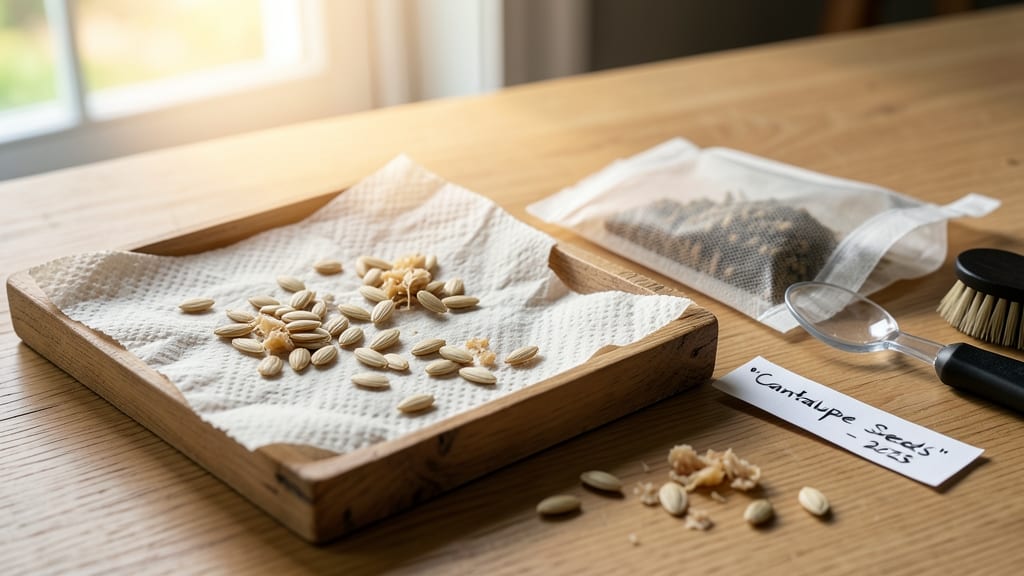
How to dry cantaloupe seeds properly ensures next year’s harvest starts with the strongest possible plants. 🌱 I’ve saved seeds for years, and the difference between fresh, viable seeds and moldy failures comes down to drying them correctly—no shortcuts work. The key is patience and control: extracting seeds from fully ripe fruit, rinsing away the jelly-like coating, and drying them slowly to prevent cracking. Most beginners rush this step, but taking 3-5 days for air-drying makes all the difference in germination rates. You’ll end up with seeds that sprout reliably, producing melons just as sweet as the original. The process is simple but requires attention to humidity and airflow—critical factors for long-term storage success. Works for cantaloupe, honeydew, and other melons alike. Let’s get those seeds ready for planting season!
📚 In This Guide
- What you need
- Instructions
- Tips and common mistakes
- Wrapping up and next steps
What you need
- ● Fresh cantaloupe – Choose a ripe, organic cantaloupe for the best seed quality.
- ● Knife or spoon – A sharp knife or a spoon for scooping out the seed-filled pulp.
- ● Water – A bowl or container to rinse and separate the seeds.
- ● Fine-mesh strainer or colander – To strain out the seeds from the pulp and water.
- ● Paper towels or coffee filters – At least 4-6 sheets for drying (or parchment paper as an alternative).
- ● Flat, dry surface or seed tray – A clean, elevated area (like a windowsill or drying rack) to spread the seeds.
- ● Small envelope or airtight container – For storing dried seeds (e.g., a paper seed envelope or glass jar with a lid).
- ● Labeling tags – To mark the seed variety and date (e.g., baker’s twine + index cards).
- ● Fan or dehumidifier – For indoor drying in humid climates.
- ● Fine-tip paintbrush – To gently separate clumped seeds after drying.
- ● Seed catalog or notebook – To track cantaloupe traits (e.g., color, size) for future reference.
Step-by-Step instructions for harvesting and preserving cantaloupe seeds
Here's the foolproof method I use every year to save seeds from my best cantaloupes.
🌱 Step 1: Select and Extract Ripe Cantaloupe Seeds
Choose a fully ripe cantaloupe—it should feel heavy for its size and have a creamy yellow spot where the stem was attached. Cut the fruit in half and scoop out the seeds along with the surrounding gelatinous pulp into a bowl. The pulp helps separate the seeds from their fibrous strands, making cleaning easier.
Let the mixture ferment for 3-5 days in a warm spot. You'll notice bubbles forming and an unpleasant odor developing—this breaks down the seed coatings. Stir the mixture daily to speed up fermentation. Once the pulp turns dark and the seeds sink to the bottom, they're ready for cleaning.
💧 Step 2: Clean and Rinse the Seeds
Fill a jar with warm water and add the fermented seed mixture. Swirl gently and let the seeds settle for a minute. The viable seeds will sink to the bottom while empty or damaged seeds float to the surface. Pour out the water and floating debris, repeating this process until only clean, settled seeds remain.
Spread the cleaned seeds on a clean paper towel or mesh screen to air-dry. I like to place them in a single layer, spaced about ½ inch apart, to prevent clumping. This initial drying stage takes 1-2 days in a well-ventilated area, but don't rush it—moisture trapped between seeds will encourage mold growth.
☀️ Step 3: Complete Drying in Sunlight
Once the seeds feel dry to the touch but aren't brittle, transfer them to a piece of cardboard or brown paper in a single layer. Place them in direct sunlight for 2-4 hours daily over the next 3-5 days. Sunlight helps kill any remaining pathogens on the seed coats while completing the drying process.
Check the seeds daily—they're properly dried when they're hard to the touch and make a rattling sound when shaken in their container. If you live in a humid climate, extend the drying time to 7-10 days to prevent moisture absorption. Store the dried seeds in a cool, dark place in a sealed container with a silica gel packet to maintain dryness.
⏰ Step 4: Test Viability Before Storage
Before storing your seeds, test their viability by placing 10 seeds between two damp paper towels in a sealed plastic bag. Keep them in a warm spot and check daily. Within 3-7 days, healthy seeds should sprout—count how many germinate to calculate your success rate. If fewer than 70% sprout, consider saving seeds from additional cantaloupes next year.
Label your seed packets with the variety name and harvest date. I also note the germination percentage and any special growing characteristics. Properly stored cantaloupe seeds remain viable for 3-5 years, though germination rates decline after the first year. Keep them in a sealed container with a desiccant to prevent moisture absorption and maintain their longevity.
Tips & tricks for perfectly dried cantaloupe seeds
Saving cantaloupe seeds successfully takes patience—and these little tricks make all the difference between viable seeds and wasted effort.
Fermentation Insight: The 3-5 day fermentation in Step 1 is non-negotiable for seed viability. I've learned the hard way that skipping this step leads to seeds that won't sprout. The unpleasant odor means the process is working—don't be squeamish! Stirring daily actually speeds up fermentation by breaking surface tension. If you're short on time, place the bowl in a warm spot (like near your oven with it off) to accelerate the process by 1-2 days.
Cleaning Efficiency: For Step 2's cleaning process, I use a fine-mesh strainer instead of a jar to separate seeds from pulp. This makes the water-rinsing process faster and more thorough. After the first rinse, you'll notice most debris floats immediately—this is normal. The key is patience: viable seeds take about 30 seconds to sink completely. If you're impatient and pour too quickly, you might lose some good seeds with the floating debris.
Sunlight Strategy: During Step 3's sunlight drying, I've found that placing seeds on a black piece of cardboard (like a cereal box) absorbs more heat than white paper, speeding up drying by about 30 minutes. If you live in a humid climate, I recommend extending the 3-5 day period to 5-7 days—moisture is the enemy here. Check seeds daily by gently pressing one between your fingers; it should feel completely dry without any dampness. Store them in a sealed container with a silica gel packet to maintain that dryness long-term.
Pro Tips for Dry Cantaloupe Seeds
- Saving cantaloupe seeds successfully takes patience—and these little tricks make all the difference between viable seeds and wasted effort.
- Fermentation Insight: The 3-5 day fermentation in Step 1 is non-negotiable for seed viability.
- Cleaning Efficiency: For Step 2's cleaning process, I use a fine-mesh strainer instead of a jar to separate seeds from pulp.
Frequently asked questions
Got questions about drying cantaloupe seeds?
You’re not alone! Here are answers to the most common queries to help you master the process like a pro.
How long do cantaloupe seeds need to dry?
Cantaloupe seeds typically need 3–5 days to fully dry on paper towels or parchment paper, depending on humidity. If your climate is damp, spread them in a well-ventilated area or use a fan to speed up drying. Overdrying can crack seed coats—aim for a crisp but pliable texture.
Can I dry cantaloupe seeds in the oven?
Yes, but use low heat (100–120°F or 38–49°C) for 1–2 hours max. Place seeds on a baking sheet with parchment paper and stir occasionally to prevent uneven drying. Skip high heat—it can kill viability. A warm oven is great for humid climates but isn’t necessary in dry weather.
What if my seeds mold or smell bad?
Mold or a musty odor means your seeds are too damp. Discard them immediately—moldy seeds won’t sprout. To prevent this, pat seeds dry before spreading them out, and avoid stacking them. If humidity is high, use a dehumidifier or dry them indoors with a fan.
How long can dried cantaloupe seeds last?
Properly dried seeds stored in a cool, dark, airtight container (like a glass jar with silica packets) can stay viable for 3–5 years. Check for moisture or pests annually. Label your seeds with the variety and date—this helps track freshness and germination rates!
What if I don’t have paper towels?
No problem! Use parchment paper, coffee filters, or even clean cardboard (like cereal boxes). Avoid newspaper—ink can inhibit germination. Just ensure your surface is flat and breathable. For extra airflow, place seeds on a wire rack or mesh screen.
Pro Tip:
Test a few seeds for germination before storing the rest! Place them between damp paper towels in a sealed bag for 3–5 days. If 80%+ sprout, your batch is ready for long-term storage.
Wrapping up and next steps
Drying cantaloupe seeds is a simple yet rewarding process that ensures a thriving garden for seasons to come! By following the sun-and-paper method, you’ve unlocked the secret to saving seeds that are viable, healthy, and ready for planting.
Whether you’re a seasoned gardener or just starting out, this technique is your ticket to homegrown success—no fancy tools required!
Now that your seeds are safely stored, why not take the next step? Plan your next cantaloupe patch—sketch out your garden layout, research companion plants, or even experiment with growing heirloom varieties. Happy gardening! 🌱