
How To
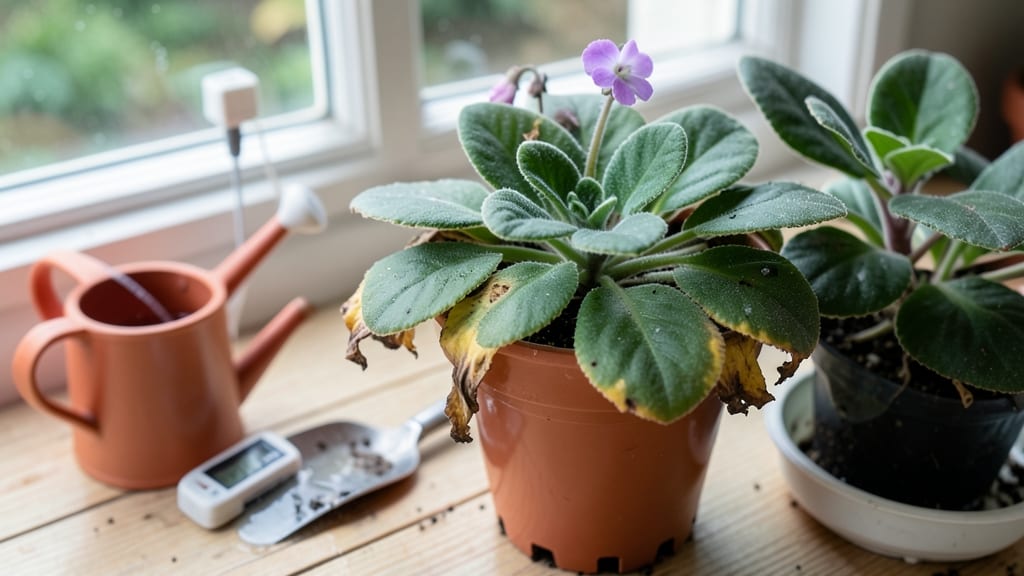
How to fix an overwatered African violet—those drooping leaves and yellowing foliage don’t mean it’s dying, just that it needs a little TLC. ✨ I’ve nursed back more than a dozen of these beauties from soggy soil, and the revival process is simpler than you’d think, starting with a few key adjustments.
The first sign of overwatering is often mushy stems or leaves that feel squishy to the touch—those roots are drowning. The fix begins with stopping water immediately and letting the soil dry out completely.
Most people panic and water again, but patience here is critical. African violets prefer slightly dry soil between waterings, and their roots need air to recover.
Within 3-5 days, you’ll see new signs of life: perky leaves, fresh growth at the base, and stems that firm up. The key is repotting into well-draining soil with perlite or sand mixed in, and choosing a pot with drainage holes—no exceptions.
This prevents future soggy soil and gives roots room to breathe.
Long-term, keep your African violet in bright, indirect light and water only when the top inch of soil feels dry. Over time, you’ll notice the leaves staying vibrant, the stems sturdy, and the blooms coming back stronger than ever. Trust the process—these plants bounce back with the right care.
Why it happens
H2: Root Causes of Overwatered Violets
African violets (Saintpaulia spp.) are delicate beauties that thrive on consistency—but when their watering routine goes awry, their roots pay the price. Understanding why overwatering happens is the first step to saving your plant. Here’s a breakdown of the most common culprits, backed by science and actionable insights:
🌧️ Inconsistent Watering Habits
African violets demand predictability in moisture levels. Their native habitat in tropical East Africa means they’re adapted to evenly moist (not soggy) soil with good drainage. When you water them on a whim—skipping days or drowning them after neglect—their roots struggle to adapt.
- Root suffocation: Excess water displaces oxygen in the soil, triggering anaerobic conditions (low-oxygen environments). Roots rely on oxygen for respiration; without it, they suffocate and rot.
- Microbe overload: Overwatering creates a breeding ground for pathogenic fungi like Pythium or Phytophthora, which attack roots, clogging pores and blocking nutrient uptake.
- Salt buildup: Tap water often contains minerals (e.g., calcium, chlorine) that accumulate in the soil. Overwatering washes away nutrients but traps salts near roots, causing osmotic stress—where roots expend energy to expel excess salts instead of absorbing water.
Actionable fix: Stick to a schedule (e.g., watering when the top 1 inch of soil feels dry) and use room-temperature distilled water to reduce salt buildup.
🏺 Poor Drainage Systems
African violets hate "wet feet." Their shallow root systems (typically 2–3 inches deep) are highly sensitive to stagnant water. If your pot lacks drainage holes or uses heavy, compacted soil, water pools at the bottom, creating a permanent soggy zone.
- Root rot progression: Stagnant water leads to hypoxia (oxygen deprivation), causing roots to turn brown/black and emit a foul odor (a sign of anaerobic decomposition).
- Structural collapse: Over time, waterlogged soil compacts, crushing roots and restricting water flow. This mimics physical asphyxiation for the plant.
- Fungal infections: Moisture-loving fungi like Rhizoctonia thrive in undrained pots, creating lesions that block water and nutrient transport.
Actionable fix: Use pots with multiple drainage holes and amend soil with perlite or orchid bark (20–30%) to improve aeration.
🌡️ Temperature and Humidity Mismatches
African violets prefer warmth (65–75°F) and moderate humidity (40–50%). When these conditions clash with your watering routine, the plant’s ability to regulate moisture plummets.
- Slow evaporation: Cool temperatures (<60°F) or high humidity (>60%) reduce transpiration (water loss through leaves). This makes soil stay wet longer, increasing rot risk.
- Root burn: Hot, dry air (e.g., near heaters) causes leaves to transpire rapidly, but if roots are waterlogged, the plant can’t keep up, leading to hydraulic stress (root cells bursting from pressure).
- Fungal blooms: High humidity + overwatering = ideal conditions for powdery mildew or gray mold, which clog stomata (leaf pores) and force roots to work harder.
Actionable fix: Move plants away from drafts/heaters, use a humidifier in dry climates, and water in the morning to allow foliage to dry.
🌱 Wrong Soil Composition
African violets need light, airy soil that mimics their natural humus-rich, volcanic substrate. Heavy garden soil or peat-only mixes hold water like a sponge, choking roots.
- Compaction: Clay or loam soils repel air when wet, creating anaerobic pockets where roots drown.
- Nutrient imbalance: Peat-heavy mixes acidify over time, disrupting microbial activity. Beneficial fungi (like mycorrhizae) die off, leaving roots vulnerable to pathogens.
- Poor capillary action: Dense soil traps water at the bottom, while the top layer dries out—leading to uneven moisture stress.
Actionable fix: Repot in a mix of 50% peat/coir, 30% perlite, and 20% vermiculite for optimal aeration.
💧 Overzealous Watering Tools
Not all watering methods are equal. Using the wrong tools or techniques can drown your violets faster than you think.
- Bottom-watering blunders: While bottom-watering is ideal, using a full saucer of water (instead of a shallow tray) causes roots to soak indefinitely.
- High-pressure sprays: Hosing leaves or soil with force disrupts soil structure, creating air pockets that trap water and suffocate roots.
- Ice cube "hacks": Placing ice cubes on soil may seem gentle, but they create localized cold spots, shocking roots and slowing microbial activity.
Actionable fix: Water at the soil surface until it drains freely from the bottom, or use a spray bottle for gentle hydration.
Revive Your African Violet Now
Overwatered African violets can feel like a heartbreaking setback, but with the right steps, you can nurse them back to health—often faster than you think! The key is acting quickly, diagnosing the root issue (literally and figuratively), and following a structured recovery plan.
Below, we’ll map out practical, step-by-step solutions tailored to the most common causes of overwatering, plus prevention tips to keep your violets thriving long-term.
---
Cause: Waterlogged soil suffocates roots, cutting off oxygen and nutrients. Fix: - 🔥 Remove the plant from its pot and gently loosen the root ball with your fingers. If the soil feels soggy or smells musty, it’s time for a refresh. - ⏰ Let it dry out for 24–48 hours. Place the plant in a shady, well-ventilated spot (no direct sunlight yet—this can stress the plant further). - 👨🍳 Repot if needed: If the roots are mushy or black (a sign of rot), trim them with sterilized scissors (dip in rubbing alcohol) and repot in fresh, well-draining African violet mix. Avoid heavy garden soil—it holds too much moisture.
💡 Pro Tip: If repotting feels overwhelming, skip it for now and focus on drying the soil. You can always repot later once the plant stabilizes.
---
Cause: Overzealous watering, poor drainage, or using the wrong soil. Fix: - 🥗 Water only when the top 1–2 inches of soil are dry. Stick your finger in the soil—if it’s damp, wait. African violets hate soggy feet! - 💧 Use the "soak-and-drain" method: Water thoroughly until it runs out the drainage holes, then empty the saucer immediately to prevent root rot. - 🌡️ Check your pot: Terracotta pots dry faster than plastic, but plastic retains moisture longer. If your violets are prone to overwatering, switch to terracotta or add perlite/pumice to the soil for better aeration.
✨ Prevention Tip: Set a reminder every 5–7 days to check soil moisture. Consistency is key—African violets prefer moderate moisture, not a swamp!
---
Cause: Stress from overwatering weakens the plant, making it vulnerable to pests or disease. Fix: - 🌿 Trim damaged leaves (brown, yellow, or wilted) to redirect energy to healthy growth. Use clean scissors and cut at a 45-degree angle. - 🍎 Feed lightly: Wait 2–3 weeks before fertilizing again. Once recovered, use a balanced, water-soluble fertilizer (like 20-20-20) diluted to half strength every 4–6 weeks. - 🌞 Gradually reintroduce light: Start with bright, indirect light (east or north-facing windows) for a few hours a day, then increase as the plant strengthens.
🎯 Long-Term Tip: African violets hate cold drafts and humidity spikes. Keep them in a warm (65–75°F), humid (40–50%) spot away from AC vents or radiators.
---
| Problem | Solution | Action Step | |---------------------------|---------------------------------------|------------------------------------------| | No drainage holes | Repot with a pot that has holes | Buy a new pot or drill holes carefully. | | Heavy, compacted soil | Mix in perlite or orchid bark | Add 20% perlite to your potting mix. | | Overwatering habit | Use a moisture meter or stick method | Test soil moisture before watering. | | Crowded roots | Repot every 6–12 months | Refresh soil and trim roots if needed. |
--- Final Thought: Overwatered African violets can bounce back surprisingly fast—sometimes in just 1–2 weeks with proper care. The secret? Patience, observation, and adjusting your routine. Once you’ve mastered the "dry-before-water" rule, your violets will reward you with vibrant blooms for months!
💡 Bonus: If your violet’s leaves start curling upward (a classic sign of underwatering), you’ve nailed the balance! 🌸
Frequently asked questions
How quickly can I expect my African violet to recover from overwatering?
With proper care, you’ll often see improvement within 3-5 days—look for perky leaves and firmer stems. Complete recovery typically takes 2-4 weeks, depending on how severe the damage was. The key is patience and consistency with drying out the soil.
Can I save an African violet with completely black, mushy roots?
It depends! If only the tips are black, trim those healthy roots and repot. But if 90%+ of roots are mushy, the plant may not recover. Try saving a cutting from healthy stems instead—root in water or moist perlite for a fresh start.
Will my African violet bloom again after overwatering damage?
Once roots recover, your violet will focus energy on new growth. You may see blooms return in 4-8 weeks. Remove any damaged leaves first to redirect the plant’s energy toward flowering.
Is it better to underwater than overwater African violets?
Not exactly—both extremes stress the plant. African violets prefer consistent moisture, not drought. The safest approach is to water only when the top 1 inch of soil feels dry—this mimics their natural tropical environment.
Can I use hydrogen peroxide to treat overwatered African violets?
Yes! Mix 1 part 3% hydrogen peroxide with 4 parts water to sterilize roots and prevent fungal growth. Use this solution when repotting to help the plant recover faster. Just avoid using it on healthy plants regularly.