
Watering
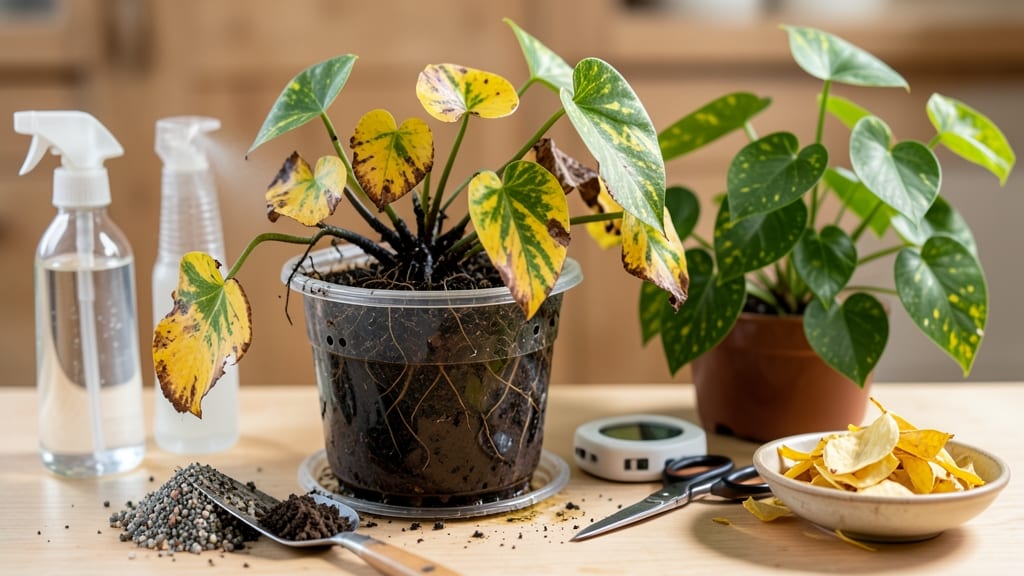
How to fix an overwatered indoor plant—yellow leaves and soggy soil are clear warning signs. I’ve nursed back more overwatered plants than I’d like to admit—some with just a few adjustments, others requiring a full restart. The good news? Most can bounce back with the right steps, even if they look hopeless now.
First, stop watering immediately and check the roots. Healthy roots should be firm and white; mushy, black, or smelly roots mean rot has set in.
Gently remove the plant from its pot, trim away the damaged roots with clean scissors, and let the roots air-dry for 24 hours before replanting in fresh, well-draining soil.
Once replanted, place your plant in bright, indirect light and wait before watering again. Stick your finger an inch into the soil—if it’s still damp, wait another day. Overwatering often comes from pots without drainage holes or a soil mix that holds too much moisture.
A terracotta pot or a mix with perlite or orchid bark helps prevent future soggy soil.
With patience, your plant will start showing signs of recovery in 2-4 weeks, like new growth or firmer leaves. The key is consistency: check soil moisture regularly and adjust your watering schedule based on your plant’s needs, not a rigid timeline. Trust me, your plant will thank you.
Root Causes Of Soggy Soil
Overwatering might seem like a simple mistake, but it’s often the result of a mix of well-intentioned habits and environmental factors. Understanding why it happens is the first step to preventing it—and saving your plants. Let’s break down the most common culprits:
---
The #1 reason plants get overwatered? Human error. Many plant parents (including pros!) fall into predictable traps: - Following a rigid schedule – Some assume plants need water every 3–7 days, but soil moisture, pot size, and plant type vary wildly.
A succulent in a tiny pot dries out in days, while a fern in a cache pot stays damp for weeks. - Mistaking thirst for wilting – Droopy leaves often signal underwatering, but overwatered plants can also droop due to root suffocation (when roots can’t breathe).
Always check soil moisture with your finger—if the top 1–2 inches are damp, wait. - Watering "just in case" – A light spray here, a quick pour there—these small amounts add up, especially in pots with poor drainage.
Plants don’t need frequent sips; they thrive on deep, infrequent watering that encourages strong roots.
---
Not all pots are created equal. If your plant’s container lacks proper drainage, water pools at the bottom, starving roots of oxygen and inviting fungal infections like root rot. Key offenders: - Sealed pots without holes – Ceramic, plastic, or even "aesthetic" grow bags trap water like a sponge.
Even "self-watering" pots can backfire if not monitored. - Clogged drainage holes – Over time, roots, soil, or mineral buildup can plug holes.
Test this by flipping the pot upside down—if water drains slowly (or not at all), it’s a red flag. - Tray buildup – If you use a saucer or cache pot, excess water sitting there for days creates a soggy mat that wicks moisture back into the soil.
Always empty trays post-watering!
---
Plants have specific needs based on their natural habitats. When you ignore these, overwatering becomes inevitable: - Humidity levels – Tropical plants (like calatheas or ferns) thrive in 60–80% humidity and need less frequent watering.
In dry climates or air-conditioned rooms, soil stays damp longer, increasing rot risk. - Temperature swings – Cold drafts (from AC or windows) slow root activity, making plants less efficient at absorbing water.
Meanwhile, heat speeds up evaporation—so your "just-right" watering schedule might turn into a deluge. - Light exposure – Low light = slower evaporation = soggy soil.
A snake plant in dim lighting might only need water every 3–4 weeks, while the same plant in bright light could dry out in 10 days.
--- Not all plants are equal—some are drought-tolerant, while others are thirsty but hate wet feet.
Common mismatches: - Confusing succulents with tropicals – A jade plant stored water in its leaves; a peace lily needs consistently moist (but not soggy) soil. Rule of thumb: If your plant’s native habitat is a desert, it hates wet roots. - New plants in old pots – A freshly repotted plant in a large container stays damp for weeks as roots adjust. Solution: Use pots 1–2 inches larger than the root ball and water sparingly until new growth appears. - Seasonal needs – Many plants slow down in winter (metabolism drops, roots shrink).
Watering them as if it’s summer = disaster. Cut back by 30–50% in cooler months.
--- Even the best intentions go wrong with the wrong tools: - Overwatering with spray bottles – Mist sprays are for humidity, not hydration.
They create a surface-layer dampness that tricks you into thinking the plant is thirsty, while roots stay dry. - Using tap water with high salts/minerals – Hard water leaves mineral deposits that disrupt drainage and suffocate roots.
If your water looks cloudy or leaves spots on surfaces, consider filtering or using distilled water. - Bottom-watering without monitoring – While this method encourages deep root growth, leaving a plant sitting in water for hours can drown it. Always drain excess within 10–15 minutes.
--- Sometimes, overwatering isn’t the cause—it’s the symptom of an underlying problem: - Fungal infections – Fungi like Phytophthora thrive in waterlogged soil, attacking roots and spreading quickly.
If your plant’s leaves yellow even after draining, check for mushy, brown roots. - Root-bound stress – When roots fill a pot, they compete for oxygen, making the plant more susceptible to rot.
If you see roots circling the soil surface, it’s time to repot into fresh, well-draining mix. - Pests weakens defenses – Mealybugs or spider mites stress plants, reducing their ability to regulate moisture. An already struggling plant overwatered = double trouble.
--- Before blaming your green thumb, test your soil: 1. Stick your finger 1–2 inches deep into the soil. 2. If it’s damp but not soggy, wait 1–2 more days.
3. If it’s bone-dry, water deeply until it drains from the bottom. 4. Pro tip: Use a moisture meter for accuracy—no guesswork!
Understanding these causes helps you adjust your routine—not just react to the damage. Next, we’ll cover how to diagnose an overwatered plant and take action. 🚀
Revive Your Plant Step by Step
Overwatering can feel like a death sentence for your leafy friends, but don’t panic—most plants are tougher than they look! The key is acting fast with the right steps tailored to the problem.
Below, we’ll map out practical fixes for each cause of overwatering, plus tips to keep your plant thriving long-term.
---
Cause: Soggy soil suffocates roots, cutting off oxygen and nutrients. How to Fix It: 1. 🔥 Stop Watering Immediately - Pause all watering until you’ve assessed the damage. Let the soil dry out completely before touching it again.
2. 🍳 Repot in Fresh, Dry Soil - Gently remove the plant from its pot and rinse the roots with lukewarm water to wash away excess soil. - Trim any black, mushy, or foul-smelling roots with sterilized scissors (healthy roots are firm and white). - Repot in a clean container with well-draining soil (mix in perlite or orchid bark for aeration).
3. ⏰ Monitor Closely for 1–2 Weeks - Water sparingly (only when the top 1–2 inches of soil are bone-dry). - Place the plant in bright, indirect light to speed up recovery.
💡 Prevention Tip: Use a moisture meter or the finger test (stick your finger 1 inch deep—if it’s damp, wait!) to avoid overwatering again.
---
Cause: Overwatering + poor drainage = salt buildup or fungal issues. How to Fix It: 1. 👨🍳 Flush the Soil - Run water through the pot until it drains freely from the bottom. Repeat 2–3 times to leach out salts.
2. 🌡️ Check Humidity & Temperature - Brown edges often signal low humidity or cold drafts. Move your plant to a warmer spot (65–75°F) and use a pebble tray or humidifier nearby.
3. 🎯 Trim Damaged Foliage - Snip off crispy edges with clean scissors to redirect energy to healthy growth.
💡 Prevention Tip: - Water at the base (not overhead) to reduce evaporation and fungal risks. - Choose pots with drainage holes—terracotta is ideal for drying out faster.
---
Cause: Excess moisture creates the perfect breeding ground for powdery mildew or root fungus. How to Fix It: 1. 🔪 Prune Infected Areas - Wipe leaves with a 70% isopropyl alcohol solution (1:1 with water) to remove mold. - Remove any severely infected leaves to stop the spread.
2. 🥗 Apply Fungicide (Natural or Store-Bought) - DIY spray: Mix 1 tsp baking soda + 1 quart water + a drop of dish soap. Spray leaves weekly. - Store-bought: Use a copper-based fungicide for stubborn cases.
3. 🌿 Improve Airflow - Space plants apart and use a small fan (on low) to circulate air.
💡 Prevention Tip: - Water in the morning so leaves dry quickly. - Avoid getting water on leaves—bottom-watering helps.
---
Cause: Chronic overwatering weakens roots, leading to poor nutrient uptake. How to Fix It: 1. 🔄 Root Pruning & Repotting - If roots are rotting, trim 1/3 of the root ball to encourage new growth. - Use a light, airy potting mix (e.g., cactus soil + perlite).
2. 💪 Fertilize Lightly (But Wait!) - Wait 4–6 weeks after repotting before fertilizing. Use a diluted, balanced fertilizer (half-strength) to avoid burning weak roots.
3. 🌿 Boost Light & Care - Move to bright, indirect light (south or east-facing windows). - Mist leaves lightly (if your plant loves humidity) or use a humidifier.
💡 Prevention Tip: - Downsize your pot—smaller pots dry out faster and reduce overwatering risks. - Stick to a schedule: Water every 7–10 days (adjust based on plant type).
---
If your plant is severely mushy at the base and won’t stay upright, it may be beyond saving—but you can propagate healthy cuttings! 1. 🌿 Take Stem Cuttings - Snip a 4–6 inch stem just below a node (where leaves grow).
2. 🌱 Root in Water or Soil - Place in water (change weekly) or moist perlite until roots form (2–4 weeks). 3. 🌱 Repot When Ready - Once roots are 1–2 inches long, transplant into fresh soil.
--- Final Reminder: 🌱 Prevention > Cure—always check soil moisture, use the right pot, and adjust your watering habits. Your plant will bounce back with a little TLC!
Frequently asked questions
How do I know if my plant is overwatered vs. underwatered?
Check the soil first—stick your finger 1–2 inches deep. If it's damp but not soggy, it's likely overwatered. Look for yellowing leaves with brown edges (overwatered) vs. crispy, dry leaves (underwatered). A drooping plant could be either, but overwatered plants often smell musty or have mushy stems.
Can I save a plant with completely black, rotten roots?
It depends! If only a few roots are rotten, trim them and repot in fresh soil. But if 90%+ of roots are black/mushy, the plant may not recover. Try propagating healthy stems instead—snip a 4–6 inch cutting and root it in water or perlite for 2–4 weeks.
Why does my plant keep getting overwatered even after fixing it?
Common culprits: using pots without drainage holes, ignoring soil moisture, or watering on a schedule instead of checking needs. Switch to terracotta pots, use a moisture meter, and water only when the top 1–2 inches of soil are dry. Group plants by water needs to avoid confusion!
Is it safe to use hydrogen peroxide on overwatered plants?
Yes! Mix 1 tablespoon 3% hydrogen peroxide with 1 quart water and water your plant with it. This oxygenates the roots and fights fungus. Use it once every 2 weeks during recovery, but don't overdo it—it can dry out soil if used too frequently.
How long should I wait before watering again after fixing overwatering?
Wait until the soil is completely dry—usually 5–7 days for most plants. Test by sticking your finger deep: if it feels dry, water thoroughly until it drains from the bottom. After recovery, adjust your schedule based on your plant type (succulents need less; ferns need more).