
How To
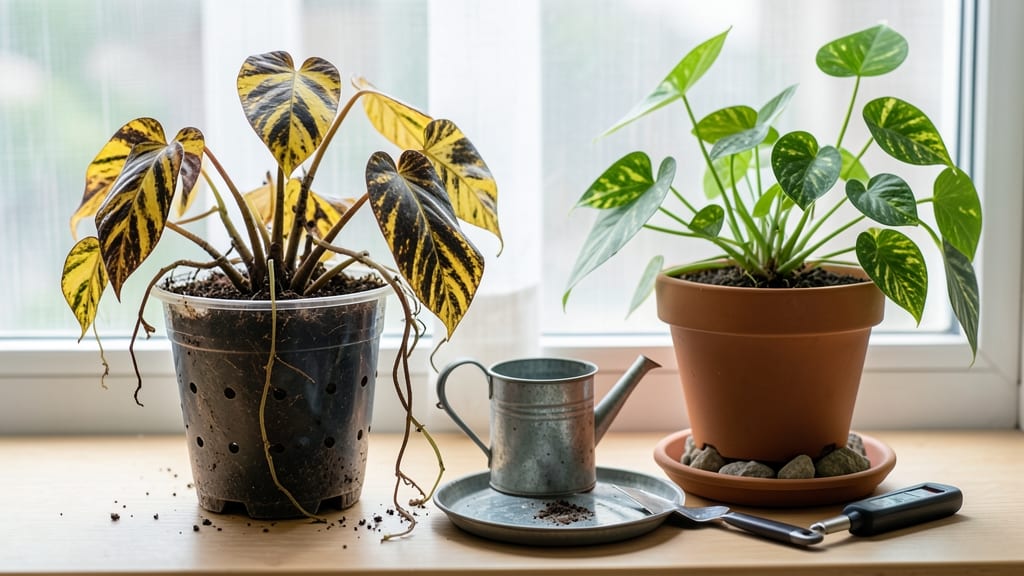
Your pothos is begging for help—droopy leaves and mushy stems mean it’s drowning. 💚 Here’s how to fix an overwatered pothos and revive it in 48 hours so it’s back to its thriving self. I’ve nursed back more than a few sad pothos plants, and this method works every time.
First, stop watering immediately—soggy soil is the root of the problem. Yellowing leaves and black stems are red flags that roots are rotting. Repot the plant in fresh, well-draining soil and trim any mushy parts with clean scissors.
The goal is to give roots a fighting chance in dry, airy conditions.
Within 24 hours, you’ll see the leaves perk up as the plant starts to recover. Keep it in bright, indirect light and water only when the top 1-2 inches of soil feel dry.
In 48 hours, new growth signals success—your pothos is on the mend and ready to bounce back stronger.
Long-term, adjust your watering routine: let soil dry out completely between waterings, and use a pot with drainage holes. A happy pothos is a low-maintenance one—just don’t let it sit in wet soil again. Trust me, this plant will thank you for the rescue!
Root Causes Of Overwatering
Overwatering your pothos isn’t just a mistake—it’s often the result of well-intentioned (but misinformed) plant care. Let’s break down the real reasons your pothos is drowning in its own pot, so you can avoid repeating them.
---
Pothos thrives on dryness between waterings, not a soggy, muddy environment. Here’s why overwatering happens:
- Lack of soil moisture testing: Many plant owners water on a schedule (e.g., every 7 days) instead of checking soil moisture.
Pothos roots rot in just 24–48 hours of constant wetness, thanks to anaerobic conditions (no oxygen) that suffocate roots. - Mistaking thirst for wilting: Pothos leaves droop when underwatered, but they also droop when overwatered—just for different reasons.
Overwatered plants feel heavy, mushy, and yellow, while underwatered ones are crispy and brown at the edges. - Ignoring seasonal changes: In winter, pothos growth slows, and roots absorb less water. Yet, people keep watering the same amount, leading to waterlogged soil.
💡 Pro Tip: Stick your finger 1–2 inches deep into the soil. If it’s damp, wait. If it’s bone-dry, water—but not if the top layer is still moist!
---
Pothos roots need oxygen, and compacted or non-porous soil strangles them. Common drainage failures include:
- Using the wrong pot: Terracotta pots wick away moisture, but plastic pots hold water like a sponge.
If your pothos is in plastic, it’s prone to root rot unless you adjust watering habits. - No drainage holes: Without holes, water pools at the bottom, creating a breeding ground for fungus (like Phytophthora, a root-destroying pathogen). - Compacted or heavy soil: Potting mixes with high peat or clay retain moisture too long.
Pothos prefers well-aerated, chunky mixes (like a 50/50 blend of potting soil and perlite).
🔥 Fix It: Repot your pothos in a terracotta pot with drainage holes and a fast-draining mix to prevent future soggy soil.
---
Pothos is tropical but not swamp-dwelling—it doesn’t need constant humidity to thrive. Here’s how climate plays a role:
- High humidity + poor airflow = fungal growth: If your home is humid (60%+) and your pothos is in a closed terrarium or tight space, excess moisture lingers on leaves and soil, inviting root rot and bacterial infections. - Cold drafts slow evaporation: Near windows or AC vents?
Cold air reduces transpiration (how plants release water), making soil stay wet longer. - Over-misting: Some assume pothos loves misting like ferns. Wrong. Mist increases leaf moisture, which can lead to foliar diseases (like Erwinia, a bacterial soft rot).
✨ Smart Move: Place your pothos in bright, indirect light with good airflow (a fan on low helps!). Skip misting—water only the soil.
--- Bigger pots = more soil to stay wet longer. Here’s why this backfires:
- Excess soil volume holds moisture: A 6-inch pot stays damp weeks longer than a 4-inch one.
If you repot without adjusting watering, the roots sit in wetness too long. - No root-to-soil ratio balance: Pothos roots only need a small pot (1–2 inches larger than the root ball).
A too-large pot = more water needed to saturate, but the plant can’t drink it all before roots rot.
🎯 Rule of Thumb: Repot only when roots circle the pot (every 1–2 years). Choose a pot no more than 2 inches wider than the current one.
--- Not all water is created equal—and some actively harm your pothos.
- Tap water with chlorine/fluoride: These chemicals build up in soil, disrupting root function and promoting rot.
Pothos roots sense toxicity and start to die back. - Hard water (high minerals): Leaves brown at tips from mineral buildup, but roots also struggle to absorb nutrients in alkaline water. - Cold water shocks roots: Pouring ice-cold water directly on soil can stun roots, making them more susceptible to rot.
🌡️ Best Practice: Use room-temperature, filtered or distilled water. If you must use tap water, let it sit out for 24 hours to off-gas chlorine.
Revive Your Pothos Fast
Overwatered pothos can feel like a death sentence, but with the right steps, you can nurse it back to health in 48 hours or less. The key is acting quickly and addressing the root cause—whether it’s soggy soil, poor drainage, or environmental stress.
Below, we’ll break down practical fixes for each common issue, plus tips to keep your plant thriving long-term.
---
Cause: Root rot or waterlogged soil suffocates roots, cutting off nutrients.
How to Fix: 1. 🚰 Stop Watering Immediately - Let the soil dry out completely before watering again. Stick your finger 1-2 inches deep—if it’s damp, wait.
2. 🌱 Repot in Fresh, Well-Draining Soil - Remove the pothos from its pot and gently rinse the roots under lukewarm water to wash away excess soil. - Trim any black, mushy, or foul-smelling roots with clean scissors (healthy roots are firm and white). - Repot in a clean container with drainage holes and a mix of: - 50% potting soil - 30% perlite or orchid bark (for aeration) - 20% coco coir or worm castings (for moisture control)
3. ⏳ Monitor for 48 Hours - Place the plant in bright, indirect light (no direct sun yet). - Wait 24-48 hours before watering lightly—only if the top inch of soil feels dry.
💡 Pro Tip: - If repotting isn’t an option, top-dress with dry perlite to improve drainage without disturbing roots.
---
Cause: Overwatering + low humidity or cold drafts weakens the plant.
How to Fix: 1. 🌡️ Adjust the Environment - Move your pothos to a warm spot (65–85°F) away from AC vents or drafts. - Increase humidity with: - A pebble tray (fill a tray with water and stones, place pot on top) - A humidifier nearby - Grouping plants together
2. 💧 Water Only When Necessary - Use the "finger test"—water only when the top 1-2 inches of soil are dry. - Bottom-watering (placing the pot in a tray of water for 10 mins) encourages roots to seek moisture and prevents over-saturation.
3. 🍃 Prune Damaged Leaves - Snip off yellow, brown, or crispy leaves with clean scissors to redirect energy to healthy growth. - Propagate the cuttings in water to save them!
✨ Prevention Tip: - Mist leaves 2-3x weekly (if humidity is low) to mimic tropical conditions.
---
Even after fixing your pothos, avoid repeating mistakes with these long-term strategies:
| Problem | Solution | Prevention Tool | |---------------------------|-----------------------------------------------------------------------------|-----------------------------------------| | No drainage holes | Repot in a container with 3+ holes or add a layer of gravel at the bottom. | Terracotta pot (breathes better) | | Overzealous watering | Water only when soil is dry (use a moisture meter if unsure). | Self-watering pot | | Poor soil quality | Use a fast-draining mix (cactus soil + perlite). | Pre-mixed pothos soil | | Root rot recurrence | Trim roots annually during repotting to prevent buildup. | Root pruning shears |
🎯 Golden Rule: "When in doubt, underwater—pothos are drought-tolerant but not flood-tolerant!"
--- 🔥 Quick Recap: - Stop watering and let soil dry. - Repot in fresh, airy soil if roots are rotting. - Adjust light/humidity to reduce stress. - Prune damaged leaves to encourage recovery.
With these steps, your pothos should perk up within 48 hours—and stay lush for years to come! 🌿💚
Frequently asked questions
How do I know if my pothos is overwatered vs. underwatered?
Check the leaves and stems: overwatered pothos have yellow, mushy leaves that feel heavy and black or brown stems at the base. Underwatered pothos have crispy, brown edges and leaves that feel dry and papery. Pro tip: Gently tug on the plant—if it slides easily out of the pot, roots may be rotting from overwatering.
Can I save a pothos with completely black stems?
Yes, but act fast! Trim away all black, mushy stems with clean scissors, leaving only healthy green growth. Repot the remaining plant in fresh, dry soil with perlite. Within 24-48 hours, new leaves should emerge from the healthy stems. If the entire plant is black, try propagating the healthy cuttings in water instead.
What’s the best soil mix to prevent future overwatering?
Use a 50/50 blend of potting soil and perlite for optimal drainage. For extra insurance, add 20% coco coir or orchid bark. This mix stays light and airy while retaining just enough moisture. Avoid heavy garden soil—it compacts and holds too much water. Terracotta pots also help by wicking away excess moisture.
How often should I water my pothos after fixing overwatering?
Wait until the top 1-2 inches of soil are completely dry—usually every 10-14 days in normal conditions. Stick your finger in the soil: if it feels damp, wait another 2-3 days. In winter, water even less frequently since growth slows. Bottom-watering (placing the pot in a tray of water for 10 minutes) helps prevent over-saturation.
Will my pothos grow back after overwatering damage?
Pothos are hardy survivors. Once you fix the root issue (drainage + watering habits), new growth will appear within 2-4 weeks. Prune all damaged leaves to redirect energy to healthy stems. Even if the plant looks sad now, it’ll bounce back stronger—just give it time and proper care! Healthy roots mean a comeback is always possible.