
Size
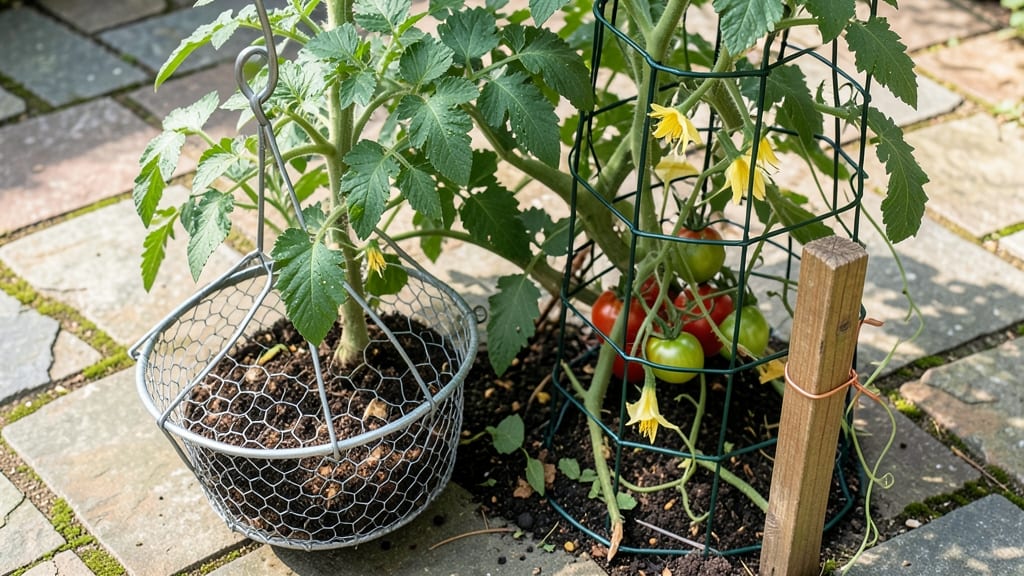
How to grow hanging tomato plants transforms patios into edible waterfalls—those cascading vines produce more fruit, improve air circulation, and save space compared to staked plants. I’ve grown tomatoes in hanging baskets for five summers now, and the difference is night-and-day. The secret starts with the right cherry or small beefsteak varieties (like 'Tiny Tim' or 'Patio Princess') and sturdy 14-18 inch fabric grow bags—they’re lightweight but hold moisture better than plastic. Add a 5-gallon capacity per plant, and you’ll avoid root-bound stress that kills yields.
By midsummer, you’ll be harvesting dozens of tomatoes that ripen faster in the hanging setup. The key? Morning watering to prevent blossom-end rot, weekly fish emulsion for vines that climb 6+ feet, and pruning suckers to focus energy on fruit—not foliage.
Works in containers, wall pockets, or even old pallets—just ensure 6+ hours of sun and consistent moisture. The best part? No bending over. Here’s how to set it up without the guesswork.
📚 In This Guide
- What you need
- Instructions
- Tips and common mistakes
- Wrapping up and next steps
What you need
- ● Hanging planters or containers: 5-gallon fabric grow bags, plastic or wooden hanging baskets, or self-watering pots (at least 12-18 inches deep and 12-18 inches wide to support root growth).
- ● High-quality potting mix: A well-draining, nutrient-rich mix (avoid garden soil—it compacts too easily!). Look for blends labeled for container gardening or tomatoes.
- ● Tomato seedlings or seeds: Determinate varieties (bush-type): Ideal for hanging baskets (e.g., 'Tiny Tim,' 'Patio Princess,' or 'Micro Tom').
- ● Indeterminate varieties (vining): Choose compact types like 'Tumbling Tom' or 'Sweet Million' (they’ll need pruning to control growth).
- ● Slow-release fertilizer: Granular or pelletized fertilizer (look for a balanced NPK ratio like 10-10-10 or a tomato-specific formula).
- ● Tomato cages or support: Small wire cages (6-12 inches tall) or ocillo clips to secure vines to the basket (prevents toppling!).
- ● Watering can or hose with a gentle spray nozzle: Hanging plants dry out faster—aim for consistent moisture without soggy soil.
- ● Pruning shears or scissors: For trimming suckers and shaping vines (sterilize blades with rubbing alcohol!).
- ● Self-watering system: A wicking basket liner or drip irrigation kit to automate watering (great for vacations!).
- ● Mulch or landscape fabric: Place a layer at the bottom of the basket to prevent soil loss and retain moisture.
- ● Epsom salt: A spoonful mixed into the soil at planting time can boost magnesium for healthier foliage.
- ● Reflective mulch or aluminum foil: Place around the base of the basket to attract pollinators (like bees!) and warm roots.
- ● Garden gloves and knee pads: Because comfort matters when you’re tending to your hanging oasis!
Step-by-Step instructions for growing thriving hanging tomato plants
Here’s the method I’ve used to grow 4 productive hanging tomato plants in limited space—no sprawling vines or wasted garden real estate.
🌱 Step 1: Select the Right Variety and Container
Not all tomatoes thrive in hanging baskets. Choose determinate varieties like 'Tiny Tim,' 'Patio,' or 'Micro Tom'—they grow in compact bushes rather than sprawling vines. Avoid indeterminate types unless you’re willing to prune aggressively to control height. A 14- to 18-inch hanging basket with multiple drainage holes is ideal for each plant. I use fabric baskets because they dry faster and prevent root rot, but plastic works too if you monitor moisture closely.
Fill the basket with high-quality potting mix (never garden soil—it compacts and suffocates roots). I mix in a slow-release fertilizer (like 4-6 month granules) at planting to feed the plant steadily. The soil should be moist but not soggy—think of a wrung-out sponge. If it crumbles when squeezed, it’s ready.
☀️ Step 2: Plant and Position for Maximum Light
Dig a hole in the center of the basket deep enough to bury the root ball up to the first set of leaves. Gently press the soil around the roots to eliminate air pockets, but don’t compact it—tomatoes need air around their roots. Place two to three tomato plants per basket (if using small varieties) to encourage bushier growth. I space mine 6 inches apart to allow airflow and reduce disease risk.
Hang the basket in a location with at least 6-8 hours of direct sunlight daily. A south- or west-facing spot is best, but if you’re in a shaded area, supplement with a grow light for 12-14 hours a day. Watch for leggy growth (long, pale stems with sparse leaves)—this means the plant isn’t getting enough light. If you see this, move the basket closer to the sun or raise the grow light within 4 inches of the foliage.
💧 Step 3: Water and Feed Consistently
Hanging baskets dry out faster than ground-planted tomatoes, so water every morning until water runs freely from the drainage holes. The soil should stay evenly moist but never waterlogged. I use a self-watering basket with a reservoir to simplify care, but if you’re watering manually, check moisture by sticking your finger 1 inch into the soil. If it’s dry, water again.
Feed the plants every 2-3 weeks with a balanced liquid fertilizer (10-10-10 or 20-20-20). I dilute it to half-strength to avoid burning the roots. Look for dark green leaves and vigorous new growth—this tells me the plant is happy. If leaves yellow or stems weaken, it’s often a sign of overwatering or nutrient deficiency, so adjust accordingly.
✂️ Step 4: Prune and Support for Heavy Fruit
As the plant grows, prune suckers (the small shoots that form in the leaf axils) to encourage stronger fruit production. I remove them when they’re no more than 2 inches long—this prevents the plant from wasting energy on unnecessary growth. Leave 2-3 main stems per plant to support the weight of tomatoes. Use soft plant ties to secure stems to the basket’s edges or a small trellis inside the basket for extra support.
When tomatoes form, remove any that appear deformed or diseased immediately to redirect the plant’s energy. You’ll know it’s working when you see plump, firm fruits hanging heavy on the vines. If the basket sags excessively, add a small stake in the center for additional support. Harvest tomatoes when fully colored and slightly soft to the touch—this ensures peak flavor and encourages more production.
🌿 Step 5: Monitor and Adjust for Pests/Disease
Hanging tomatoes are less prone to soil-borne diseases, but they can still attract pests like aphids, whiteflies, or spider mites. Inspect leaves weekly, especially on the undersides. If you spot pests, spray with neem oil or insecticidal soap in the early evening to avoid harming pollinators. For fungal issues like blight, improve airflow by thinning leaves if needed and avoid overhead watering.
By mid-season, you’ll likely see fruit splitting if moisture fluctuates wildly. To prevent this, water consistently and mulch the basket with straw or shredded leaves to retain even moisture. If the plant slows down in late summer, give it a final boost with a phosphorus-rich fertilizer (like 5-10-5) to support flowering and fruiting. With these steps, your hanging tomatoes will burst with flavor while saving your garden space.
Tips & tricks for thriving hanging tomato plants
Here's what nobody tells you about growing tomatoes in hanging baskets—these are the details that separate good plants from truly productive ones.
Variety Selection Matters: While determinate varieties like 'Tiny Tim' and 'Patio' are ideal for hanging baskets, don't overlook 'Micro Tom' for truly compact growth. I've found that these cherry tomato varieties produce fruit in clusters, making them perfect for hanging displays. When selecting plants, look for healthy seedlings with sturdy stems—avoid leggy or overly tall plants that won't thrive in the limited space. The key is choosing plants that naturally grow in a bushy form rather than trying to force vining varieties into containers.
Container Size and Material: The 14- to 18-inch basket size recommendation isn't arbitrary—it provides enough root space for two to three plants while maintaining stability. Fabric baskets are my top choice because their breathable nature prevents moisture buildup that leads to root rot, but if you prefer plastic, just be vigilant about watering frequency. I've learned the hard way that smaller baskets (under 12 inches) restrict root growth and lead to stunted plants. For maximum productivity, position your baskets where they'll receive that critical 6-8 hours of direct sunlight daily, ideally in a south-facing location.
Watering Strategy: The morning watering routine is non-negotiable for hanging tomatoes—they dry out faster than ground plants, and inconsistent moisture leads to split fruit. I've developed a simple test: if you can't feel moisture within 1 inch of the soil surface, it's time to water. For even better results, consider adding a 1-inch layer of mulch (like straw) on top of the soil to retain moisture and regulate temperature. This simple addition can make the difference between healthy plants and those struggling with moisture fluctuations.
Pruning Technique: When pruning suckers in Step 4, focus on removing them when they're just 2 inches long—this is when they're most easily identifiable and before they've sapped energy from your main plant. I've found that leaving 2-3 main stems creates the perfect balance between support and fruit production. For additional support, use soft plant ties to secure stems to the basket edges or add a small bamboo stake in the center. This prevents the basket from sagging under the weight of heavy fruit, which is especially important for larger varieties like 'Patio' tomatoes.
Pro Tips for Grow Hanging Tomato Plants
- Here's what nobody tells you about growing tomatoes in hanging baskets—these are the details that separate good plants from truly productive ones.
- Variety Selection Matters: While determinate varieties like 'Tiny Tim' and 'Patio' are ideal for hanging baskets, don't overlook 'Micro Tom' for truly compact growth.
- Container Size and Material: The 14- to 18-inch basket size recommendation isn't arbitrary—it provides enough root space for two to three plants while maintaining stability.
Frequently asked questions
Got questions about growing hanging tomato plants? You’re not alone—this method is packed with charm but comes with a few curveballs. Here are answers to the most common queries to keep your vines thriving and your harvests bountiful!
What’s the best time to plant hanging tomato plants?
Plant your hanging tomatoes after the last frost when soil temps hit 60°F (15°C) or warmer. Most varieties (like ‘Tumbling Tom’ or ‘Sweet Million’) thrive when transplanted 4-6 weeks before your area’s first frost date. Start seeds indoors 6-8 weeks earlier if you’re impatient—just give them plenty of light!
Can I grow any tomato variety in a hanging basket?
Not all tomatoes are hanging heroes! Opt for determinate (bush) varieties like ‘Tiny Tim’ or ‘Patio Princess’—they’re compact and manageable. Avoid indeterminate giants (e.g., ‘Beefsteak’) unless you’re okay with pruning and heavy baskets. Pro tip: Check seed packets for “container-friendly” labels!
Why are my hanging tomato leaves turning yellow?
Yellow leaves usually signal overwatering, underwatering, or nutrient issues. Check the soil—it should stay consistently moist but not soggy. Yellowing on lower leaves? It might be blossom end rot (calcium deficiency). Boost calcium with crushed eggshells or a balanced fertilizer. Bonus: Ensure baskets have drainage holes!
How often should I water hanging tomato plants?
Hanging baskets dry out faster than ground beds! Water daily in hot weather (or twice if temps exceed 90°F/32°C) and every 2-3 days in mild conditions. Use a self-watering basket or drip irrigation to keep roots happy. Warning: Avoid wetting leaves to prevent disease.
Can I reuse last year’s hanging basket for tomatoes?
Yes, but sterilize it first! Scrub with soapy water, rinse well, and soak in a 1:10 bleach-water mix (or vinegar) for 10 minutes to kill pests/diseases. Replace old soil entirely—tomatoes hate leftover pathogens. Add fresh potting mix with compost or worm castings for a nutrient boost!
How do I know when hanging tomatoes are ripe?
Ripeness depends on the variety! Most hanging tomatoes turn deep red, orange, or yellow (check the label). Gently squeeze—ripe ones should yield slightly. Pro tip: Harvest when they’re firm but softening to avoid overripening in baskets. Unripe? Pick them green and ripen indoors with a banana!
Wrapping up and next steps
Growing hanging tomato plants is a rewarding way to maximize your garden space while enjoying a bountiful harvest of juicy, flavorful fruits! 🍅 With the right container, support, and care, you can transform even a small balcony or patio into a thriving tomato oasis.
Now that you’re armed with the knowledge, take the plunge and start your hanging tomato adventure today! Grab your supplies, hang those baskets, and watch your plants flourish. Happy gardening—and may your tomatoes be plentiful and delicious! 🌱✨