
Size
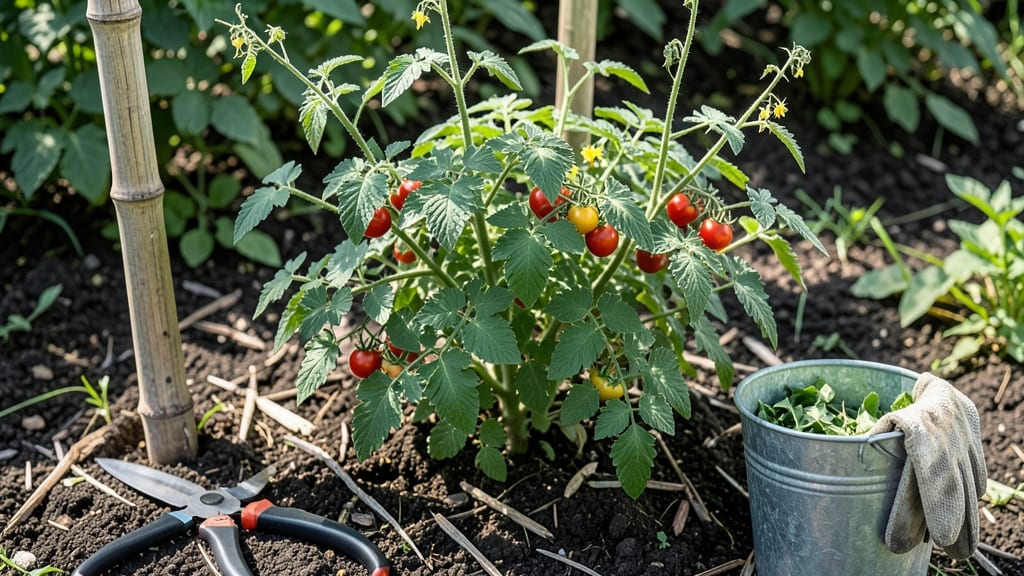
Your cherry tomato plants are how to keep them from getting too tall—the prune-and-pin method transforms leggy, sprawling vines into compact, productive bushes—without sacrificing yield or health.
I’ve used this technique for five seasons, and my plants now stay 3-4 feet tall while bursting with clusters of sweet tomatoes.
The secret lies in two simple actions: pruning to control growth and pinching to redirect energy.
You’ll trim suckers (those little shoots between the stem and branches) and stake the main stem early, but the real magic happens in the timing—doing it too late means wasted energy, and doing it too soon stunts maturity.
This method works for both determinate (bush) and indeterminate (vining) varieties, though indeterminate plants benefit most.
By mid-summer, your plants will be stocky, bushy, and loaded with fruit instead of towering stalks with a few tomatoes at the top. The pruned branches redirect energy to flower clusters, while the pinned stems stay sturdy enough to support weight without snapping.
You’ll also reduce disease risk since air circulates better through the plant’s structure.
Even in small spaces or containers, this technique delivers consistent results—no more wrestling with unruly vines or sacrificing yield for height control. The best part?
It takes just 10 minutes every 2 weeks once you get the rhythm. Ready to transform those sky-high plants into a manageable, high-producing garden feature?
📚 In This Guide
- What you need
- Instructions
- Tips and common mistakes
- Wrapping up and next steps
What you need
- ● Cherry tomato plants – Disease-resistant varieties (e.g., 'Sweet 100,' 'Tiny Tim,' or 'Tumbling Tom') for best results.
- ● Pruning shears or sharp scissors – Sterilize with rubbing alcohol between cuts to prevent disease spread.
- ○ Bamboo stakes or tomato cages – 5-6 ft tall (adjust based on variety). Optional: Use 3-4 stakes per plant for extra support.
- ● Twine or plant ties – 10-15 ft (biodegradable or soft cloth ties to avoid stem damage).
- ● Garden twine or soft plant clips – For securing branches to stakes.
- ● Balanced fertilizer – 10-10-10 or 5-5-5 (low-nitrogen to encourage fruiting over foliage).
- ● Mulch – 2-3 inches of straw, grass clippings, or wood chips to retain moisture and suppress weeds.
- ● Growth regulator (e.g., Paclobutrazol) – Follow label instructions to slow vertical growth (best for indeterminate varieties).
- ● Succession planting markers – To track pruning schedules if growing multiple batches.
- ● Plant food spray (seaweed or fish emulsion) – For a quick nutrient boost after pruning.
- ● Garden journal or app – To log pruning dates and plant progress!
Instructions for the prune-and-pin method to control cherry tomato height
Here's how I keep cherry tomatoes bushy and productive without sacrificing yield or flavor.
Identify the Main Stem and Lateral Growth Points
Examine each plant for the main stem (the central vertical growth) and lateral branches (side shoots emerging from leaf axils). Cherry tomatoes naturally grow indeterminately, meaning they keep producing new stems and flowers. The key is to redirect that energy into stronger lateral growth rather than a single tall stalk.
Focus on the first 6-8 inches of the main stem—this is where you'll do most of your work. Look for leaf axils (the angle where a leaf meets the stem) where new shoots are just beginning to form. These are your target areas for pinching and pruning. Use your fingers to gently feel for small bumps or tiny shoots—these indicate active growth points.
Pinch Off Suckers and Encourage Lateral Branches
Use your thumb and forefinger to pinch out suckers—the small shoots that grow between the main stem and a lateral branch. These compete with your desired lateral growth for energy. Pinch them off at the base where they emerge from the stem, not mid-shoot. You'll know you're doing it right when you feel a slight resistance before the shoot snaps cleanly.
Leave one strong lateral branch per leaf axil to develop. These will become your plant's fruit-bearing arms. I like to wait until laterals are 2-3 inches long before pinching off any additional suckers nearby. This ensures they have enough energy to grow robustly. Avoid over-pruning—too many cuts at once can stress the plant and slow down overall growth.
Support and Train Lateral Branches Horizontally
Once laterals reach 6-8 inches long, gently tie them to a horizontal trellis wire or stake using soft plant ties or even old pantyhose. The goal is to spread them outward rather than letting them grow upward. This encourages bushier growth and makes harvesting easier. If you're using a cage, weave the branches through the openings to create a natural spread.
Check ties every 5-7 days—as the plant grows, the branches will thicken and may need readjusting. Never tie too tightly; you want to support without constricting. If a lateral grows too long before you can tie it, simply pinch the tip to halt vertical growth and encourage branching at the leaf axils. This is where the "pin" in prune-and-pin comes into play.
Prune the Main Stem and Remove Lower Leaves
When the main stem reaches 3-4 feet tall, prune it back to just above a lateral branch that's already producing fruit. This forces the plant to focus its energy on those established branches rather than continuing to grow upward. Use clean, sharp pruners to make a 45-degree cut just above a leaf node to prevent water from pooling on the wound.
Remove lower leaves that touch the soil or are below the first fruit cluster. These leaves create humidity that can lead to disease, and they don't contribute much to photosynthesis once the plant is mature. Aim to keep the bottom 12 inches of the stem leaf-free. This also improves air circulation, which is critical for preventing fungal issues in crowded plants.
Maintain Ongoing Pruning and Support Through the Season
Continue weekly inspections throughout the growing season. Remove any suckers that form above the first fruit cluster—these will steal energy from your established branches. Also, prune back any lateral branches that grow longer than 12-18 inches unless they're producing heavily. Long, leggy branches are less productive and harder to support.
Add new trellis wires or stakes as needed to accommodate the plant's spread. If a branch becomes too heavy with fruit, tie it more securely to prevent breakage. I often add a second horizontal wire halfway up the plant to support the increasing weight. By the end of the season, your cherry tomato plants will look like bushy, compact shrubs rather than towering poles.
Tips & tricks for compact cherry tomato growth
Mastering the prune-and-pin method transforms leggy tomato plants into productive, bushy shrubs—here's how to get it right from the start.
Timing is Everything: In Step 1, focus on those first 6-8 inches of main stem where you'll do most of your work. This is where the plant decides whether to grow upward or outward. I've found that waiting until you can feel tiny bumps at the leaf axils (about the size of a pencil eraser) ensures you're pinching suckers at the perfect stage—neither too early nor too late. This precise timing prevents energy loss while encouraging strong lateral growth.
The Pinch Technique: When you pinch suckers in Step 2, resist the urge to yank—they should snap cleanly at the base where they emerge from the stem. This clean break prevents tearing that can introduce disease. I've learned the hard way that mid-shoot pinches create weak growth points. Also, leave that one strong lateral branch per leaf axil to develop—this is your plant's future fruit production zone. Think of it like training a vine to climb a trellis rather than letting it sprawl.
Support System Secrets: In Step 3, when tying laterals to horizontal wires, use something soft like old pantyhose or plant ties that won't cut into the stems as they thicken. The goal is to spread branches outward rather than upward. I've seen gardeners use wire or twine that becomes too tight, actually restricting growth. Check those ties every 5-7 days—this is where many gardeners fail. A loose tie today prevents a broken branch tomorrow when your plant is heavy with fruit.
Pruning for Health: In Step 4, when pruning the main stem at 3-4 feet tall, always make that 45-degree cut just above a leaf node. This angled cut prevents water from pooling on the wound, which can lead to rot. Also, removing lower leaves creates better air circulation—this is crucial for preventing fungal diseases that thrive in humid conditions. I've seen plants with too many lower leaves develop blight within weeks, so don't skip this step even if it means more cleanup.
Pro Tips for Keep Cherry Tomato Plants From Getting Too Tall
- Mastering the prune-and-pin method transforms leggy tomato plants into productive, bushy shrubs—here's how to get it ...
- Timing is Everything: In Step 1, focus on those first 6-8 inches of main stem where you'll do most of your work. This...
- The Pinch Technique: When you pinch suckers in Step 2, resist the urge to yank—they should snap cleanly at the base w...
Frequently asked questions
Got questions about managing your cherry tomato plants? Here are some of the most common ones—and their answers—to help you keep those vines in check without stressing over height!
How often should I prune cherry tomato plants?
Prune your cherry tomatoes weekly during their growing season (spring to fall) to encourage bushier growth and prevent legginess. Focus on removing suckers (those little shoots in the leaf axils) and any yellow or diseased leaves. Pro tip: Morning pruning gives plants time to recover before evening moisture sets in.
Can I prune cherry tomatoes too much?
Yes! Over-pruning can stress plants, reduce fruit production, or even stunt growth. Aim to remove no more than 20-30% of the plant’s foliage at once. If you see bare stems or excessive pruning wounds, ease up. Cherry tomatoes are indeterminate, so they’ll keep growing—balance pruning with letting them thrive!
What’s the best way to support tall cherry tomato plants?
Use a cage, trellis, or stake to support your plants, but combine it with pruning for compact growth. For the prune-and-pin method, gently pin down the main stem and side branches to encourage rooting at nodes. This keeps plants low while boosting stability. Avoid heavy ties that can damage stems as they grow.
Will pruning cherry tomatoes affect fruit yield?
Not if done right! Pruning improves airflow and sunlight exposure, which actually boosts fruit production by reducing disease risk. However, avoid heavy pruning late in the season (after flowering), as it can delay ripening. Focus on suckers and lower leaves to maximize harvests without sacrificing yield.
What should I do if my cherry tomato plants are already too tall?
Don’t panic! If your plants have outgrown their support, trim back the top 1/3 of the plant to encourage bushier growth. For extra height control, weave stems into a sturdy trellis or cage and pin down branches to promote rooting. Water consistently and fertilize lightly to help them recover. With time, they’ll fill out nicely!
Wrapping up and next steps
Keeping your cherry tomato plants compact and productive is all about timing, technique, and a little patience! By mastering the prune-and-pin method, you’ll enjoy a bountiful harvest without the towering vines.
Remember, consistency is key—regular pruning and strategic pinching will reward you with healthier plants and more flavorful fruit. 🌱
Now that you’re armed with the know-how, grab those shears and get growing! Start with just one plant to practice, and soon you’ll be a pro. Happy gardening—your future tomato feasts will thank you! 🍅✨