
Container Gardens
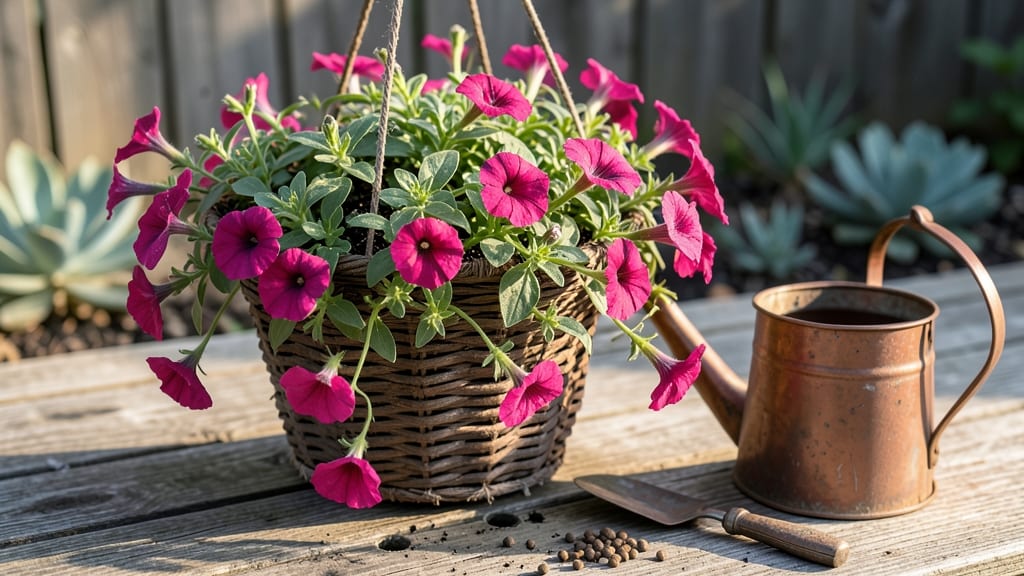
How to grow petunia hanging baskets turns porches into explosions of color—and you’ll have those cascading blooms in just three months. 🌸 I’ve grown them for years, and the secret isn’t fancy tricks but matching their needs: bright light, well-draining soil, and consistent water. Skip the guesswork, and you’ll avoid the wilted, leggy plants that frustrate beginners.
The right setup makes all the difference. You’ll need 10-12 inch baskets, a lightweight potting mix with perlite, and petunia varieties like ‘Supertunia’ or ‘Wave’ for their trailing habits. Start seeds indoors 8-10 weeks before frost, or buy sturdy transplants in spring.
Hang baskets where they get 6+ hours of sun daily—morning light prevents scorching, while afternoon sun fuels blooms.
By midsummer, your baskets will be spilling over with blossoms, attracting butterflies and hummingbirds. Prune spent flowers regularly to encourage more blooms, and fertilize every 2 weeks with a balanced liquid feed.
The payoff? A year-round display if you bring baskets indoors before frost or overwinter them in a cool, bright spot.
Pair petunias with trailing lobelia or calibrachoa for extra drama, or add herbs like thyme for a fragrant, pollinator-friendly combo. Even in small spaces, these baskets create instant curb appeal—no green thumb required. Let’s get those roots growing!
📚 In This Guide
- What you need
- Instructions
- Tips and common mistakes
- Wrapping up and next steps
What you need
- ● Hanging basket – Choose a 12-18 inch diameter basket with drainage holes (plastic, fabric, or wire). Pro tip: Fabric baskets retain moisture better but need more frequent watering!
- ● Petunia plants – 6-10 healthy seedlings (suffrutiose or grandiflora varieties work best). Look for compact, bushy types labeled for hanging baskets.
- ● Potting mix – 1 gallon of high-quality, well-draining container mix (avoid garden soil—it compacts and suffocates roots!).
- ● Slow-release fertilizer – 1-2 tablespoons of 14-14-14 or 10-10-10 formula mixed into the soil for a nutrient boost.
- ● Watering can or hose with a gentle spray nozzle – Essential for deep, even hydration without damaging delicate petunia blooms.
- ● Gloves – Protect your hands from prickly stems and soil.
- ● Scissors or pruners – For trimming leggy stems or deadheading spent blooms.
- ○ Mulch (optional) – 1 inch of bark or coconut coir to retain moisture and suppress weeds.
- ○ Liquid fertilizer (optional) – Balanced 20-20-20 formula for mid-season feeding (every 2-3 weeks).
- ○ Support stakes (optional) – For trailing varieties like Surfinia petunias.
Step-by-step instructions for growing petunia hanging baskets
Here's the foolproof system I use to transform bare baskets into cascading floral displays—tested across seasons and climates.
🪴 Step 1: Select and Prepare the Baskets
Choose 14-18 inch diameter hanging baskets with sturdy handles and multiple drainage holes—petunias hate soggy roots. I prefer coconut fiber liners because they wick moisture evenly and prevent soil loss. Soak the liner in water for 10 minutes before inserting it into the basket to prevent shrinking later.
Line the basket with sphagnum moss (about 1 inch thick) to protect roots from the liner's coarse texture. This creates a soft barrier while still allowing drainage. Place the liner in the basket and secure it with twine or wire at the top edge to prevent it from slipping down as you add soil.
🌱 Step 2: Layer Soil and Fertilizer for Optimal Growth
Fill the basket halfway with a lightweight potting mix designed for hanging baskets—it should contain peat moss, perlite, and vermiculite for aeration. Mix in controlled-release fertilizer (about 1 cup per basket) to provide nutrients slowly over 3-4 months. This prevents the "green push" where plants grow leaves instead of blooms.
Gently pat the soil down to remove air pockets but don't compact it—petunias need well-draining soil that doesn't crust over. Leave 2-3 inches of space at the top for plants and water retention. Here's the thing—if the soil feels like packing dirt after pressing, you've compacted it too much. It should crumble easily when squeezed.
🌿 Step 3: Plant Petunias for Maximum Impact
Remove petunias from their nursery pots and loosen the root ball gently to encourage outward growth. Space plants 6-8 inches apart—closer spacing creates a denser, fuller look faster. For 4 baskets, you'll need about 12-16 plants total, depending on variety. I always plant trailing types (like 'Wave' or 'Supertunia') in the outer positions so they spill beautifully over the edges.
Dig holes twice as wide as the root ball but only as deep as the container they came in. Press soil lightly around each plant to eliminate air gaps, then water deeply until it drains from the bottom. The first watering settles the soil and helps roots make contact with the mix. Watch for soil settling—if the plant looks too high after watering, add a bit more mix around it.
☀️ Step 4: Water and Position for Blooms
Water every morning for the first 7-10 days to help roots establish. After that, check moisture by lifting the basket—it should feel light but not bone dry. Petunias need consistent moisture, so I use a drip irrigation system or watering can with a rose attachment to direct water to the soil without disturbing plants. Never let them sit in saucers of water.
Place baskets in full sun (at least 6-8 hours daily) for the most vibrant blooms. If you're in a hot climate, provide afternoon shade to prevent leaf scorch. You'll know they're happy when they produce nonstop blooms with minimal leaf drop. Real talk: if you see mostly green leaves and few flowers, they need more sunlight or fertilizer.
✂️ Step 5: Maintain and Encourage Continuous Blooms
Deadhead spent blooms weekly by pinching off flowers just above the next set of leaves. This redirects energy to new blooms instead of seed production. I also trim leggy stems back to a leaf node to encourage bushier growth. Use clean, sharp scissors to avoid tearing plant tissue—petunias heal quickly but hate jagged cuts.
Feed plants every 2-3 weeks with a balanced liquid fertilizer (10-10-10 or 20-20-20). Look for signs of deficiency—yellow leaves mean nitrogen, purple stems mean phosphorus, and weak growth means potassium. I swear by fish emulsion for a mid-season boost, but follow label rates to avoid burning roots. With consistent care, your baskets will stay in bloom until first frost.
Tips & tricks for perfect petunia hanging baskets
These game-changing strategies will help you create lush, vibrant hanging baskets that burst with blooms all season long.
Liner Prep Secret: The 10-minute soak for your coconut fiber liner is non-negotiable—it prevents shrinking later and ensures even moisture distribution. Pro tip: After soaking, wring out excess water gently. A soggy liner can suffocate roots, while one that's too dry won't hold moisture properly. I test by squeezing—it should feel damp but not dripping. This step alone prevents the most common early-season failures.
Soil Texture Matters: When filling your basket halfway with potting mix, focus on creating an airy structure. I press the soil lightly but firmly—it should crumble when pinched, not pack like wet sand. For extra drainage, mix in a handful of perlite or coarse sand (about 10% of the soil volume). This prevents the dreaded "crusting" that strangles roots and leads to leggy growth. Think of it as creating a sponge that holds moisture but breathes.
Root Ball Technique: That initial deep watering after planting is your chance to establish strong root-to-soil contact. I use a watering can with a rose attachment to saturate the soil completely, then let it drain for 10 minutes before adding any extra mix. This prevents air pockets that can cause wilting. Watch for soil settling—if plants look too high after watering, add a bit more potting mix around the base to stabilize them.
Sunlight Strategy: The 6-8 hours of full sun requirement is critical, but here's what nobody tells you: morning sun is your friend, but afternoon sun in hot climates can scorch leaves. I position baskets to catch the intense midday rays only if my area has mild summers. For hot climates, move baskets to partial shade after 2 PM. You'll notice the difference in leaf health—vibrant green means you've got it right, while crispy edges mean you need that afternoon reprieve.
Pro Tips for Grow Petunia Hanging Baskets
- These game-changing strategies will help you create lush, vibrant hanging baskets that burst with blooms all season l...
- Liner Prep Secret: The 10-minute soak for your coconut fiber liner is non-negotiable—it prevents shrinking later and ...
- Soil Texture Matters: When filling your basket halfway with potting mix, focus on creating an airy structure. I press...
Frequently asked questions
Got questions about growing stunning petunia hanging baskets? You’re not alone! Here are answers to the most common queries—so you can skip the guesswork and dive right into blooms.
When is the best time to plant petunias in hanging baskets?
Plant petunias after the last frost date in your area (typically late spring). For a jumpstart, start seeds indoors 8–10 weeks before the last frost or buy young plants from a nursery in early spring. Petunias thrive in warm soil—wait until nighttime temps stay above 50°F (10°C) to avoid cold damage.
How long does it take for petunias to bloom in hanging baskets?
With proper care, you’ll see the first blooms in 6–8 weeks after planting. For faster results, choose pre-blooming petunia plants from nurseries. Consistent watering, sunlight (6+ hours/day), and regular deadheading will keep flowers coming all season long!
Why are my petunia leaves turning yellow or brown?
Yellow leaves often signal overwatering or poor drainage. Brown edges or crispy leaves? You might be underwatering or exposing plants to harsh afternoon sun. Check your basket’s drainage holes—petunias hate soggy roots! If yellowing spreads, test for nutrient deficiencies (like nitrogen) and fertilize lightly.
What pests should I watch for in petunia hanging baskets?
Keep an eye out for aphids, spider mites, and whiteflies, which love petunias. Blasts of water or neem oil can deter them. For severe infestations, use insecticidal soap. Prevention tip: Space baskets for airflow and remove damaged leaves promptly to discourage pests.
Can I reuse the same hanging basket for petunias year after year?
Yes! Clean and disinfect baskets at the end of the season with a 10% bleach solution (1 part bleach to 9 parts water) to kill fungi and pests. Replace old soil completely—petunias deplete nutrients quickly. Add a layer of sphagnum moss at the bottom for better moisture retention if needed.
What can I plant with petunias in hanging baskets for year-round color?
Pair petunias with trailing plants like calibrachoa (million bells) or lobelia for a cascading effect. For height, add bacopa or verbena. Mix in foliage plants like helichrysum (licorice plant) for texture. Just ensure all plants share similar water and sunlight needs!
Wrapping up and next steps
Growing petunia hanging baskets is a rewarding journey that brings vibrant color and life to your space—and you’ve got all the tools to succeed! 🌸 With the right soil, consistent care, and a little patience, you’ll enjoy a stunning floral display in just three months.
Now that you’re armed with tips and tricks, why not take the next step?
- Start small: Pick a sunny spot and plant your first basket this weekend!
- Experiment: Try mixing petunia varieties or adding trailing plants for extra flair.
- Share the joy: Snap photos of your blooms and inspire others to garden too!
Happy planting—your future hanging garden awaits! 🌿✨